Saves instantly, no account needed. Already a member? Sign in.
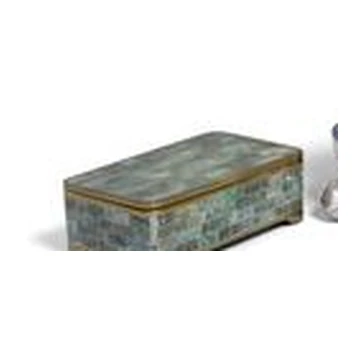
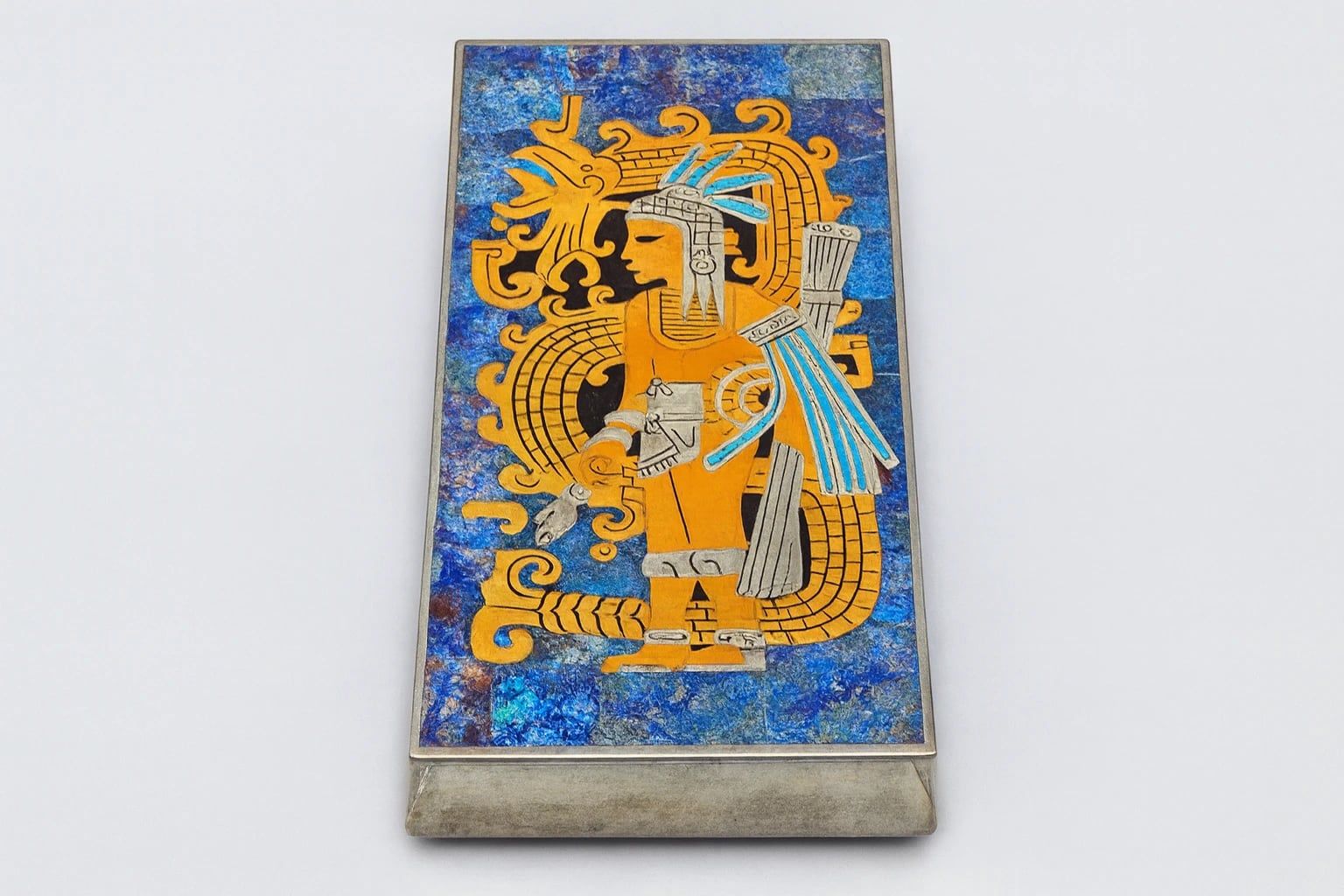
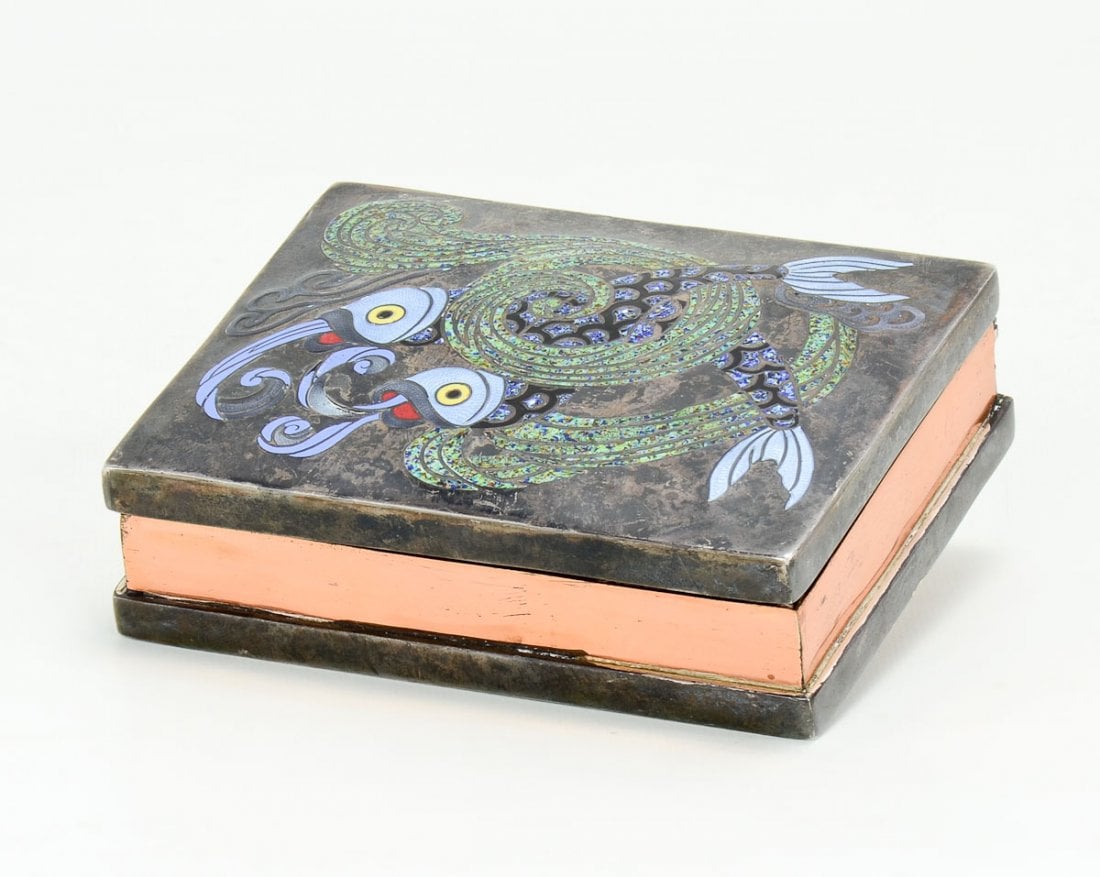
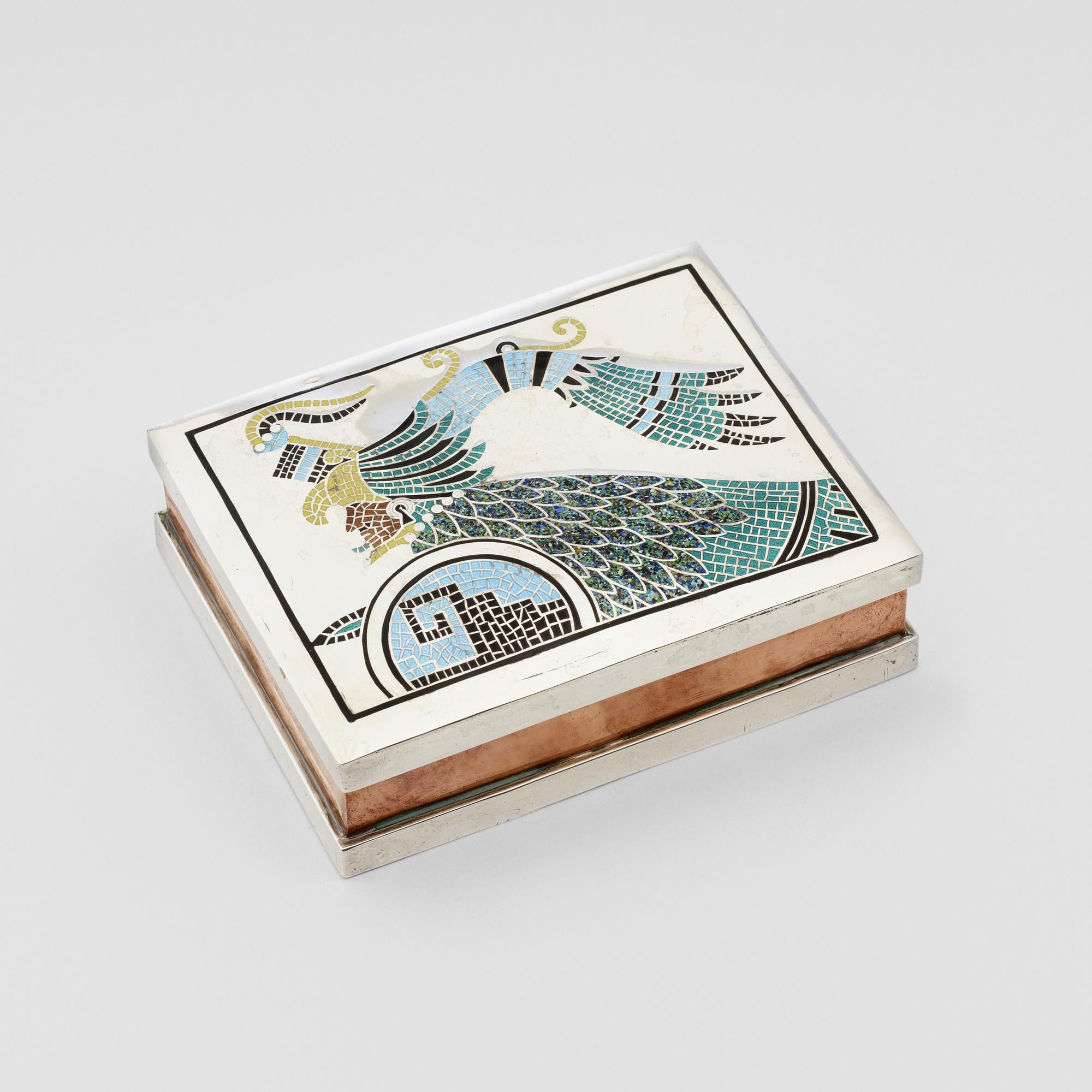
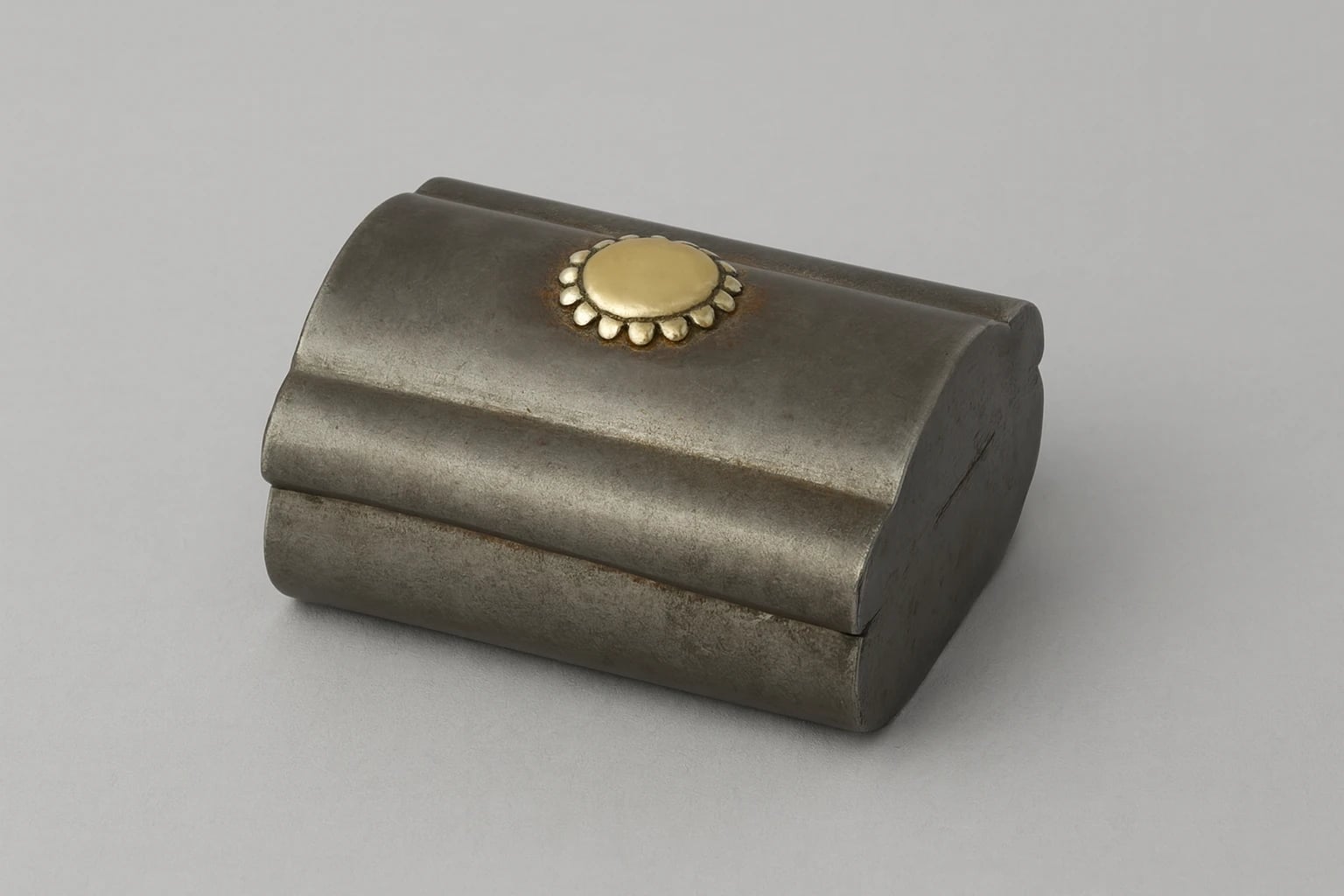
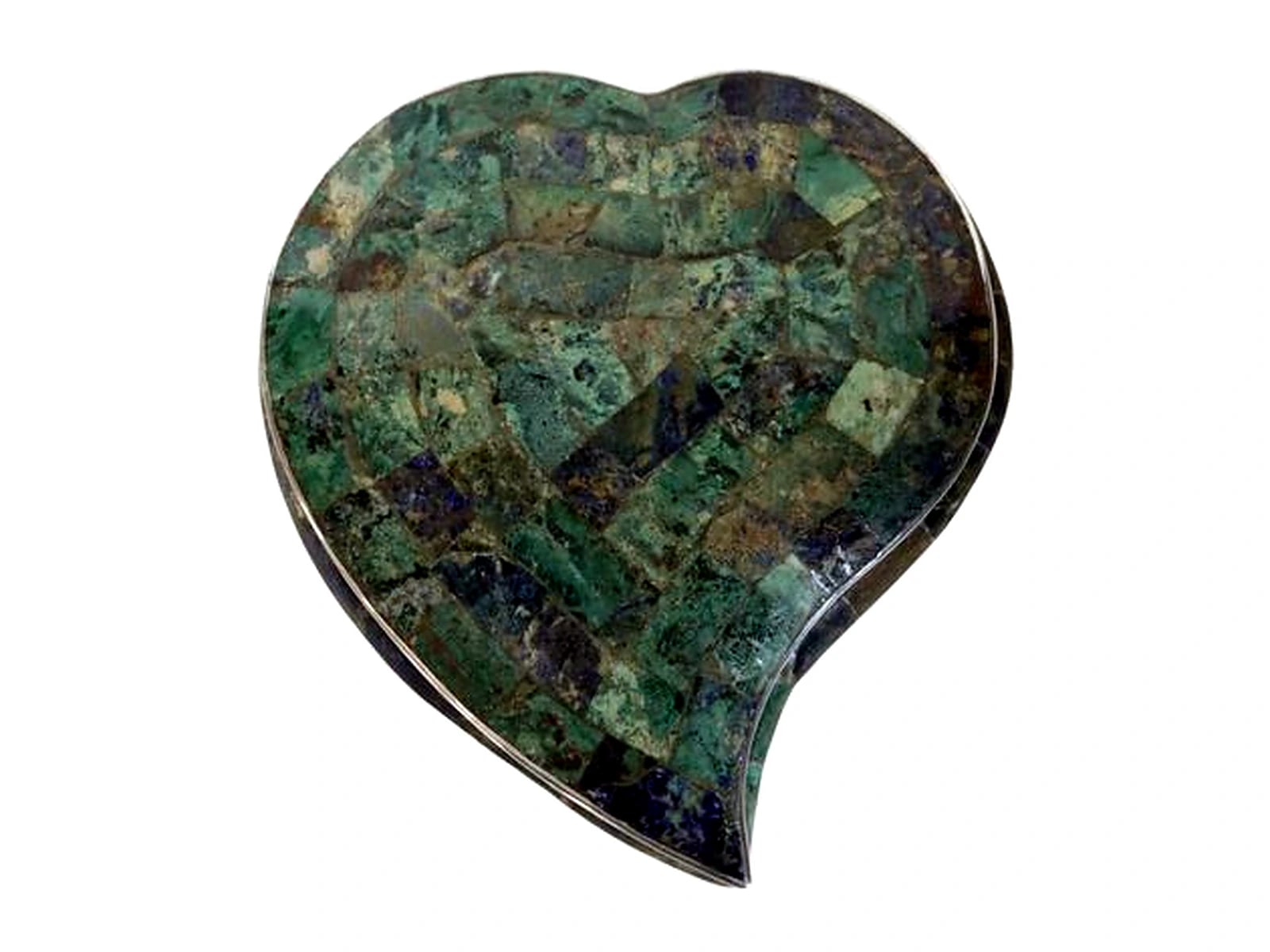
A lidded box that treats stone not as decoration applied to metal but as the surface itself, its top and sides worked in crushed and cut stone set flush into inlaid fields. This is the signature achievement of Los Castillo: the transformation of hardstone mosaic into a fully controlled medium for hollowware and boxes, where color, opacity, and pattern carry the design rather than engraving or repoussé. The box belongs to a body of work in which the workshop pursued inlay techniques with the seriousness that other talleres reserved for silversmithing alone.
The construction depends on precise fitting. Stone inlay of this kind requires each element to be cut and seated so that its edges meet cleanly against neighboring stones and against the metal frame that contains them, with the surface then ground and polished level. Where a design combines materials such as onyx and tortoise, as recorded in related Los Castillo pieces, the contrast is one of depth and light: the dense black of onyx against warmer translucent shell, each field bounded by silver. The lid and body must align so the pattern reads as continuous across the closure, which places the burden of the design on the carpentry and fitting as much as on the metal. Los Castillo maintained a dedicated carpentry shop for exactly this reason, a structure the family described as central to their more ambitious commissioned work.
Los Castillo built these inlay techniques into named production lines, each carrying its own hallmark: Mosaico Azteca, Pluma Azteca, Onix Negro, and the fired-enamel Esmalte a Fuego, marks documented in use from roughly 1950 through the mid-1960s. That a workshop registered its inlay methods as branded lines indicates how far the Castillos had moved stone mosaic from occasional novelty toward systematic manufacture. The technique had roots in the workshop's early history and in the wider postrevolutionary interest in indigenous Mexican material traditions, but the Castillos developed it as their own formal language. Salvador Terán, who worked at Los Castillo from 1939 until 1952, carried a parallel interest in mosaic into glass when he left, evidence of how central the mosaic idea was to the workshop's identity during these years.
Within a museum collection, a stone inlay box documents the part of the Mexican silver renaissance least represented in accounts that focus on jewelry and holloware. It shows a Taxco workshop treating inlay as a primary discipline, supported by specialized craftsmen, a carpentry shop, and registered technical lines. The box records how Los Castillo extended the vocabulary of the taller system beyond the silversmith's bench and made hardstone mosaic a legible expression of the workshop's ambitions.
Museum of Mexican Silver. “Heart-Form Stone-Mosaic Box.” Catalog no. MoMS-001239. https://museumofmexicansilver.com/pieces/los-castillo-box-stone-inlay-hammered
See something wrong with this record? Suggest a correction and the piece details fill in automatically.
Los Castillo
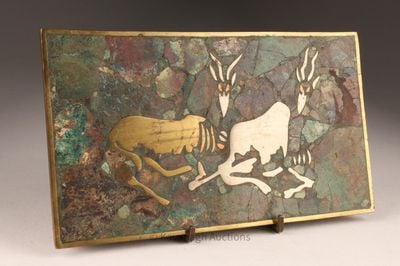
Deer-Motif Cigar Box with Stone Mosaic
Turquoise