Saves instantly, no account needed. Already a member? Sign in.
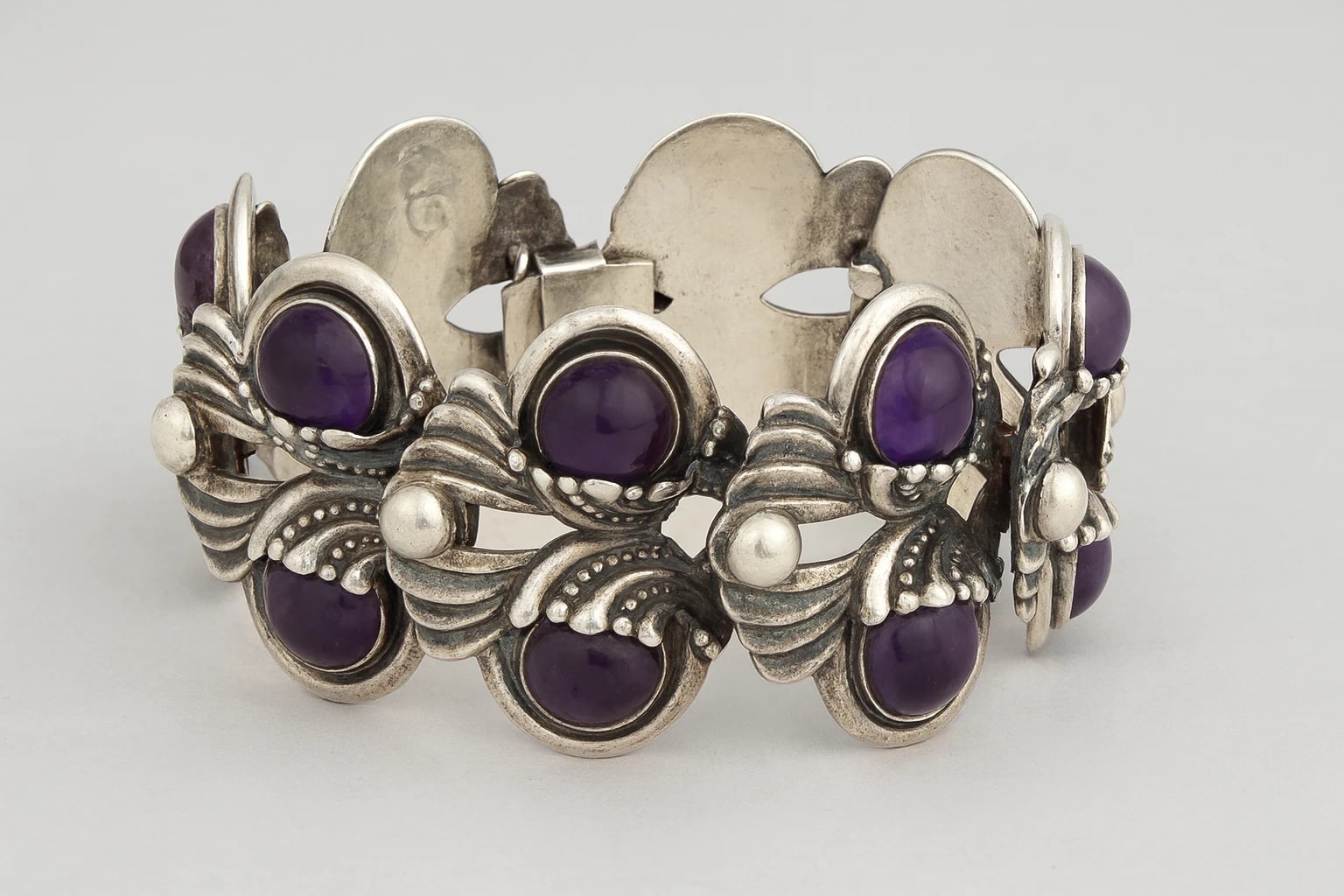
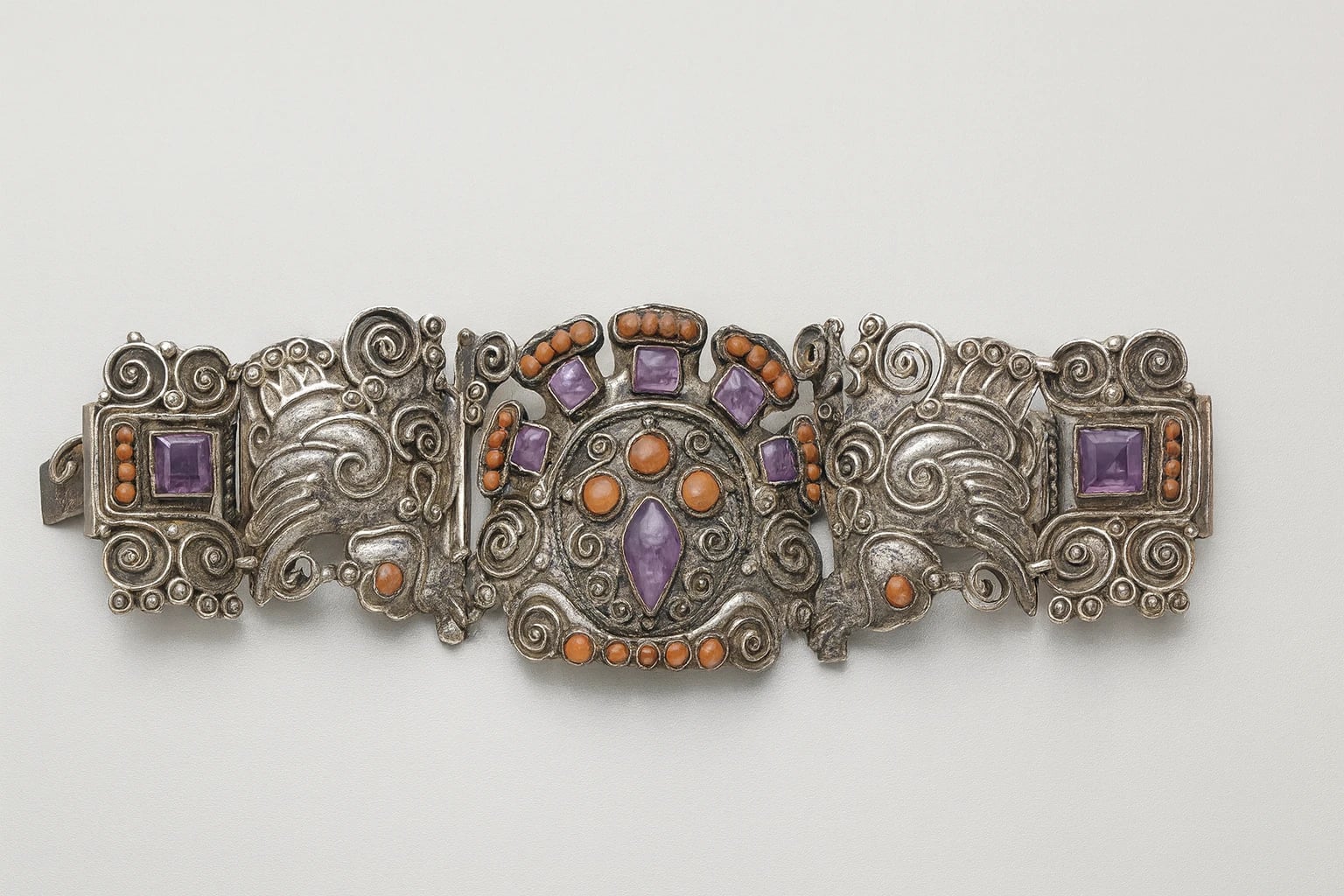
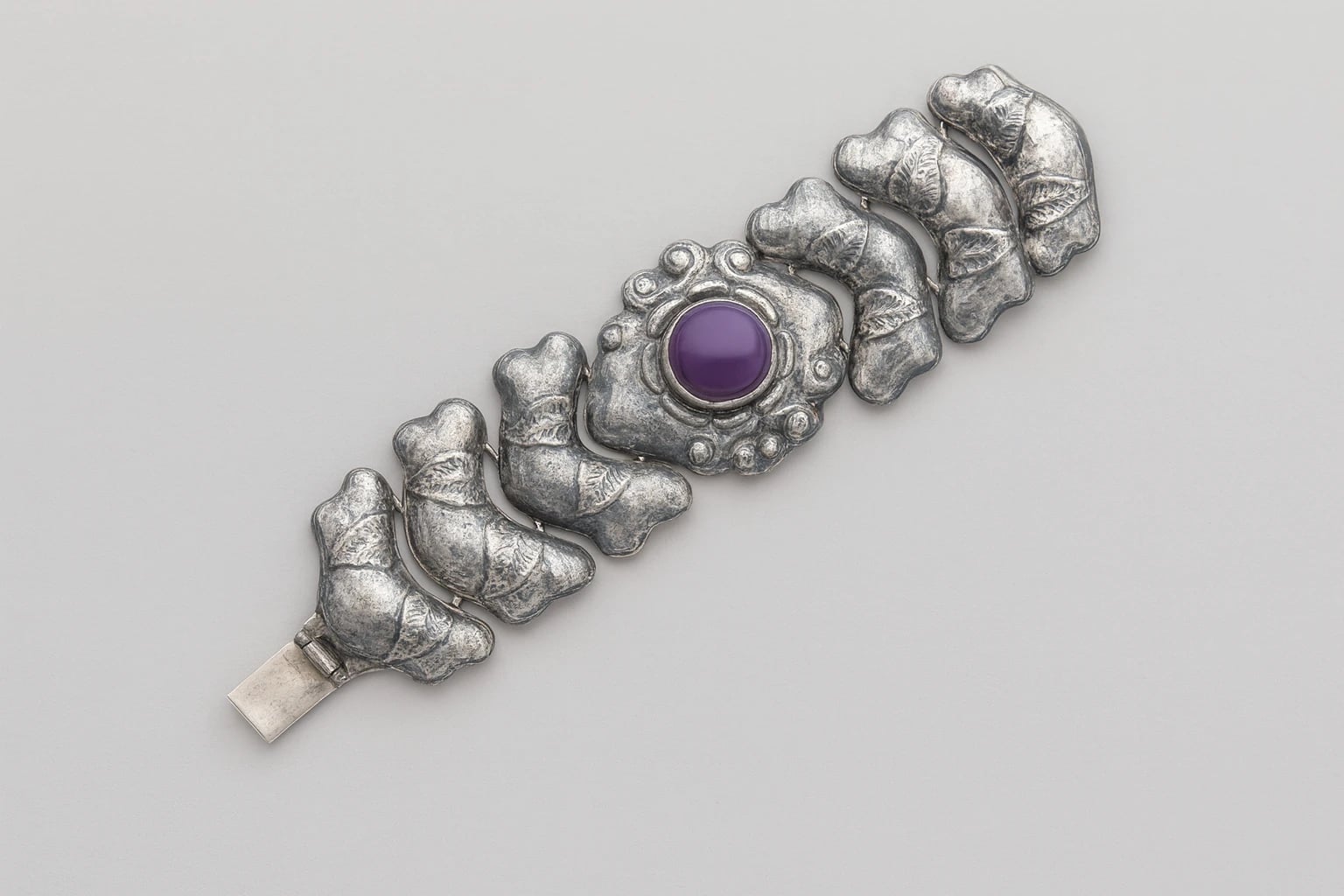
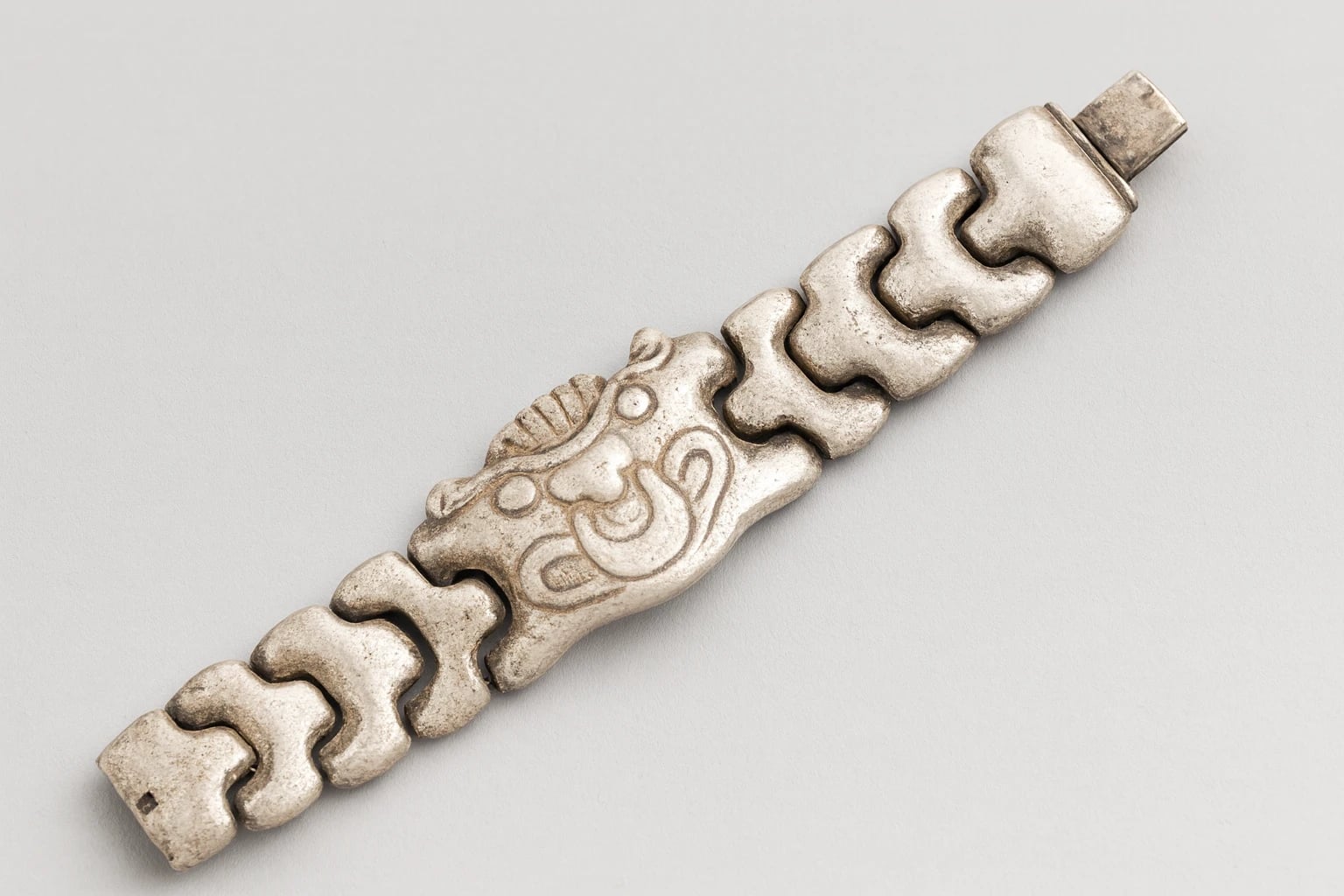
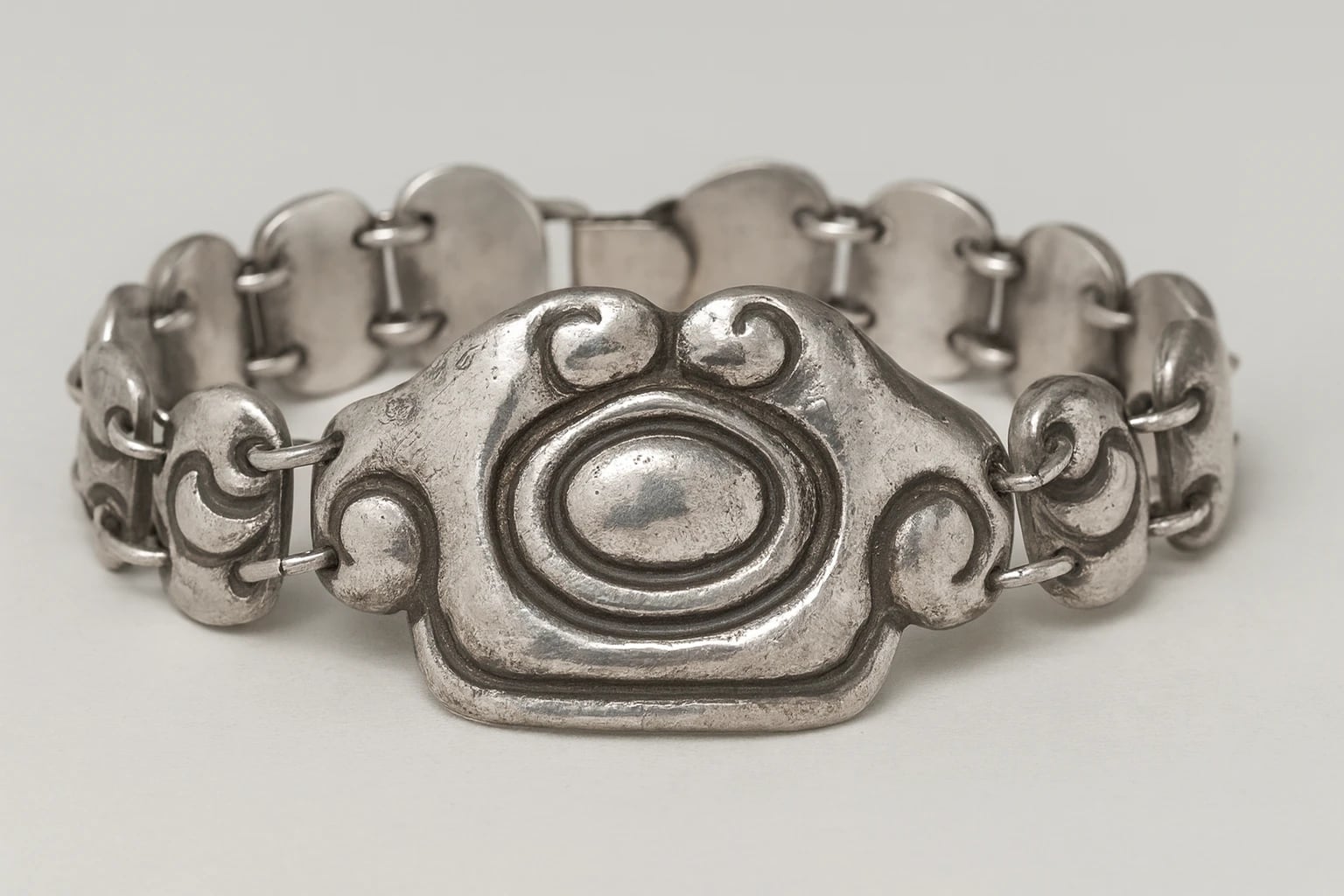
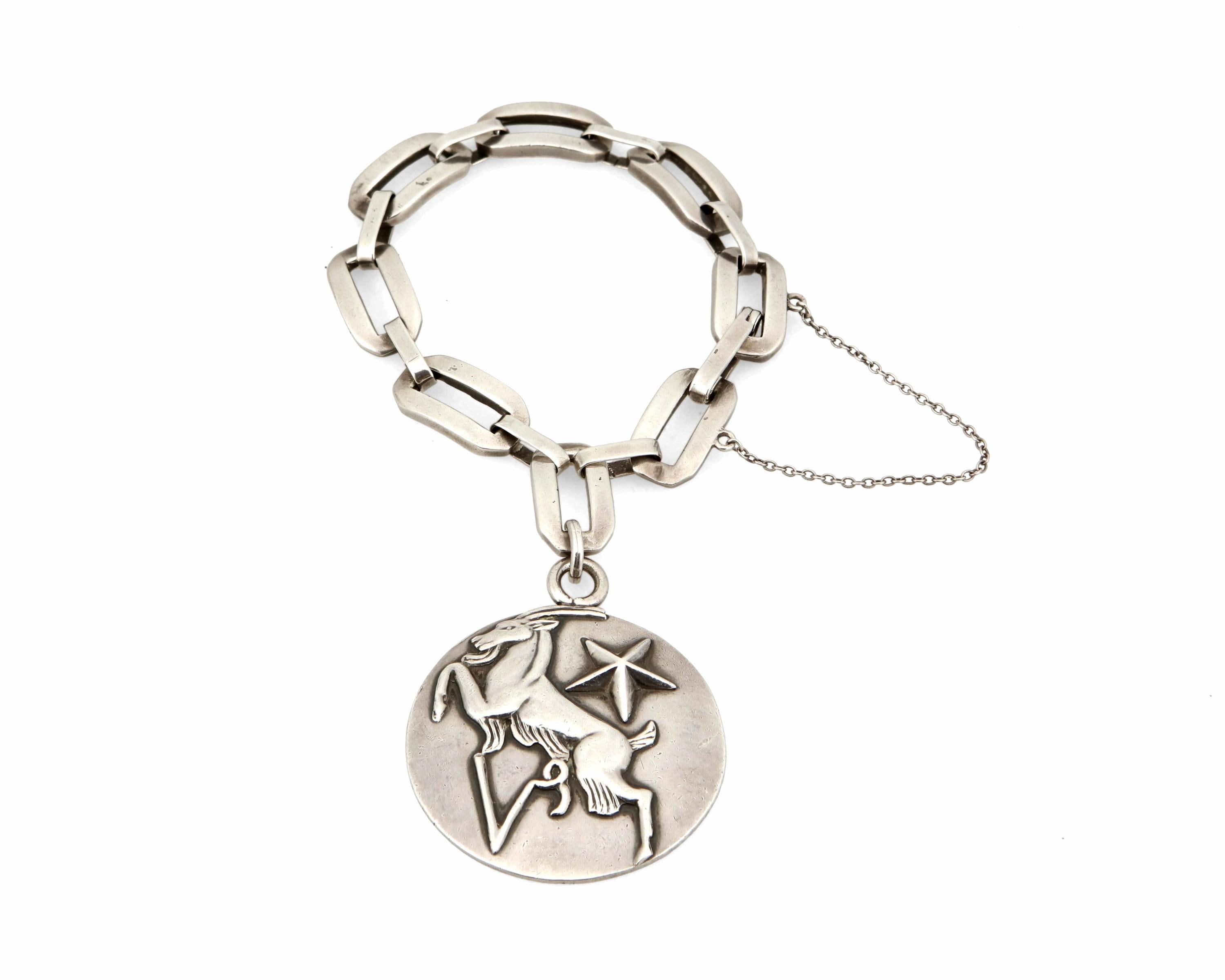
Design number 5223 places this bracelet in the earlier range of Margot de Taxco's numbered output, a bracelet built from articulated sterling links that carry enamel across the wrist. The pairing of silver and enamel is the material combination on which Margot van Voorhies built her reputation, and a bracelet of this kind demonstrates how she treated the surface of a link not as a background for a single motif but as a continuous field that the enamel could animate. Where much Taxco jewelry of the period relied on the reflectivity and mass of silver alone, this design gives color a structural role, coordinating hue with the rhythm of the links.
The bracelet's flexibility comes from its construction as a chain of separate elements joined so the whole band curves and settles against the wrist. Each link functions as both a unit of movement and a unit of color, so the enamel reads as a repeated pattern rather than a single centered ornament. That distinction matters to how the design behaves in wear: the eye follows the sequence around the arm, and the silver framing between colored areas keeps the palette disciplined. Enamel bonded to silver in this way requires firing that fixes the color into recessed or defined areas of the metal, a technique demanding both a designer's sense of proportion and a workshop equipped to control the kiln. The result is jewelry in which color and metal are fused rather than merely set together.
Margot van Voorhies came to her own shop in 1947 after designing for Los Castillo, the taller she had helped launch with Antonio Castillo before their marriage ended in 1946. She opened Margot de Taxco in 1947, and her champlevé enamel production began in 1955, as Hougart records. A design numbered 5223 therefore sits near the transition in her practice, at the point where her workshop was establishing the enamel vocabulary that would define its later fame. Her marks, catalogued by Hougart, distinguish enamel pieces from those on plain sterling, and the closeness of 5223 to numbers such as 5199 and 5230 in the recorded sequence situates it early within the numbered designs rather than among the late production that continued under her name toward 1985. Because a later hallmark can appear on a design conceived earlier, the number is best read as evidence of relative sequence rather than an exact fabrication date.
Margot's enamel work occupied a distinct position within the Taxco renaissance, one so recognizable that Hougart notes other makers such as Castelan produced silver and enamel pieces "very reminiscent of Margot." That resemblance testifies to the influence her designs exerted on the wider field. A bracelet in design 5223 records how a designer trained inside one of Taxco's foundational workshops went on to build an independent language in which enamel color was integral to the structure of a piece, and it preserves an example of the numbered production through which that language reached collectors who continue to distinguish her work by its command of color on silver.
Museum of Mexican Silver. “Design 5223 Bracelet.” Catalog no. MoMS-001018. https://museumofmexicansilver.com/pieces/margot-bracelet-5223
See something wrong with this record? Suggest a correction and the piece details fill in automatically.
Design 5268 Bracelet
Sterling silver