Saves instantly, no account needed. Already a member? Sign in.
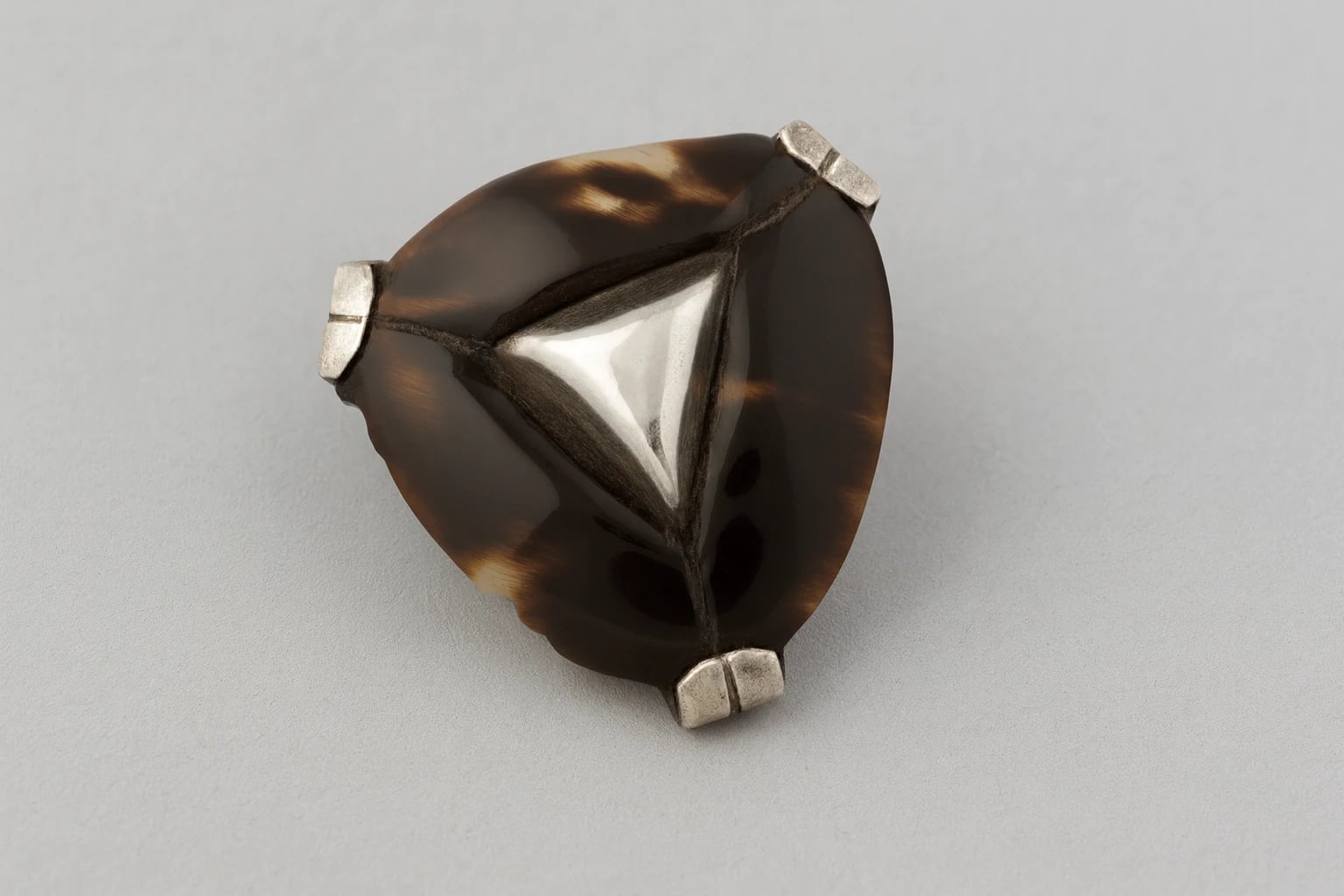
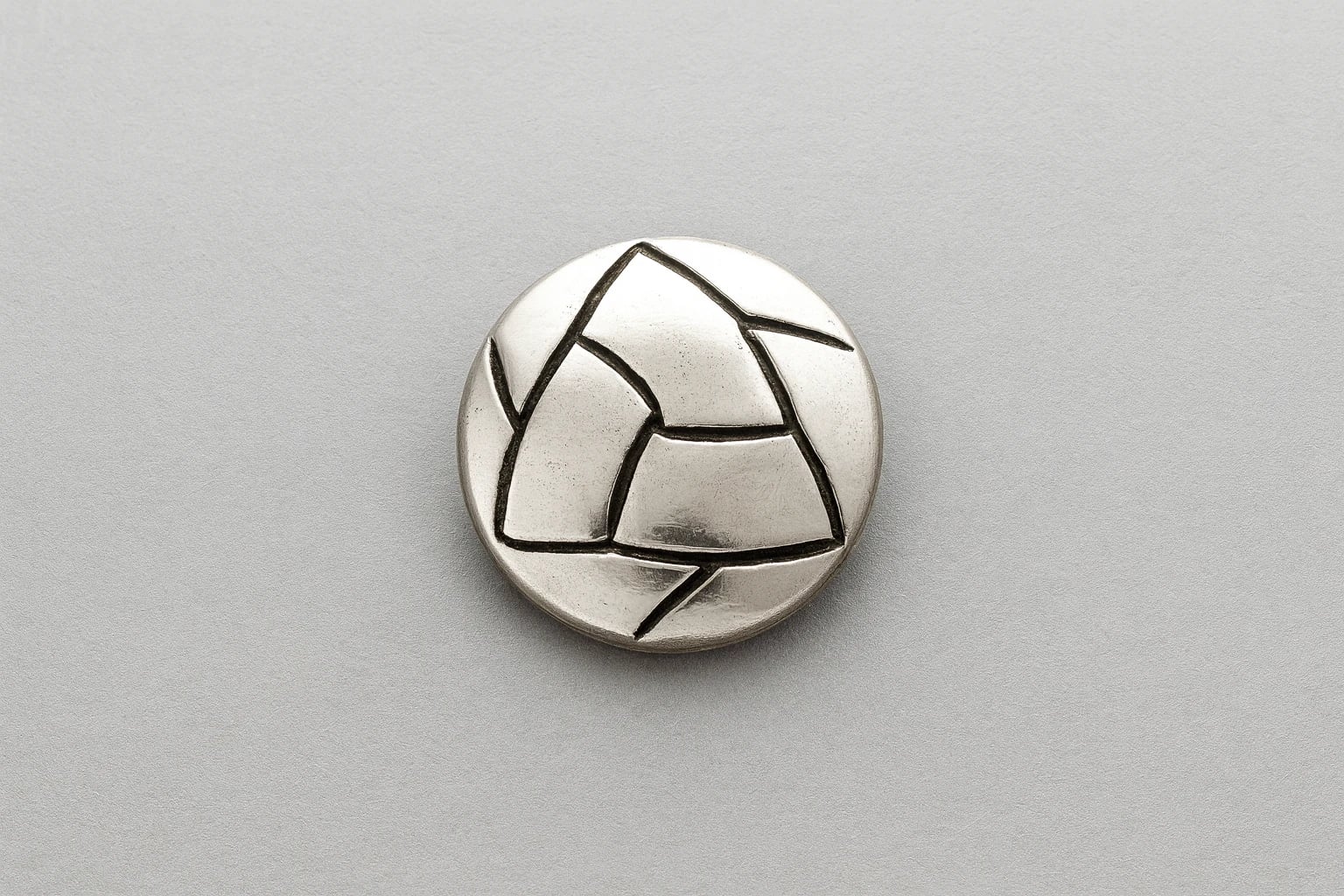
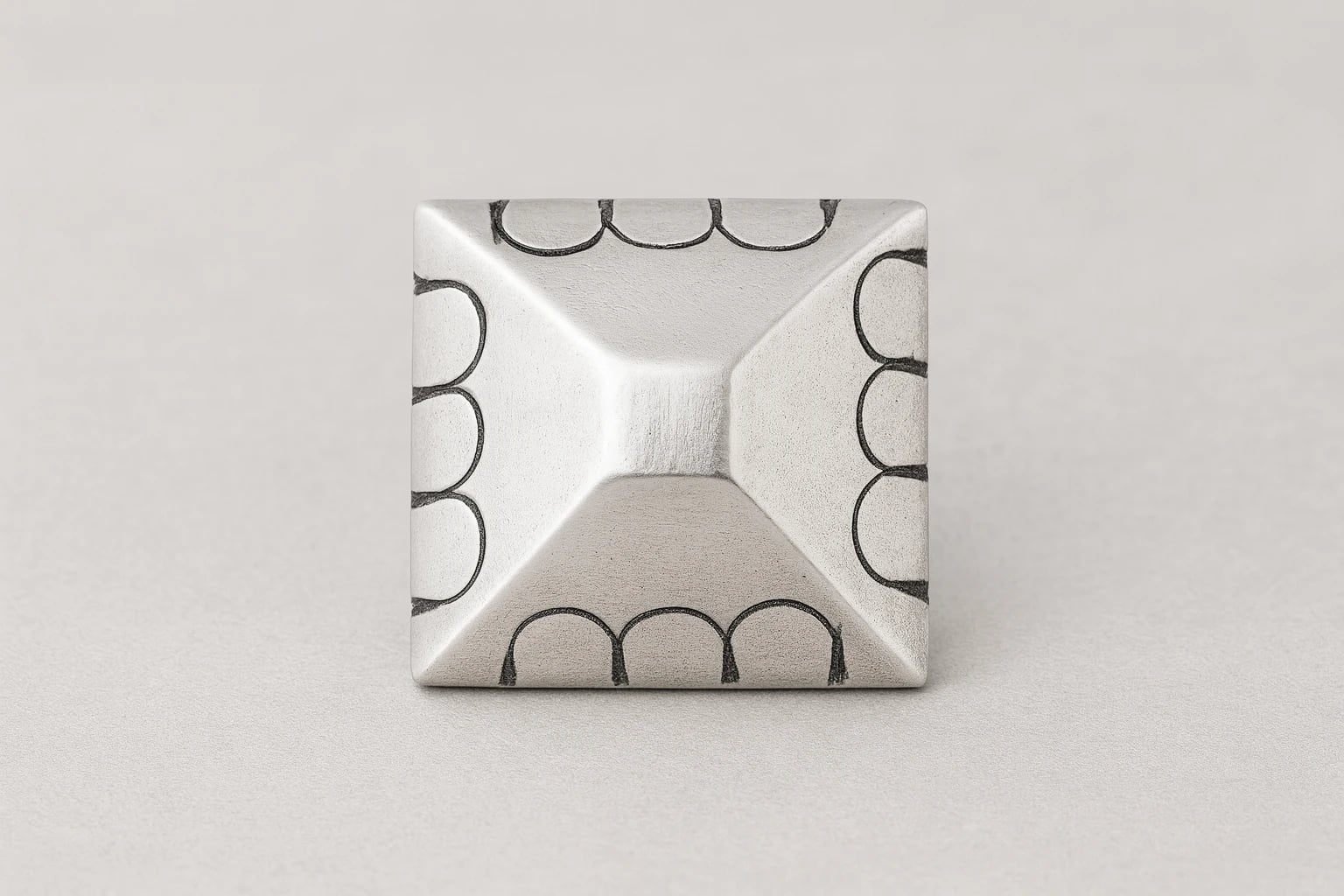
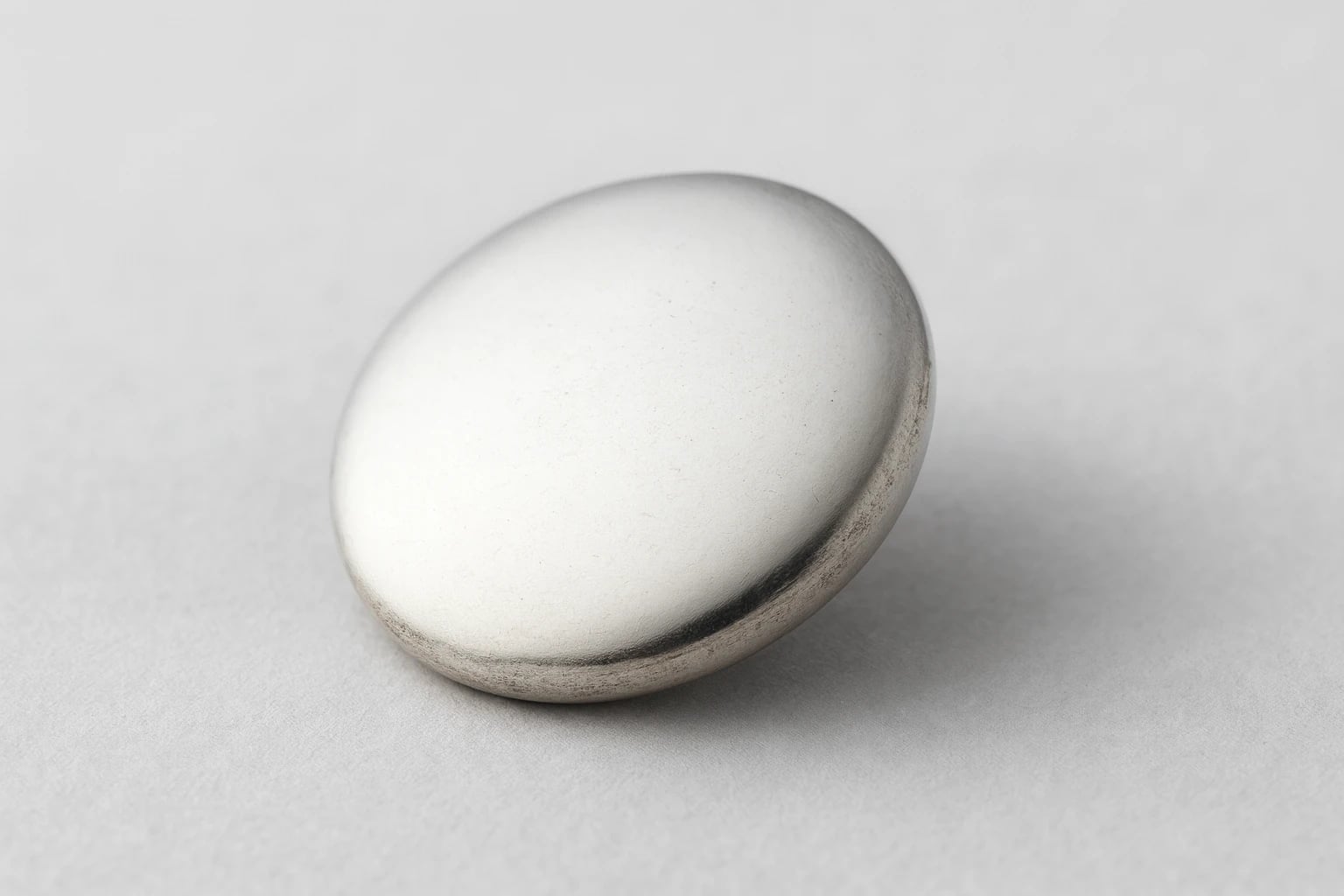
The button is the smallest complete design a workshop can make, and that is exactly why it tests a silversmith. There is no chain to distract the eye, no stone to carry the interest, no articulation to animate the form. A plain silver button asks the metal alone to hold attention through proportion, edge, and the behavior of light across a modest surface. In the Spratling workshop this humble object became a legitimate exercise in reduction, where the discipline that governed a major necklace was applied to something a person handled every day and fastened without thinking.
Silver rewards this kind of restraint in specific ways. A plain domed or flat face reads first as a reflective disc, gathering the color of whatever surrounds it, so the button changes as the wearer moves through light. The rim and the transition to the shank are where the design actually lives: a crisp edge holds a clean line of highlight, while a softened one lets the reflection dissolve. Wear tends to concentrate on the high points, and over years a plain button acquires a quiet patina in the recesses that the maker never applied but the design anticipated. Everything depends on how cleanly the form was finished, because there is nothing else to look at.
Buttons occupied a real place in Spratling's Taller de Las Delicias and in the broader Taxco renaissance it helped catalyze after 1931. Morrill's Silver Masters of Mexico records Spratling buttons carried across a range of the workshop's marks, in both 925 and 980 silver, and dates that production roughly between 1935 and 1955, which places these small objects within the workshop's most productive decades rather than at its margins. The button was also a training ground for the smiths Spratling formed. Rafael Dominguez, described in Morrill's Mexican Silver as one of Spratling's pupils "from the time he could lift a hammer," was singled out in a 1950 Taxco guidebook for making "especially attractive silver buttons," a reminder that in this community the button was understood as a serious small object and a measure of a maker's hand.
For a collection, a plain Spratling button records the workshop practicing its principles at the smallest possible scale. The larger jewelry demonstrates how Spratling controlled mass and rhythm across the body; the button demonstrates the same values compressed into an object that had to function, survive daily use, and still satisfy the eye when examined closely. Understanding the button clarifies what the whole workshop was doing, because a taller that could make reduction convincing on this scale had earned the ambition of its most demanding designs.
Museum of Mexican Silver. “Plain Silver Button.” Catalog no. MoMS-000074. https://museumofmexicansilver.com/pieces/spratling-109
See something wrong with this record? Suggest a correction and the piece details fill in automatically.
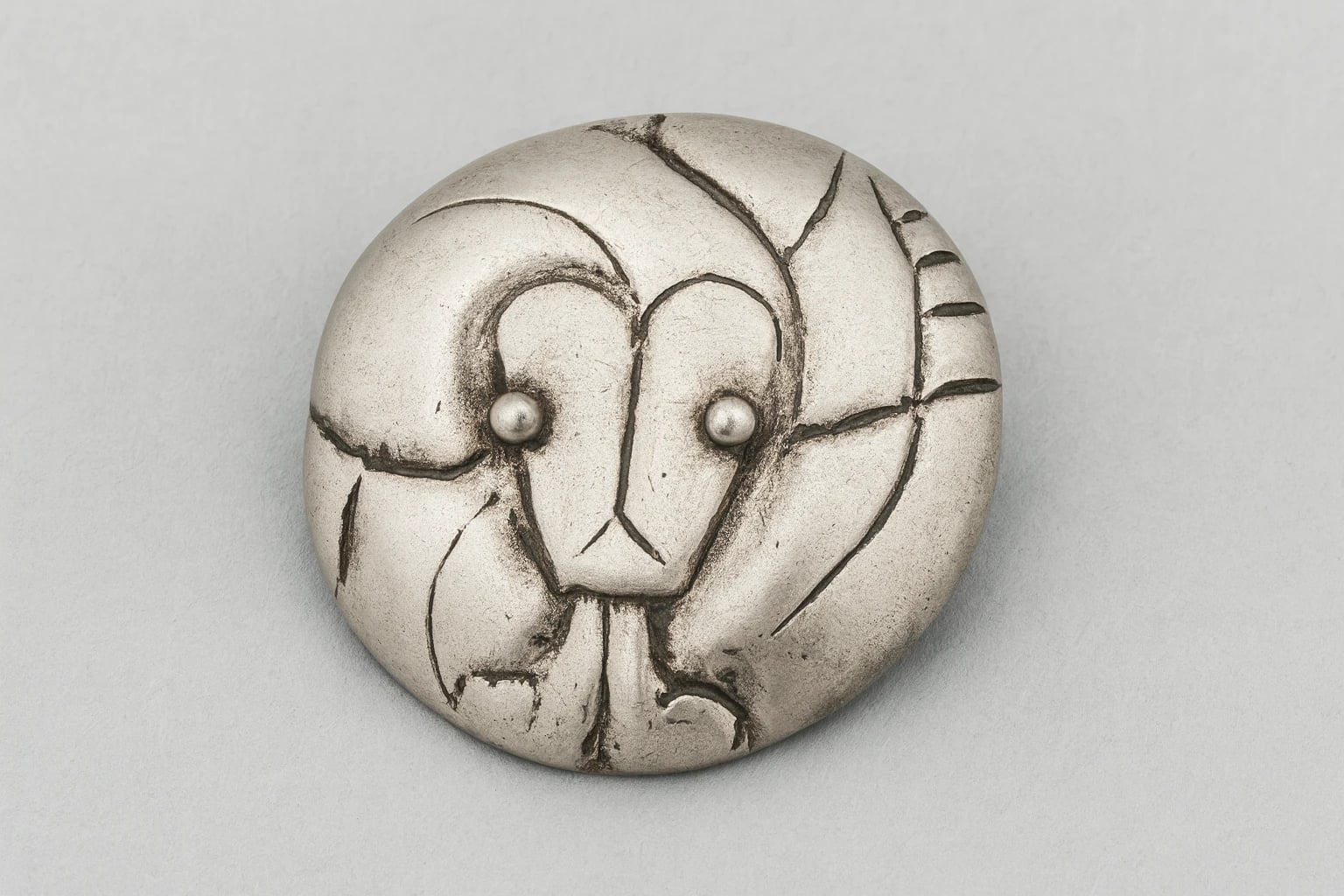
Serpent Head Button
Silver