Saves instantly, no account needed. Already a member? Sign in.
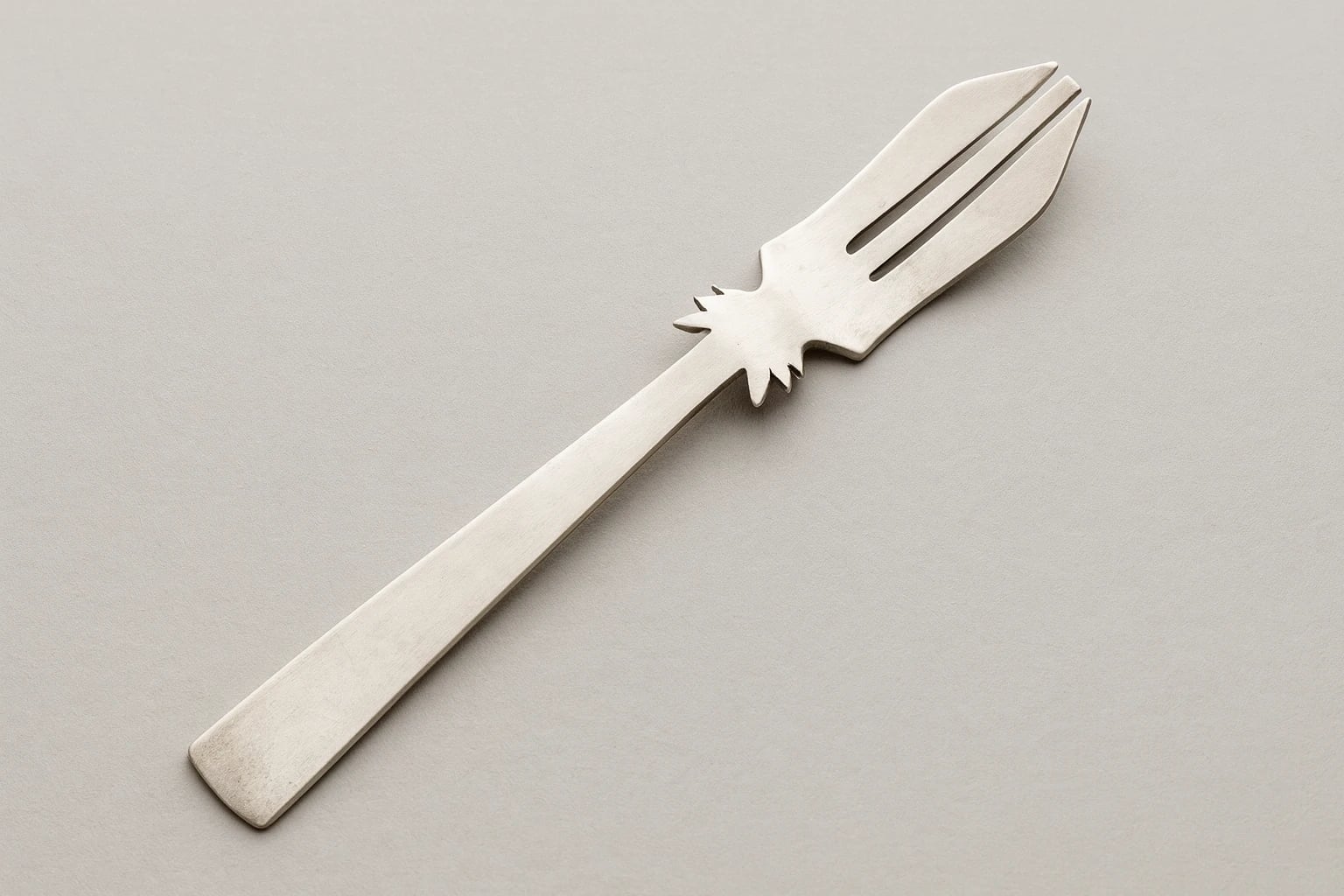
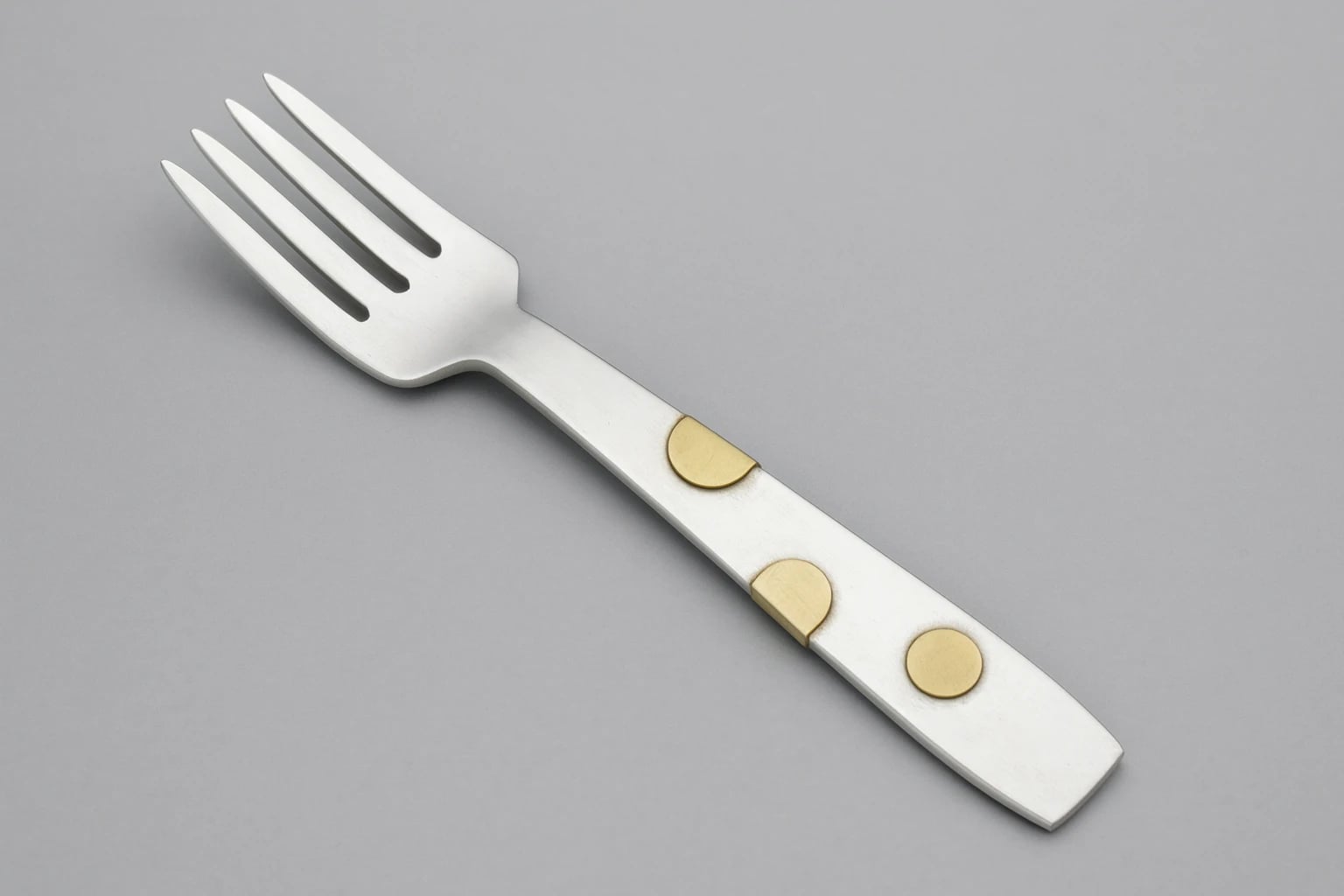
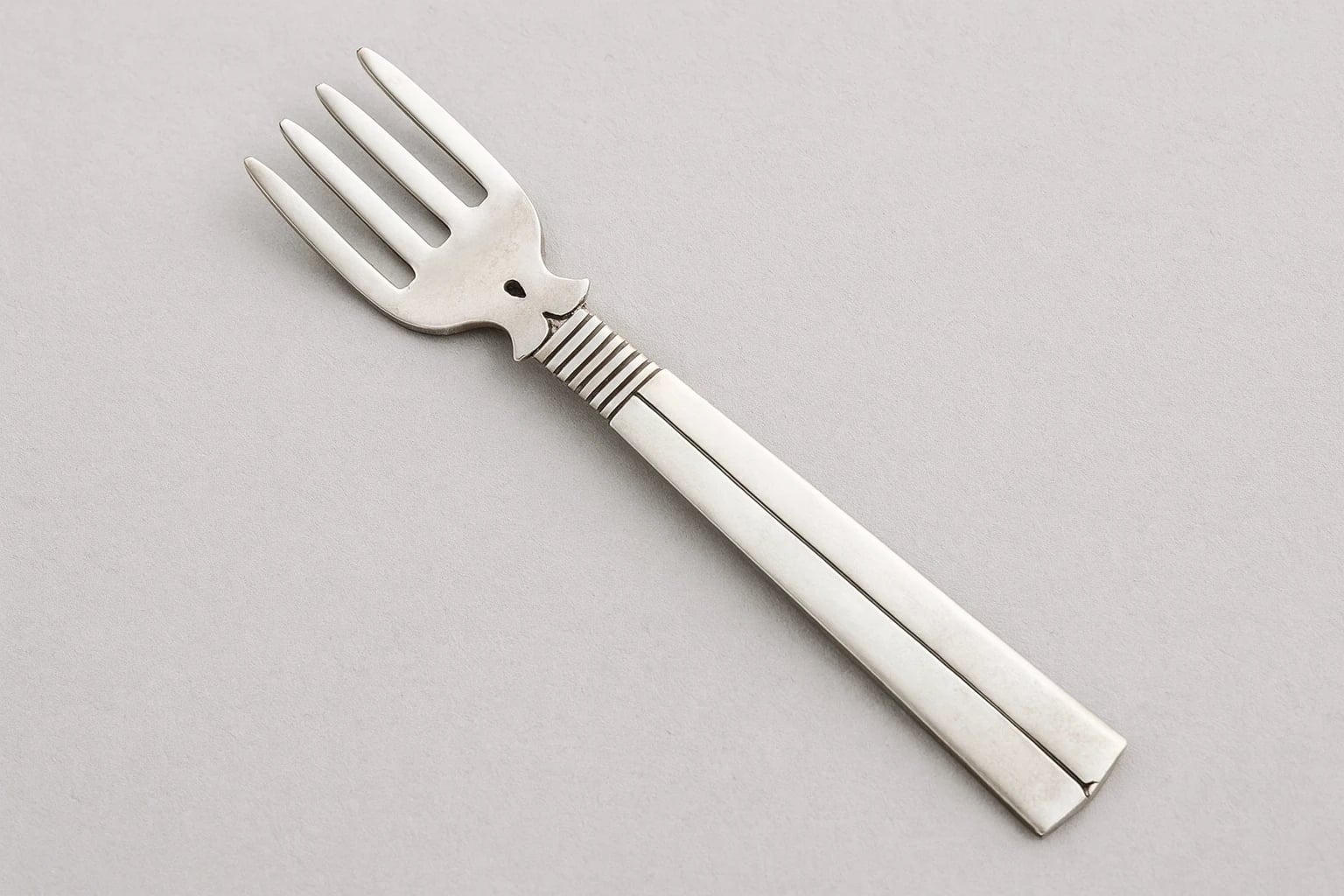
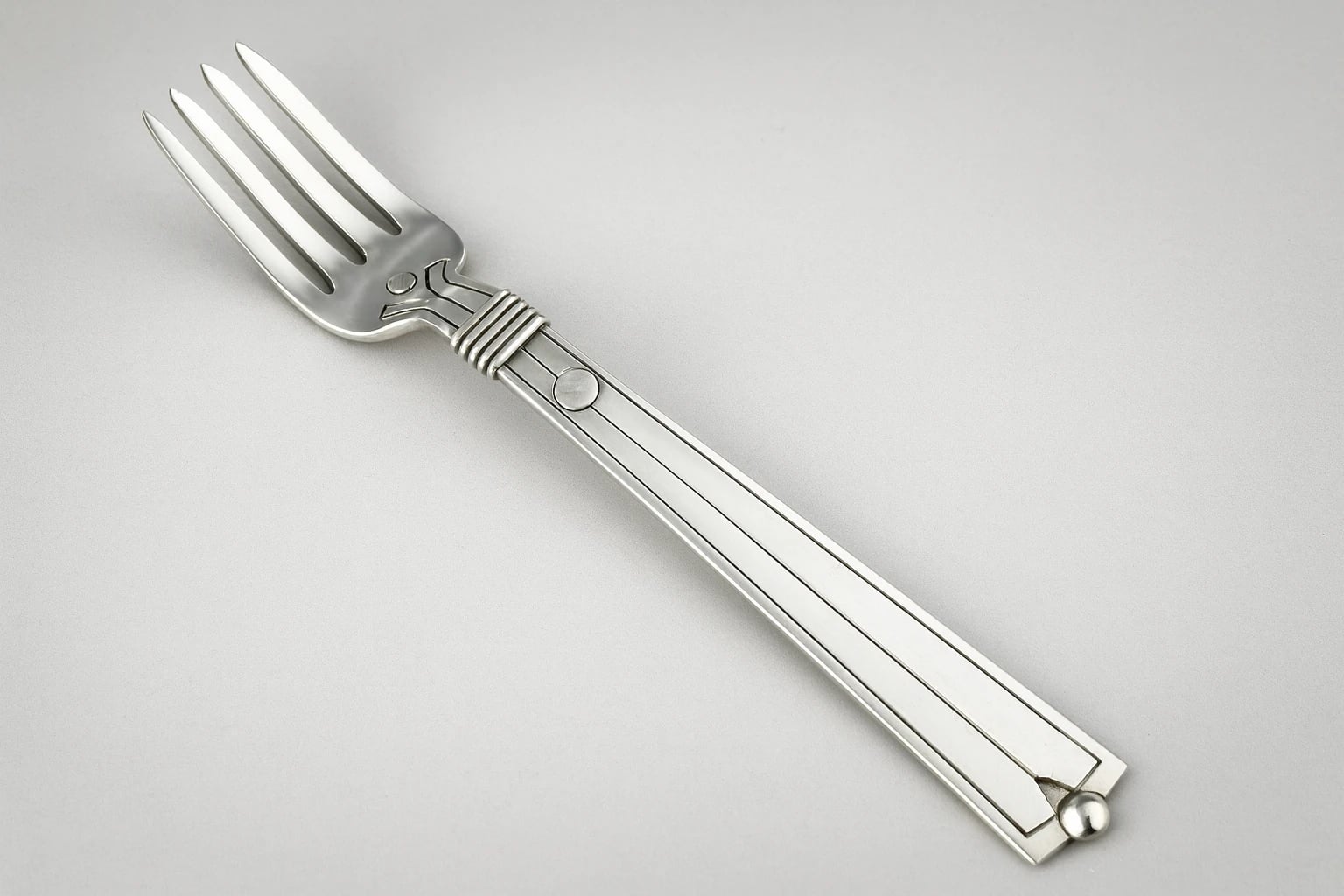
A child's fork is a small object that still carries a full design idea, and this pierced example shows Spratling's flatware vocabulary scaled down. The piercing keeps the piece light, and the same motif recurred across the studio's tablewares, used in bowls and even adapted by Conquistador for a plate the maker called "Buttons and Bows."
The design's longevity is part of its interest. It appears in the surviving catalogue record, the three-piece set listed at $16 in the 1958-59 catalog and $17.60 in 1967, and the design has since been reissued. That a children's pattern carried forward this way speaks to how completely Spratling's flatware designs were treated as a permanent repertoire.
Spratling's flatware was hand-wrought throughout, and after his death the Sucesores de William Spratling continued to produce his designs by techniques little changed in fifty years (Morrill, p. 251). A reissued pattern sits squarely within that tradition of continuity.
The fork is recorded in Spratling Silver, in Littleton's The Color of Silver, and in Goddard's Spratling Silver: A Field Guide, an unusually full documentary footprint for so modest an object.
Museum of Mexican Silver. “Pierced Child's Fork.” Catalog no. MoMS-000659. https://museumofmexicansilver.com/pieces/spratling-213
See something wrong with this record? Suggest a correction and the piece details fill in automatically.
Amarres Child's Fork
First Design Period: 1931 - 1946
Silver