Saves instantly, no account needed. Already a member? Sign in.
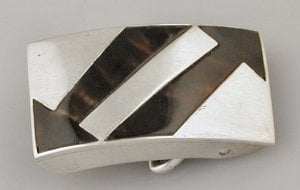
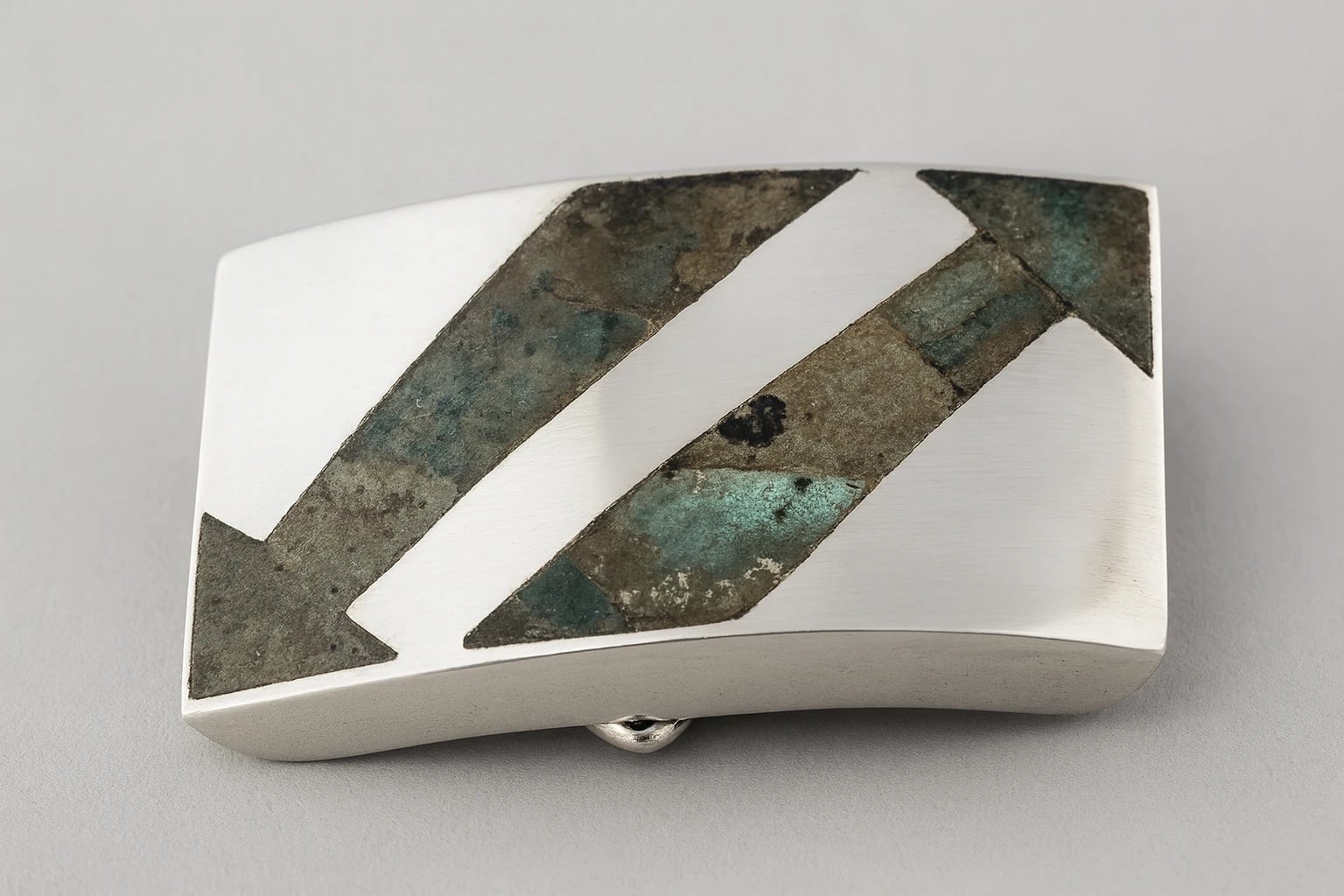
Two arrows inlaid in azur-malachite run the length of this silver buckle, a Third Design Period (1951 to 1967) piece in which the inlay does all the decorative work against a plain ground. The arrow is not a generic ornament here. The motif traces to the prototype buckles Spratling developed out of his Alaskan work, and the same design was issued with tortoise shell arrows as an alternative material.
Spratling's connection to Alaska was real and documented. In 1945 he traveled there at the request of the U.S. Arts and Crafts Board to devise a plan for a native crafts industry, and the training of Alaskan smiths in Taxco followed in 1949 (Morrill, Mexican Silver, 1994, pp. 28, 62). The arrow buckles read as an echo of that episode, with a northern, almost graphic motif translated into the inlay technique his workshop had refined.
The banded green-and-blue of azur-malachite gives the arrows their color and contrast, set flush into the silver so the surface reads as a single plane. This is consistent with the textural interplay Morrill describes in Spratling's 1950s work, where the emphasis falls on the contrast of silver against a colored inset material (Morrill, p. 73).
The piece is recorded in Phyllis M. Goddard's Spratling Silver: A Field Guide. With its documented Alaskan lineage and its alternate tortoise-shell version, it sits within a recognizable family of Third Period buckles rather than as a one-off, which is part of what makes it useful to collectors tracing Spratling's design evolution.
Museum of Mexican Silver. “Buckle with Two Inset Azur-Malachite Arrows.” Catalog no. MoMS-000521. https://museumofmexicansilver.com/pieces/spratling-3092
See something wrong with this record? Suggest a correction and the piece details fill in automatically.
William Spratling
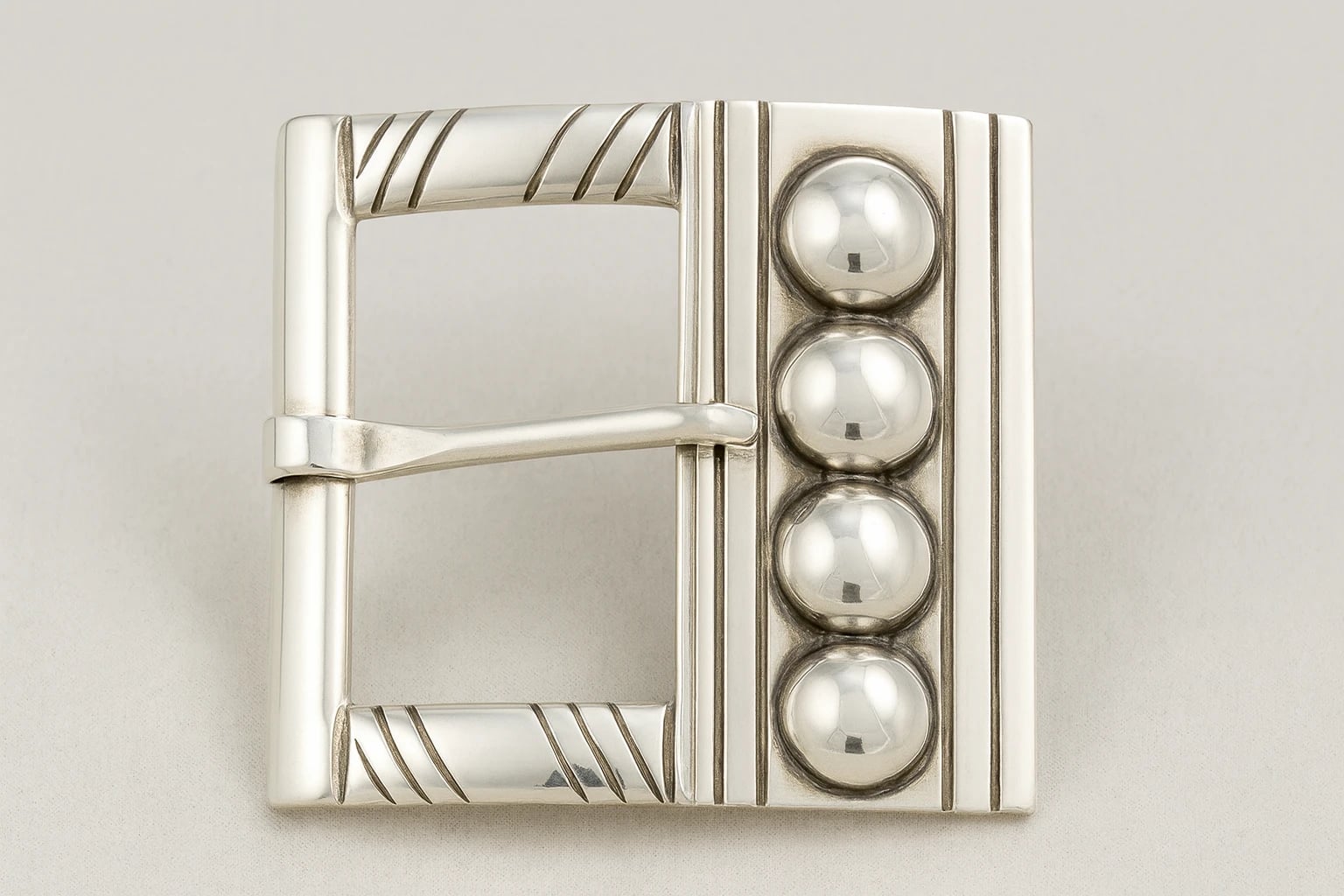
Four Ball Buckle
First Design Period: 1931 - 1946
Silver