Saves instantly, no account needed. Already a member? Sign in.
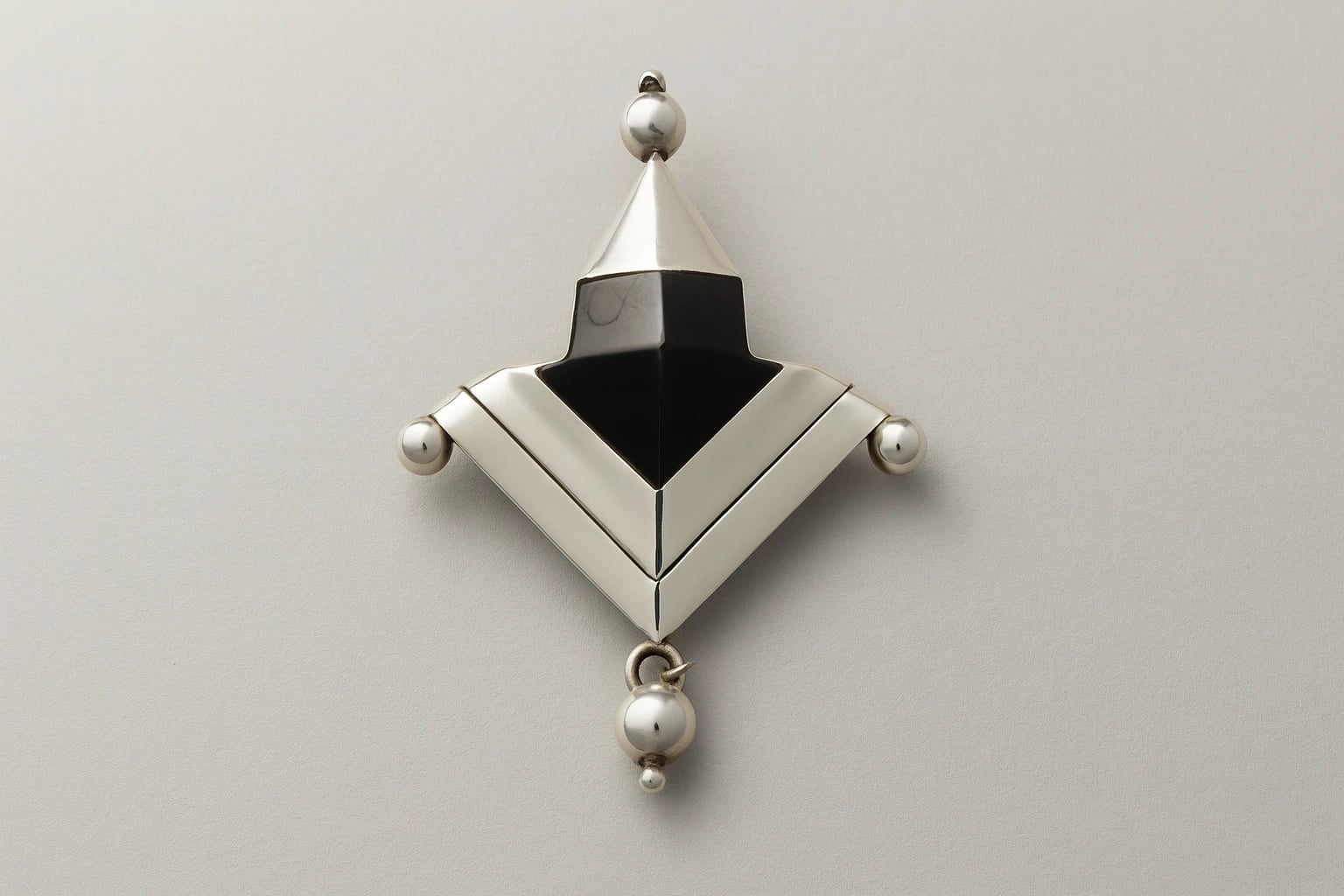
Spratling's early wholesale catalogs name this Art Deco brooch the "faceted obsidian arrow," and the faceting is the whole point: cut to throw light, the obsidian dramatically emphasizes the linear thrust of the arrow form. The arrow motif went on to a long life in Spratling's work, used extensively through the 1950s across necklaces, bracelets, earrings, and pins. A closely related design survives in Spratling's own "Folio of Drawings," and the brooch is recorded in Morrill's "William Spratling and the Mexican Silver Renaissance" and Goddard's field guide.
The arrow's clean geometry sits in the Deco idiom that ran alongside Spratling's pre-Columbian work, the faceted obsidian doing the expressive work that a stone might do elsewhere through color.
Obsidian was among the native Mexican materials Spratling drew on from his earliest years, and faceting it to catch light is a refined use of that local stone.
With a surviving drawing, an original catalog name, and a place in two references, the faceted obsidian arrow is a well-documented example of how Spratling developed a single motif into a sustained design family. The design has been reissued.
Museum of Mexican Silver. “Faceted Obsidian Arrow Brooch.” Catalog no. MoMS-000698. https://museumofmexicansilver.com/pieces/spratling-327
See something wrong with this record? Suggest a correction and the piece details fill in automatically.
William Spratling
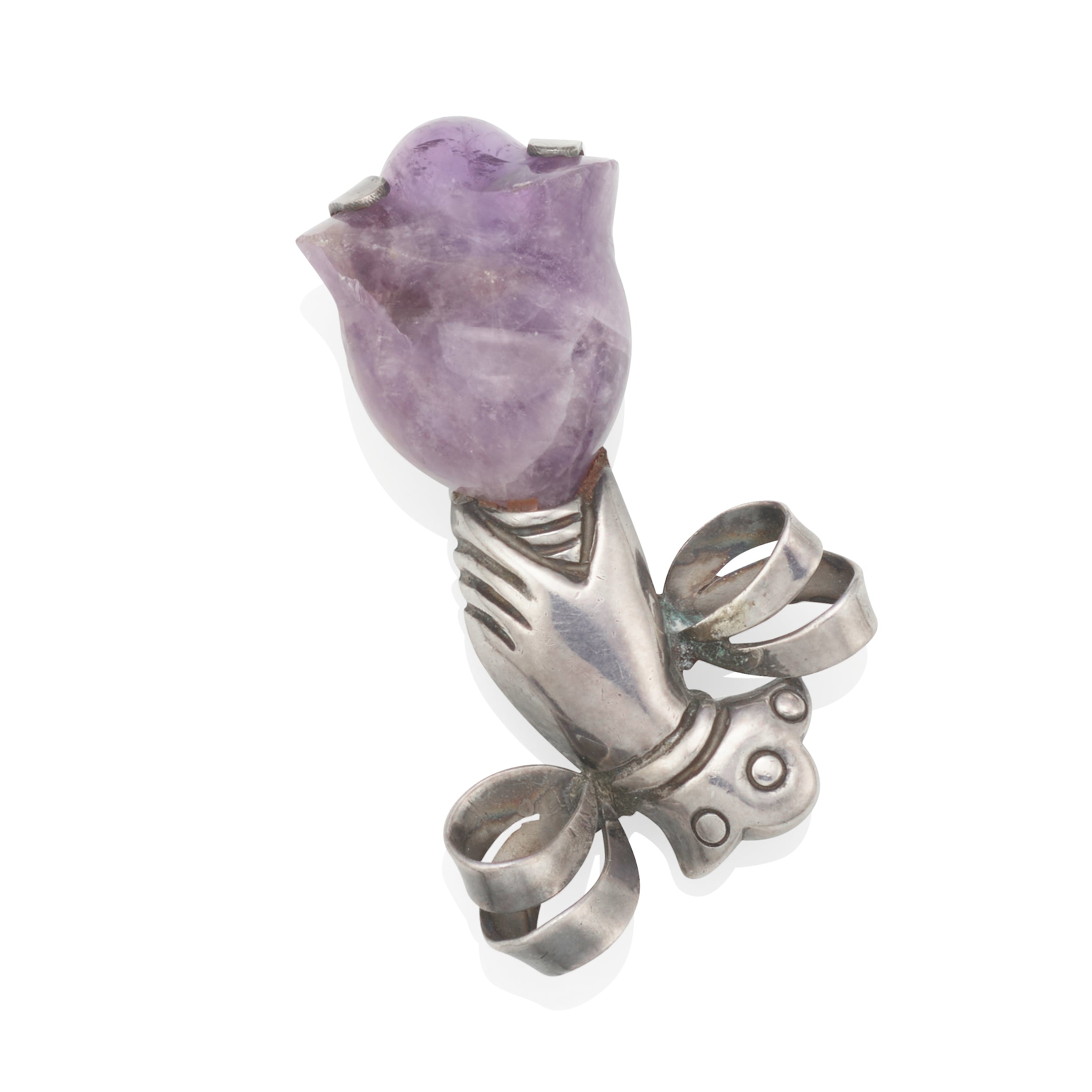
Amethyst Tulip Brooch
First Design Period: 1931 - 1946
Silver