Saves instantly, no account needed. Already a member? Sign in.
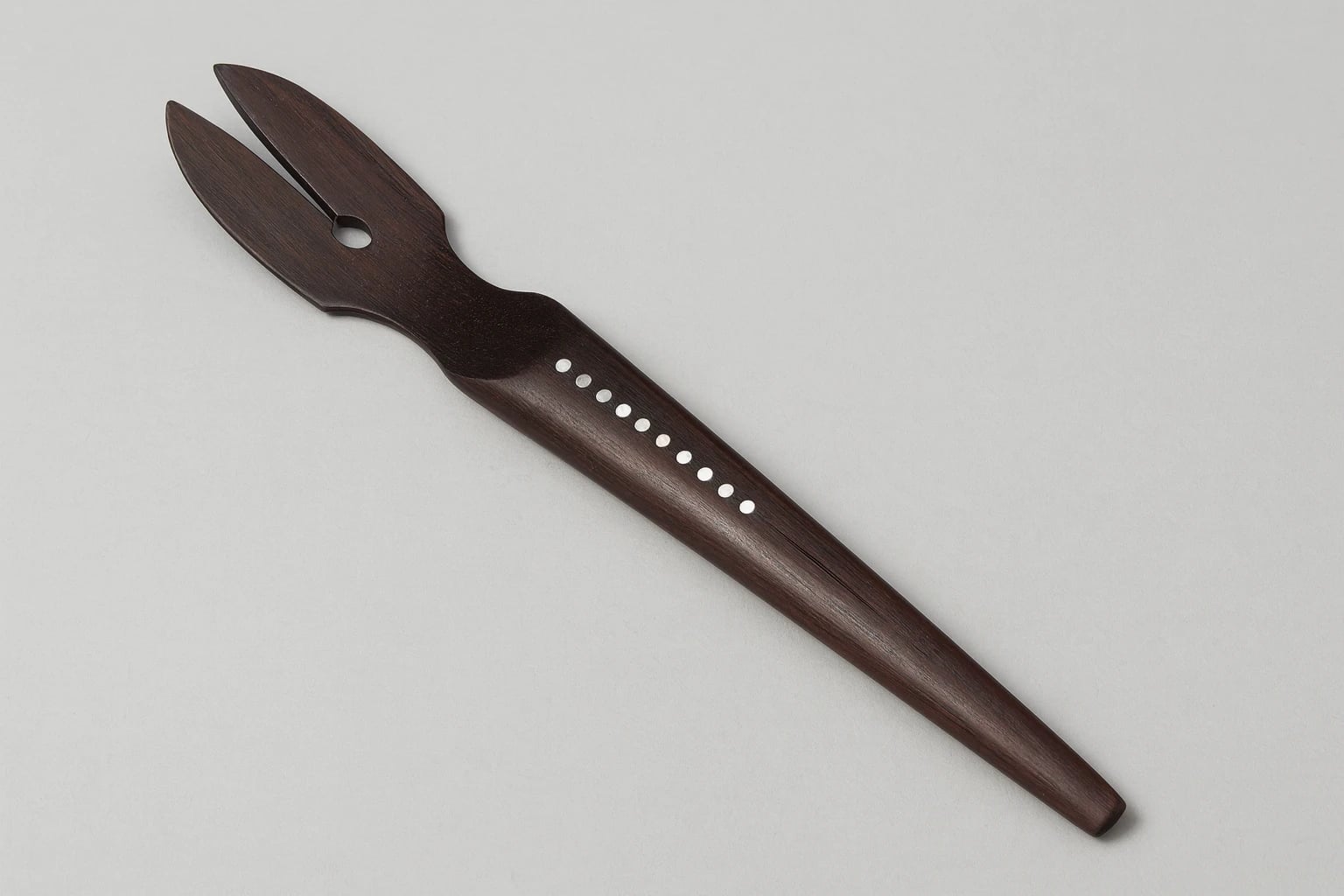
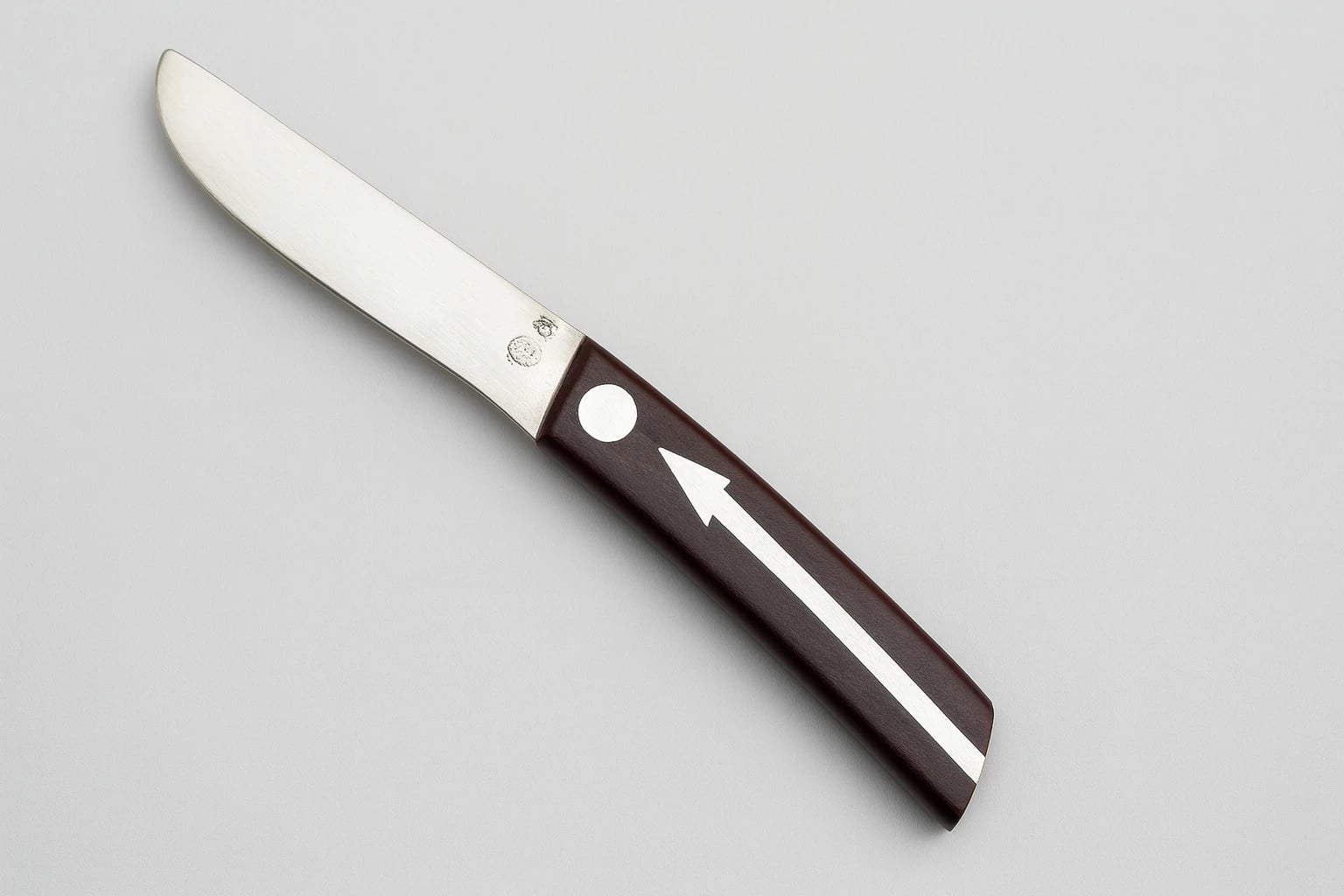
An ebony handle set with a silver carving fork translates the aesthetic seriousness of Spratling's jewelry and hollowware into the utilitarian language of the table. The pairing of a dark, close-grained tropical wood with silver was one of Spratling's recurring material strategies, and its appearance on a carving fork extends that idea to an object meant to be gripped, used, and passed across a dinner table. Where silver flatware in the North American and European tradition often relied on ornament cast or engraved into the metal, this design lets the two materials remain distinct, the wood carrying the hand and the silver carrying the working tines.
The contrast depends on the relationship between opacity and reflectivity. Ebony reads as solid, matte, and warm to the grip, while the silver tines catch and return light along their length. In a carving set the fork must anchor the roast while the knife cuts, so the handle length and the balance between the weighted wood and the lighter metal are functional as well as visual decisions. Spratling frequently used wood not as a cost-saving substitute for silver but as a deliberate second material, and here the ebony gives the fork a center of gravity in the hand while keeping the silver reserved for the part that does the work.
The design belongs to Spratling's tableware production of the mid-century decades, when the Taxco workshop was supplying not only jewelry but complete domestic objects to an international market. A 1961 Spratling catalog lists the carving set at a wholesale price of thirty dollars, which places it within the workshop's regular commercial output rather than among unique commissions. That catalog presence, together with the fact that the design has been reissued, indicates a pattern that the workshop considered durable enough to keep in production. Spratling's marks moved through many forms across these years, from the early Taxco and 925 stacks of the 1930s to the round William Spratling and Taxco Mexico legends carrying eagle 30 that were in use across the 1950s and 1960s, and later revival marks after 1979. Dating any individual example of this fork therefore depends on its specific mark rather than on the design itself, since a long-lived pattern could be fabricated across more than one period.
The set appears in Cederwall and Riney's Spratling Silver, which documents the range of Spratling's silver production beyond jewelry. As a museum object the carving fork records how the Taxco workshop applied a consistent material vocabulary across categories, treating a serving implement with the same attention to the meeting of wood and silver that shaped its more celebrated pieces. It shows the domestic and commercial reach of Spratling's design program at a moment when Mexican silver was entering dining rooms far beyond Taxco.
Museum of Mexican Silver. “Ebony and Silver Carving Fork.” Catalog no. MoMS-000649. https://museumofmexicansilver.com/pieces/spratling-742
See something wrong with this record? Suggest a correction and the piece details fill in automatically.
Rosewood