Saves instantly, no account needed. Already a member? Sign in.
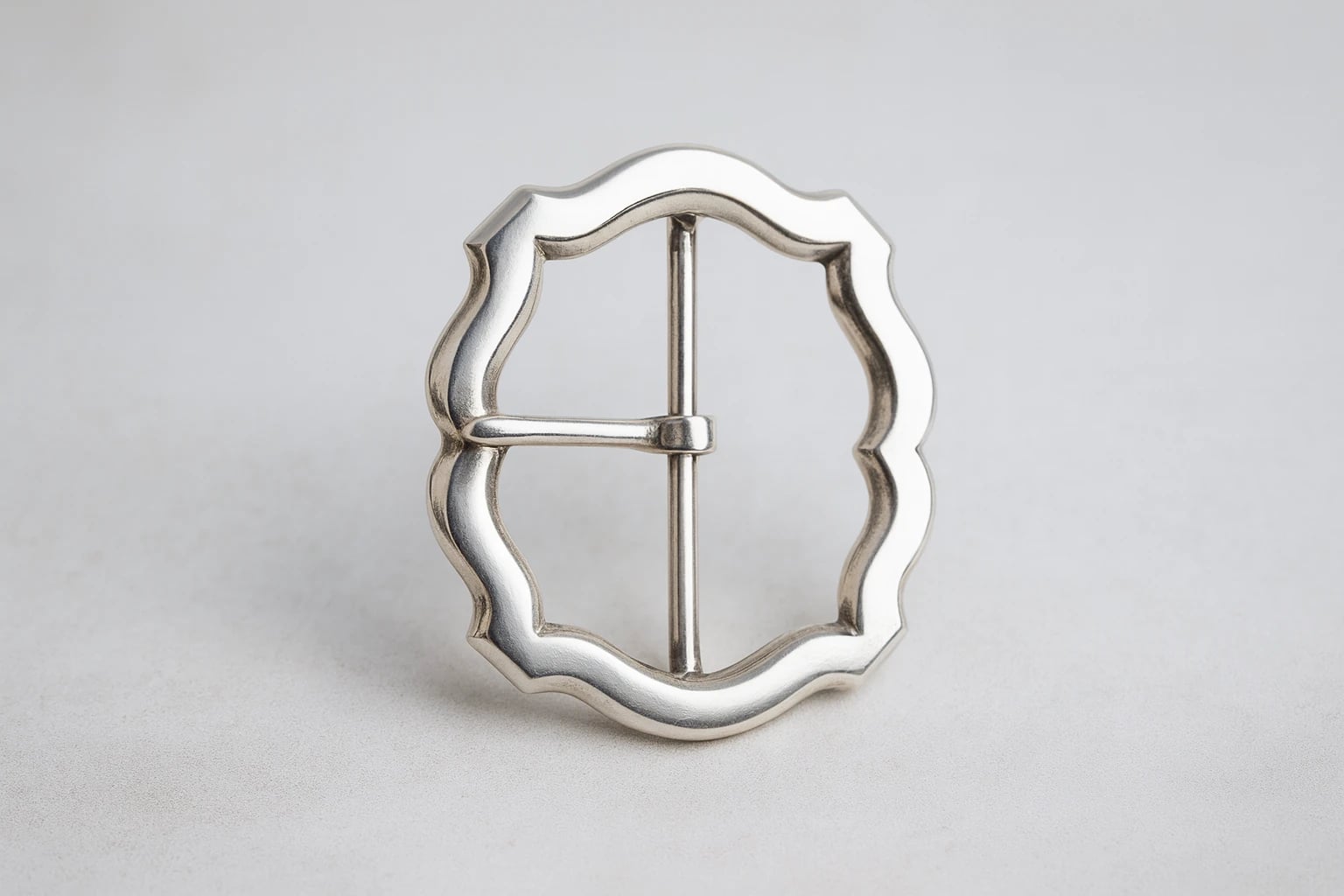
A pair of crescents set back to back gives this belt buckle its structure and its name. William Spratling called the design "double half moons," and the two curved forms read at once as opposed and joined, their inner edges facing while the outer arcs frame the space the belt passes through. The silver is worked in a heavy gauge, and the buckle's authority comes from the weight and simplicity of those two shapes rather than from surface ornament. It is a design that resolves a functional object into two clean geometric gestures.
The half moon was among the forms Spratling returned to across his production. The earliest objects from his Taller de Las Delicias included, as Morrill records, simple half-dome earrings and heavy silver belt buckles, and the crescent belongs to that vocabulary of reduced, weighty shapes cut and polished from substantial silver. Here the two crescents establish a rhythm through repetition and reversal: the eye moves along one arc, crosses the central opening, and follows the second. Where much of Spratling's jewelry drew on Aztec seals or colonial cord and saddle motifs, this buckle carries no borrowed iconography. Its interest lies in the relation between the two curves and the negative space they enclose, a modernist economy achieved with a form as old as the moon itself.
Spratling assigned this design to his second design period. The wholesale price recorded for 1957, four dollars and nineteen cents, situates it within the workshop's steady commercial production, an object made to be sold in quantity over roughly a decade of manufacture rather than as a singular commission. That commercial life is part of its meaning. The taller system that Spratling helped organize in Taxco allowed a design to be conceived once and executed repeatedly by skilled smiths, and a buckle at this price point reached buyers who might never have owned a major necklace or bracelet. Its ten years of production indicate a form that held its appeal, one of the practical objects through which Spratling's design sensibility circulated widely.
Spratling stands among the generation of Taxco designers that Stromberg names alongside Antonio Pineda, Héctor Aguilar, the Castillo brothers, and others who built the workshops of the Silver Age. Within that context the "double half moons" buckle documents a quieter register of the school's achievement: not the ambitious sculptural jewelry for which Taxco is often remembered, but the disciplined design of everyday silver, where a useful object was reduced to two shapes and made to hold together through balance alone. It records how thoroughly modernist restraint entered even the most ordinary categories of the workshop's output.
Museum of Mexican Silver. “Double Half Moons Buckle.” Catalog no. MoMS-000584. https://museumofmexicansilver.com/pieces/spratling-969
See something wrong with this record? Suggest a correction and the piece details fill in automatically.
William Spratling
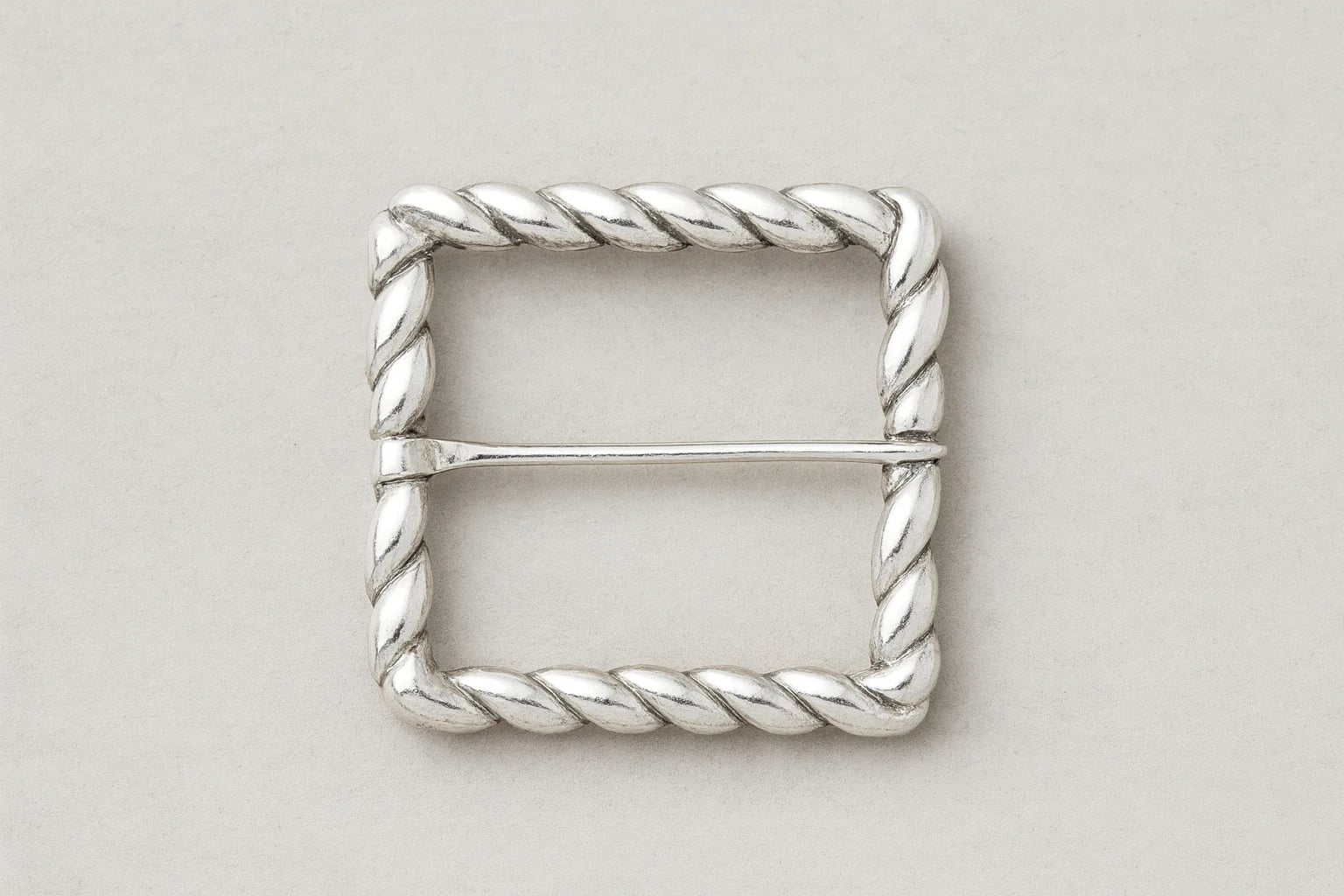
Belt Buckle of Twisted Silver Cord
First Design Period: 1931 - 1946
Silver