Saves instantly, no account needed. Already a member? Sign in.
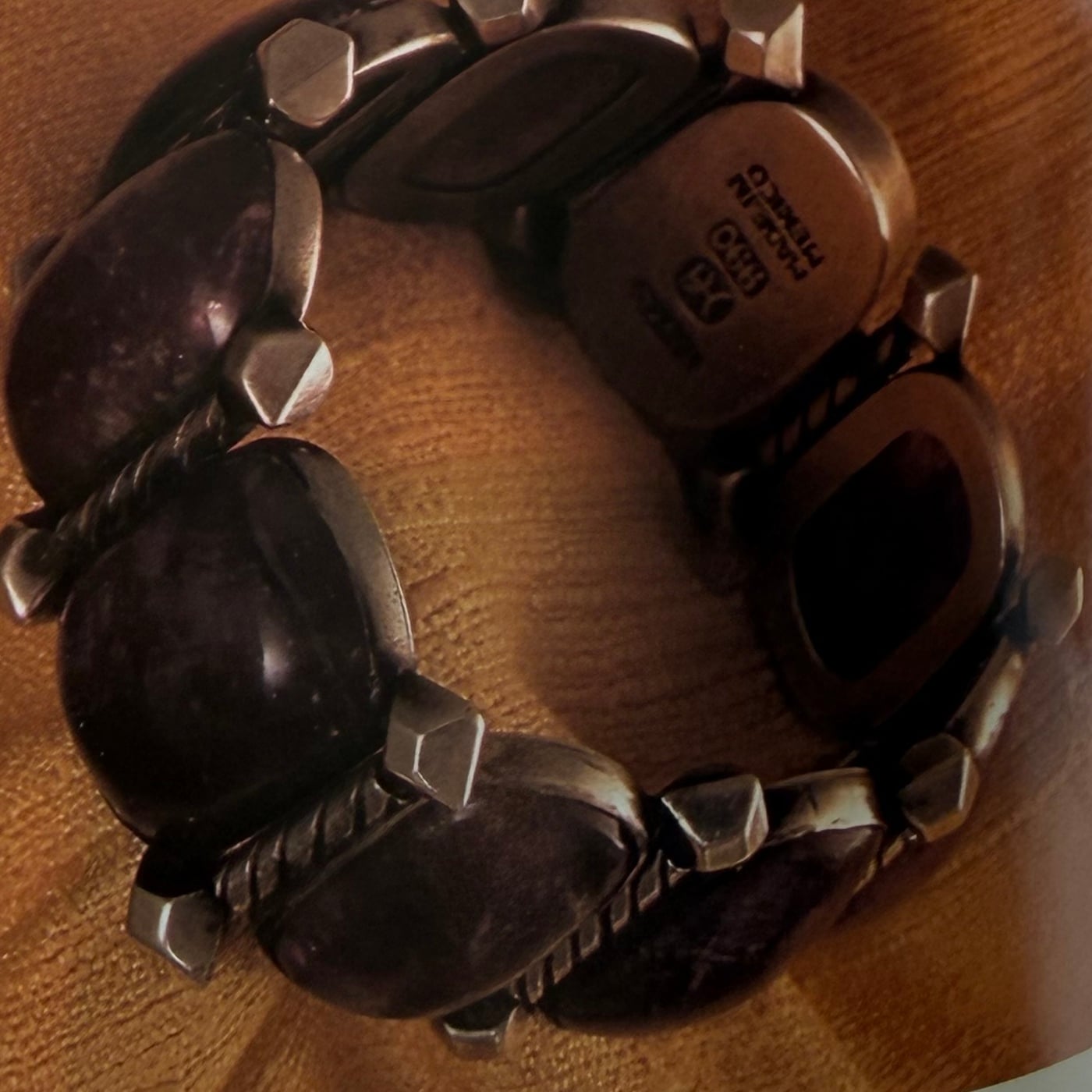
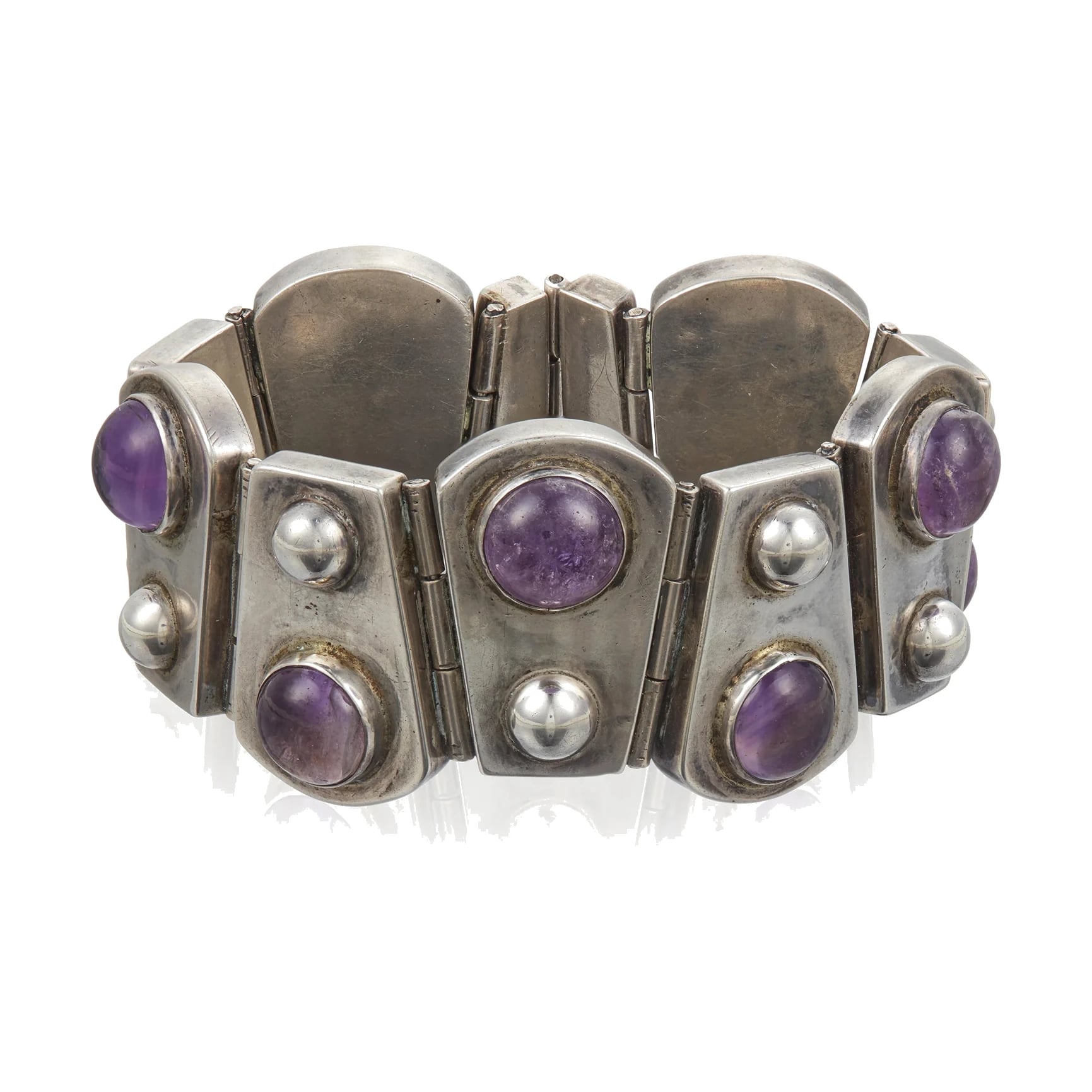
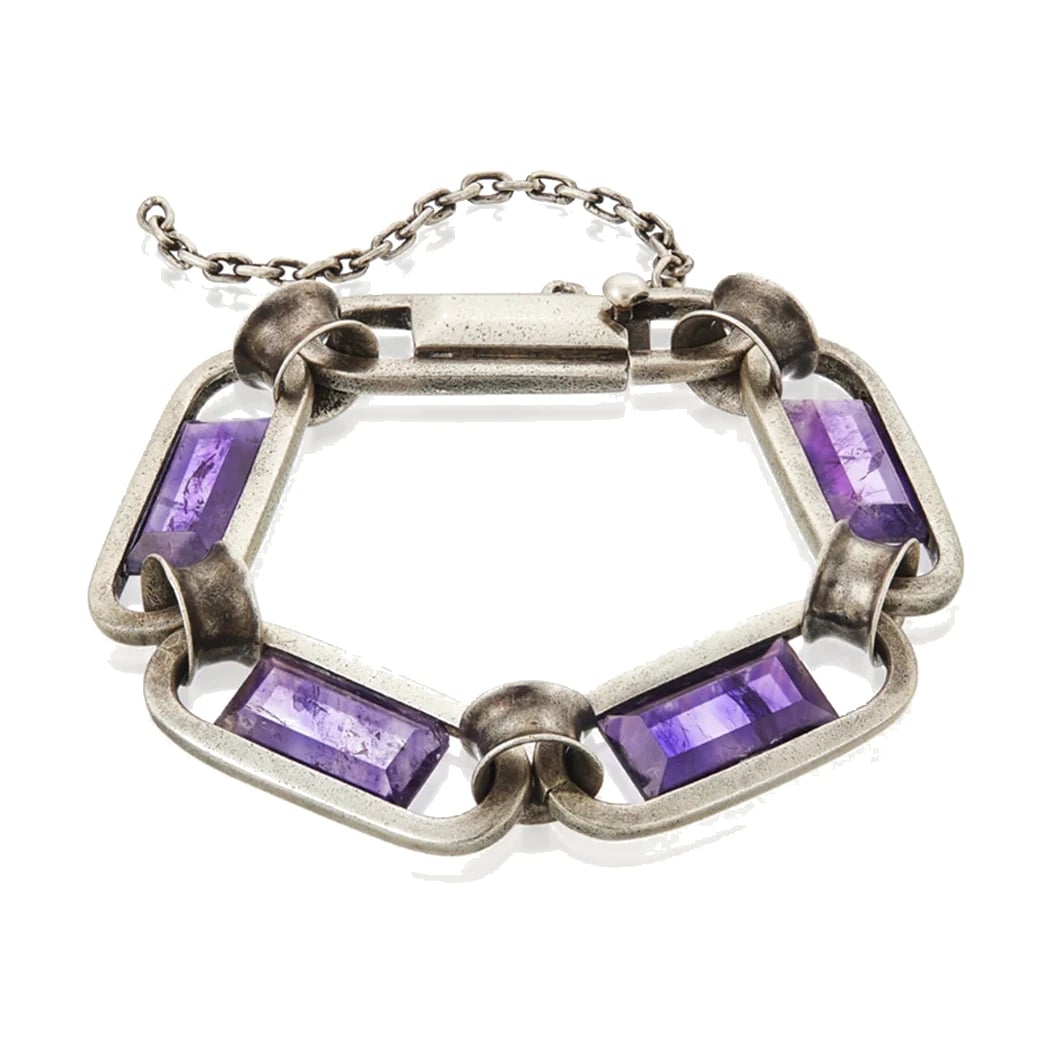
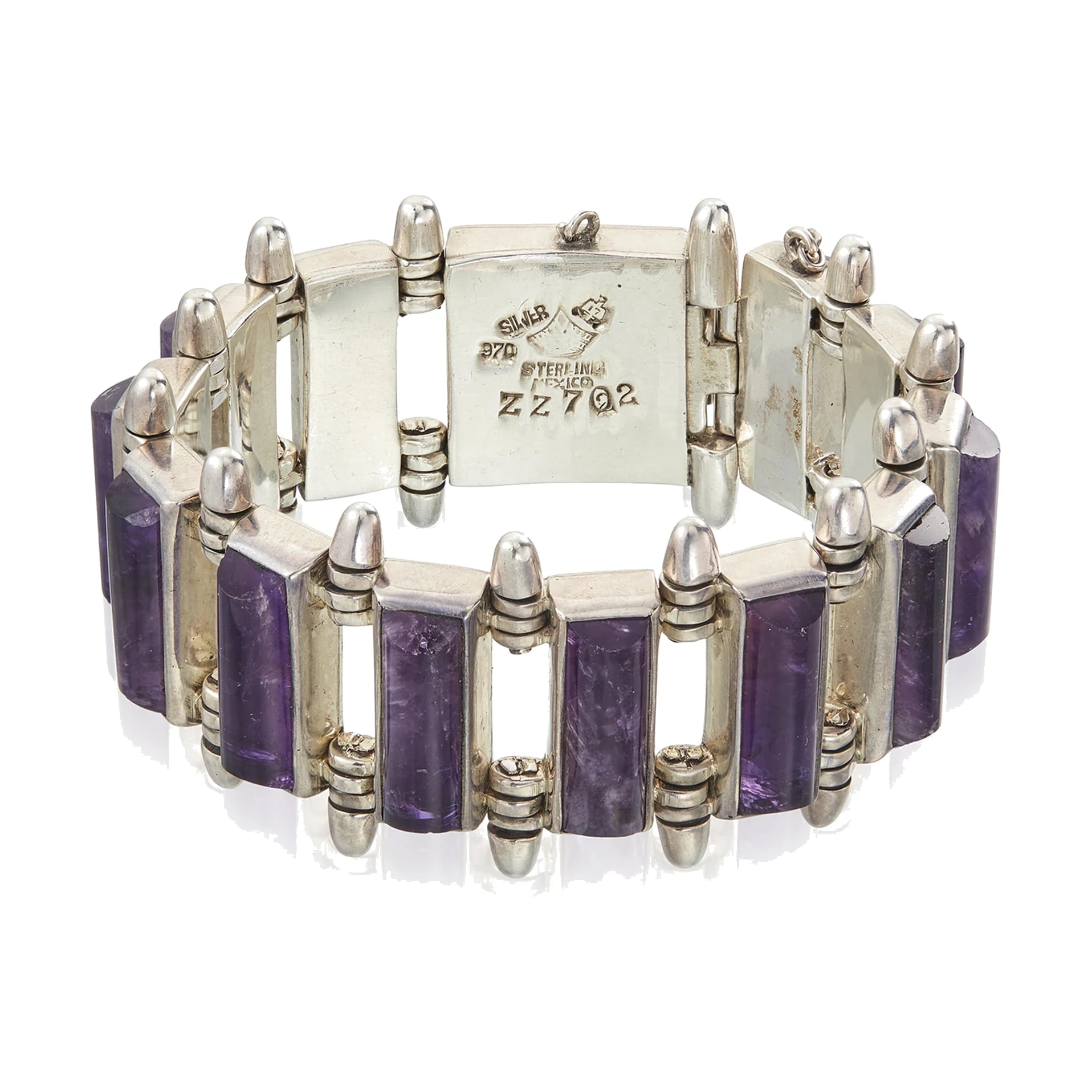
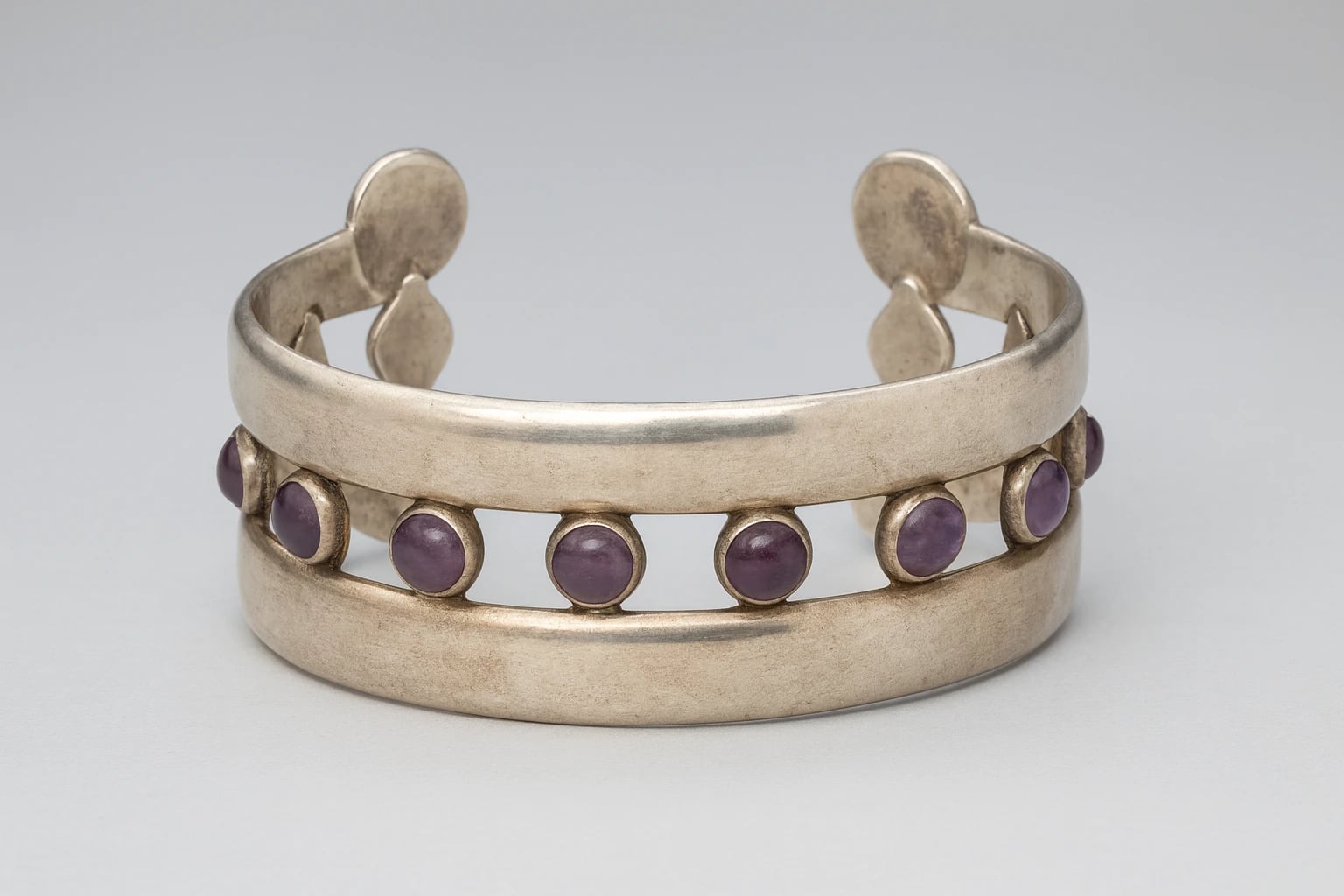
A row of amethyst cabochons set into a repeating sequence of silver rods and spheres organizes this bracelet around structure rather than surface decoration. The stones do not sit on top of the silver as applied ornament. They occupy their place within the interval, alternating with the machined regularity of the rod-and-sphere links so that color and metal share the work of holding the form together. This is the kind of gemstone setting that distinguishes the more resolved Aguilar bracelets: the amethyst carries light and violet color, but the silver geometry remains the governing idea.
The rod-and-sphere segment is a characteristic device in Héctor Aguilar's vocabulary, a way of building an articulated band from simple turned and joined elements. Here the cabochons interrupt that rhythm at measured intervals, and the eye reads the bracelet as a sequence of alternating parts rather than a continuous surface. The rounded amethyst catches and softens the light that the polished spheres reflect more sharply, so the two materials divide the visual labor between warmth and shine. Aguilar produced amethyst-set bracelets in several formats through the early to mid 1940s, and Morrill records related examples in square, rounded, and tubular-hinge variants dated approximately to that decade. The present bracelet belongs to that family of experiments in setting purple quartz within a strongly geometric silver frame.
Aguilar established his Taller Borda in Taxco in 1939, after years managing William Spratling's Taller de Las Delicias, and the workshop developed a formal language built on weight, clean joinery, and a preference for silver's structural presence over applied filigree or narrative motif. The rod-and-sphere construction reflects that orientation. It treats the bracelet as an assembly of discrete forged and turned parts, a logic closer to modern industrial design than to colonial or popular ornament, while the amethyst grounds the piece in the Mexican material tradition of locally available quartz. Morrill catalogs a substantial group of Aguilar amethyst bracelets from these years, which indicates that the combination of violet cabochon and disciplined silver framing was a sustained interest at Borda rather than an isolated trial.
Within a collection, the bracelet documents how a leading Taxco workshop integrated stones into structure at a moment when much tourist jewelry used them as loose decoration. The distinction is concrete and visible in the way the amethyst sits within the interval of the rod-and-sphere sequence, sharing the rhythm rather than merely dressing it. It records a specific and repeatable solution to the problem of setting color into a modern silver band, and it places Aguilar's Borda production alongside the broader effort of the Mexican silver renaissance to treat jewelry design with the seriousness of any other modern discipline.
Museum of Mexican Silver. “Amethyst and Silver Bracelet with Rod-and-Sphere Segments.” Catalog no. MoMS-001966. https://museumofmexicansilver.com/pieces/aguilar-amethyst-and-silver-bracelet-with-rod-and-sphere-21
See something wrong with this record? Suggest a correction and the piece details fill in automatically.
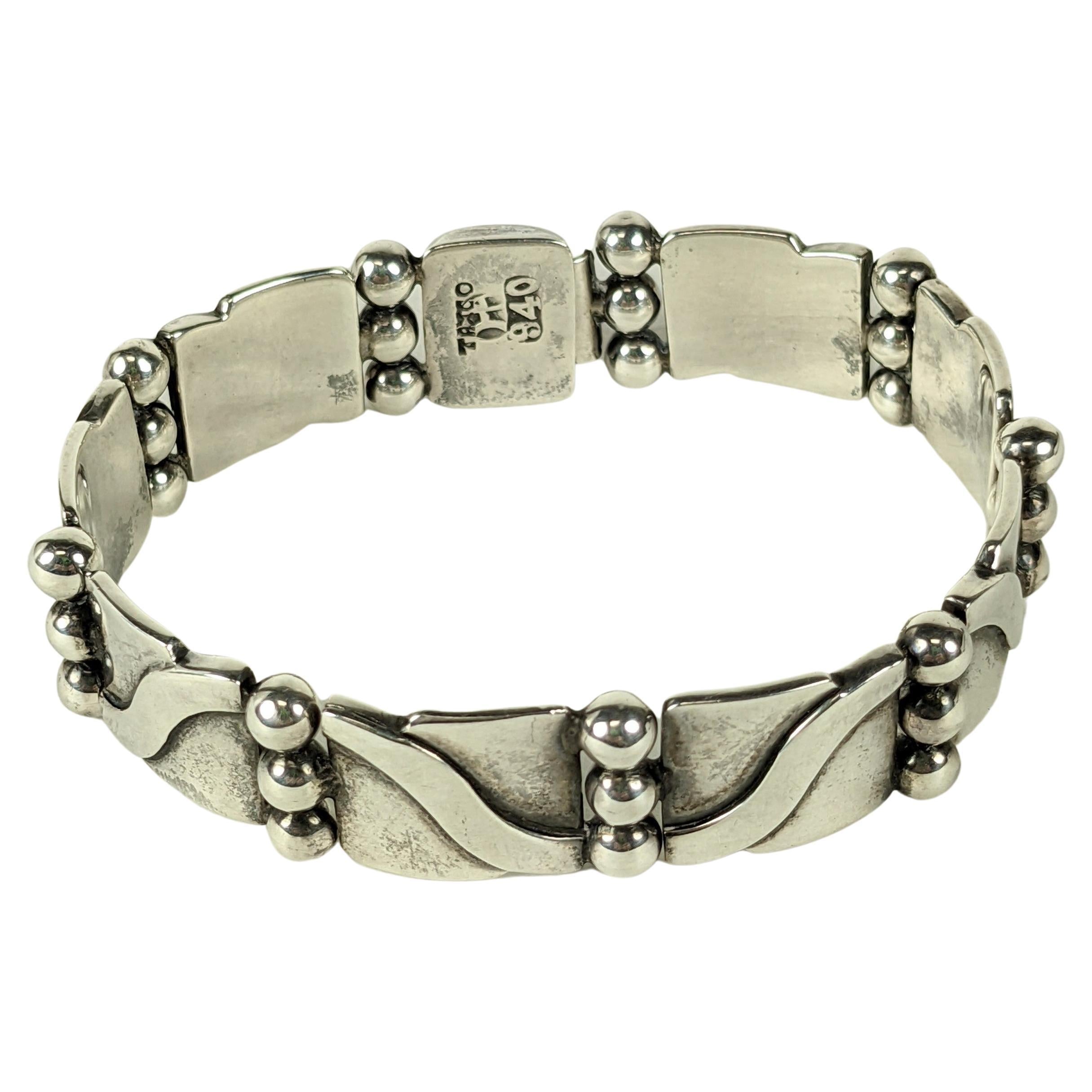
Héctor Aguilar
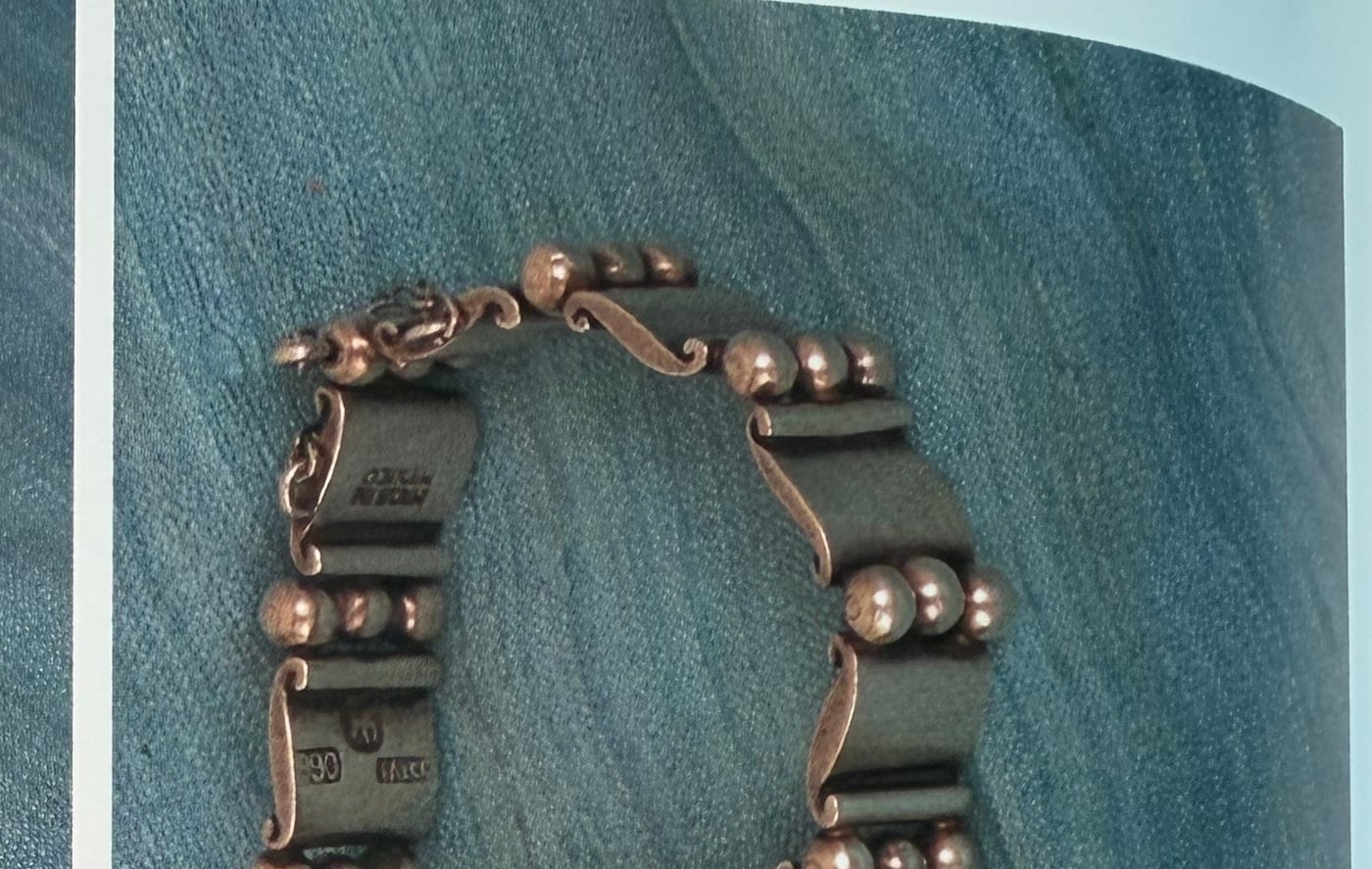
Three Ball and Wave Bracelet
c. 1940–1945
940 silver