Saves instantly, no account needed. Already a member? Sign in.
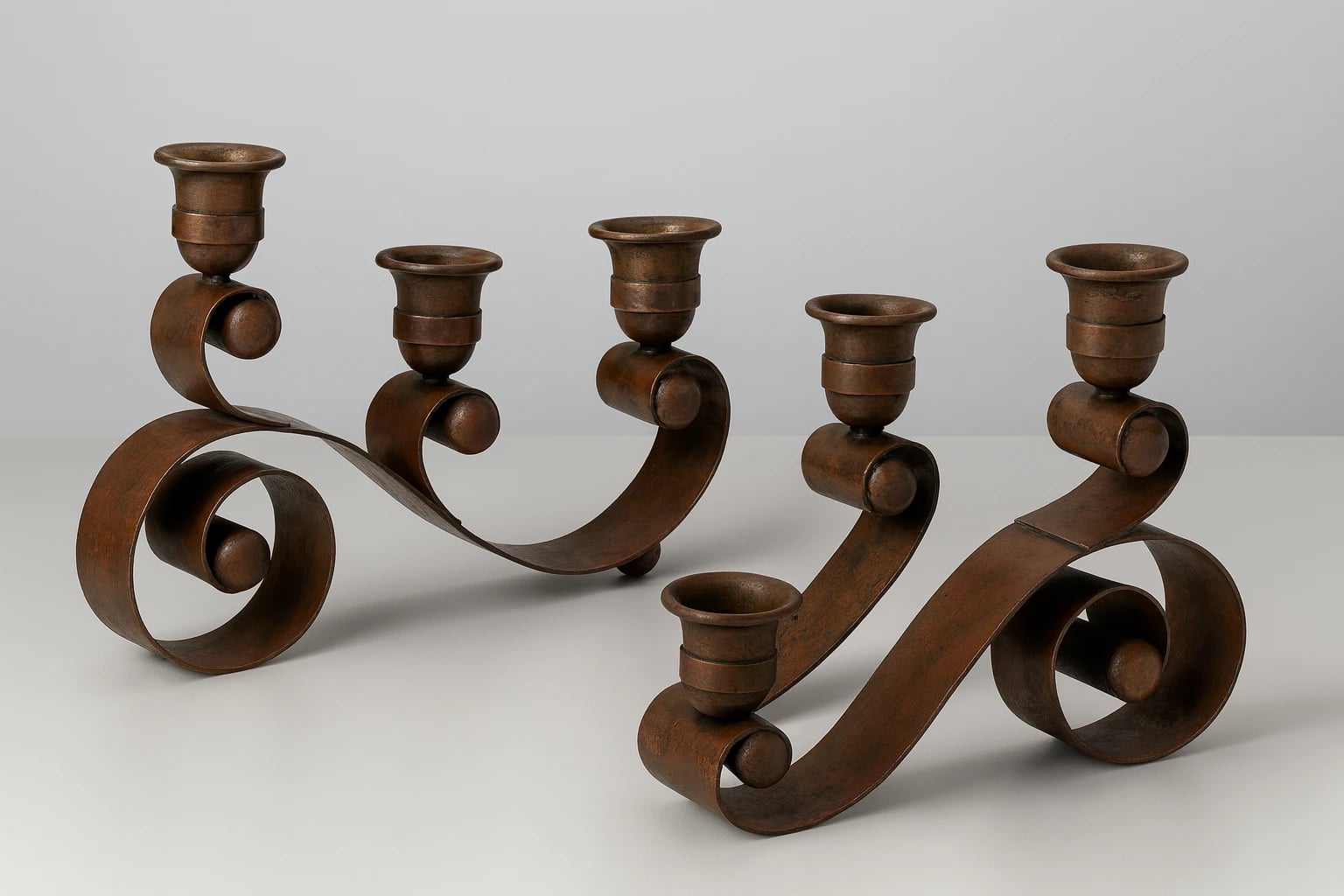
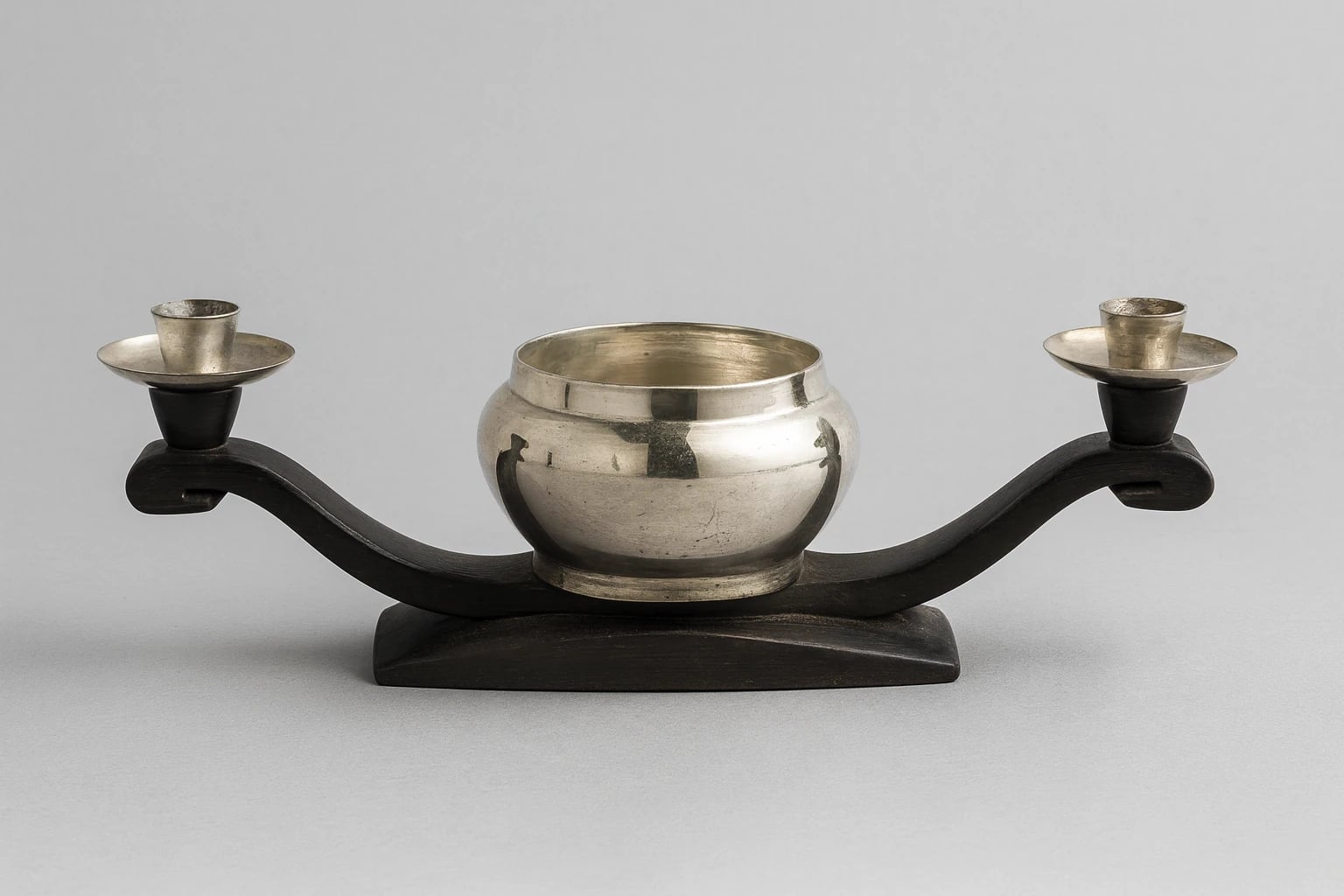
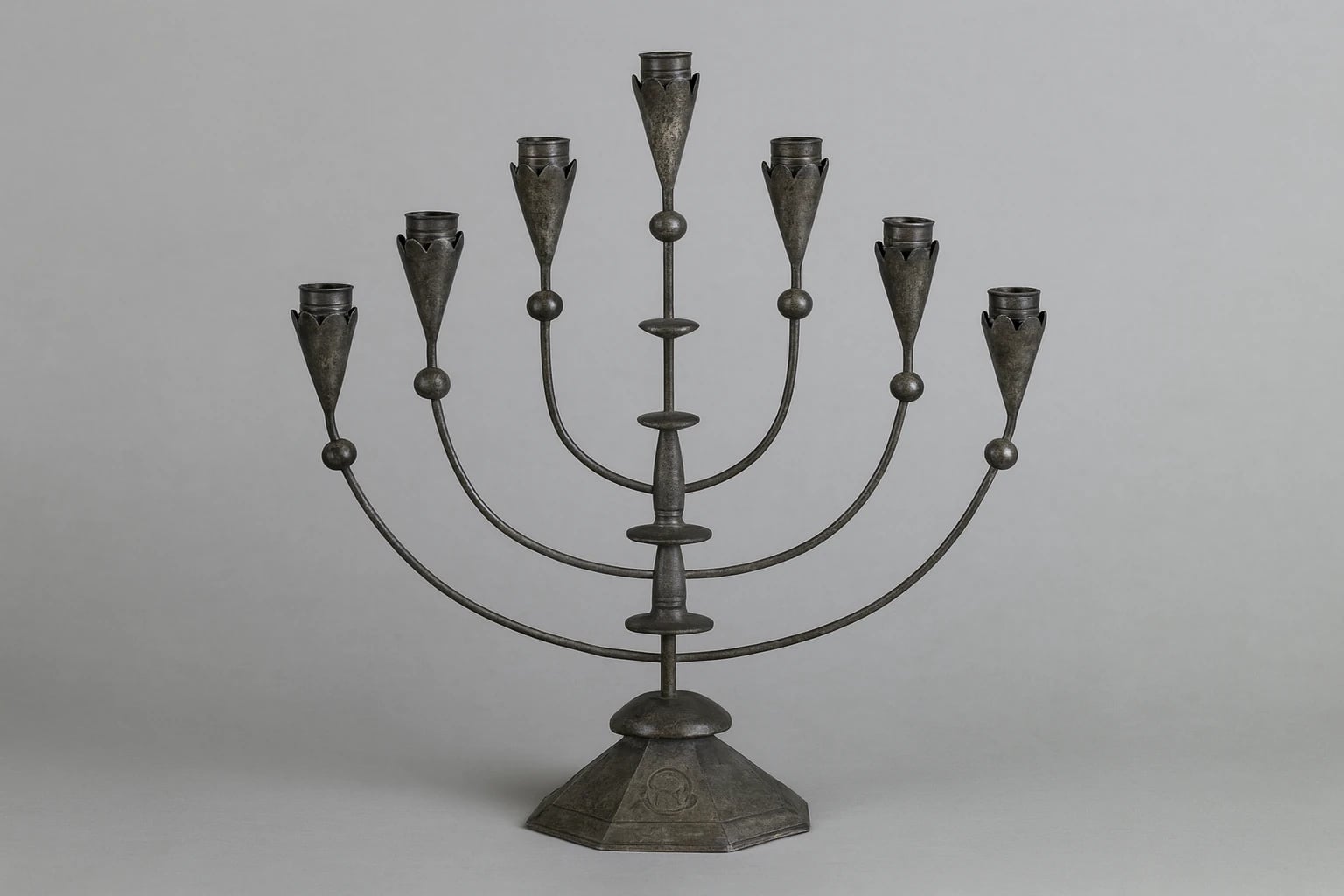
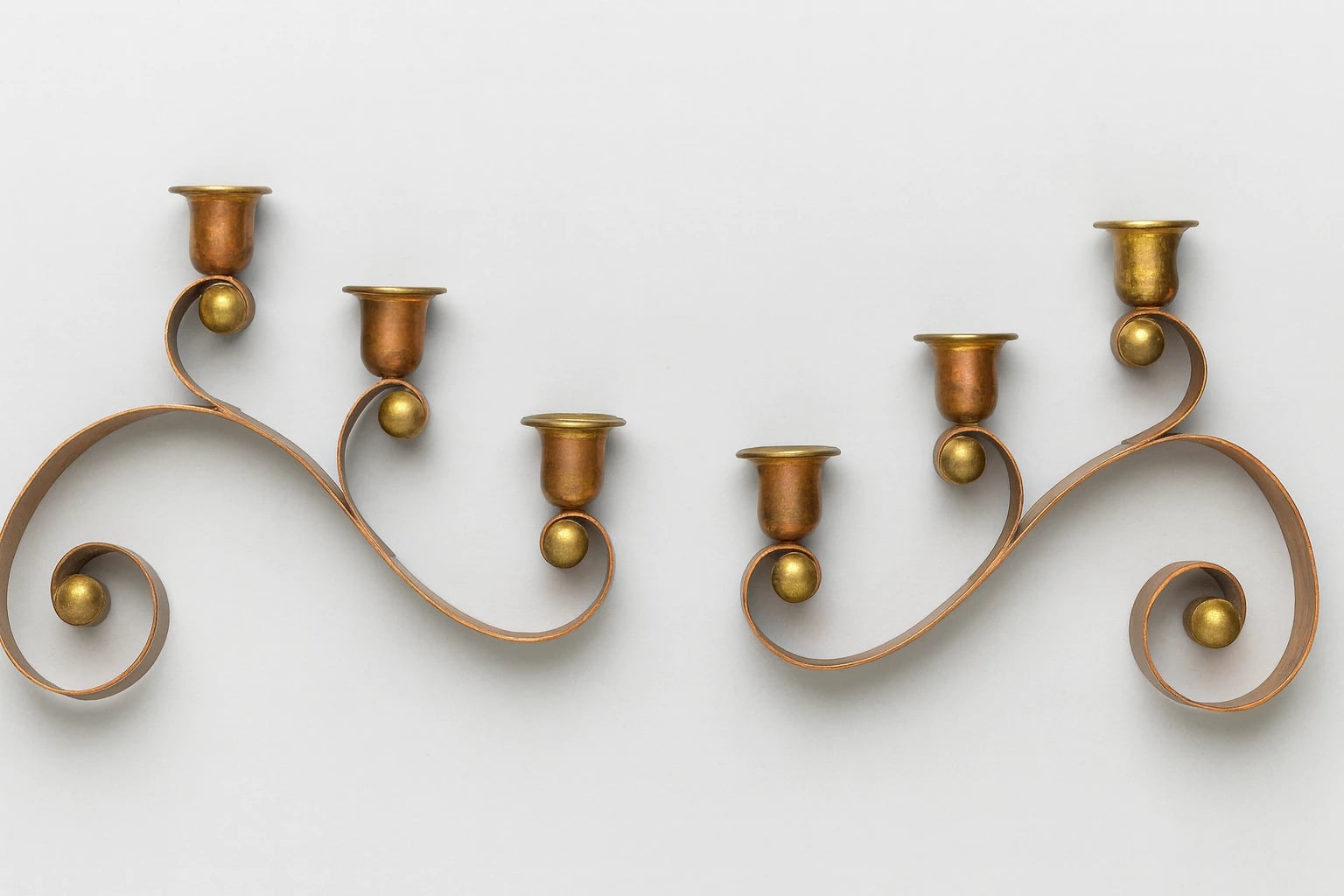
Two metals do the work of ornament in this candelabra, and Héctor Aguilar lets them argue with each other. Copper carries the warm body of the piece; brass supplies the brighter, cooler accents where light needs to catch. The design earns its authority from restraint, building a branching form out of clean arms and disciplined curves rather than applied decoration. Aguilar understood that in a metal as humble and inexpensive as copper, the design itself had to carry all the weight that silver collectors expected from precious material. This object proves he could deliver it.
The candelabra belongs to the copper and brass work that Aguilar produced through the Taller Borda, the Taxco workshop he directed, and it shows the same handwrought character that Penny Chittim Morrill singles out as the signature of his metalwork. The strength lies in how the arms rise and divide, holding their candle cups in a balanced rhythm that reads as sculpture before it reads as a functional light source. Brass sits against copper where the maker wanted contrast, so the eye moves along the structure by following shifts in color rather than by tracing carved pattern. This is a modernist decision. The two alloys become the ornament, and the ornament is inseparable from the object's frame. Nothing is added that the construction does not require.
Aguilar's choice of copper and brass was neither an economy nor an afterthought within the Taxco renaissance. Morrill records that his copper jewelry was as costly as pure silver when it was made, and that both Aguilar and the designer Valentin Vidaurreta found genuine expression in these base metals rather than treating them as substitutes for silver. Related examples anchor the design securely in his production: Morrill illustrates an Aguilar copper and brass candelabra dated around 1940 in the Krieger collection, and another brass and copper candelabra by Aguilar appears in a group of copper, brass, and silver work dated approximately 1945 to 1955. Marks documented by Hougart confirm that Aguilar stamped both copper and brass with the HA mark, sometimes with TAXCO MEXICO, and that on copper he sometimes added the number 994 to indicate copper content. The form and material combination place this candelabra within that documented body of work.
Copper and brass objects like this one broaden what the Taxco School was. The renaissance is remembered largely for silver, but Aguilar's decorative metalwork demonstrates that the same design intelligence governed his humbler materials, and that patrons prized these pieces enough to pay silver prices for them. A candelabra of this kind shows how a Taxco workshop turned functional hollowware into serious modern design, using the color of the metal itself as its primary expressive means. It records a part of the movement that histories of Mexican silver too often leave in the shadow of the precious material.
Museum of Mexican Silver. “Copper & Brass Candelabra.” Catalog no. MoMS-001378. https://museumofmexicansilver.com/pieces/aguilar-candelabra-copper-brass
See something wrong with this record? Suggest a correction and the piece details fill in automatically.
Héctor Aguilar
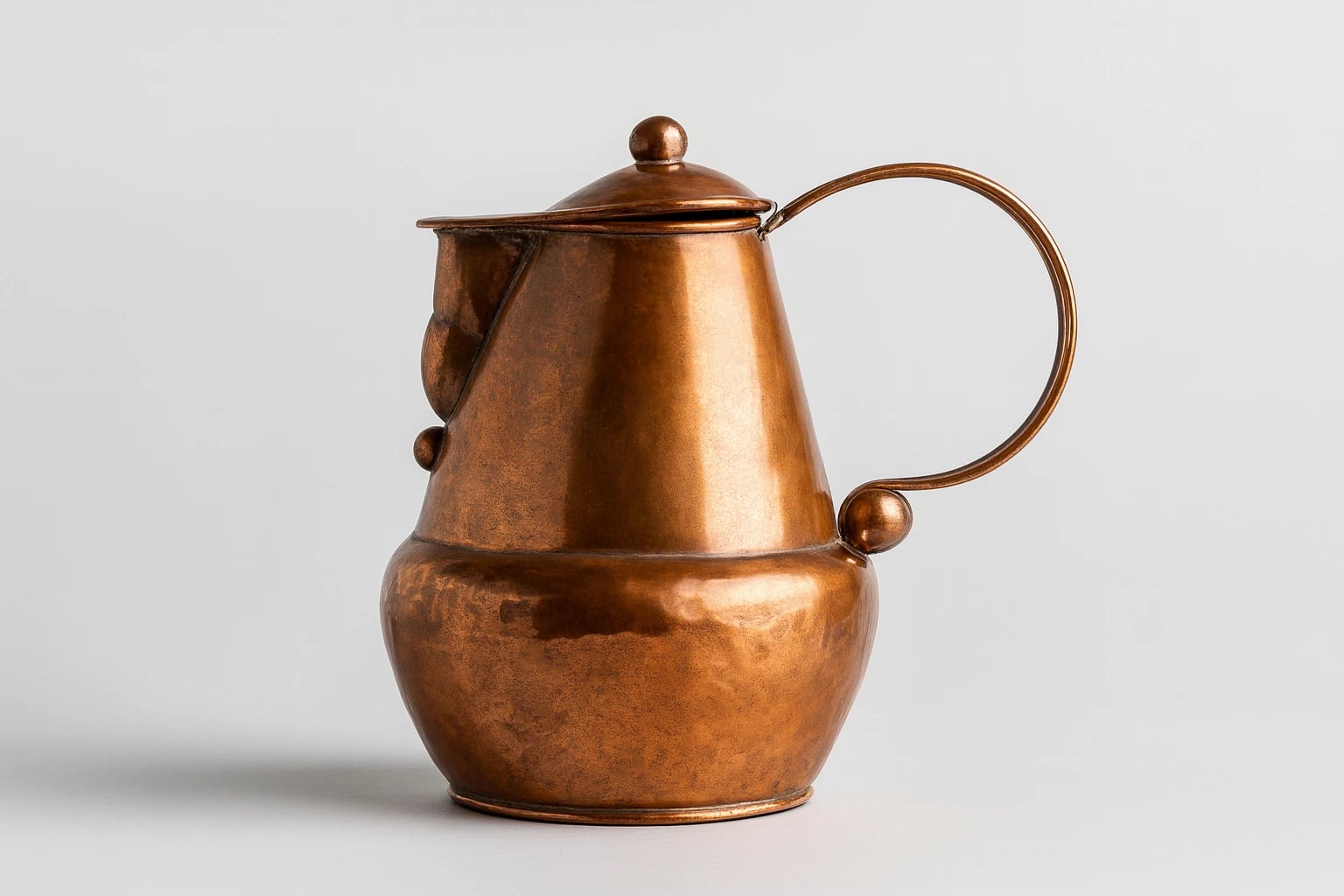
Copper Pitcher
c. 1945
Copper