Saves instantly, no account needed. Already a member? Sign in.
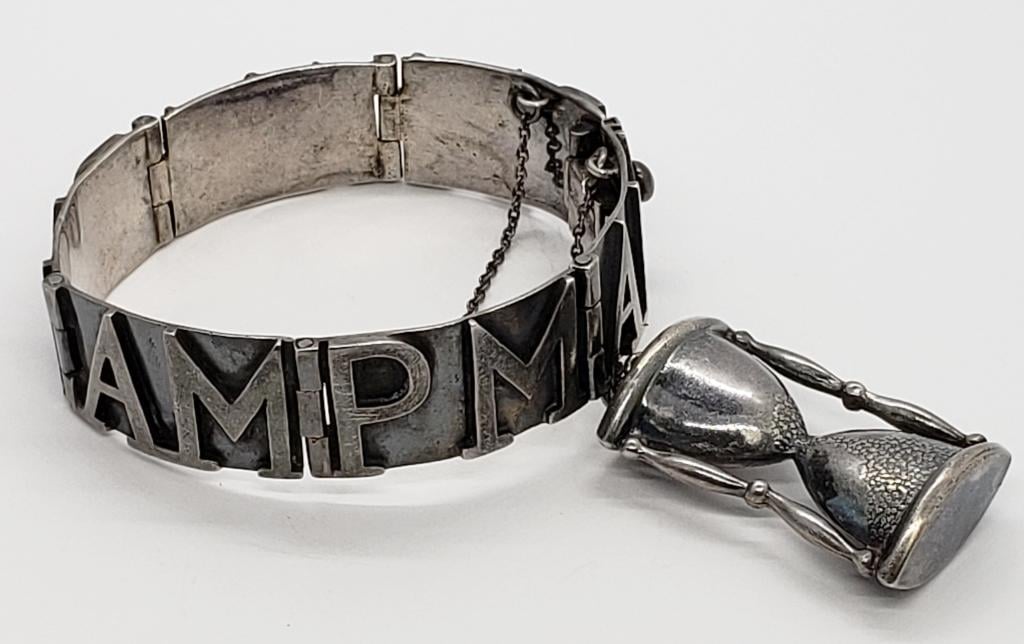
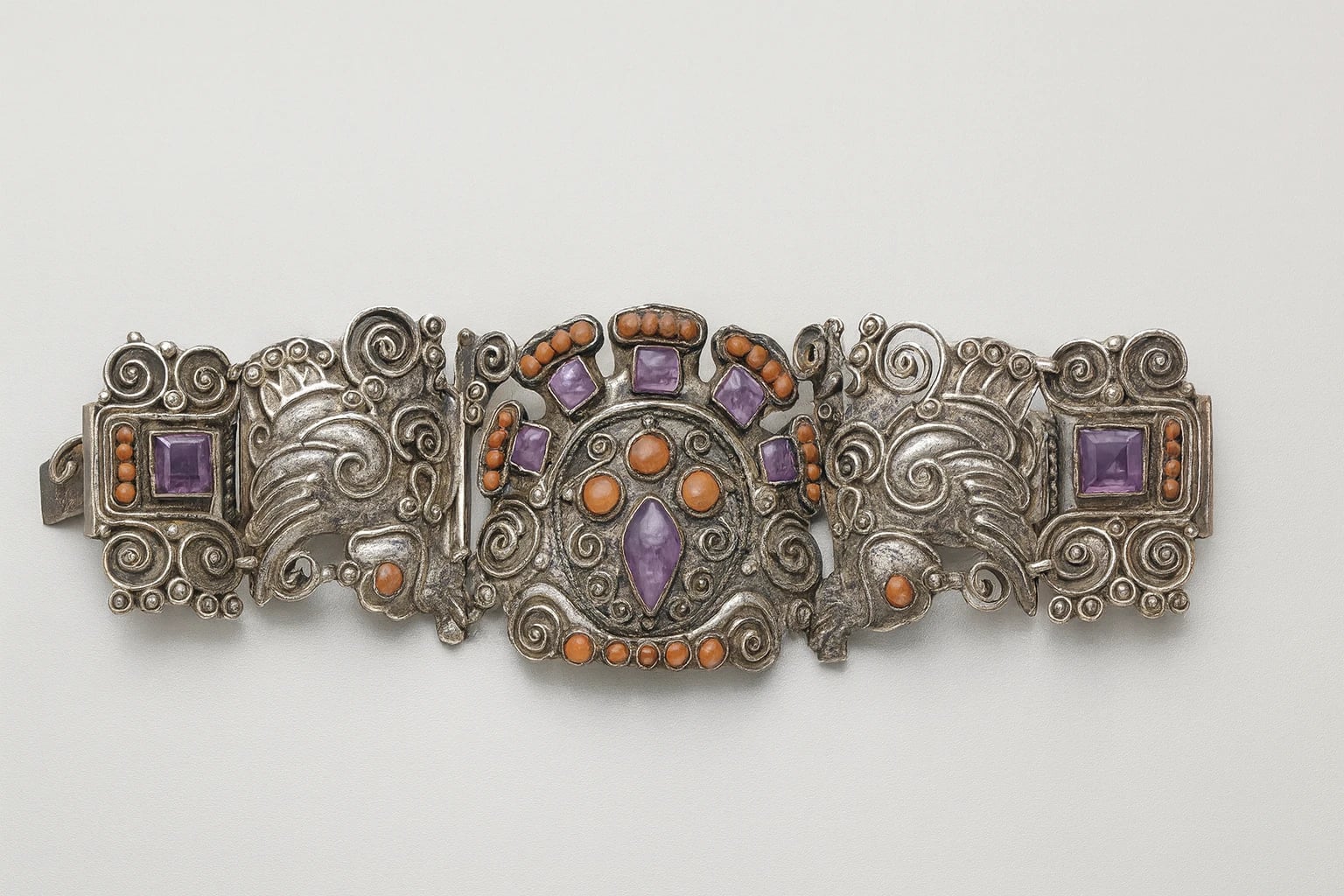
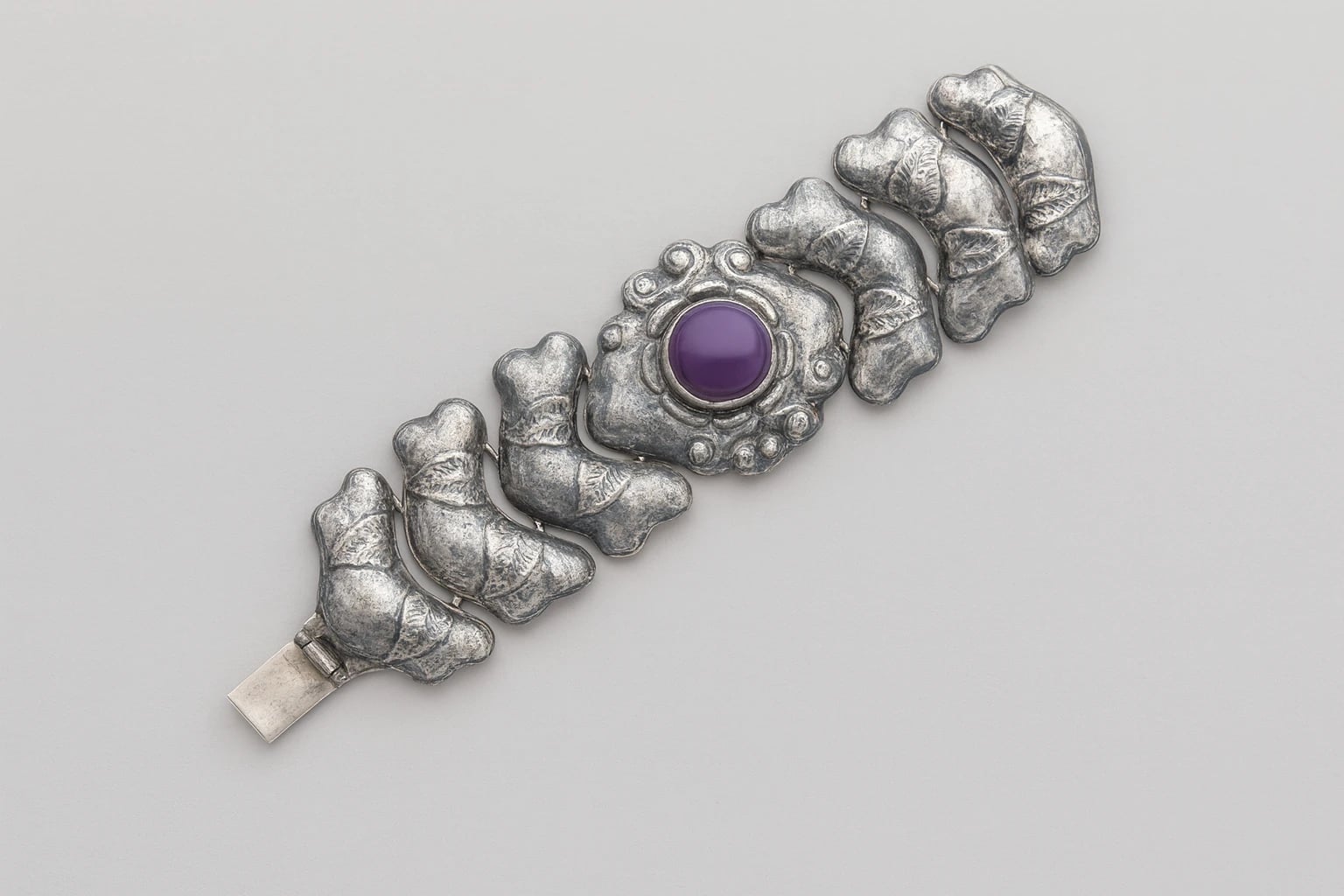
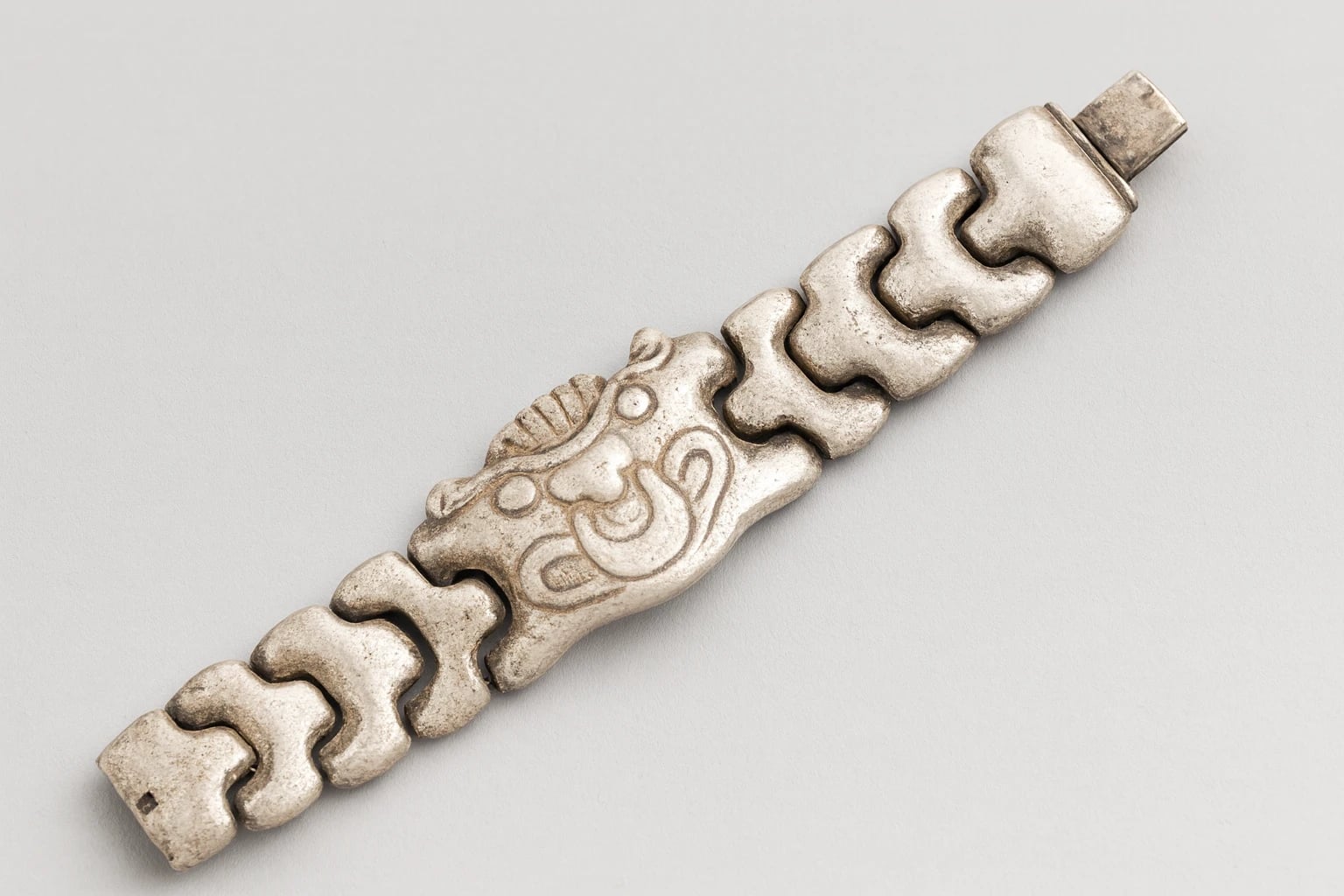
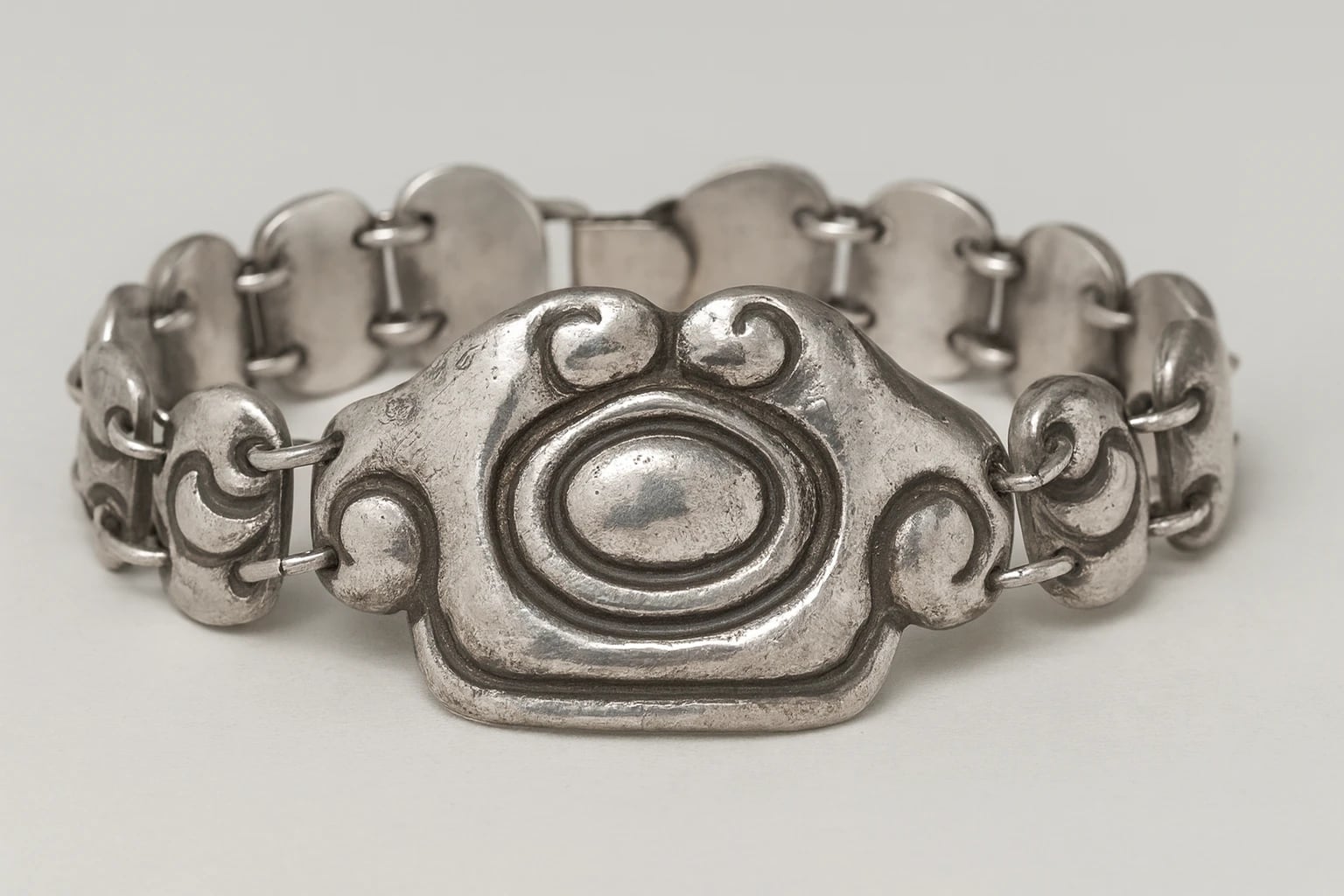
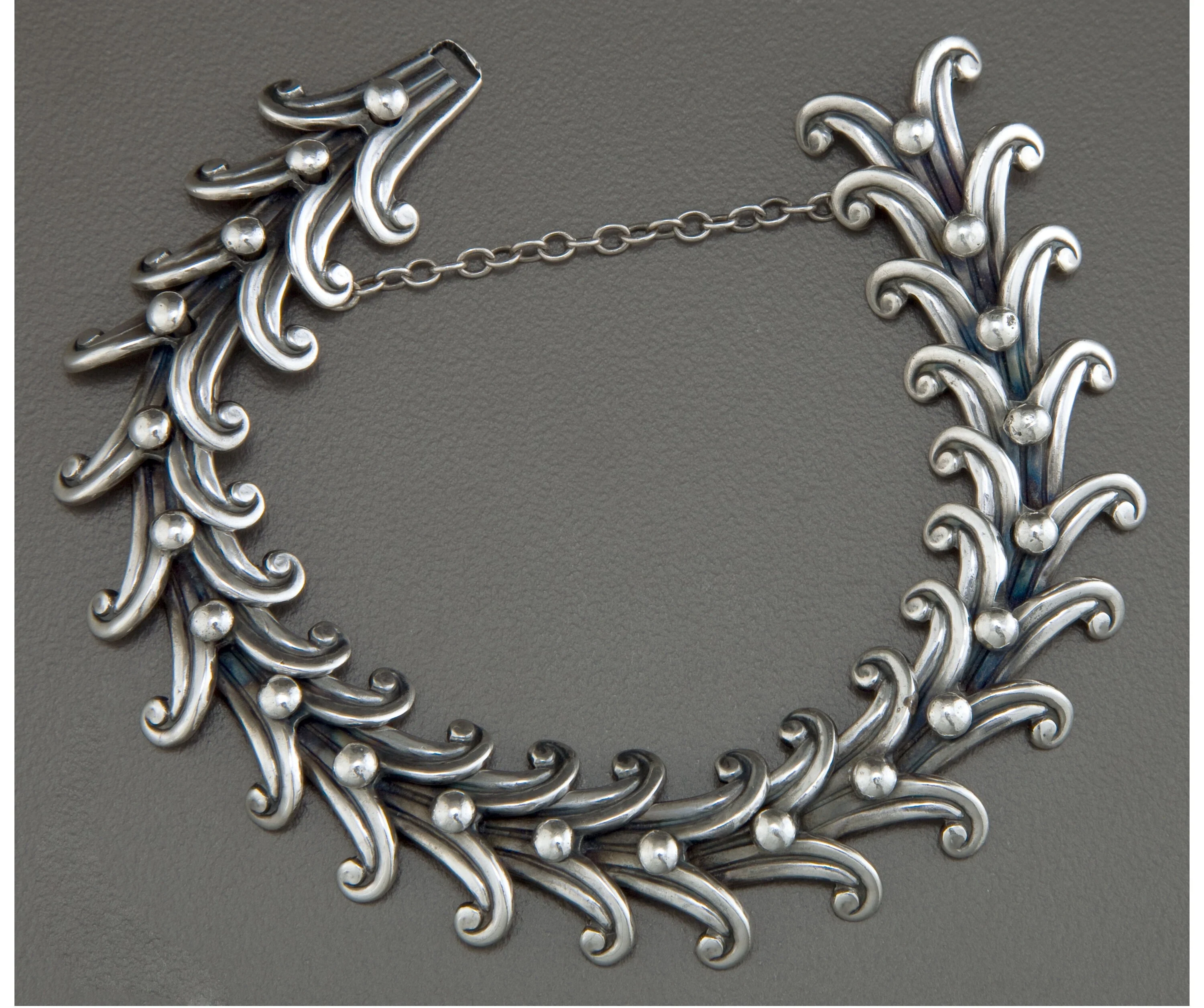
The bracelet builds its rhythm from repetition, a band of linked sterling units carrying enamel across the wrist so that color travels as a continuous ribbon rather than sitting as isolated accents. This is the central proposition of Margot de Taxco's design 5102: a structural articulation in which the flexible mechanics of the linked bracelet become the vehicle for a sustained field of enamel. Where much Taxco silver of the period treated enamel as a bright inset within a dominant metal frame, Margot pushed color to the front, using the segmented construction to keep the surface both mobile and unbroken.
The engineering matters here because it makes the color possible. A bracelet that must curve around and flex with the wrist cannot carry a single rigid enamel plaque, so the design divides the surface into repeating links, each a small carrier of vitreous color, hinged to its neighbors. The links move independently, yet the enamel pattern reads across them as one design when the bracelet is worn closed. This is the logic of champlevé, in which recesses cut or built into the metal are filled with enamel and fired, leaving thin metal walls to separate and define each field of color. The metal ridges do double duty, drawing the pattern and containing the glass. The result is a piece that hides its mechanical seriousness inside what looks like pure ornament.
Margot van Voorhies opened her own shop, Margot de Taxco, in 1947, after years designing for Los Castillo, the taller she had helped launch with Antonio Castillo. Her champlevé enamel production began in 1955, and it is the work for which she is chiefly remembered, distinctive enough that Hougart notes other makers, Castelan among them, produced enameled silver "very reminiscent of Margot." Design 5102 sits within a numbered system that Margot maintained across sterling and enamel lines, with documented marks running from the 5100s into the 5600s. The lower position of 5102 in that sequence suggests an earlier place in her design output, though the number alone fixes relative order rather than a precise year, and any given example could have been fabricated across the long span her marks remained in use. The Margot de Taxco hallmark identifies the workshop under which the design was produced and sold; it does not tell us which enameler at the bench fired this particular band.
For a collection tracing the Mexican silver renaissance, the bracelet documents the moment when enamel stopped being an accent and became the primary language of a Taxco workshop. Margot's achievement was to treat color as seriously as her contemporaries treated silhouette and mass, and to solve the mechanical problem of carrying an unbroken decorative field across a moving joint. The design's persistence across her long production, and the appearance of imitators working in her manner, together mark how fully she made enameled silver her own territory rather than a borrowed technique.
Museum of Mexican Silver. “Design 5102 Bracelet.” Catalog no. MoMS-001042. https://museumofmexicansilver.com/pieces/margot-bracelet-5102
See something wrong with this record? Suggest a correction and the piece details fill in automatically.
Design 5201 Bracelet
Sterling silver