Saves instantly, no account needed. Already a member? Sign in.
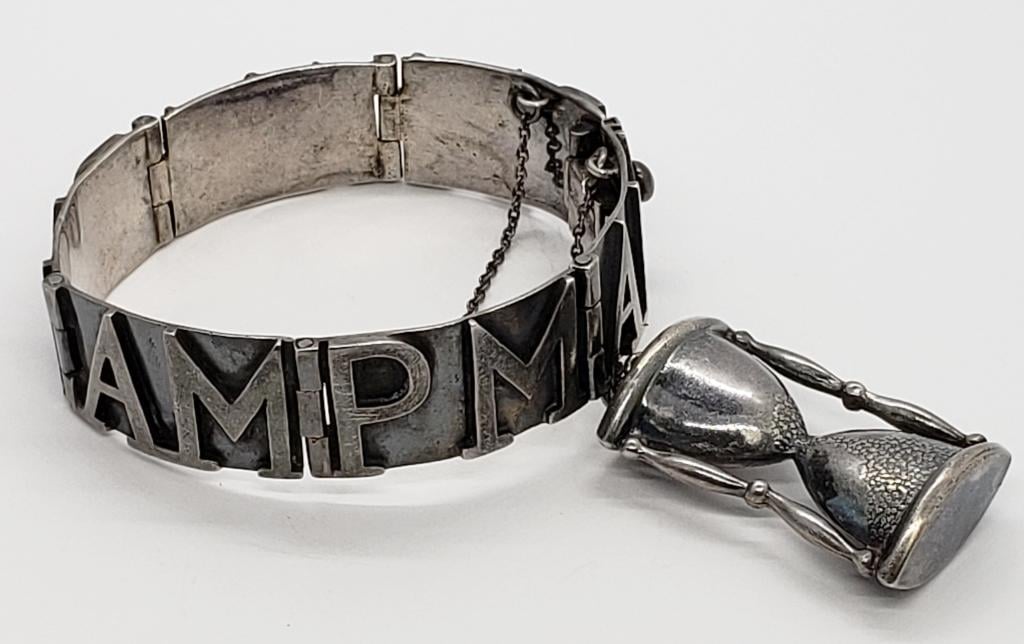
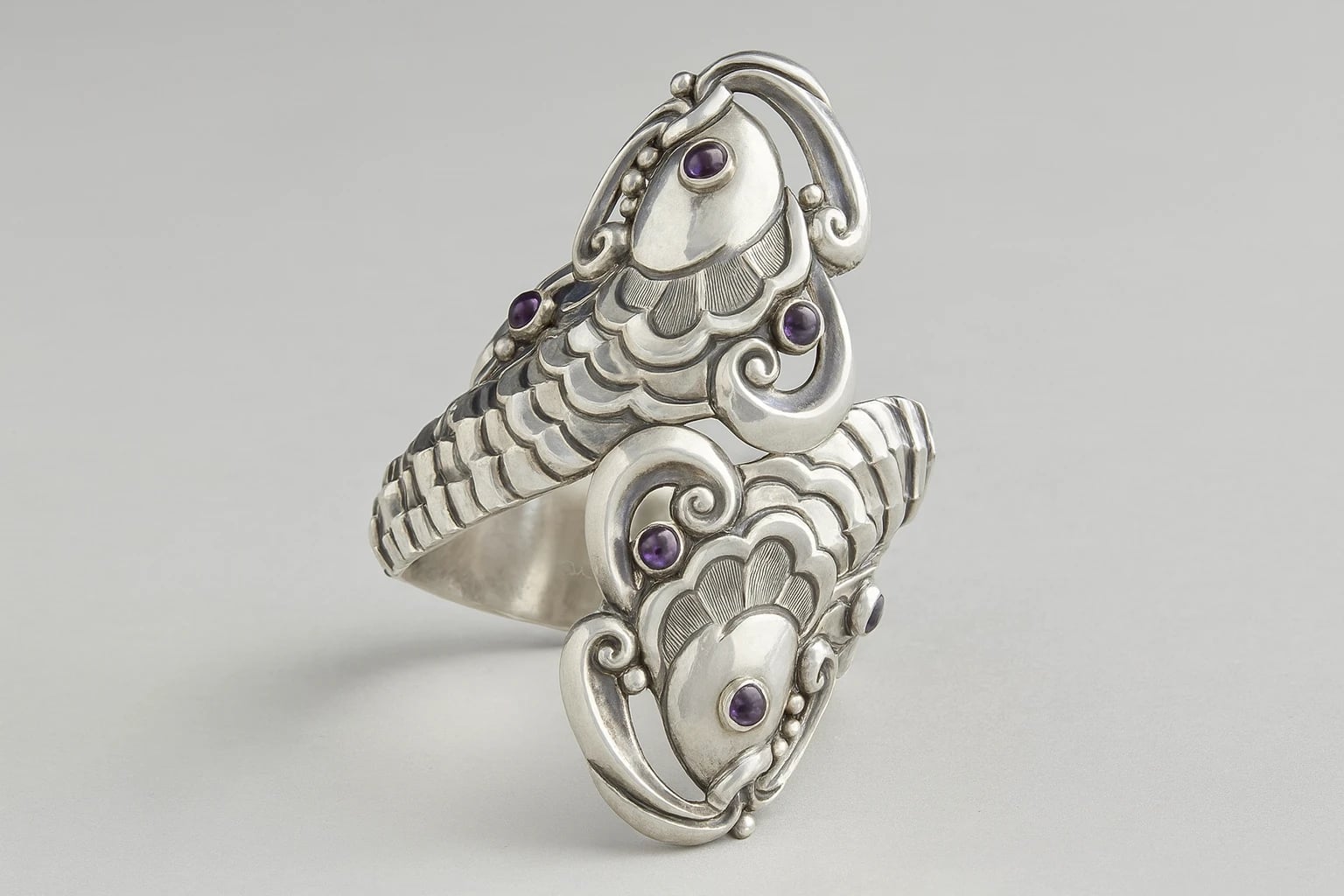
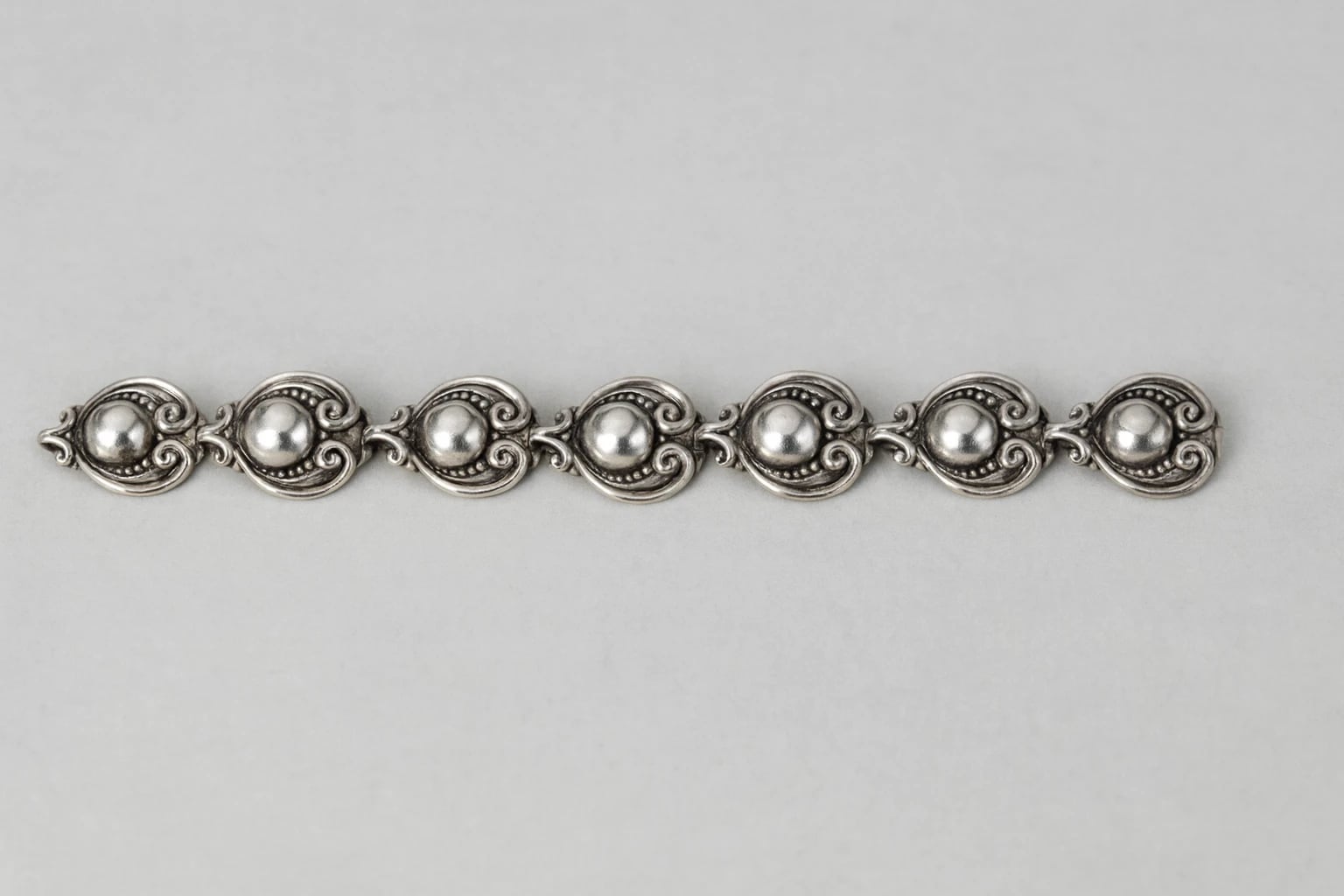
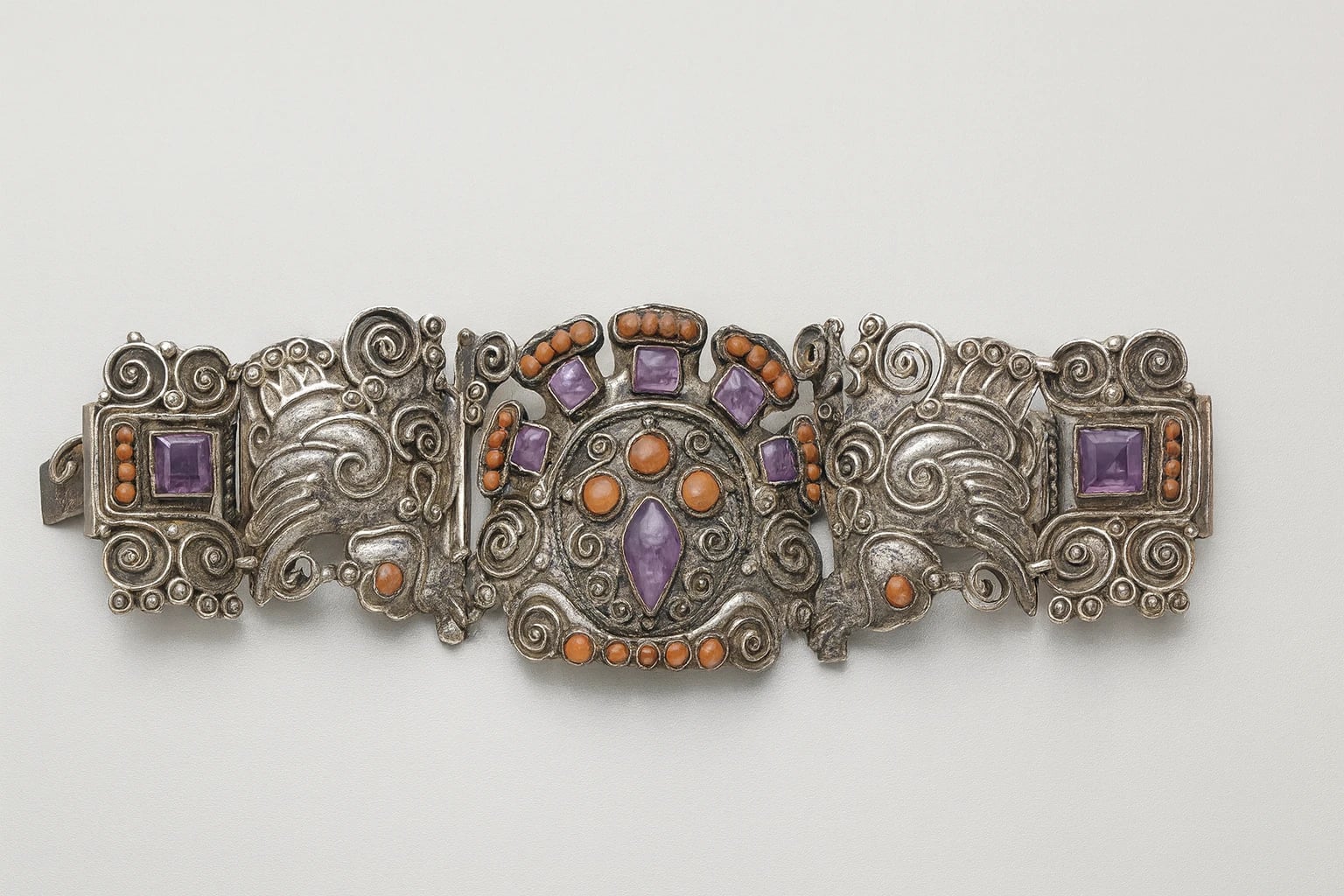
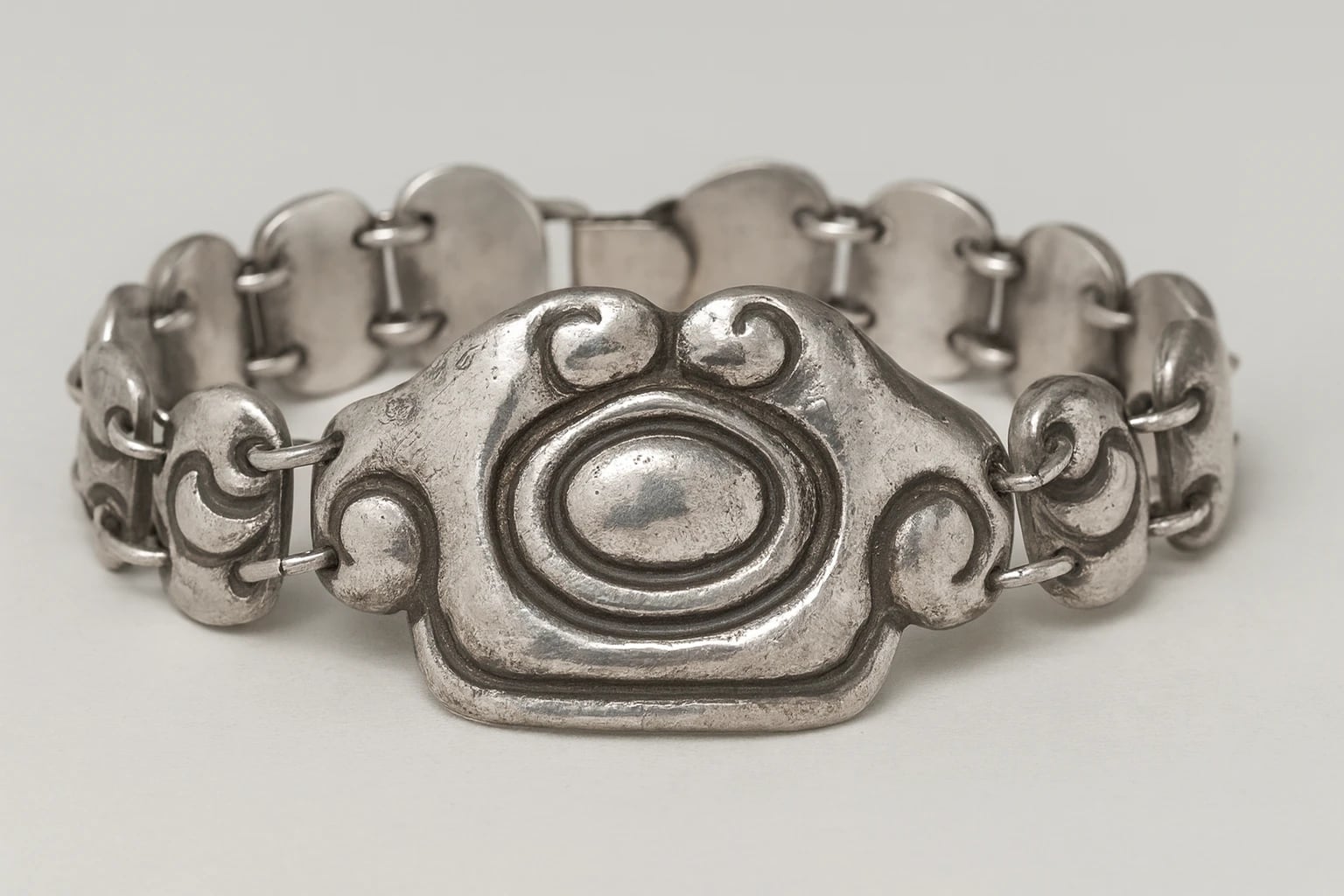
Margot de Taxco design 5192 belongs to the bracelet work that made her enamel the signature of her workshop, sterling silver worked as a support and a frame for color rather than as the entire event. The design carries her own number within the numbering system her shop used for its patterns, and it sits in the range associated with her mature production. What distinguishes her bracelets of this type is the discipline with which the metal organizes the enamel: the silver defines the compartments, holds the color in register across the wrist, and articulates so that a rigid decorative field can follow the curve of the arm.
The construction principle in a Margot de Taxco enamel bracelet depends on the relationship between the silver cells and the vitreous color they contain. In champlevé, the technique for which she is best known, recesses are cut or built into the metal and filled with enamel, then fused and polished so the color sits flush with the surrounding silver walls. Those walls do more than contain the enamel. They draw the pattern, catch light along their polished edges, and separate one hue from the next with a clean metallic line. Linked construction lets a series of enameled units join into a continuous band while retaining the flexibility to move, so the ornament reads as one field at rest and as a sequence of hinged elements in wear. Without direct examination the specific palette and the exact link geometry of this design cannot be described further, and the recorded material, sterling with enamel, is consistent with the workshop practice documented for her shop.
Margot van Voorhies opened Margot de Taxco in 1947, after the years in which she created many of the early designs for Los Castillo, the taller she had helped her husband Antonio Castillo establish. Her champlevé enamel production began in 1955, and it became the identity of her workshop, distinct enough that Hougart notes other Taxco makers, including Castelan, produced sterling and enamel work reminiscent of hers. That comparison measures her influence: her enamel set a standard against which contemporaries were read. The bracelet form gave her the largest continuous surface a piece of jewelry offers, and her numbered designs treated that surface as a place to compose color within silver rather than to display silver alone.
Margot de Taxco marks carry the shop name with Sterling and Made in Mexico, and her enamel pieces from 1955 onward often show design numbers in the range recorded by Hougart, sometimes with the eagle 16 assay stamp. Collectors and cataloguers should note that her name and numbers were counterfeited: the reference explicitly flags a crude cast counterfeit mark, so a Margot design number alone does not settle authenticity, and the enamel quality and the character of the mark matter together. Within a collection, design 5192 documents the enamel line that defined her workshop after 1955 and shows how a Taxco taller built an international reputation on color held in silver, extending the Mexican silver renaissance beyond the polished metal for which Taxco is more commonly remembered.
Margot de Taxco (American-born, d. 1985) Matching Pair of Taxco Sterling Silver Cuff Bracelets, 1948-1978
Hindman · 2024-07-11
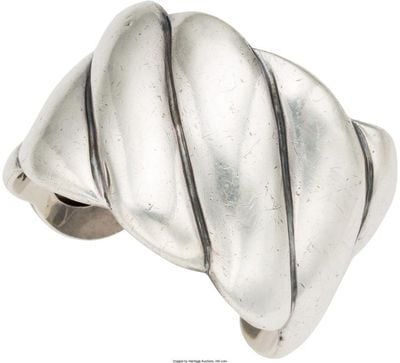
A Margot de Taxco Mexican Silver Cuff, Taxco, circa 1948-1978 Marks: MARGOT DE T
Heritage Auctions · 2017-04-20
A Sterling Silver Cuff Bracelet, Margot de Taxco, Circa 1950, 44.20 dwts
Hindman · 2015-12-07
Museum of Mexican Silver. “Design 5192 Bracelet.” Catalog no. MoMS-001050. https://museumofmexicansilver.com/pieces/margot-bracelet-5192
See something wrong with this record? Suggest a correction and the piece details fill in automatically.
Design 5210 Bracelet
Sterling silver