Saves instantly, no account needed. Already a member? Sign in.
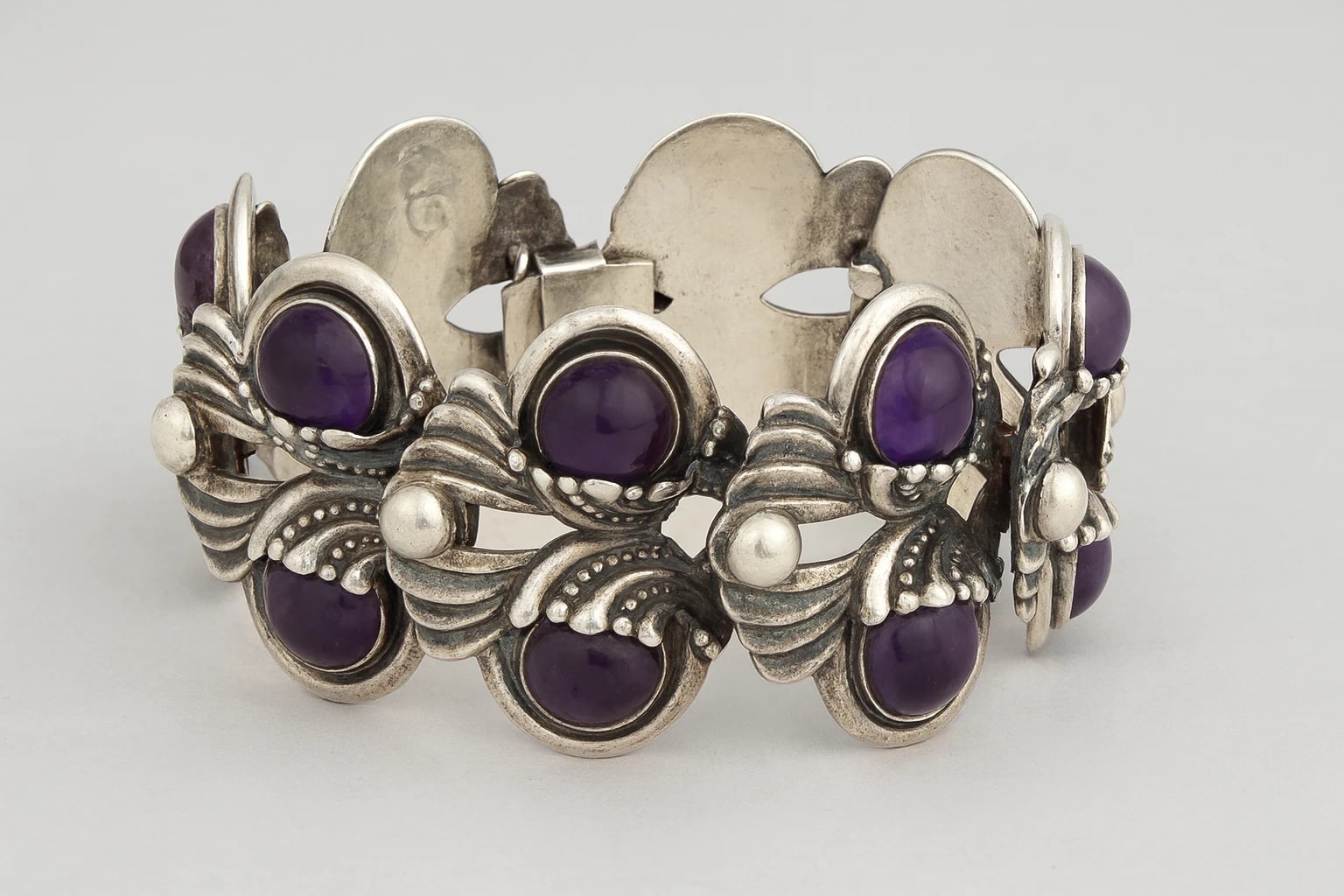
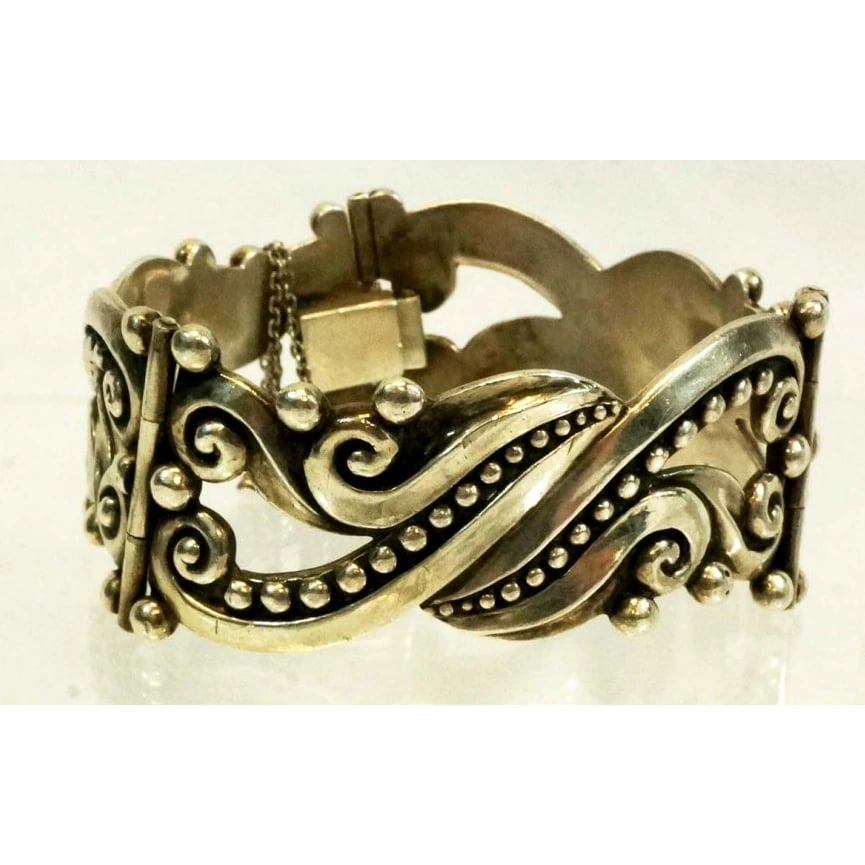
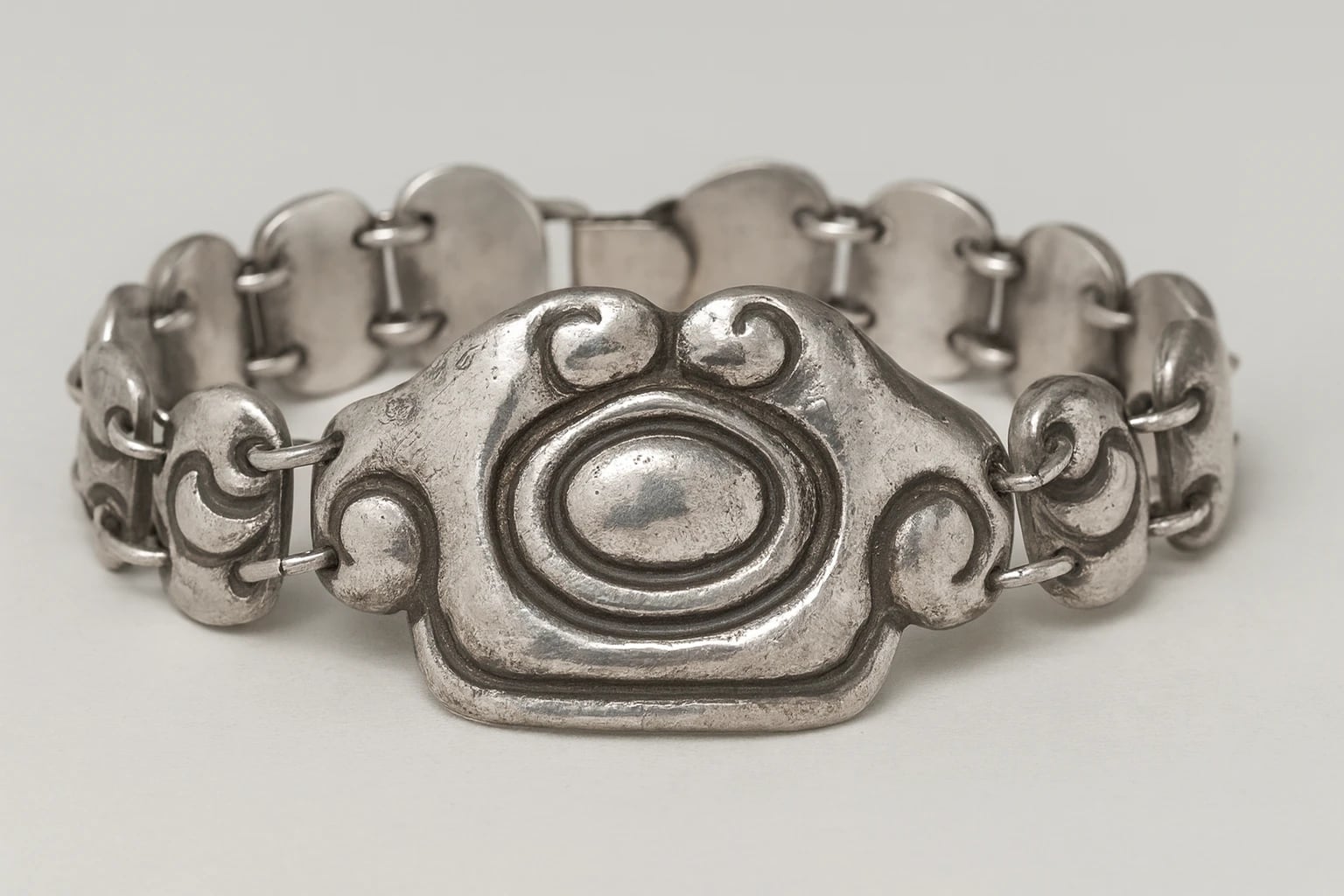
Design 5210 sits in the numbered sequence that Margot van Voorhies developed after she opened her own shop, and the bracelet reveals what set her enterprise apart from the workshops around her: she treated enamel not as a decorative afterthought applied to silver, but as the governing surface of the object. Where much Taxco silver of the period relied on the reflectivity of the metal itself, Margot built designs in which color, opacity, and the fired surface carried the composition, with the silver serving as armature and boundary. A bracelet in this vocabulary asks to be read as a band of controlled color moving around the wrist.
The construction of an enamel bracelet in the Margot manner depends on the relationship between the metal cells and the vitreous fill they contain. In champlevé, the technique for which she became known, recesses are cut or built into the silver and flooded with enamel, so that the raised metal lines become both drawing and containment. The result is a surface where the silver reads as a network of edges and the enamel as fields of saturated color held firmly in place. On a bracelet this discipline matters twice over, because a form that wraps and flexes against the body puts stress on the join between metal and glass. The design must distribute its enameled areas so that articulation does not fracture the fired surface, which means the rhythm of the composition and the engineering of the band are the same decision.
Margot's independent production began in 1947, and her champlevé enamel work started in 1955, a distinction that bears directly on how a design number like 5210 should be read. The number places the design within her own numbered system rather than the earlier work she created for Los Castillo before that marriage ended in 1946. Her enamel pieces carry marks documented across the 1955 to 1978 range, while sterling pieces without enamel appear under marks running from 1948. A given example of 5210 was fabricated within those windows, and the design was conceived when Margot drew it into her catalog, not necessarily in the year any single bracelet left the bench. That her designs were distinctive enough to be imitated is itself part of the record: Hougart notes that some Castelan enamel pieces are very reminiscent of Margot, and the hallmark reference flags a crude cast counterfeit of another Margot number, evidence that her enamel language was recognized and worth copying in its own time.
What a bracelet from this sequence contributes to a collection is a clear demonstration that the Mexican silver renaissance was not solely a story of hammered metal and stone. Margot van Voorhies made enamel a serious modern medium within Taxco, building a body of numbered designs in which fired color and silver line worked as one system. Design 5210 belongs to that achievement, and it lets a collection show the range of the renaissance beyond the reflective surfaces that dominate its popular image.
Museum of Mexican Silver. “Design 5210 Bracelet.” Catalog no. MoMS-001059. https://museumofmexicansilver.com/pieces/margot-bracelet-5210
See something wrong with this record? Suggest a correction and the piece details fill in automatically.
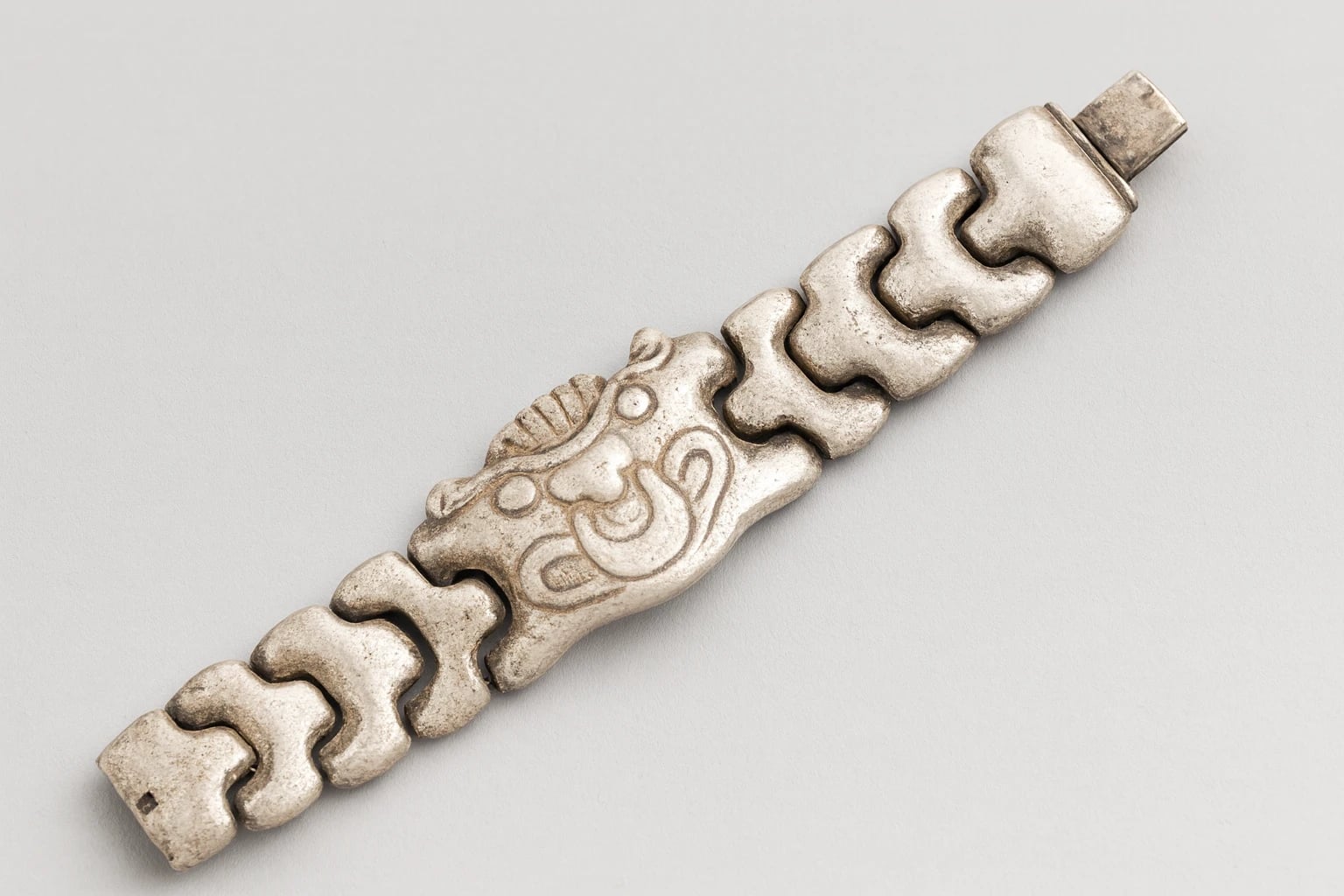
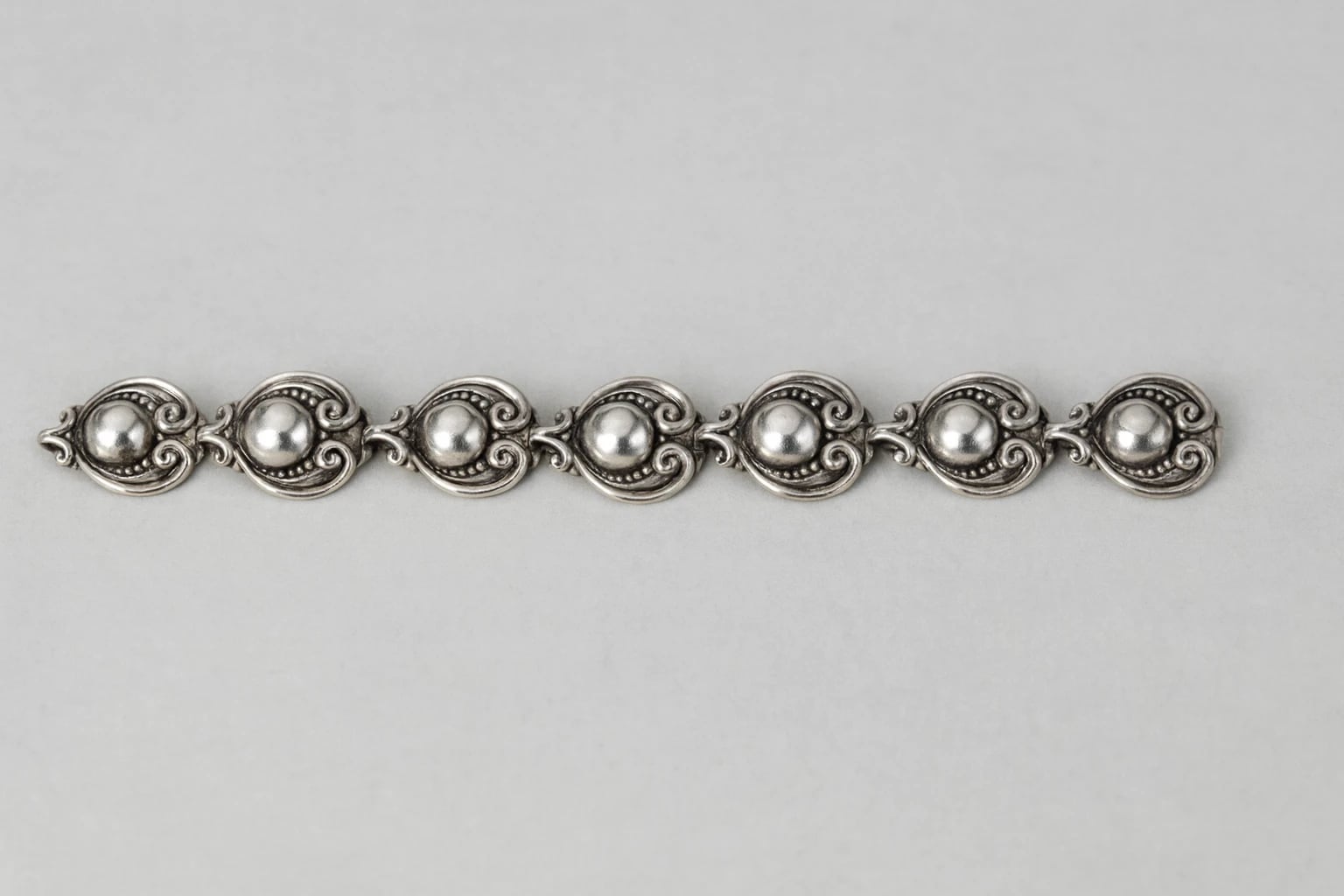
Design 5247 Bracelet
Sterling silver