Saves instantly, no account needed. Already a member? Sign in.
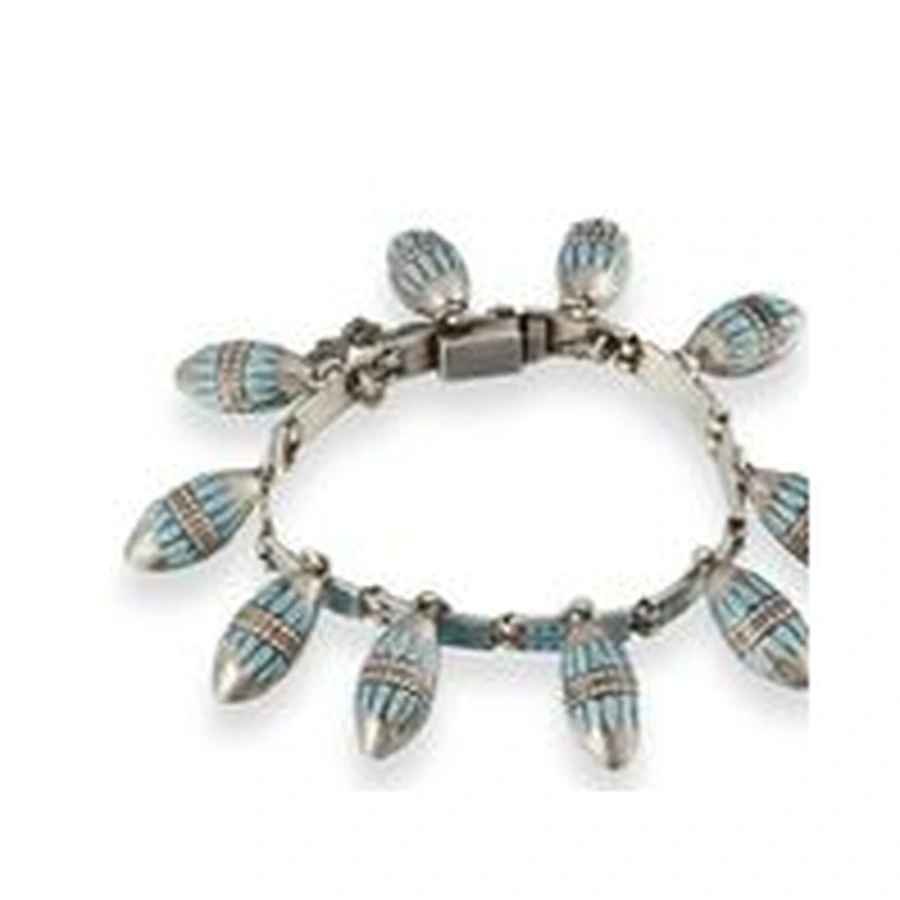
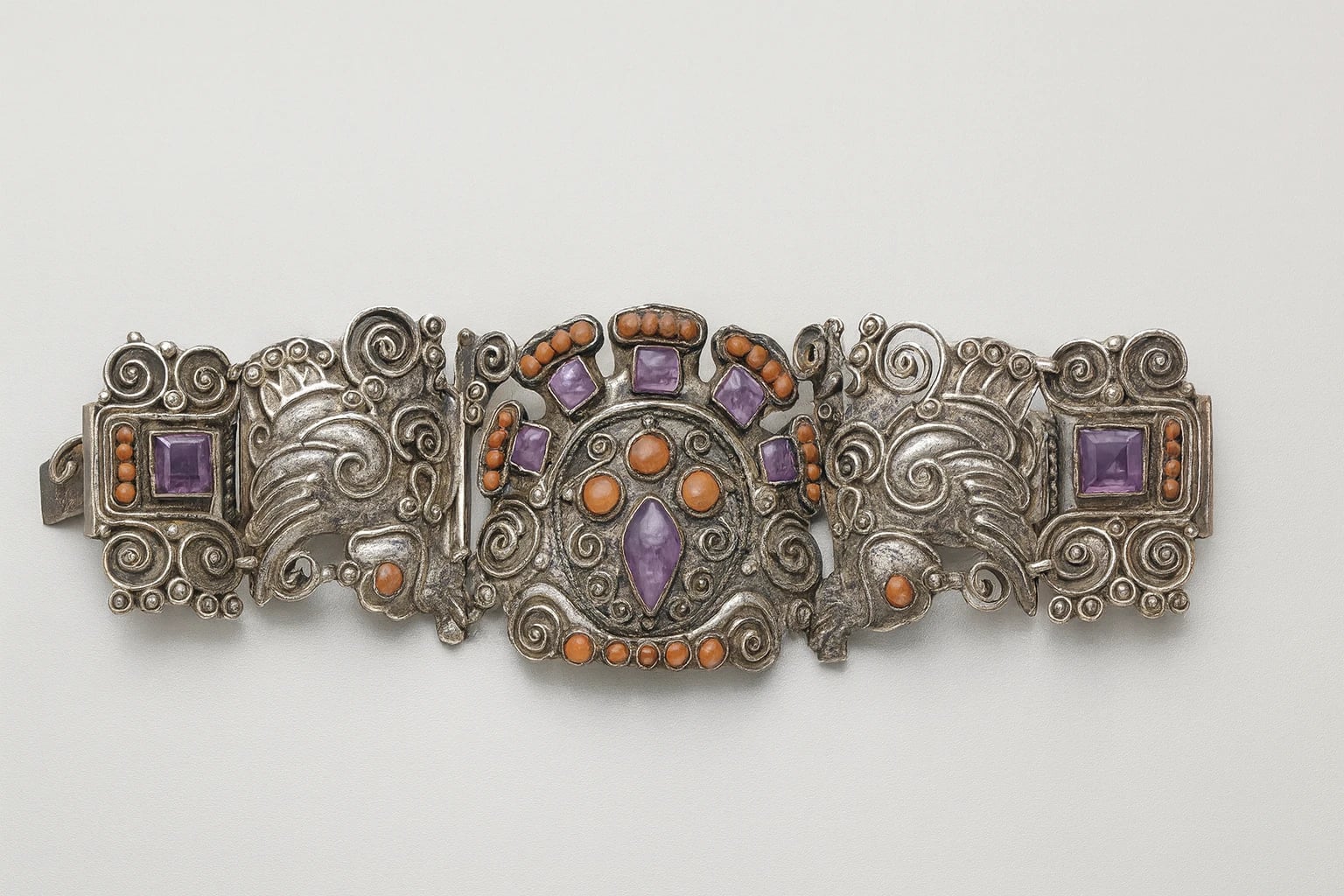
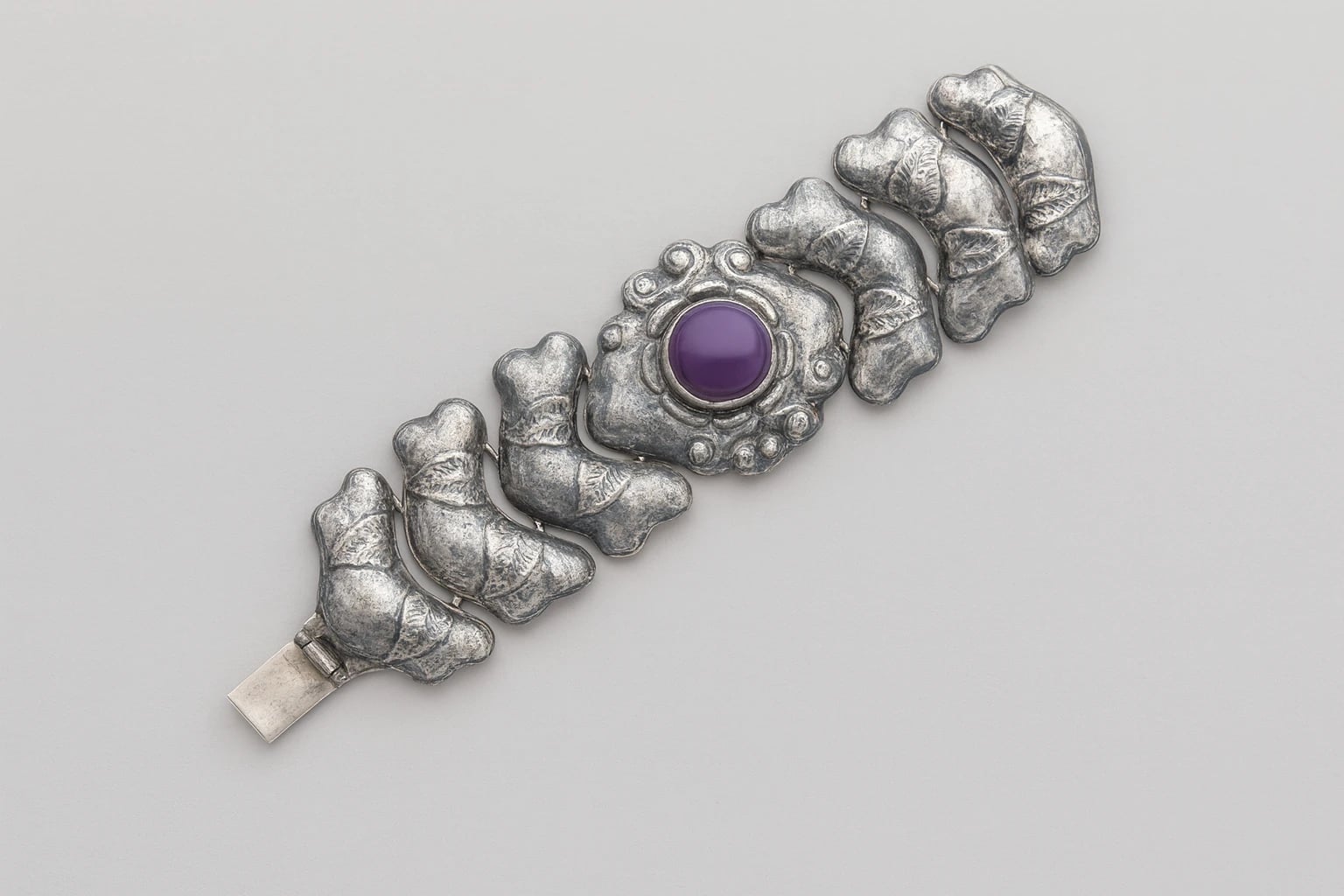
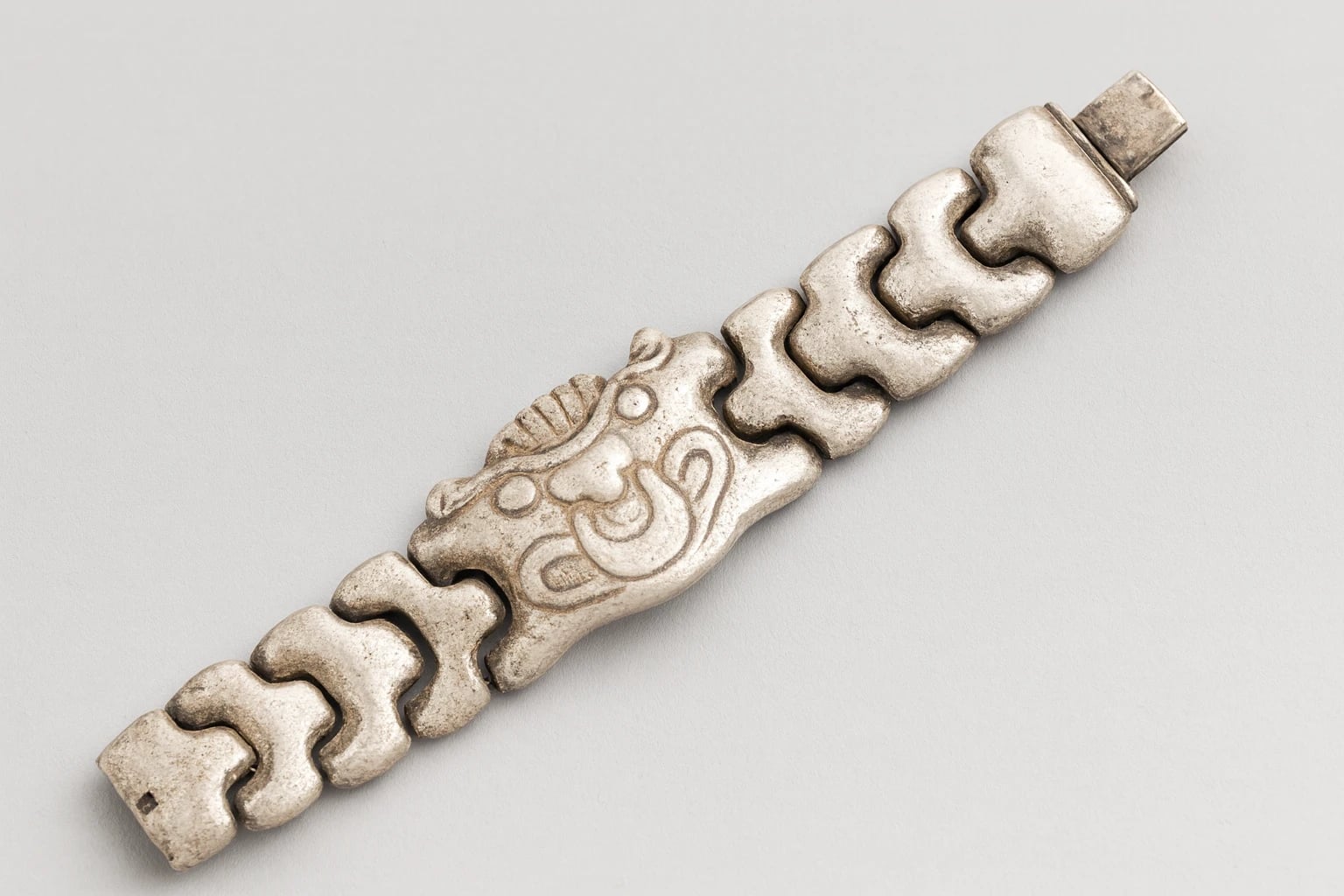
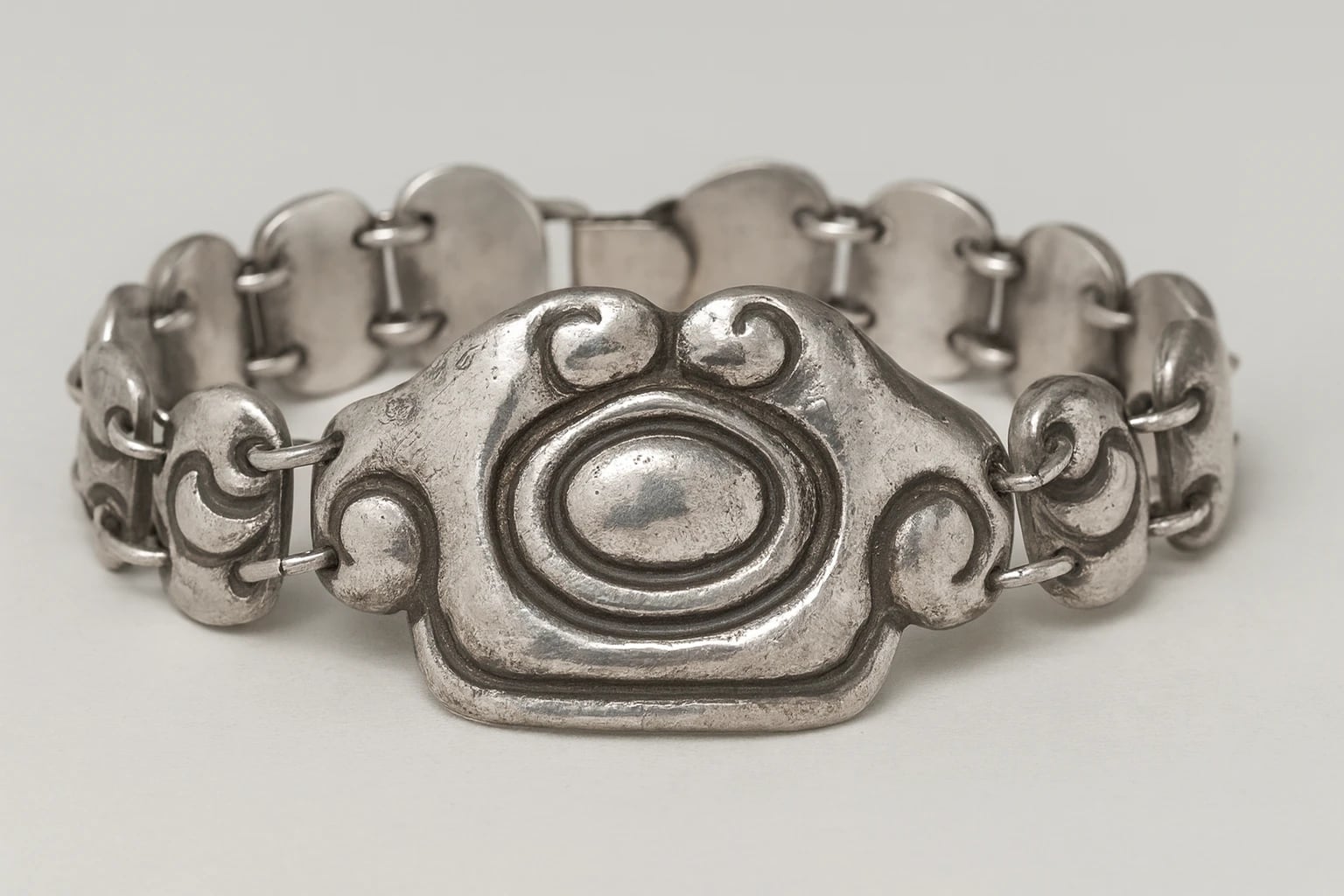
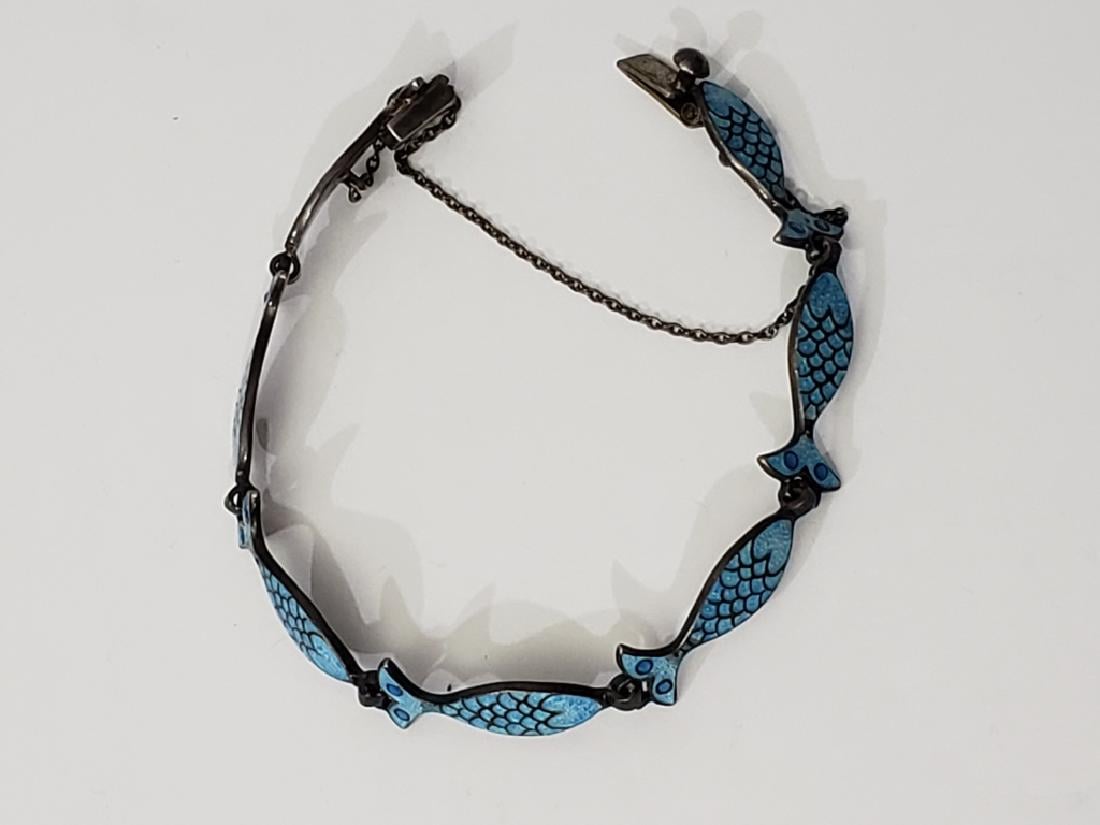
Design 5693 sits at the far end of Margot de Taxco's numbering, a bracelet from a shop that had already worked out its language of color and metal and could push it further. The design belongs to the era after 1955, when Margot's workshop began producing the champlevé enamel work that would define her reputation, and the number places it late in a sequence that ran from the 5100s into the higher ranges recorded on enamel pieces. What the bracelet demonstrates is not the discovery of a technique but its confident deployment: enamel set into recessed cells of sterling, fired to a hard glassy surface, and carried across an articulated band meant to move with the wrist.
The construction principle here is the one that separated Margot's best work from decorative silver that merely borrows color. In champlevé, the silversmith cuts or casts depressions into the metal, fills them with vitreous enamel, and grinds the surface flush so that thin walls of silver hold each field of color in place. The result reads as drawing and painting at once, with the metal supplying the line and the enamel supplying the plane. On a bracelet the demand is greater than on a static object, because the band must flex without cracking the fired glass. That requires the enamel to be confined to discrete links or panels, each rigid in itself, hinged to its neighbors so the color survives the bending. The rhythm of a Margot enamel bracelet is therefore a rhythm of repeated cells, and the design does its work in how those cells alternate, mirror, or progress along the arm.
Margot van Voorhies came to this material through a specific history. She had designed for Los Castillo, the taller founded by Antonio Castillo and his brothers, and created many of its early designs before the marriage ended in 1946. She opened Margot de Taxco in 1947 and turned to champlevé enamel production in 1955, building a body of work distinctive enough that other makers imitated it. Hougart notes that certain Castelan pieces in sterling with enamel are very reminiscent of Margot, a measure of how recognizable her formula had become. The imitation is telling. It confirms that the enamel bracelets were not incidental output but the signature that the market associated with her name, and it is why the reference literature also records a crude counterfeit Margot mark, the kind of forgery that only attaches to work worth copying.
For a collection tracing the Mexican silver renaissance, a late enamel bracelet like Design 5693 documents a chapter that ran parallel to the Spratling-derived sculptural silver and pursued a different ambition. Where much Taxco jewelry argued through mass and reflectivity, Margot argued through color locked permanently into metal, a technically exacting practice that few workshops sustained at her level. The bracelet shows a designer who had left the collaborative Los Castillo enterprise, established her own formal language, and made enamel the core of it. Placed beside the sterling work that dominates most accounts of the period, it corrects the impression that the renaissance spoke in a single material voice.
Museum of Mexican Silver. “Design 5693 Bracelet.” Catalog no. MoMS-001061. https://museumofmexicansilver.com/pieces/margot-bracelet-5693
See something wrong with this record? Suggest a correction and the piece details fill in automatically.
Margot de Taxco
Cornflower Clamper Cuff
after 1948
Sterling silver