Saves instantly, no account needed. Already a member? Sign in.
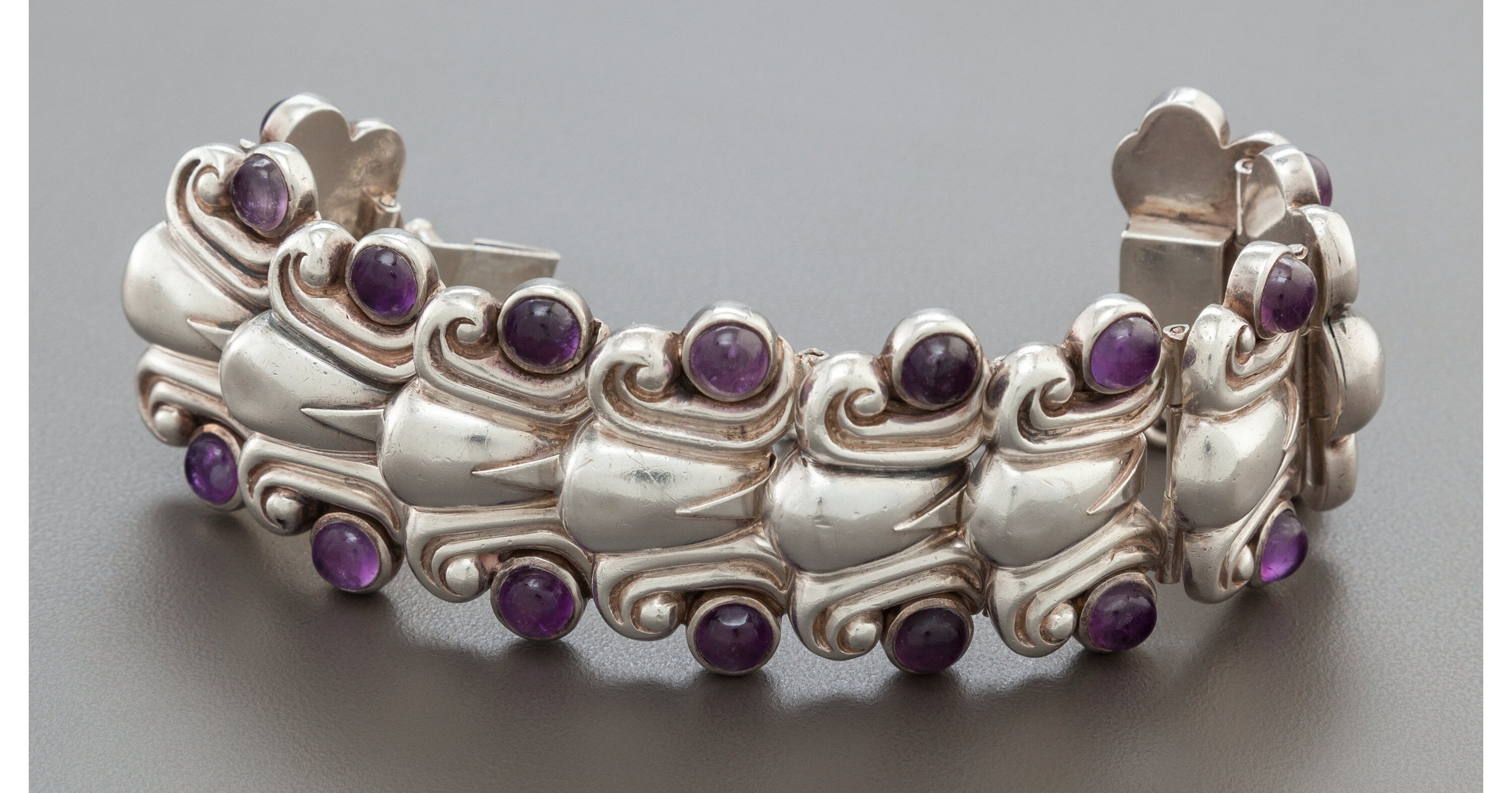
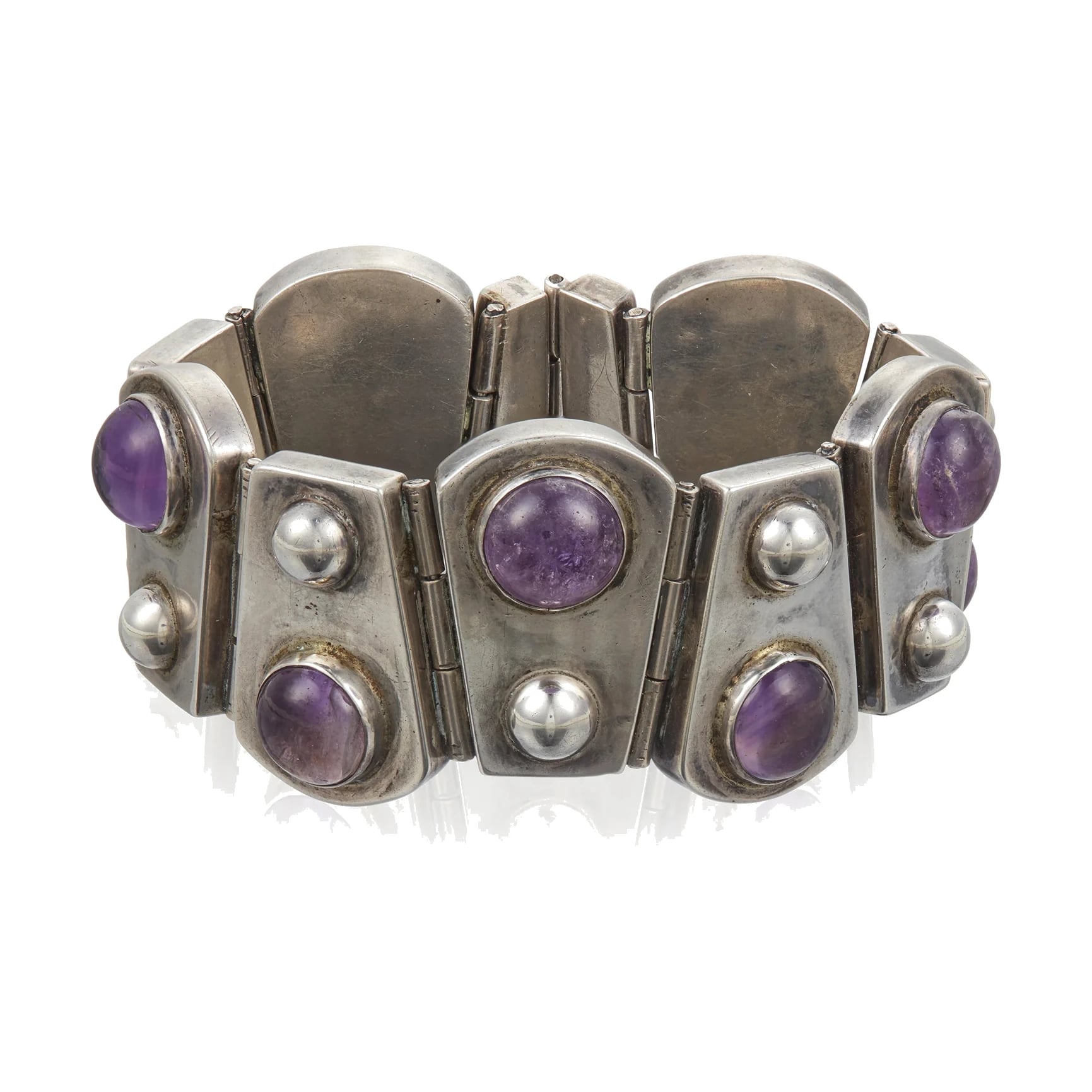
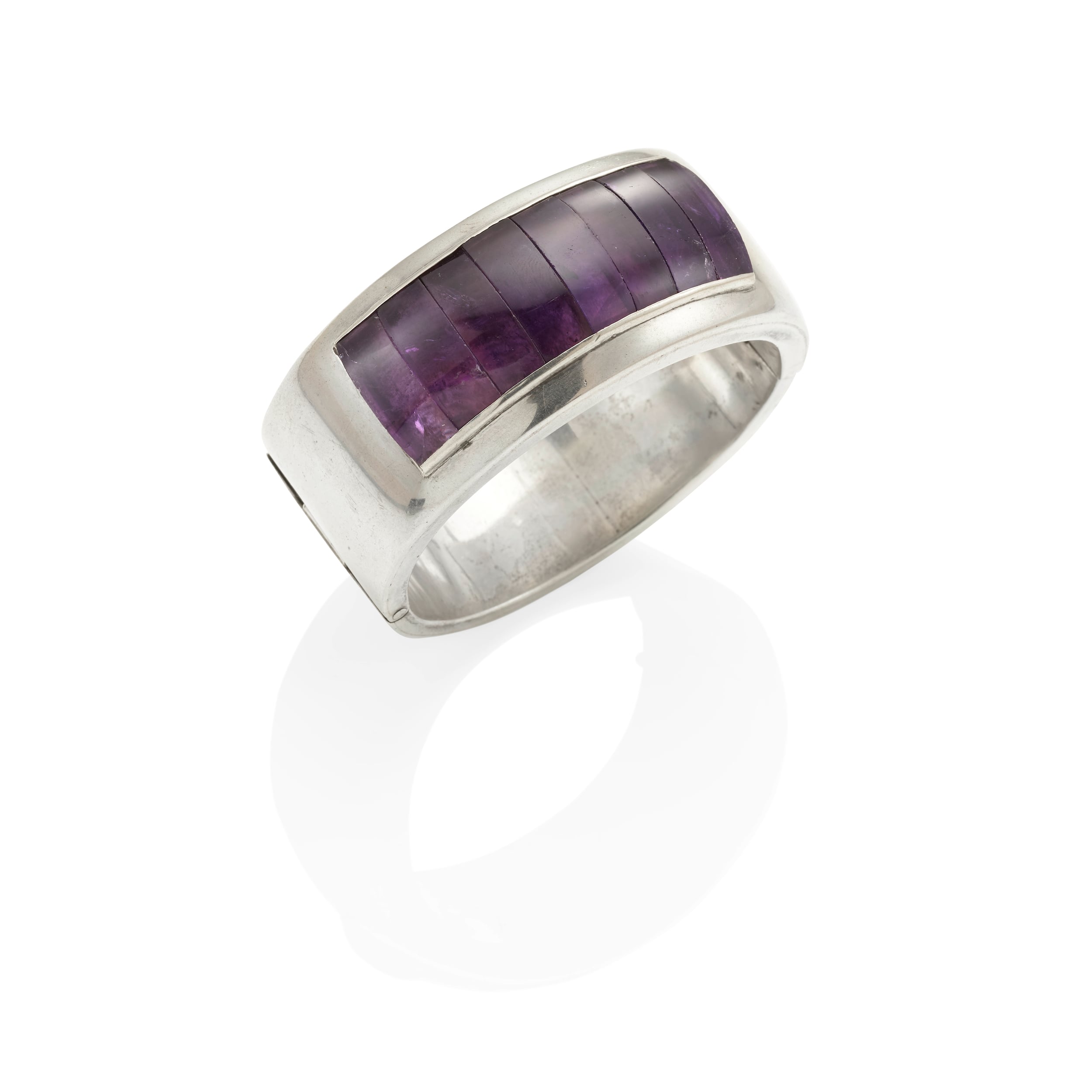
A row of amethyst cabochons runs the length of this bracelet, each stone set into a silver frame and linked to the next so the band curves around the wrist. The design is organized around repetition: identical cells, identical settings, a single stone type carried across the whole circumference. Antonio Pineda favored this kind of controlled seriality, in which a modernist grid meets the body's need to bend, and the interest lies in how uniform units accommodate movement without breaking the visual rhythm.
The amethyst is used as color and mass rather than as a faceted display of brilliance. Cut as cabochons, the stones read as smooth domes of violet, their rounded tops catching light softly against the harder reflectivity of the surrounding silver. Pineda often paired silver with translucent and semi translucent stones, and the pairing here sets a warm purple against the cool metal. The linked construction means each cell can pivot slightly on its neighbor, allowing the band to conform to the wrist while the row of stones stays continuous. Weight and articulation cannot be judged from appearance alone, but the segmented format is a familiar solution in Pineda's bracelets for keeping a rigid grid flexible.
Antonio Pineda directed one of the most inventive workshops of the postwar Taxco renaissance, working under the Antonio crown mark. Morrill's Silver Masters of Mexico documents a series of his bracelets from the mid to late 1950s built on comparable logic: the Cartouche with Moonstone Bracelet, the Concave Ovals Bracelet, the Squares with Bands bracelet, each organized around a repeated cell or a single recurring stone. Pineda trained in the milieu that grew out of Spratling's Taller de Las Delicias, but he developed a distinct formal language, drawn to smooth volumes, purified geometry, and the pairing of silver with colored stones chosen for their density of hue. This bracelet sits within that vocabulary of serial cabochon settings rather than standing apart from it.
The piece comes from the collection of Jill and Byron Crawford, whose holdings reflect sustained attention to Pineda and his contemporaries. As an example of his cabochon bracelets, it shows how the workshop translated a modernist interest in the module into wearable form, letting a strict repeating unit soften into the curve of the wrist. It records a characteristic phase of Pineda's mid century production, when color and disciplined repetition defined the work of his taller.
Museum of Mexican Silver. “Silver and Amethyst Cabochon Bracelet.” Catalog no. MoMS-001927. https://museumofmexicansilver.com/pieces/pineda-silver-and-amethyst-cabochon-bracelet
See something wrong with this record? Suggest a correction and the piece details fill in automatically.
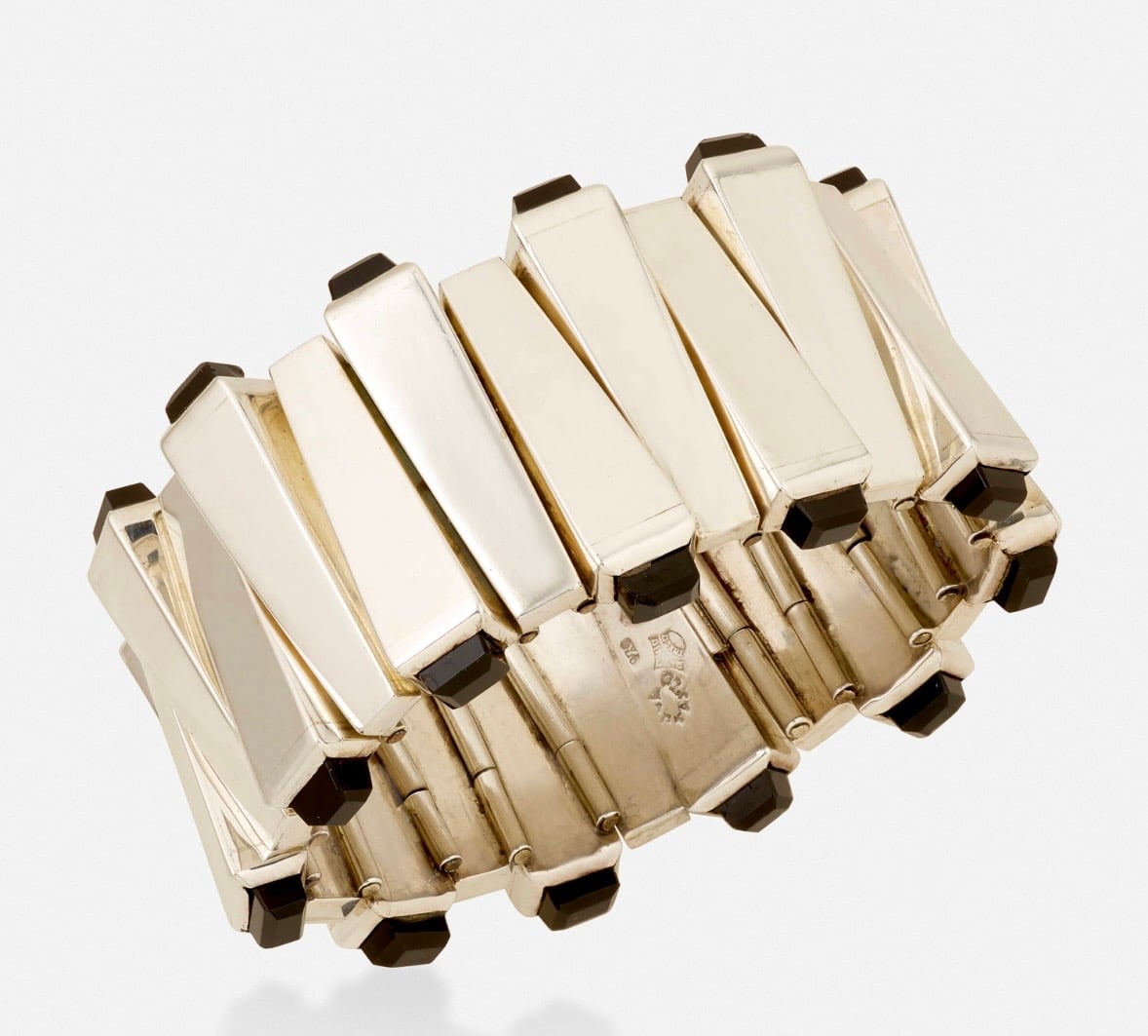
Antonio Pineda
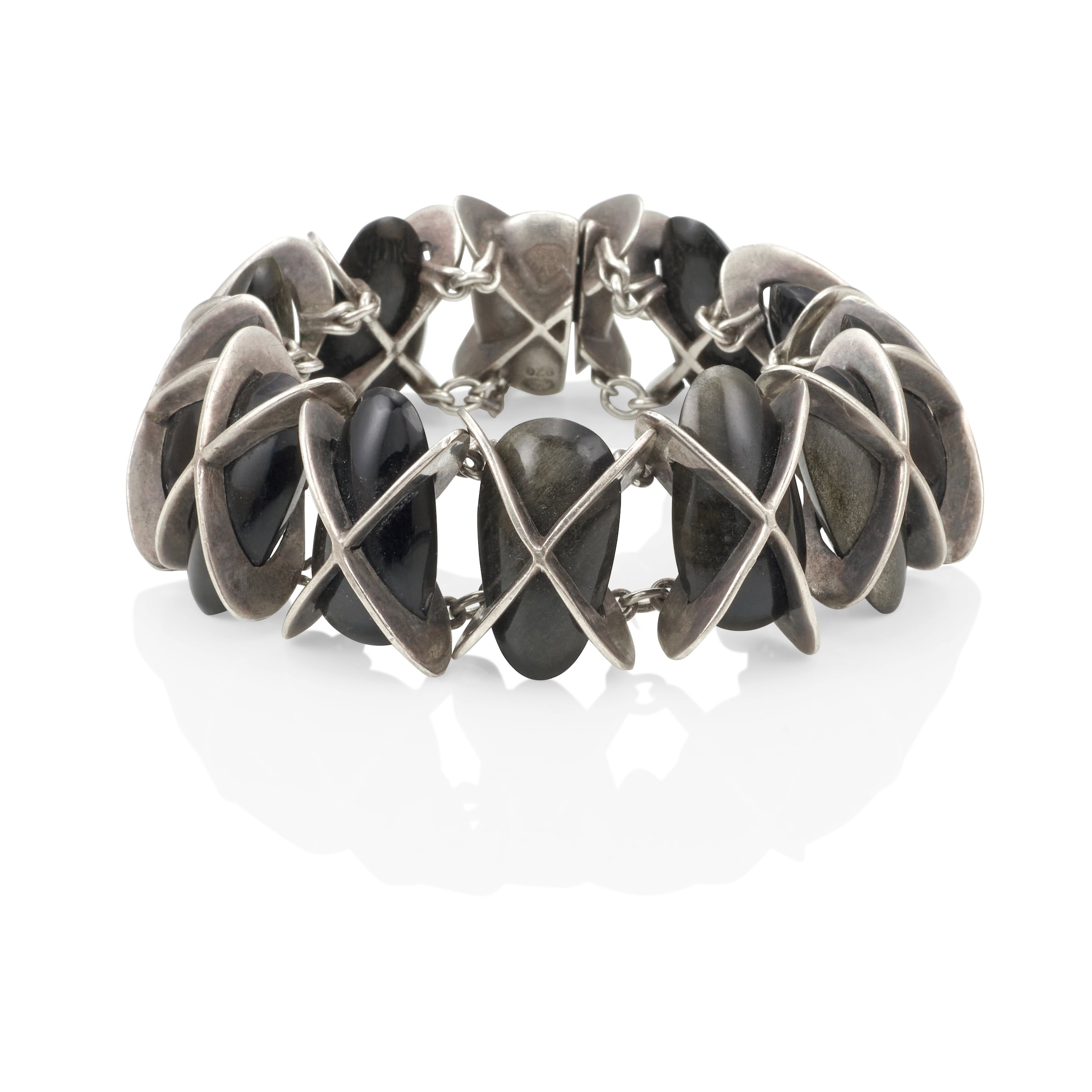
Matchstick Bracelet with Obsidian Tips
c. 1960
Sterling silver