Saves instantly, no account needed. Already a member? Sign in.
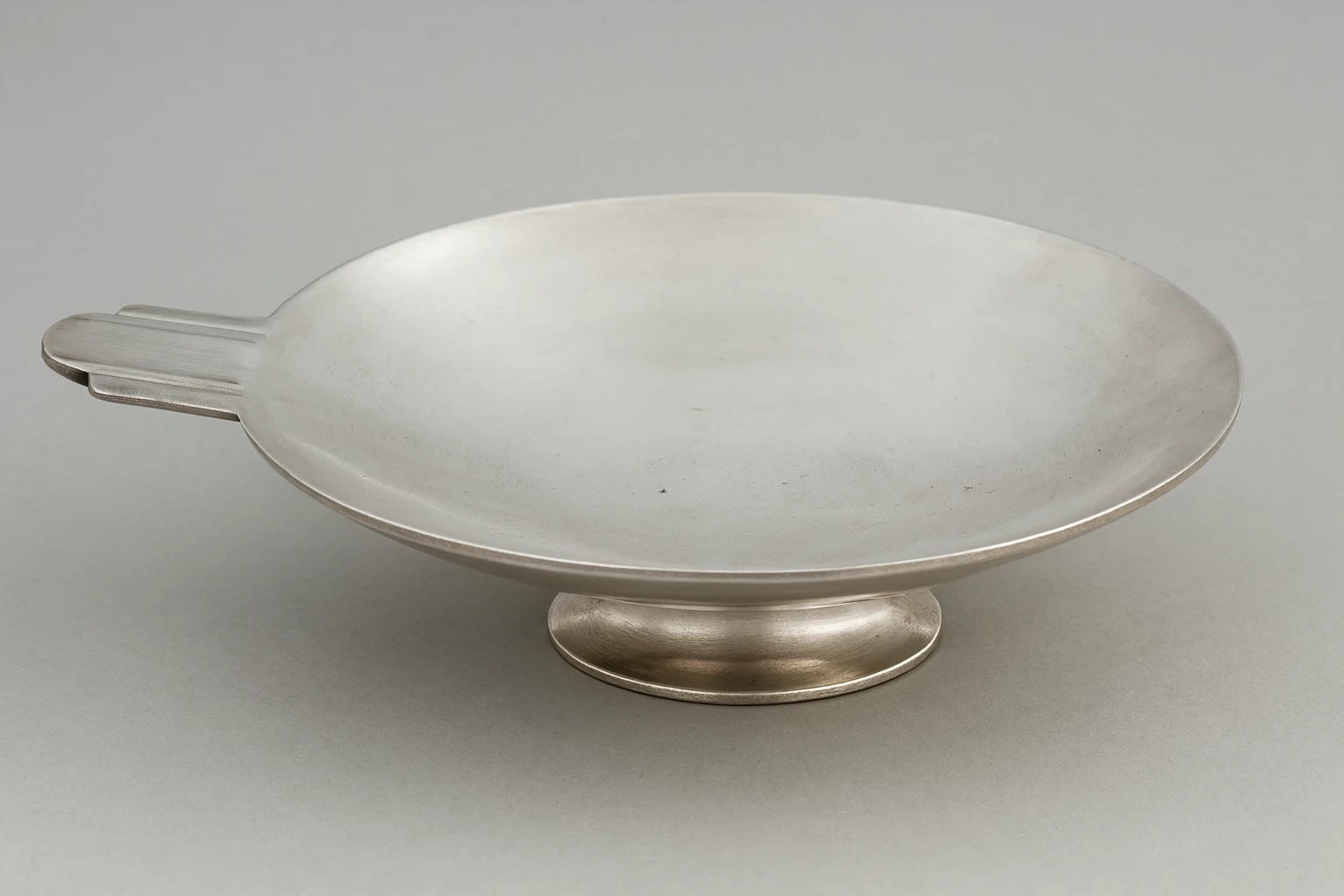
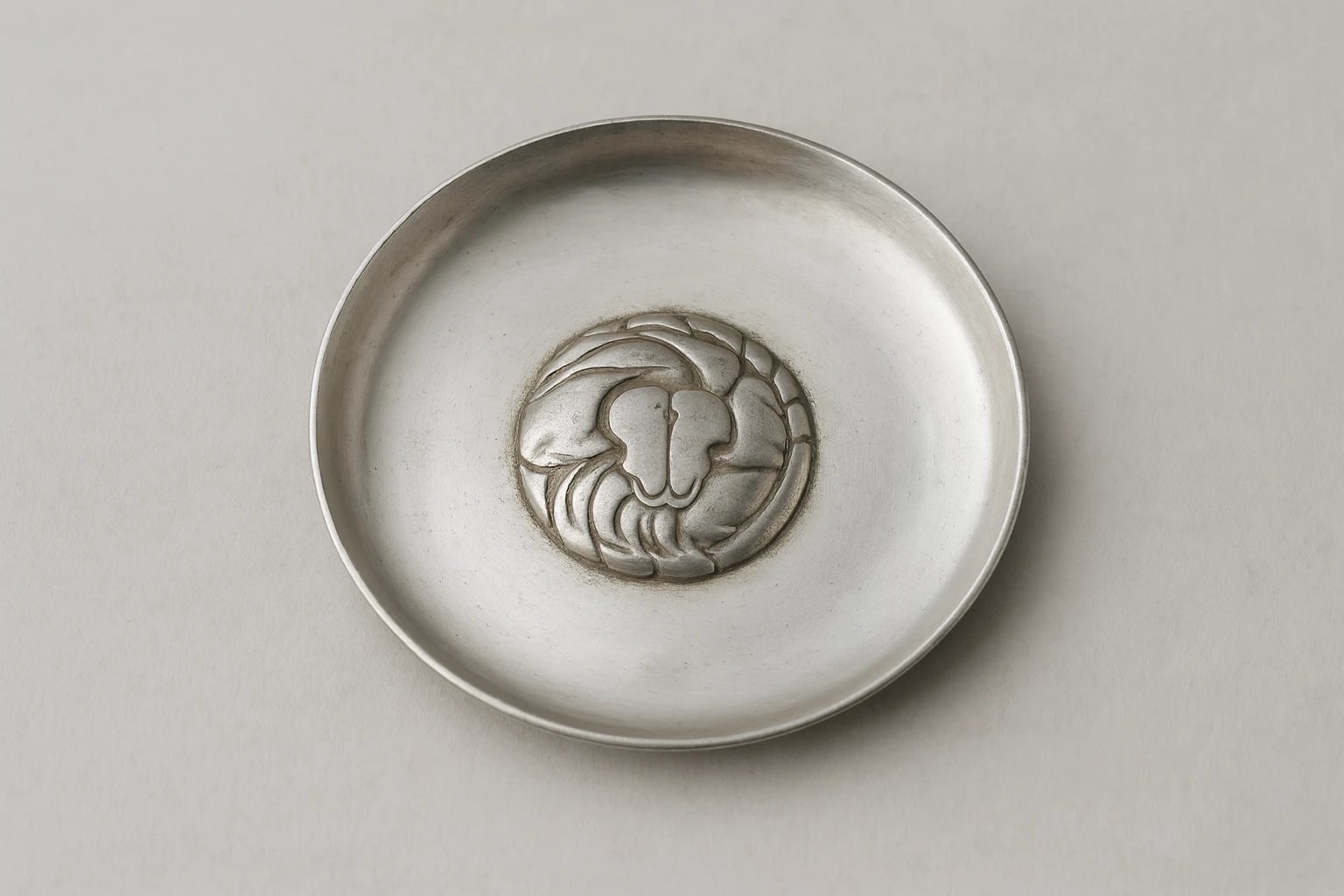
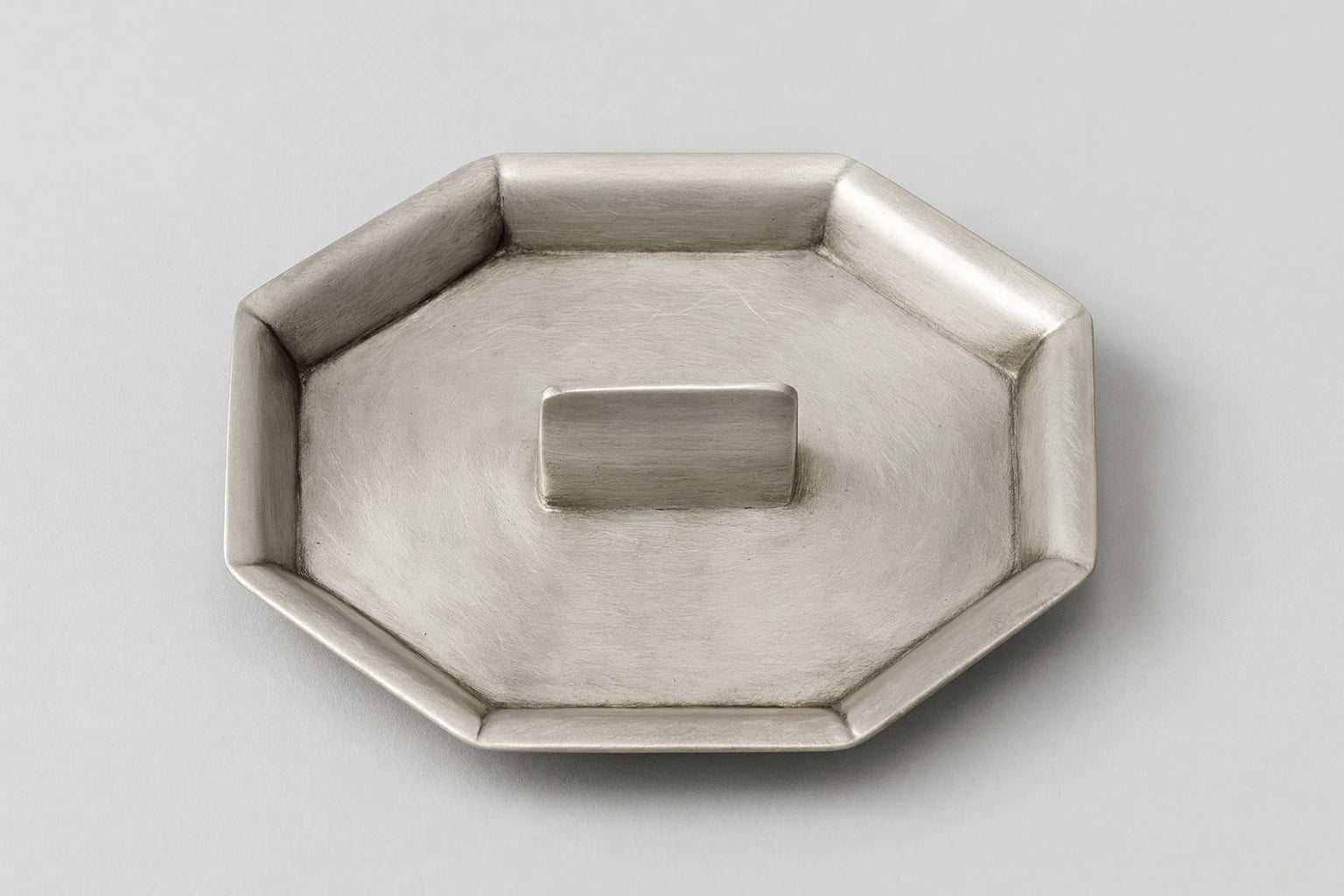
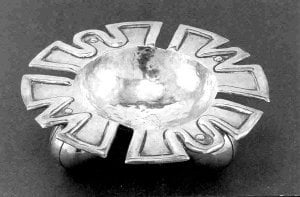
An ashtray carries a broad rim of strong Aztec repoussé and sits on three ball feet, a domestic object given the weight of Mexico's pre-Conquest past.
This is Spratling's design philosophy in functional form. He described his early sources as "almost literal copies of Aztec and Colonial motives," a pre-Columbian vocabulary used as a "point of departure" rather than reproduced wholesale (Morrill, p. 39). Repoussé worked into the rim of a useful object turns ancient design into everyday silver.
Ashtrays were among the holloware that defined the workshop's table production. When the McNay Art Institute organized "The World of William Spratling" in 1965, ashtrays were among the objects on the published inventory (Morrill, p. 77).
The piece dates to the First Design Period, 1931 to 1946.
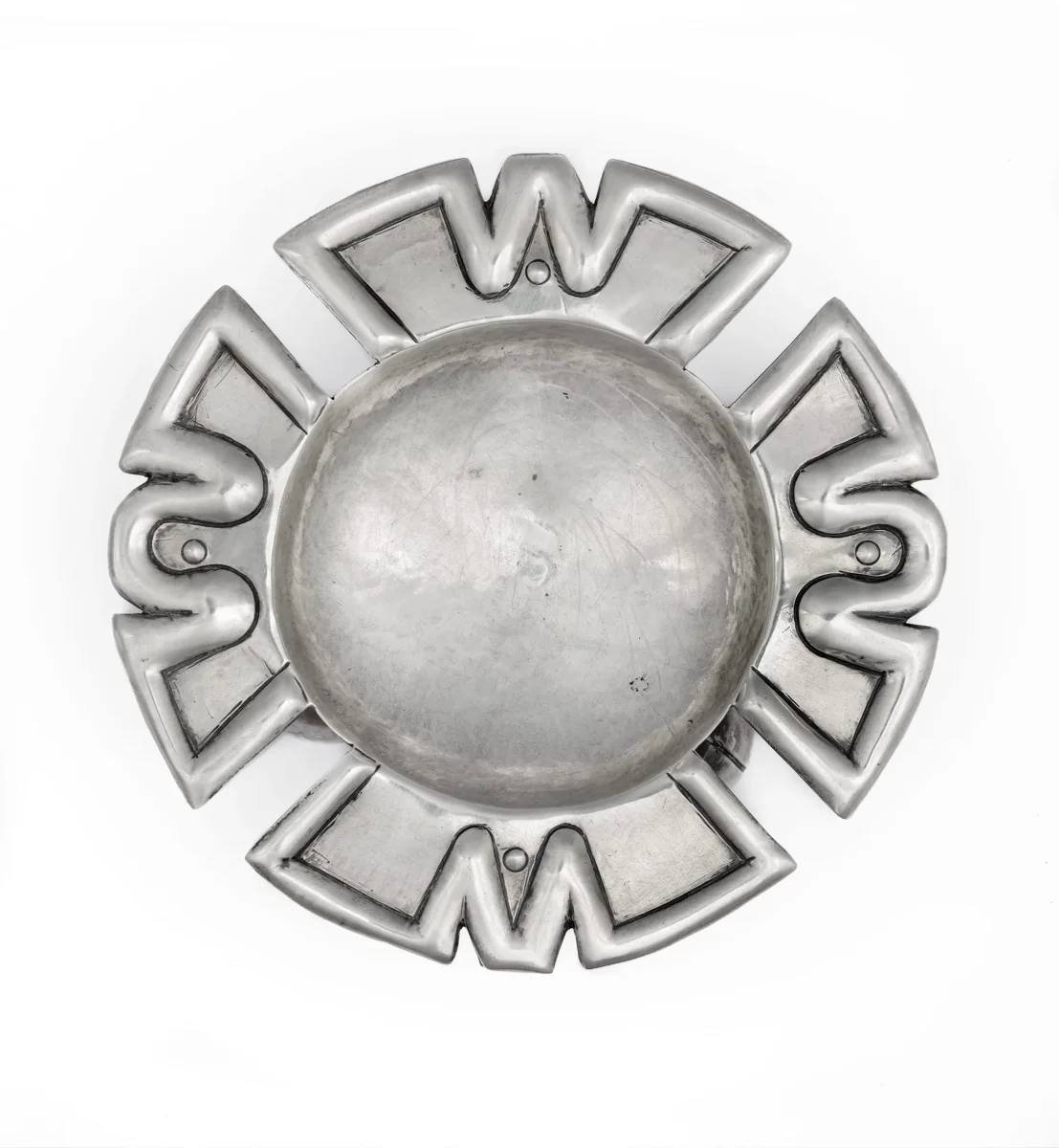
Ashtray (Cenicero), 1933-1938
Accession M.2015.249.11. Official museum record Photo: Los Angeles County Museum of Art.
Verified against each institution's own collection records. All museum collections
Museum of Mexican Silver. “Aztec Repousse Ashtray.” Catalog no. MoMS-000016. https://museumofmexicansilver.com/pieces/spratling-2369
See something wrong with this record? Suggest a correction and the piece details fill in automatically.
William Spratling
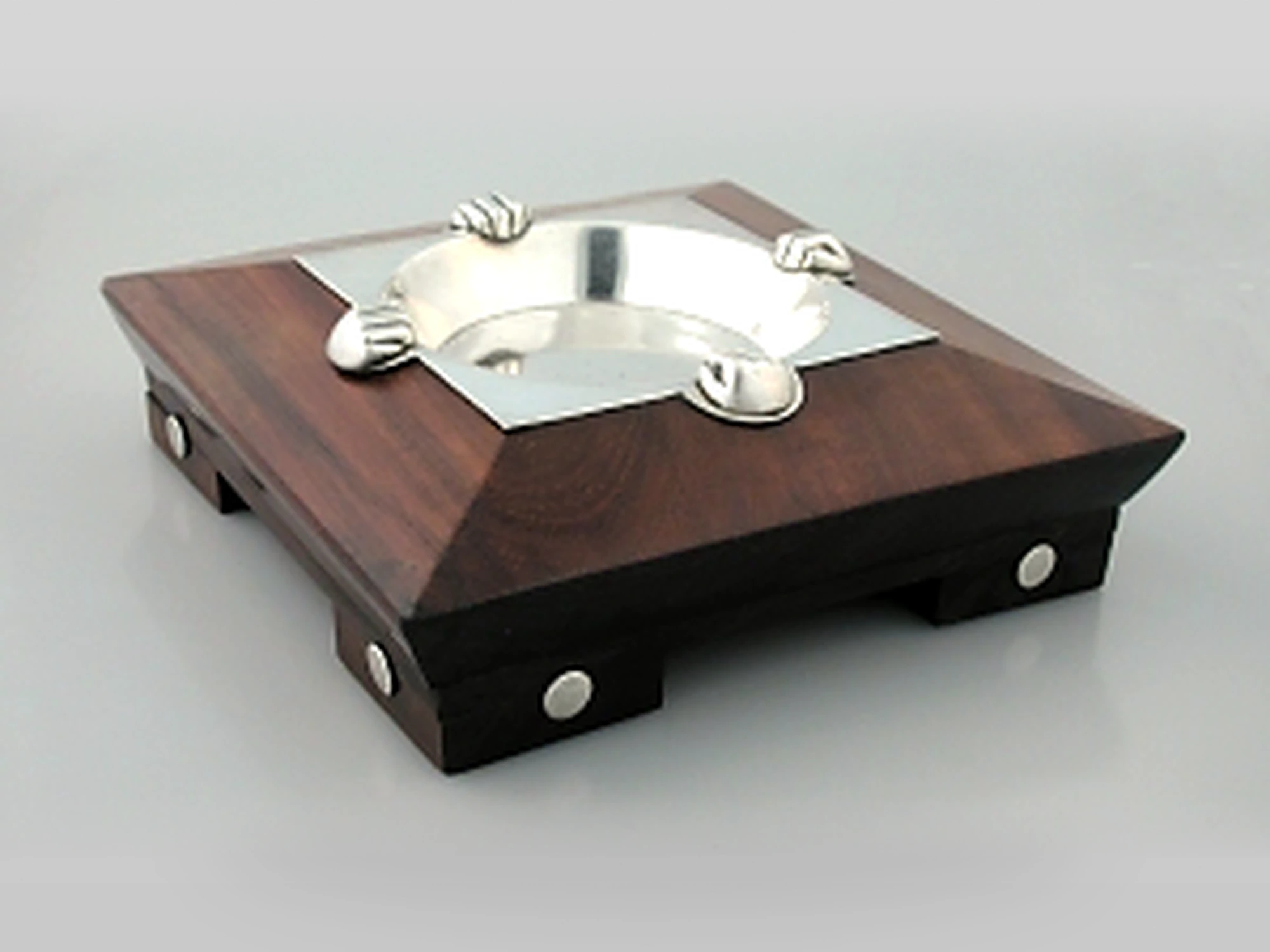
Silver Fist Mahogany Ashtray
Third Design Period: 1951 - 1967
Mahogany