Saves instantly, no account needed. Already a member? Sign in.
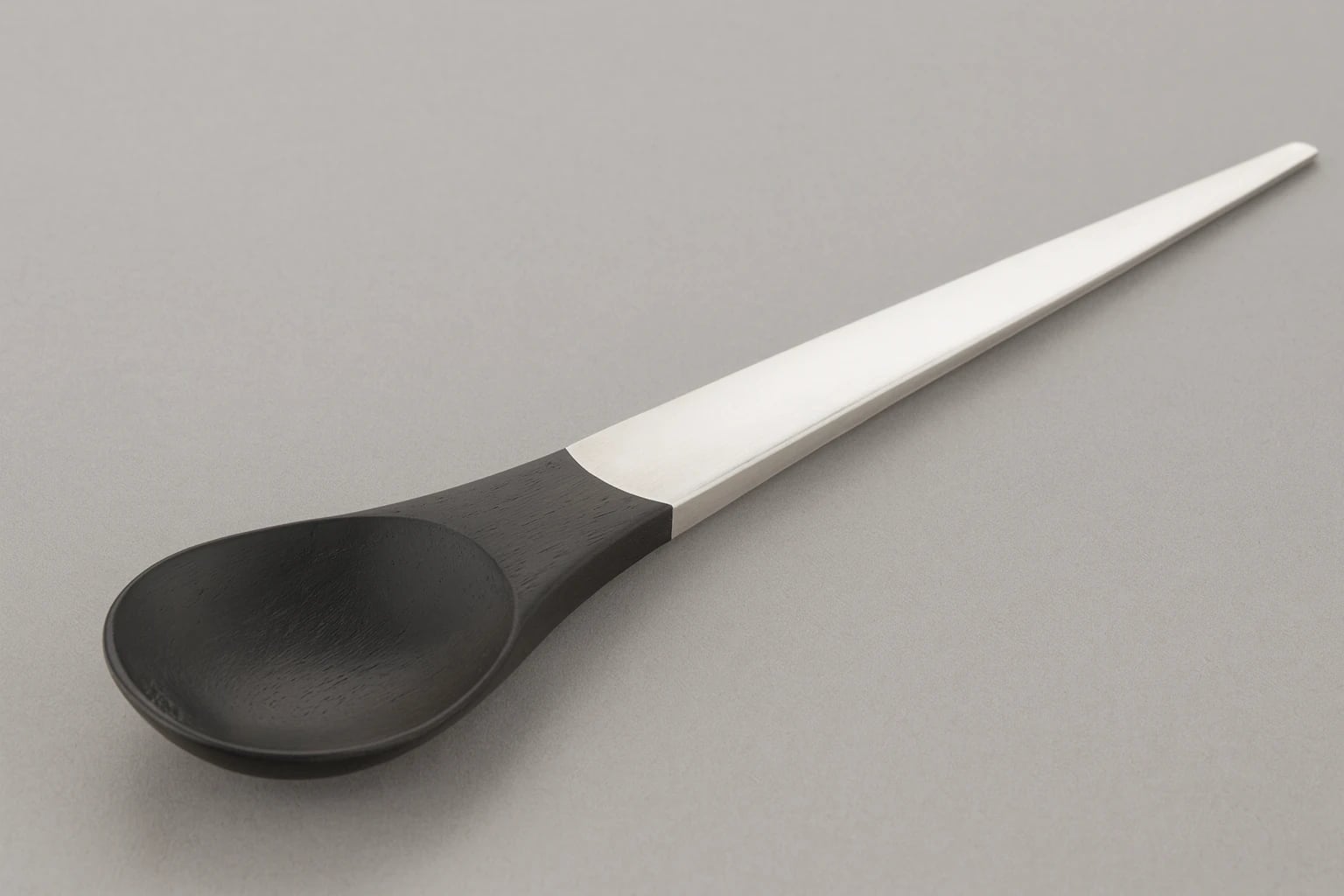
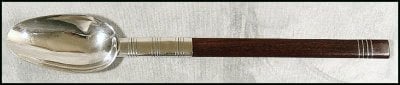
A salad serving spoon with a slender rosewood handle, part of a matched set with a fork, this piece pairs warm wood with silver in Spratling's table service. Three inset silver wires run down the rosewood handle, picking up three groups of three incised horizontal lines at the base of the spoon's bowl, so the metal and the wood share one rhythm.
Flatware and holloware were a real part of Spratling's workshop production, hand-wrought to the same standard as his jewelry (Morrill, Mexican Silver, 1994, pp. 53, 251). A wood-handled salad server belongs to that program of fine table silver.
The silver-and-rosewood pairing is characteristic of Spratling's taste for setting metal against dark wood for contrast (Morrill, p. 73), and the inset wires and incised lines show his habit of carrying one decorative idea across the whole object. The repetition of threes gives the design its discipline.
That the spoon survives with its matching fork makes it a record of a complete serving set. Table silver survives in smaller numbers than Spratling's jewelry, so a documented wood-and-silver server is a useful example of his flatware design.
Museum of Mexican Silver. “Rosewood Salad Spoon.” Catalog no. MoMS-000531. https://museumofmexicansilver.com/pieces/spratling-3150
See something wrong with this record? Suggest a correction and the piece details fill in automatically.
William Spratling
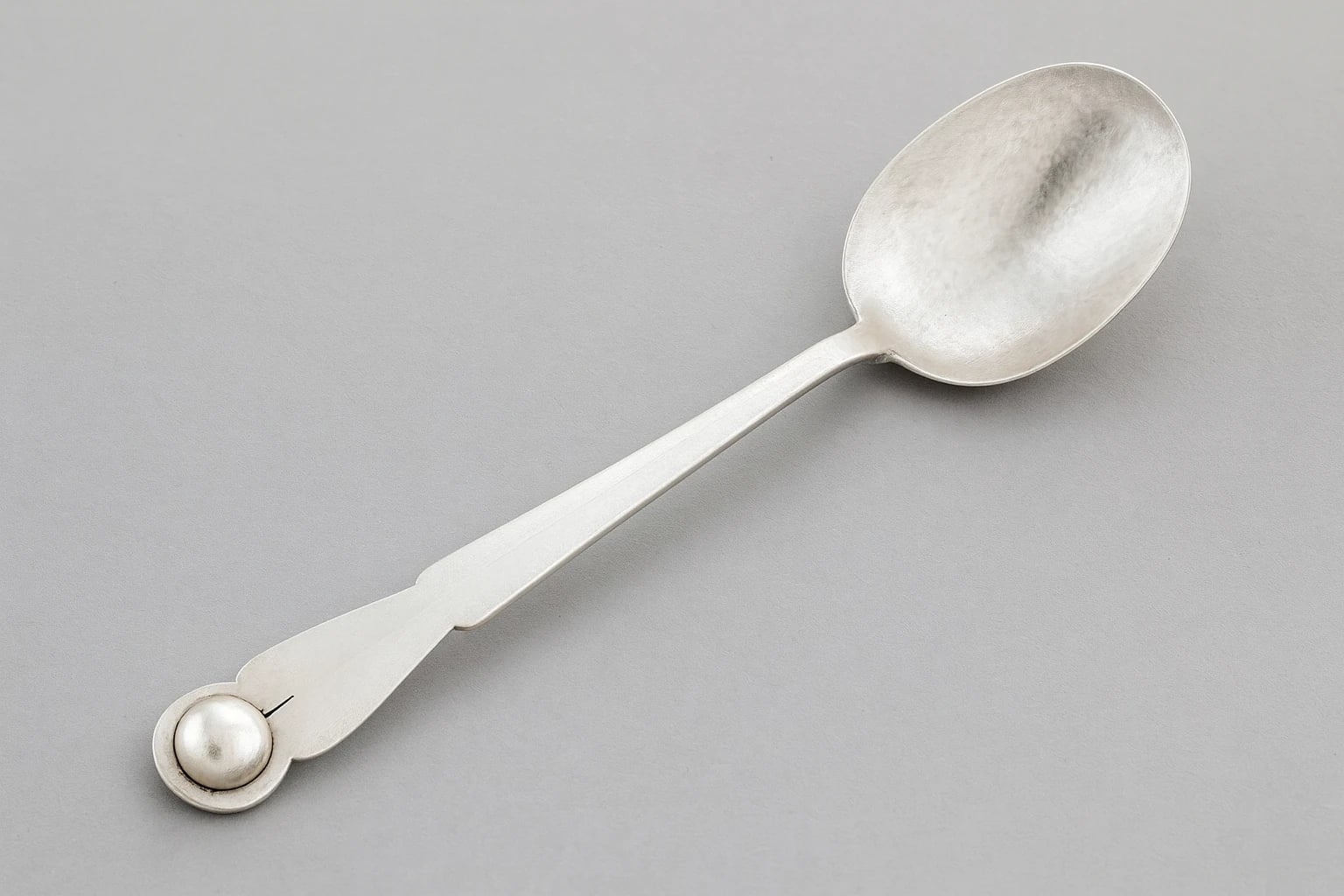
Ball End Salad Spoon
First Design Period: 1931 - 1946
Silver