Saves instantly, no account needed. Already a member? Sign in.
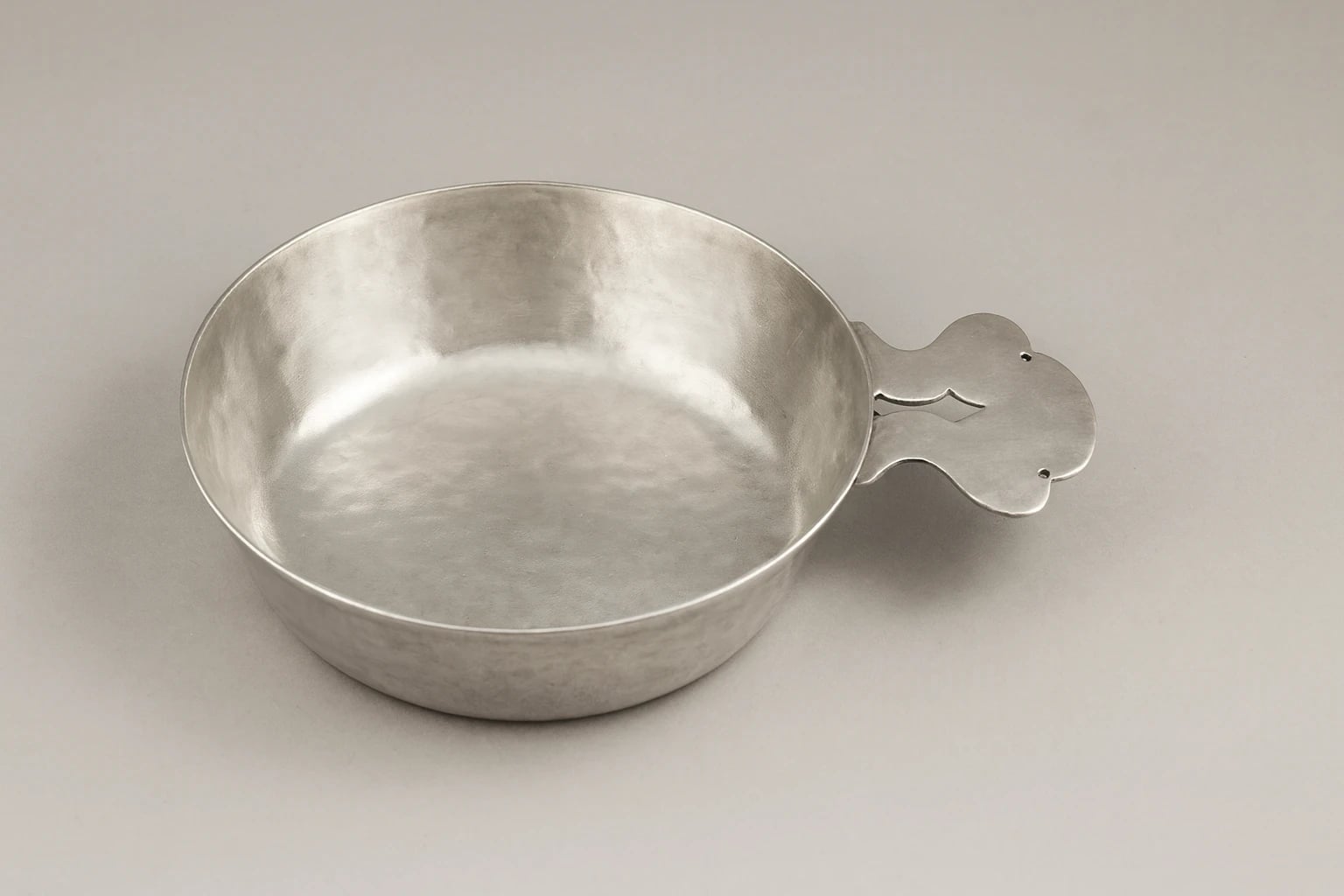
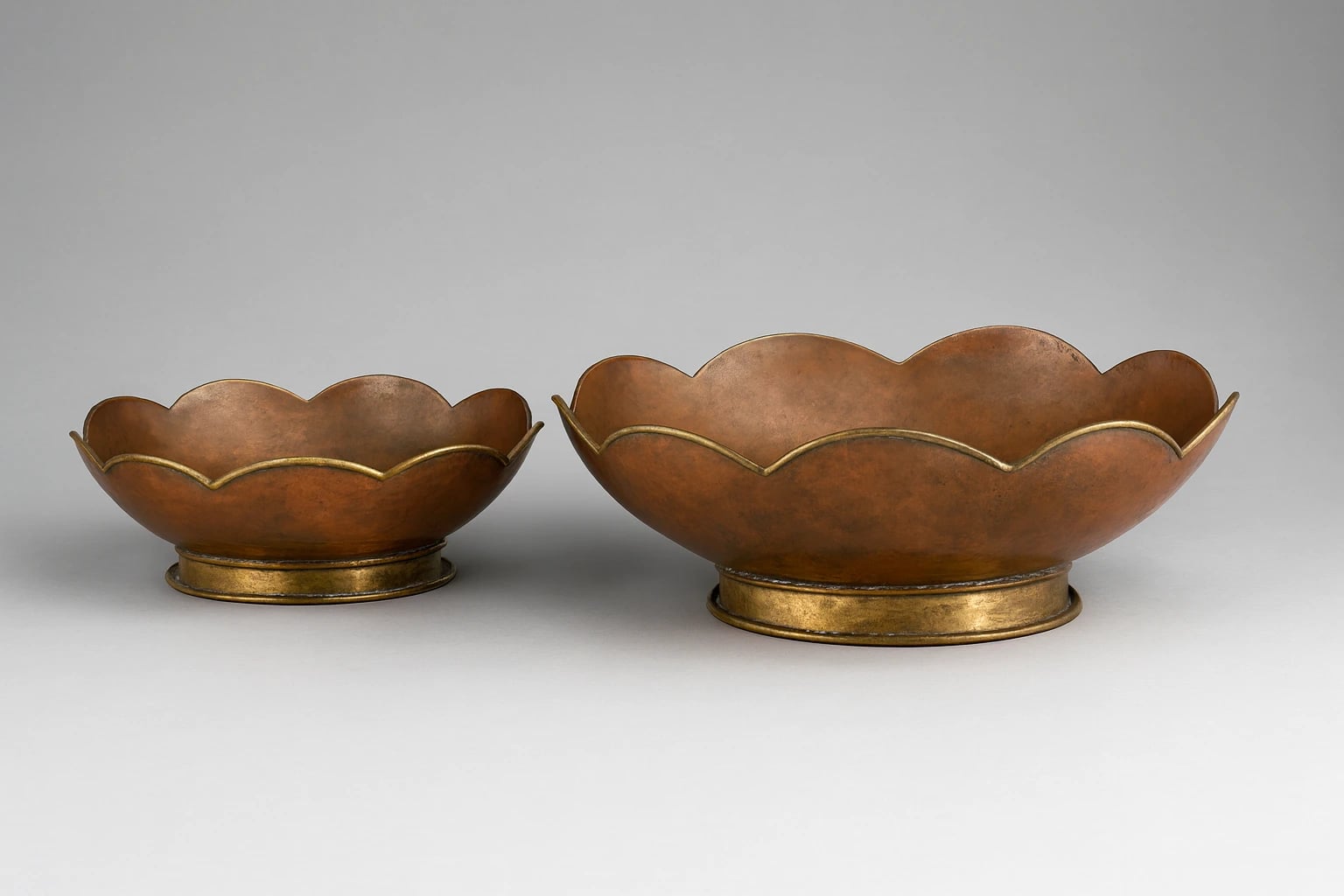
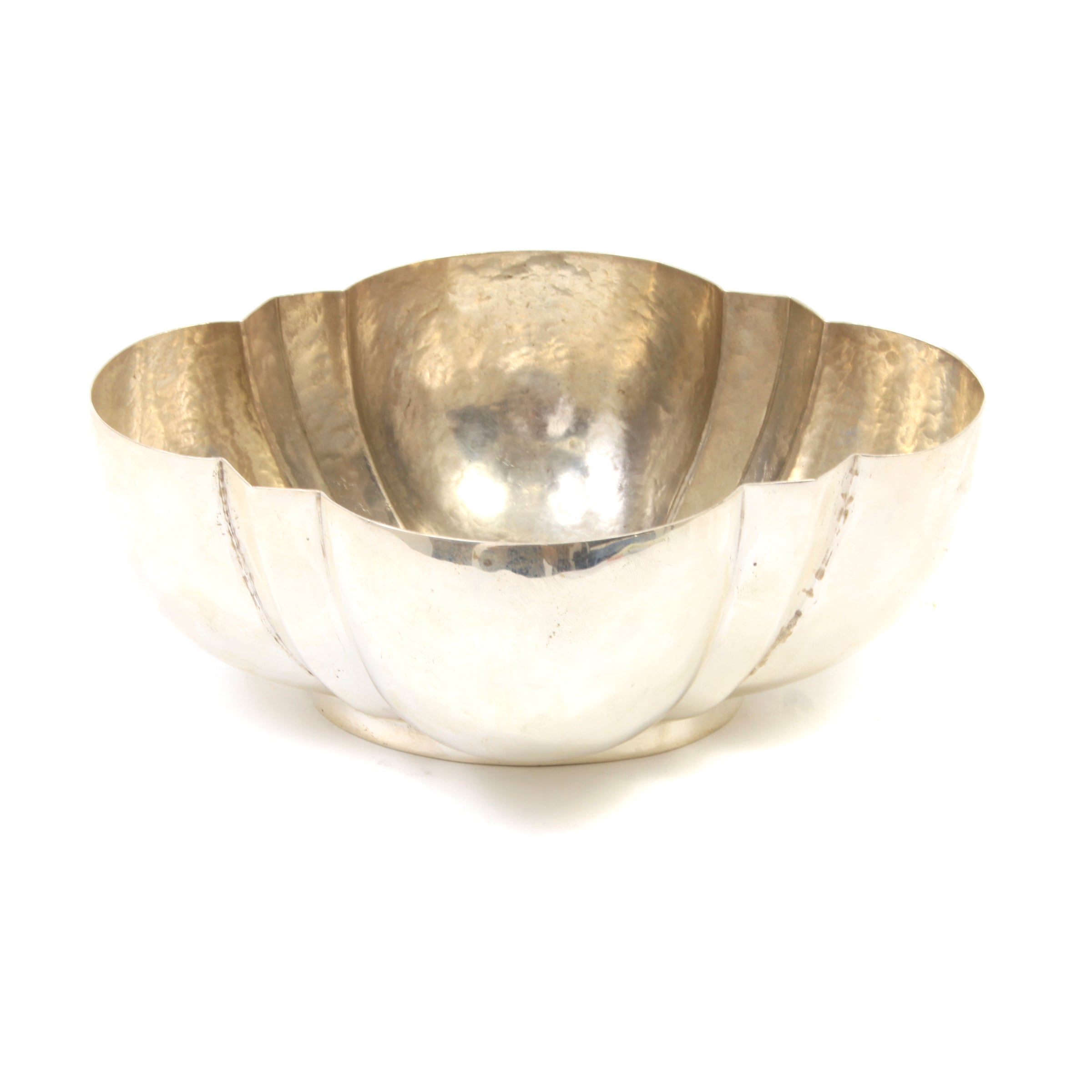
A shallow silver bowl takes its form from a single decision carried out around its entire circumference: the rim is worked into a continuous series of scallops, and the body is left densely covered in the marks of the hammer. The result is a vessel that reads as a field of light rather than a smooth reflective surface. Where a spun or machine-finished bowl would return a clean mirror image, this one breaks the light into hundreds of small facets, so the metal appears to hold a soft, moving brightness. The scalloped edge organizes that field, giving the eye a steady rhythm to follow around the perimeter while the hammered interior stays alive with texture.
The hammering here is structural as much as decorative. Raising and finishing a bowl by hand leaves a record of the process in the metal, each blow slightly overlapping the last, and Spratling's workshop chose to preserve rather than polish away that evidence. In the vocabulary the Taxco silversmiths used for their own techniques, this is the domain of the hammer and the cincel, the marking tools that shape and texture a surface through repeated controlled strikes. The scallops at the rim require the edge to be worked in a regular, planned sequence, so that the curves meet cleanly and the vessel keeps a true circular footprint. The interplay is simple to describe and demanding to execute: a disciplined geometric border containing a deliberately irregular ground.
The bowl belongs to Spratling's first design period, the years following his founding of the Taller de Las Delicias in 1931, when the workshop was building the formal language that would define early Taxco silver. It reflects a decision that runs through much of that early production, to let hand process become the ornament rather than applying separate decorative elements to a finished surface. This was a workshop achievement, not a solitary one. Spratling directed design and standards while master smiths and specialists translated those decisions into finished objects, the collaborative taller structure that later allowed designers across Taxco, among them Antonio Pineda and the Castillo brothers, to concentrate on form while working with skilled hands at the bench. The hammered scalloped bowl shows that same division of labor applied to hollowware, where raising a vessel and finishing its edge demand different competencies within a single object.
Recorded in the principal Spratling references, including Cederwall and Riney's Spratling Silver and Morrill's study of the Spratling workshop, the bowl documents how the taller extended its hand-process aesthetic beyond jewelry into functional silver for the table. It shows the early workshop treating a domestic object with the same attention to surface and edge that shaped its brooches and necklaces, and it preserves, in the visible texture of the metal, a direct account of how such a piece was made.
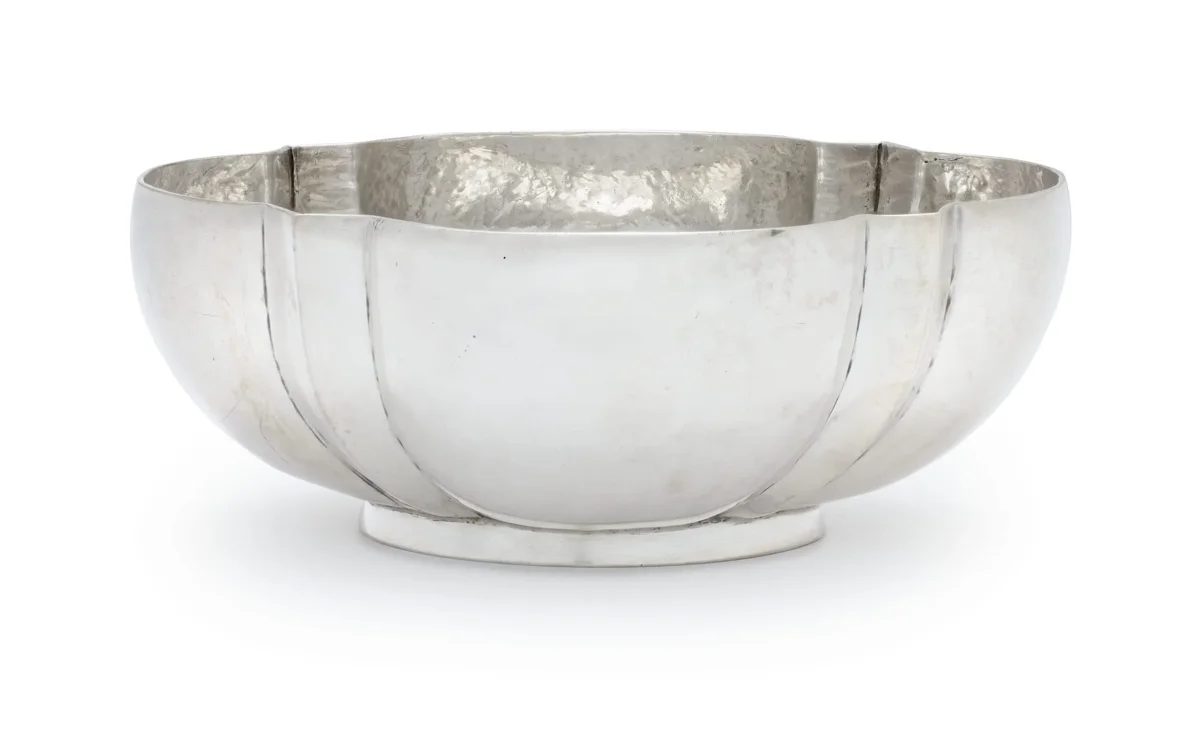
Scalloped-shaped Bowl, circa 1940-1945
Accession M.2018.68.41. Official museum record Photo: Los Angeles County Museum of Art.
Verified against each institution's own collection records. All museum collections
Museum of Mexican Silver. “Hand Hammered Scalloped Silver Bowl.” Catalog no. MoMS-000029. https://museumofmexicansilver.com/pieces/spratling-39
See something wrong with this record? Suggest a correction and the piece details fill in automatically.
William Spratling
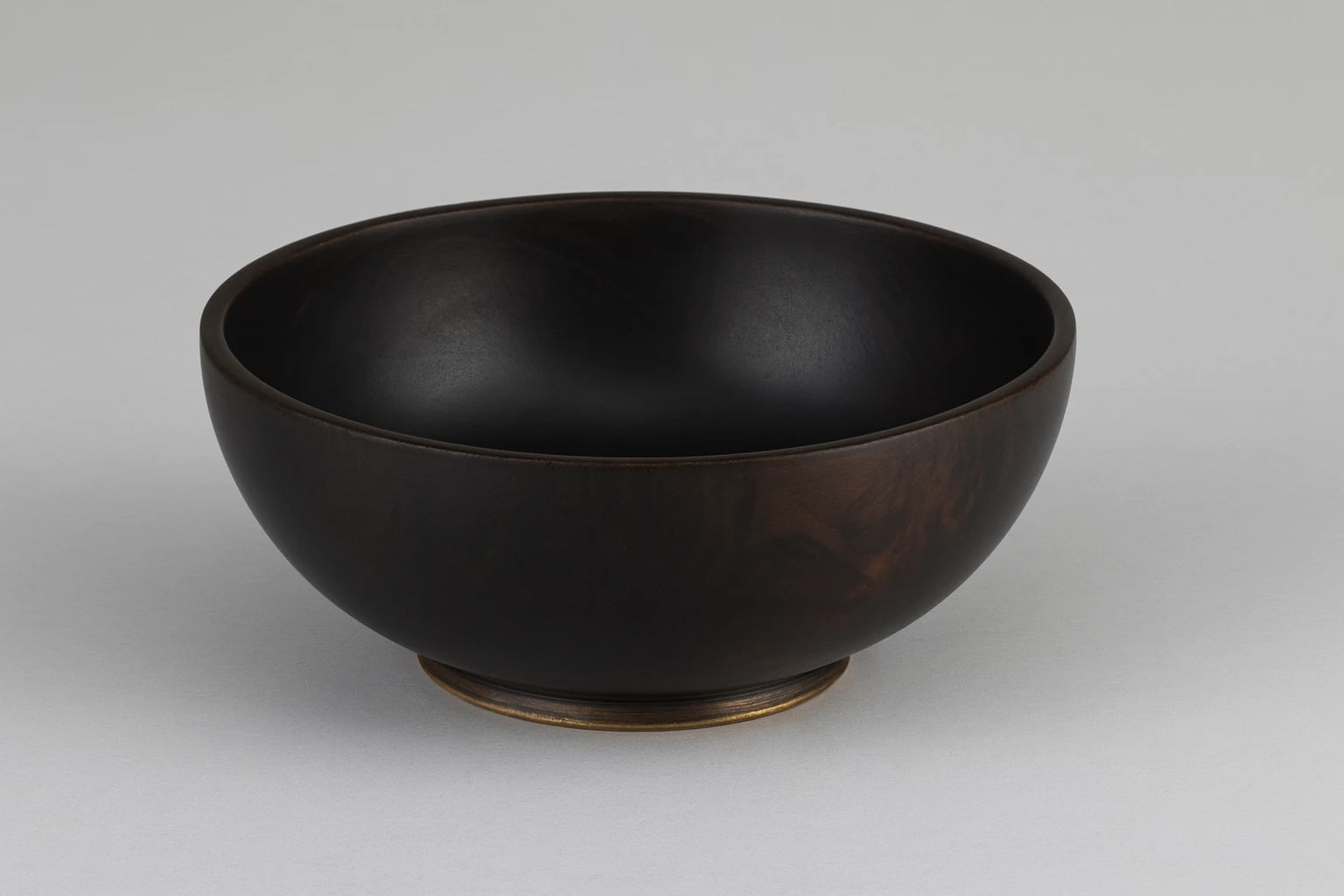
Inset Circle Softwood Bowl
First Design Period: 1931 - 1946
Wood