Saves instantly, no account needed. Already a member? Sign in.
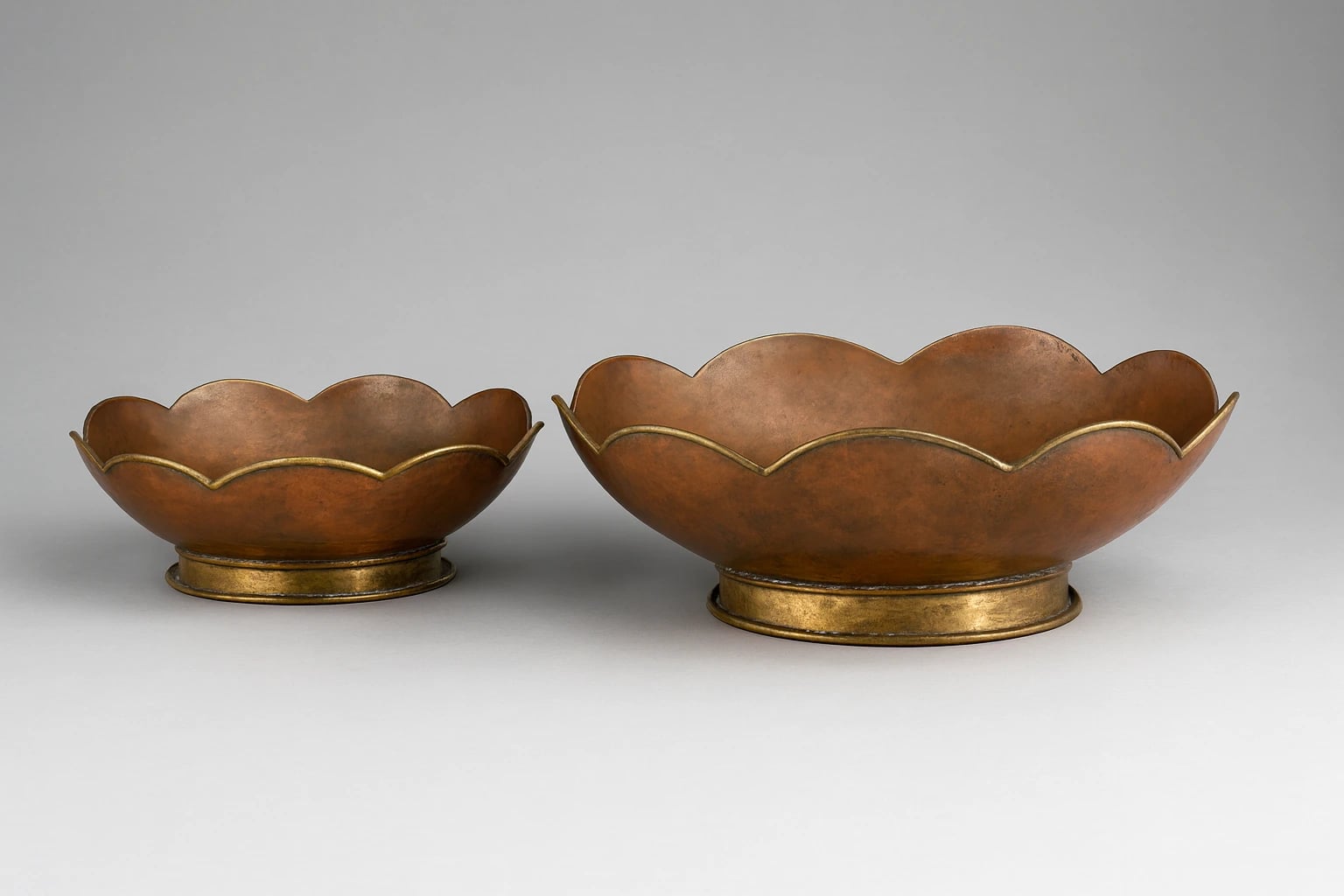
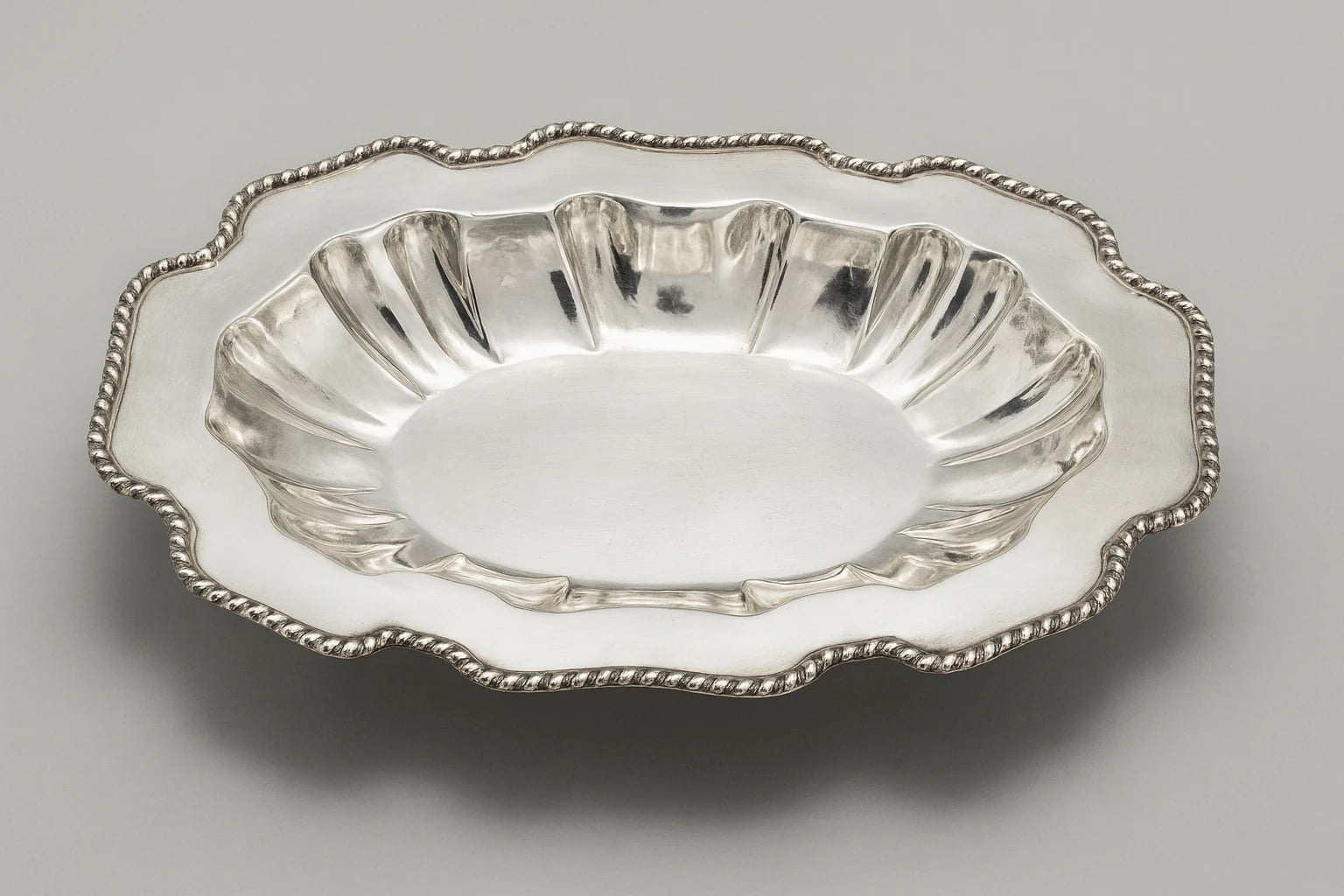
The scalloped rim is the design. A continuous applied rope border traces every curve of the bowl's edge, so the eye follows an unbroken twisted line as it rises and dips around the vessel. The scalloping is not a decorative flourish added to a round bowl but the governing geometry, a repeating wave that gives a functional serving piece a defined rhythm. The rope frames that rhythm and holds it, turning the boundary between silver and air into the most active part of the object.
The bowl belongs to William Spratling's first design period, the years between founding the Taller de Las Delicias in 1931 and 1946, when much of his hollowware drew on colonial and vernacular Mexican forms rather than the pared modernism of his later jewelry. The rope border, called a torzal, was a recurring device in his tableware, a braided cord of silver soldered along an edge to define and strengthen it. Here the rope does structural and visual work at once: it stiffens the thin scalloped rim and gives the flat lip a finished weight, while its twist catches light differently from the smooth body, so the outline reads as a bright cord against the broader planes of reflection within the bowl. The scalloped form itself was part of a shared vocabulary in the workshop. The Museum's record notes that the same shape was used on a large meat platter, which points to how Spratling's taller developed serving forms as coordinated families, a bowl and a platter sharing a profile so that a table set with Las Delicias silver held together as a whole.
Understanding this piece means understanding the production system Spratling built rather than crediting a single pair of hands. The Taller de Las Delicias combined a designer's authority with the specialized skills of master smiths, and hollowware of this kind required raising, planishing, and the careful application of a rope border, each a distinct competence. The workshop trained a generation that reshaped Mexican silver, including figures who passed through Las Delicias before establishing their own talleres. This bowl reflects the same design intelligence that Spratling applied across the shop's output, an insistence that even a vegetable dish carry a considered edge and a clear silhouette. It also situates him within a broader Mexican silver renaissance rather than at its lonely origin, one designer among many, though an early and influential one, who understood that tableware could carry serious design.
As a document of Spratling's hollowware, the bowl records how the early taller translated a Mexican serving tradition into silver with restraint. It is not a rare experimental object but a resolved example of workshop practice: a coordinated form, an economical decorative device that also strengthens the piece, and a surface calibrated to reflect light along its scalloped course. Seen beside the jewelry that has come to dominate Spratling's reputation, it broadens the picture of what the first design period actually produced, and how much thought went into the objects meant for daily use at the table.
Museum of Mexican Silver. “Scalloped Vegetable Bowl Outlined with Rope.” Catalog no. MoMS-000205. https://museumofmexicansilver.com/pieces/spratling-520
See something wrong with this record? Suggest a correction and the piece details fill in automatically.
William Spratling
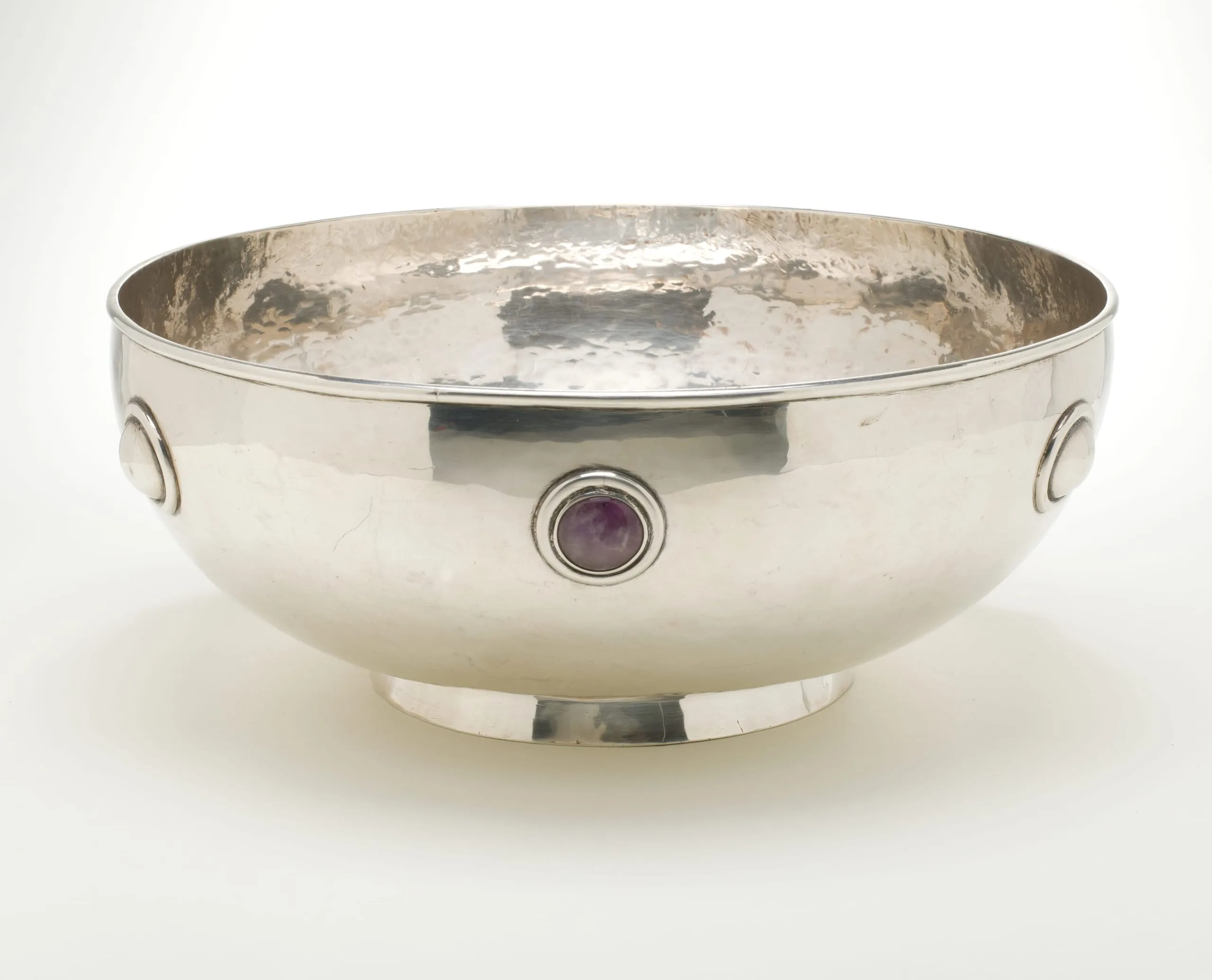
Silver and Amethyst Punch Bowl
Silver