Saves instantly, no account needed. Already a member? Sign in.
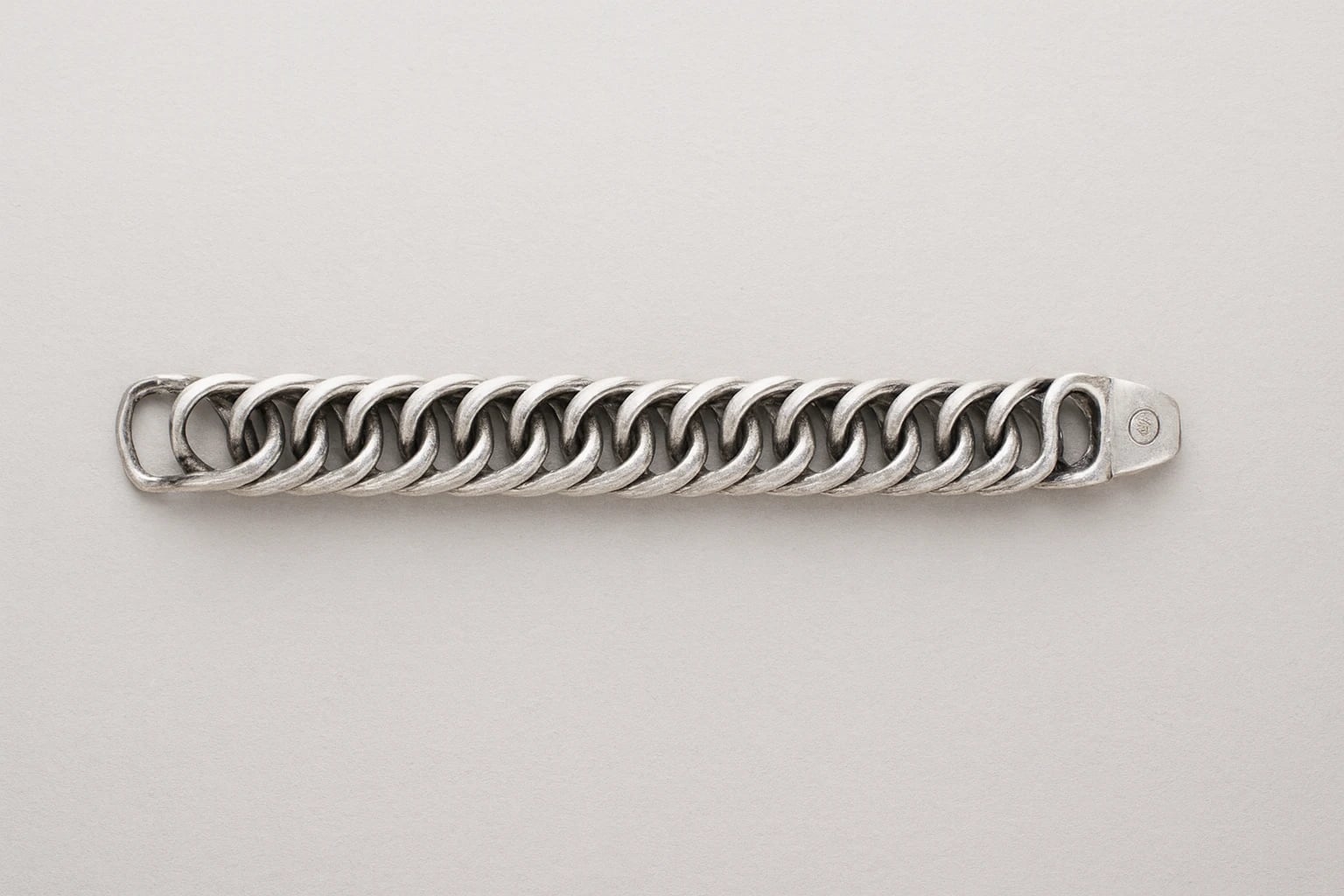
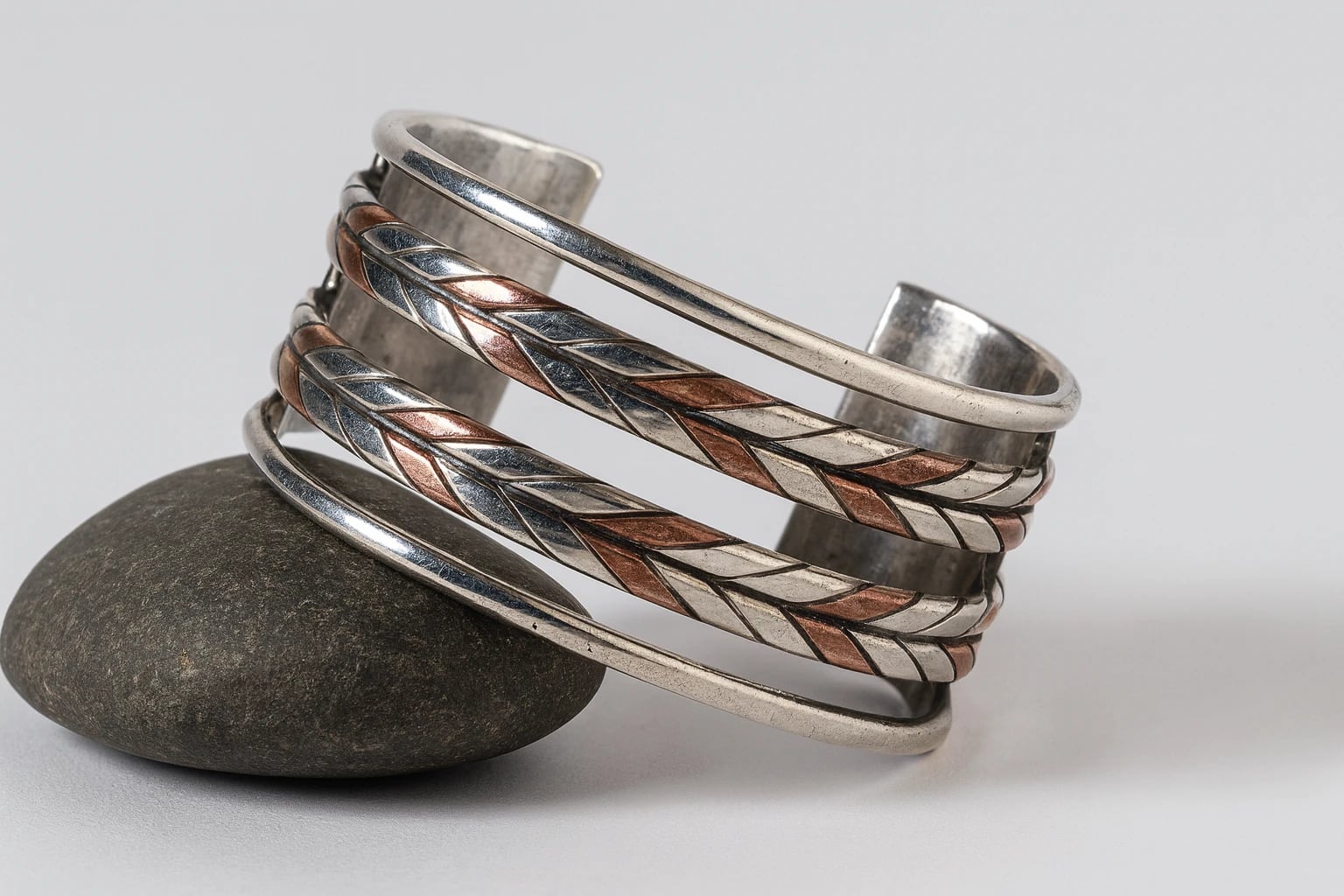
Braid two soft metals of different color into a single band and the ornament becomes the structure. This cuff by William Spratling does exactly that, weaving strands of silver and copper into an interlaced surface where the pattern holding the bracelet together is also the thing the eye follows. The two metals do not blend. Silver stays cool and reflective, copper reads warm and dark, and the alternation of the two as they cross over and under gives the band its rhythm. Nothing is applied to the surface. The decoration is the construction.
The braid organizes the whole object. Each strand passes over its neighbor at a regular interval, so the band carries a steady diagonal beat around the wrist, and the open cuff form lets that beat run without interruption from clasp or hinge. Copper against silver was a deliberate material choice rather than an economy. The contrast of color is the design, and it depends on keeping the two metals legible as distinct threads rather than fusing them into a uniform tone. This use of copper alongside silver belongs to Spratling's early practice, when he treated base metal as a color and a texture in its own right, not as a substitute for something finer.
The design carries a documented history within Spratling's first period at the Taller de Las Delicias. It was listed in the 1938 catalogue as silver and bronce, and by the 1942 catalogue the same design appears as silver and copper, a shift in how the workshop named the alloy rather than a change in the object. That the cuff moves through successive catalogues shows it as an established part of the Las Delicias line, produced and sold across years rather than made once. The design is recorded in Phyllis Goddard's field guide to Spratling silver and in Morrill and Berk's survey of twentieth century Mexican metalwork, placing it firmly within the documented body of his first design period, roughly 1931 to 1946. That period established the vocabulary the later Taxco School would build on, and the mixed metal braid is one of its plainest, most direct ideas.
Within a collection, this cuff records Spratling working with the simplest possible means: two metals, one structural principle, no stones or applied ornament. It shows how the early Las Delicias workshop could take a technique as old as braiding and use color contrast to make it modern. A version of the design in copper has been reissued, which speaks to the continuing appeal of the pattern, but the silver and copper cuff is the form the 1938 and 1942 catalogues describe, and it preserves the first period's confidence that material and construction alone could carry a design.
William Spratling Sterling Silver and Copper Cuff
Auctions at Showplace · 2026-03-05
William Spratling Sterling & Copper Cuff Bracelet
Revere Auctions · 2025-03-26
A William Spratling silver and copper cuff bracelet
John Moran Auctioneers · 2022-11-15
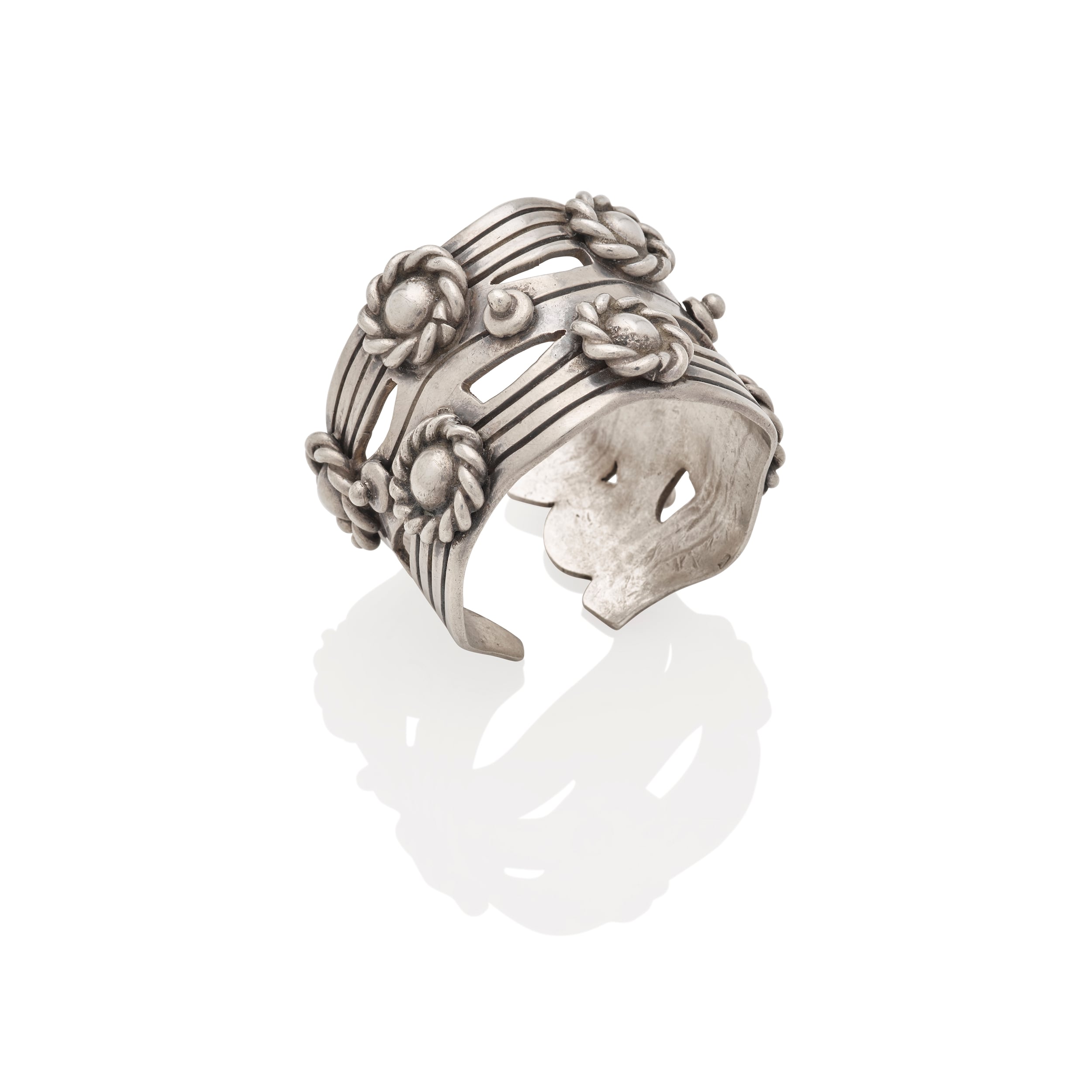
A WILLIAM SPRATLING SILVER AND COPPER CUFF BRACELET William Spratling, Taxco, Mexico, circa 1950 Marks: WS, SPRATLING, MADE IN MEXICO, SPRATLING SILVER 2-5/8 inches wide (6.7 cm) 3.8 ounces (gross)
Heritage Auctions · 2012-09-25
Museum of Mexican Silver. “Braided Silver and Copper Cuff Bracelet.” Catalog no. MoMS-000048. https://museumofmexicansilver.com/pieces/spratling-64
See something wrong with this record? Suggest a correction and the piece details fill in automatically.
William Spratling
Large River of Life Cuff Bracelet
First Design Period: 1931 - 1946
Silver