Saves instantly, no account needed. Already a member? Sign in.
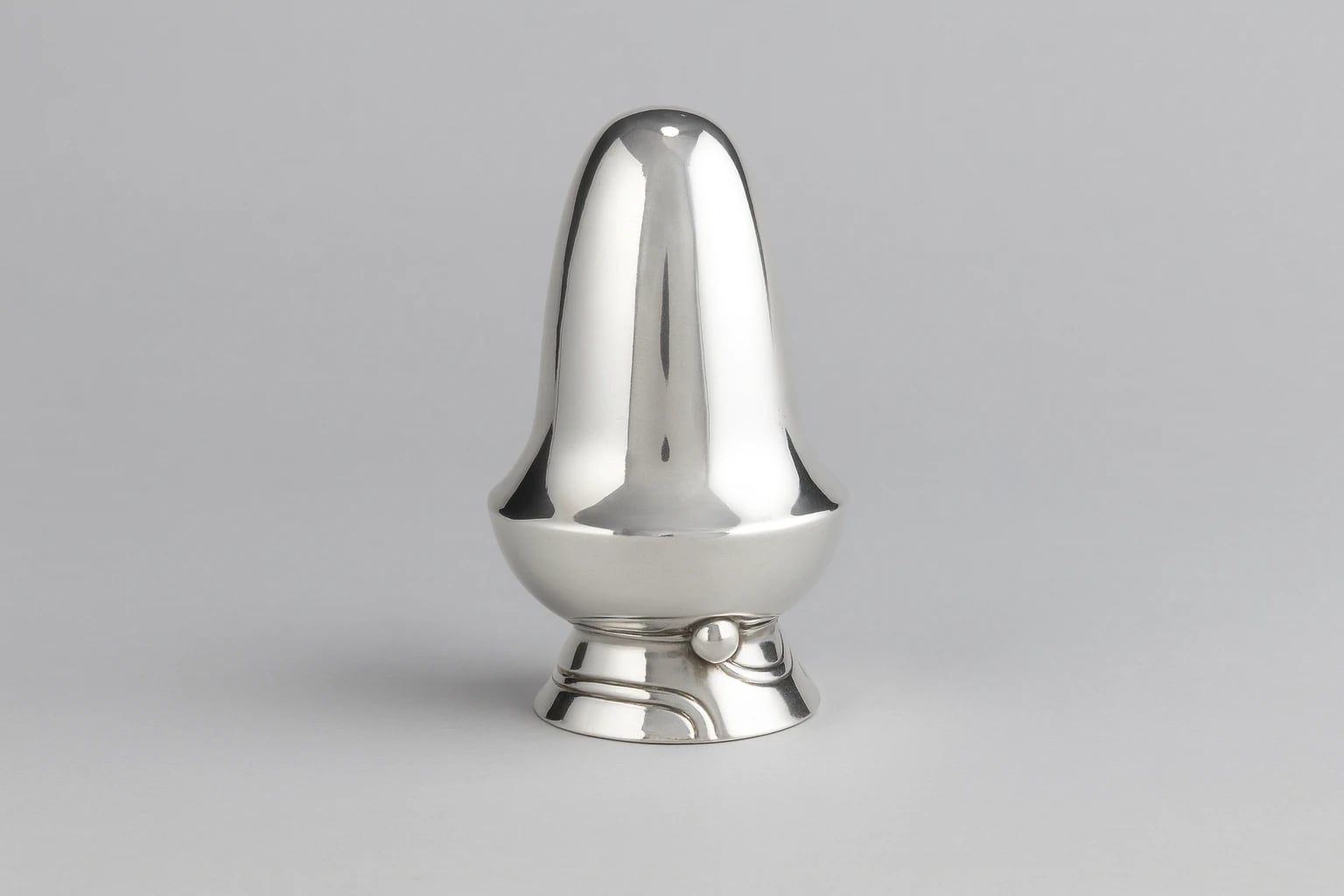
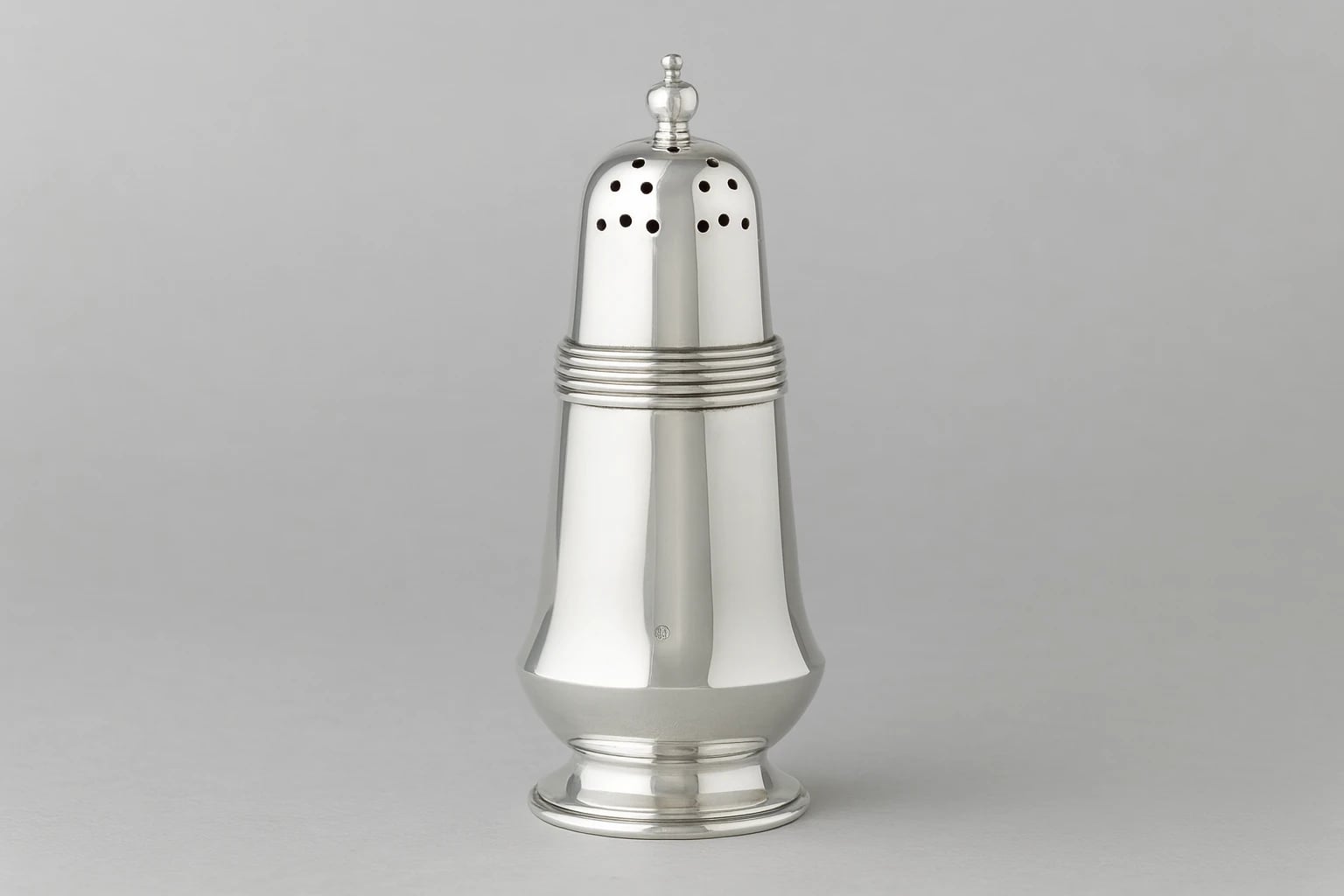
A wrapped silver band, coiled tight around the shoulder of an otherwise plain caster, does the work of ornament here. Spratling built the form from smooth cylindrical volumes and then interrupted them with a single applied element: silver wire wound closely upon itself and set as a horizontal collar. The band gives the eye a texture to catch, a ring of small parallel reflections against the broad reflective body, and it organizes the whole object around one deliberate decision rather than an accumulation of detail.
The caster reads as a study in restraint and contrast. The body reflects in long unbroken planes; the wrapped wire breaks that reflection into a repeating rhythm of fine ridges. This is a device Spratling used across his hollowware and jewelry, the coiled or braided wire that converts a functional edge or seam into a piece of pattern. Applied to a table object meant to be handled, the band also serves the hand, offering a slightly raised surface where fingers meet the form. Photographs establish the geometry and the surface treatment; the material fineness and construction method rest on the museum record and Spratling's own catalog, which listed the object as a caster.
Spratling founded the Taller de Las Delicias in Taxco in 1931 and, through the 1930s and 1940s, built a design vocabulary that carried into his tableware and orfebrería as clearly as into his jewelry. Hollowware of this kind belonged to a program that treated the dinner table as a place for the same disciplined modern forms he applied to the body. The wrapped band connects this caster to that larger practice, in which a plain silver volume is given identity by one clean applied motif drawn from wire, cord, or braid. Attribution rests on the museum record and on the object's appearance in Morrill and Berk's Mexican Silver. The design has been reissued, so a given example may postdate the original conception; the hallmark on the specific object, not the design date, fixes when that example was made.
As a documented Spratling caster, the object records how his workshop extended a coherent design language from personal ornament to the objects of daily use. It preserves, in a small functional form, the same logic that governs his more familiar jewelry: a simple volume, a single applied band, and the quiet contrast between smooth silver and worked wire.
Museum of Mexican Silver. “Salt Shaker with Wrapped Silver Band.” Catalog no. MoMS-000800. https://museumofmexicansilver.com/pieces/spratling-754
See something wrong with this record? Suggest a correction and the piece details fill in automatically.
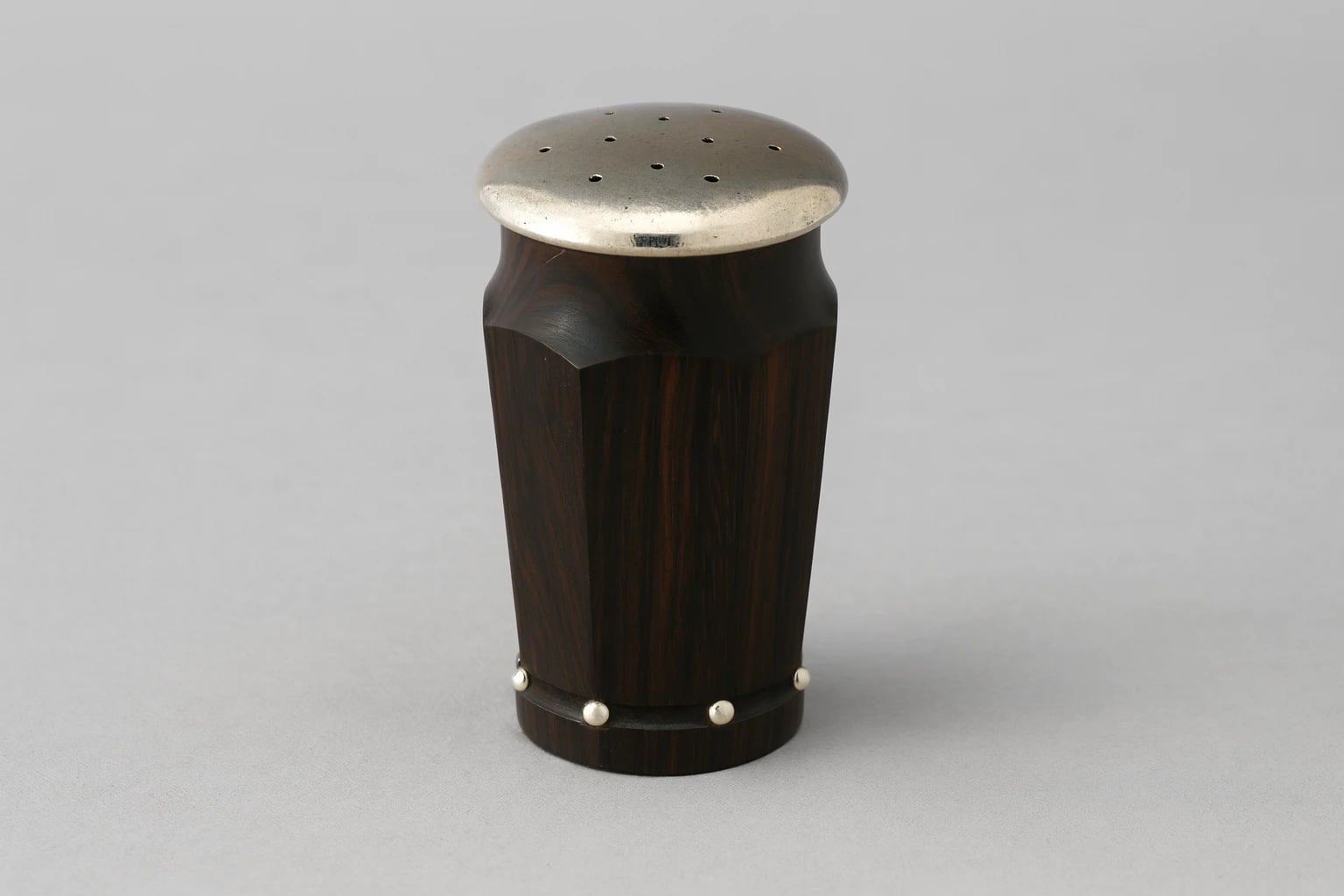
Salt Shaker of Shaped Rosewood
Rosewood