Saves instantly, no account needed. Already a member? Sign in.
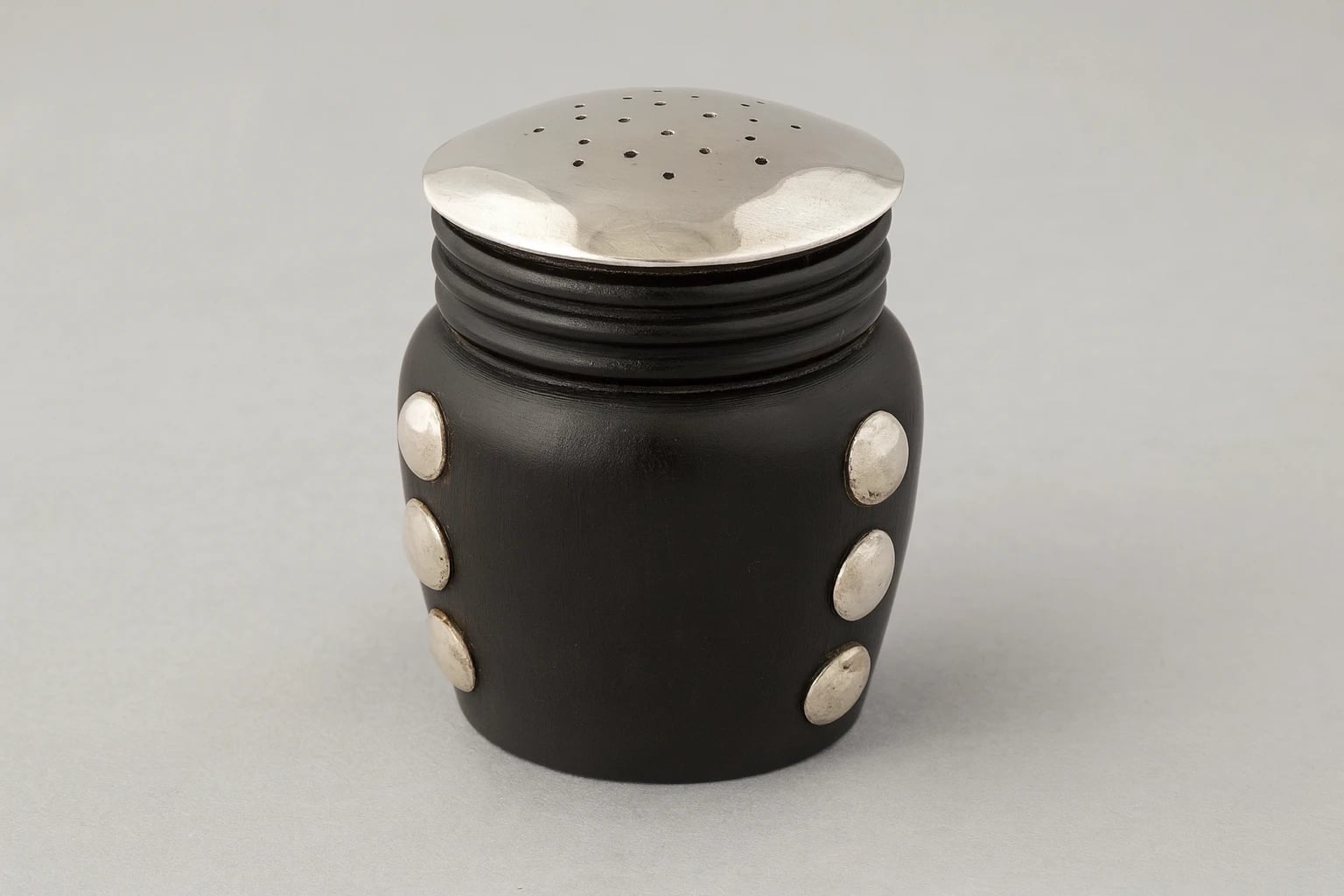
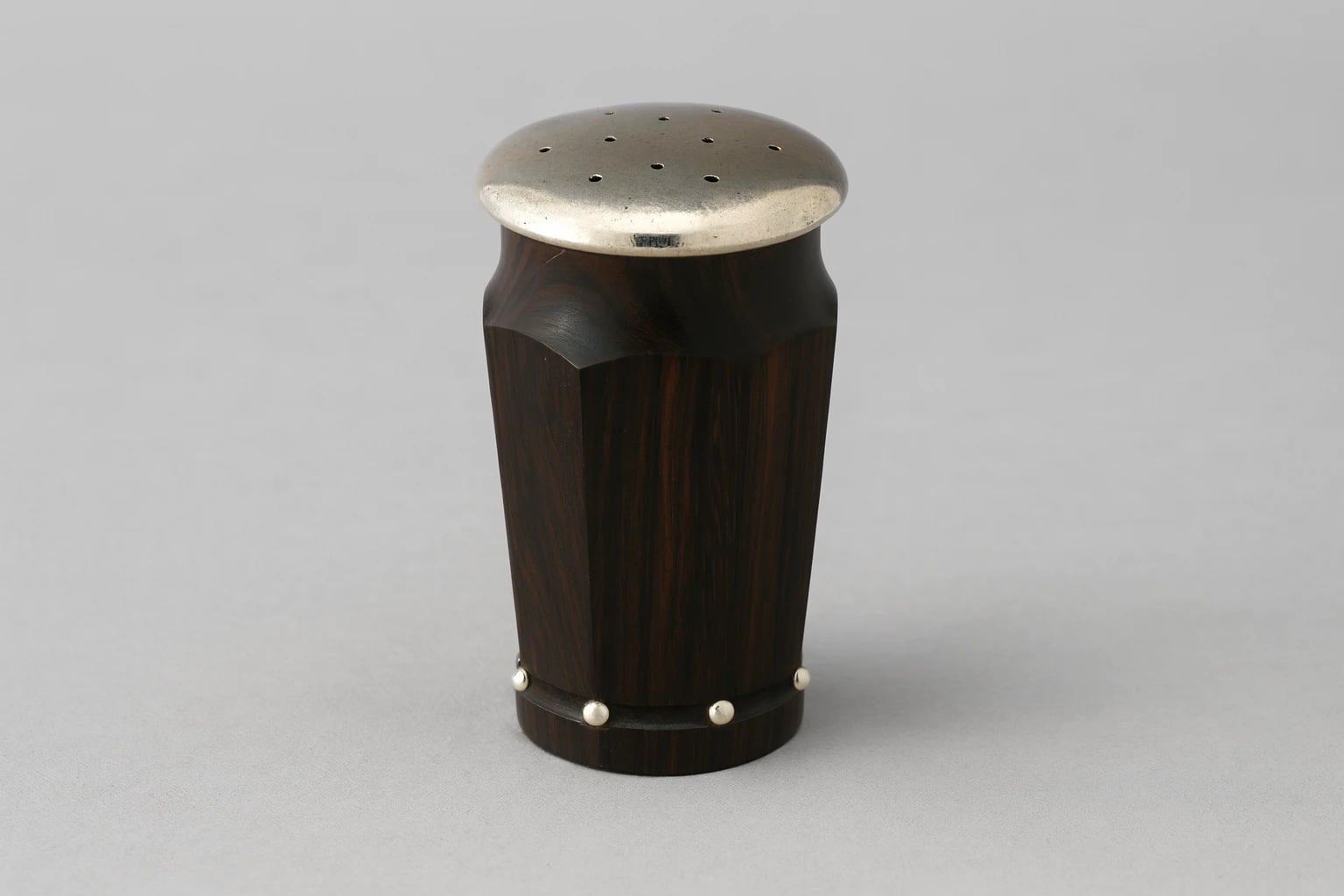
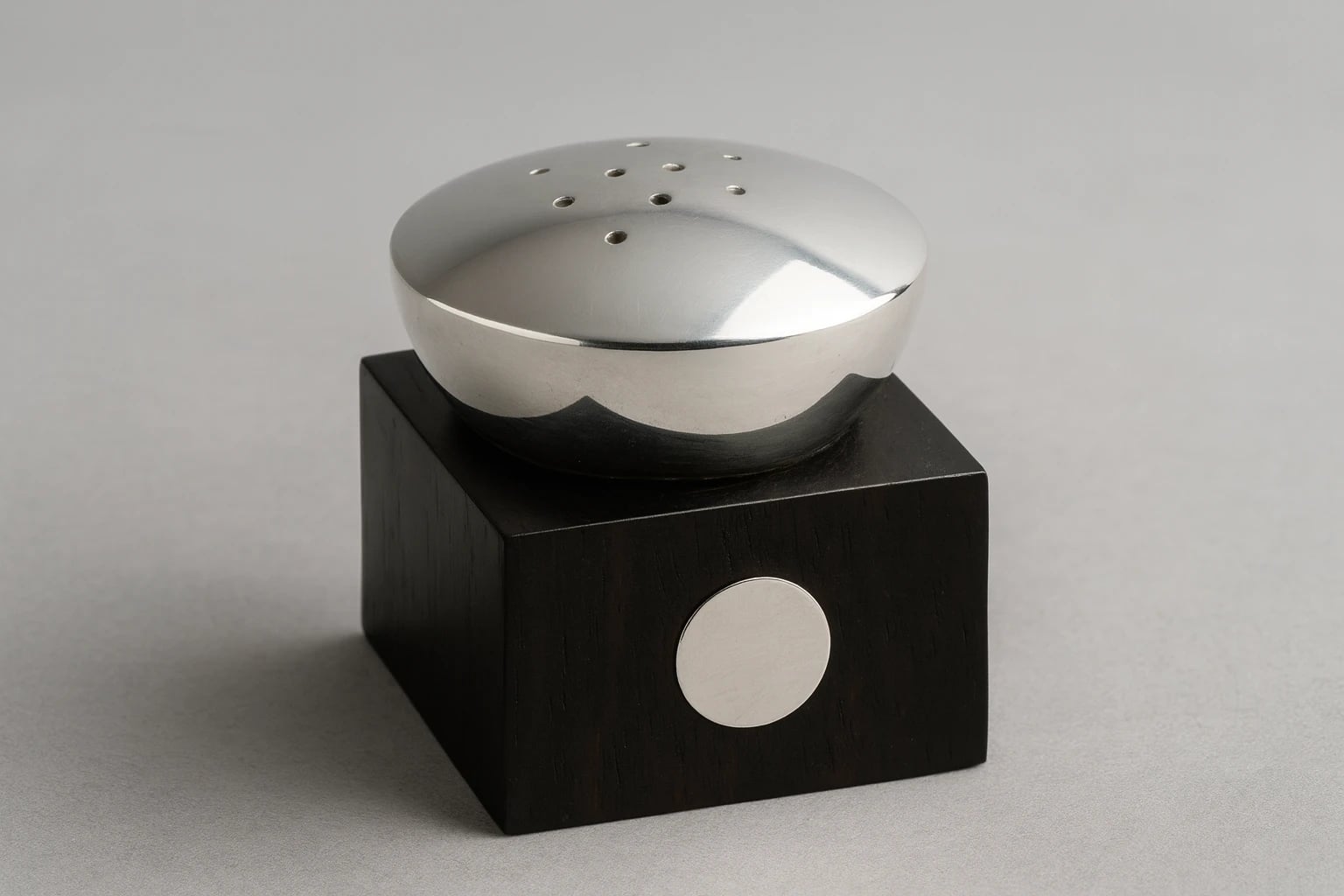
A rosewood cylinder anchors this salt shaker to the table, and into its side sits a single silver disc, flush and unadorned, that reads as pure geometry against the grain of the wood. The silver top completes a composition built from two contrasts: the density and warmth of tropical hardwood set against the reflective coolness of silver, and the vertical body set against the flat circle inlaid into it. William Spratling organized much of his hollowware around exactly this kind of restraint, letting a plain form and a considered pairing of materials carry the design rather than surface ornament.
The construction depends on the join between silver and wood. The inset disc is fitted into the rosewood rather than applied over it, so the two surfaces meet in the same plane, and the eye registers the circle as a drawn shape rather than a raised element. This treatment of silver as inlay within wood recurs across Spratling's tableware and accessories, where he used rosewood, ebony, and other hardwoods as full partners to the metal. The silver top serves the object's function, closing and dispensing, while extending the material dialogue from base to crown. Weight, interior fittings, and the exact fineness of the silver are not established by appearance alone, and the museum record does not fix them here.
Spratling's turn toward wood-and-silver hollowware belongs to the mature phase of the Taller de Las Delicias and its successors, when he applied the workshop's design intelligence to the full range of the modern table. The salt shaker sits within a Mexican modernist idiom that prized clean volumes and honest materials, and Spratling's use of native rosewood connected his tableware to Mexican resources rather than to imported precedent. Morrill and Berk's Mexican Silver documents this current in his production, in which silver is disciplined into simple geometry and married to warm-toned woods. The circle inset into the cylinder is characteristic of how Spratling reduced ornament to a single clear gesture.
Among Spratling objects, jewelry and larger hollowware tend to dominate attention, so a small functional piece like this salt shaker records the reach of his design thinking into everyday domestic use. It shows the workshop applying the same principles of material contrast and geometric clarity at the scale of the table setting. Within a collection of Mexican silver, it documents Spratling's hollowware practice and his consistent pairing of silver with Mexican hardwood, a combination that defined a distinct strand of his output.
Museum of Mexican Silver. “Rosewood Salt Shaker.” Catalog no. MoMS-000639. https://museumofmexicansilver.com/pieces/spratling-758
See something wrong with this record? Suggest a correction and the piece details fill in automatically.
Incised Swirl Salt Shaker
First Design Period: 1931 - 1946
Silver