Saves instantly, no account needed. Already a member? Sign in.
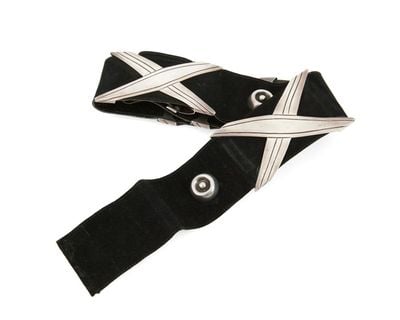
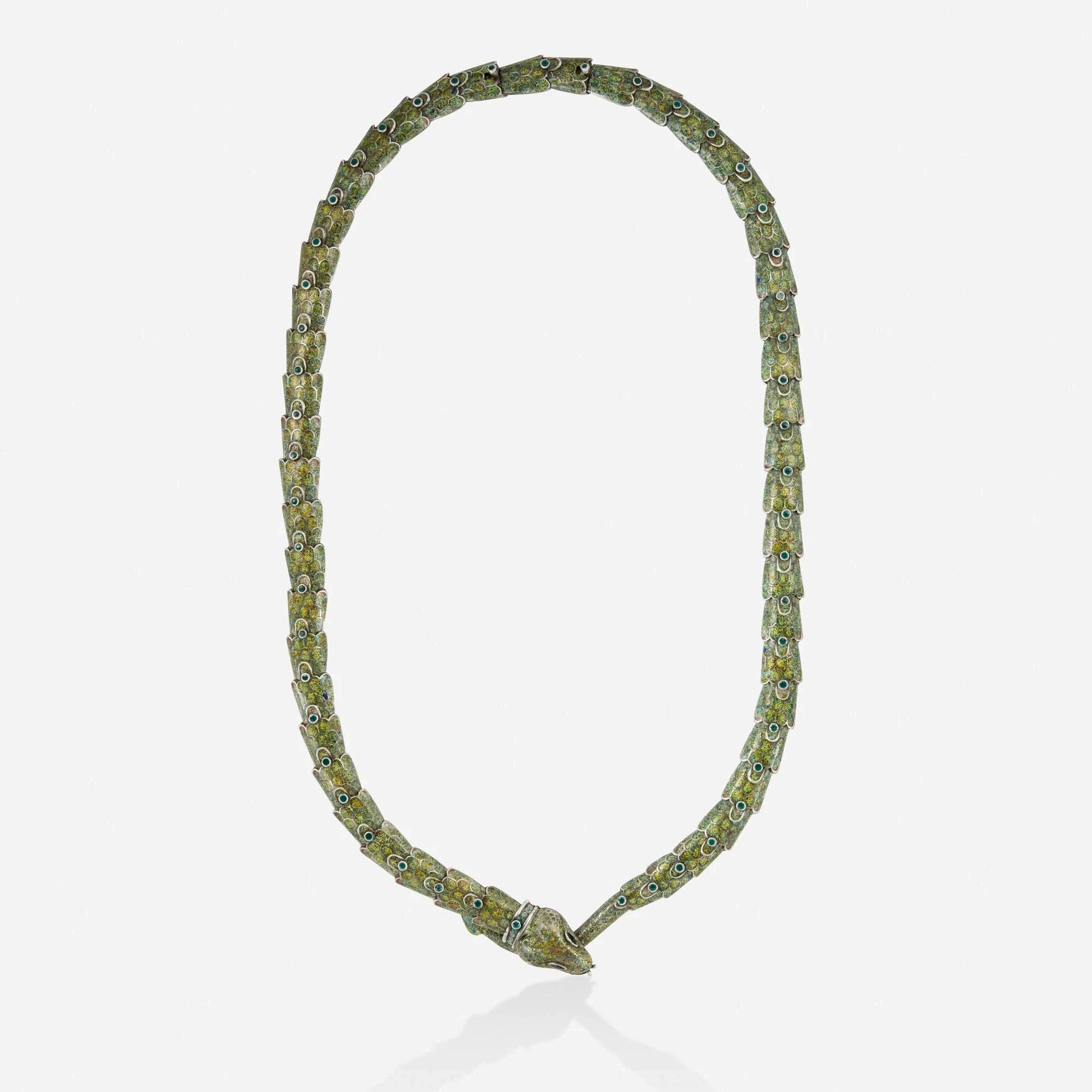
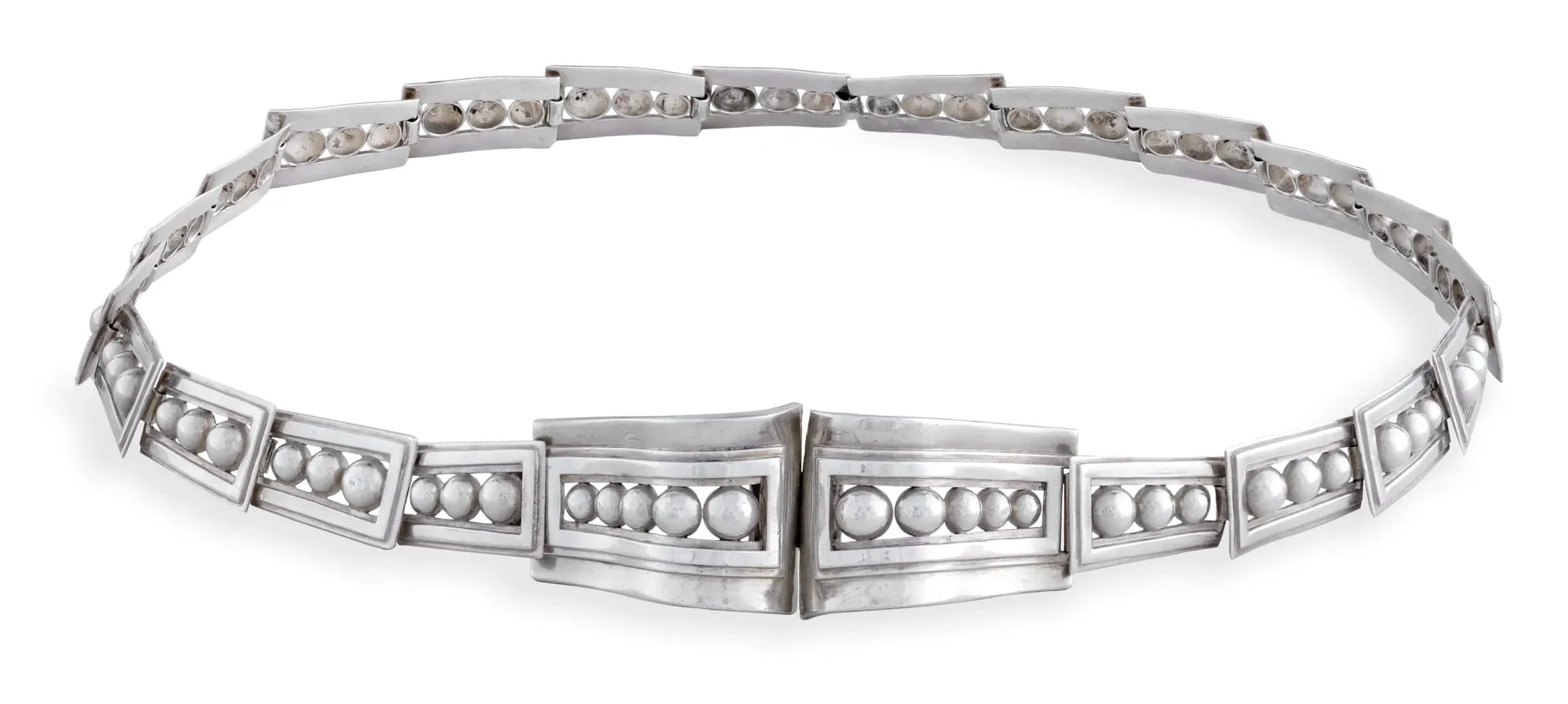
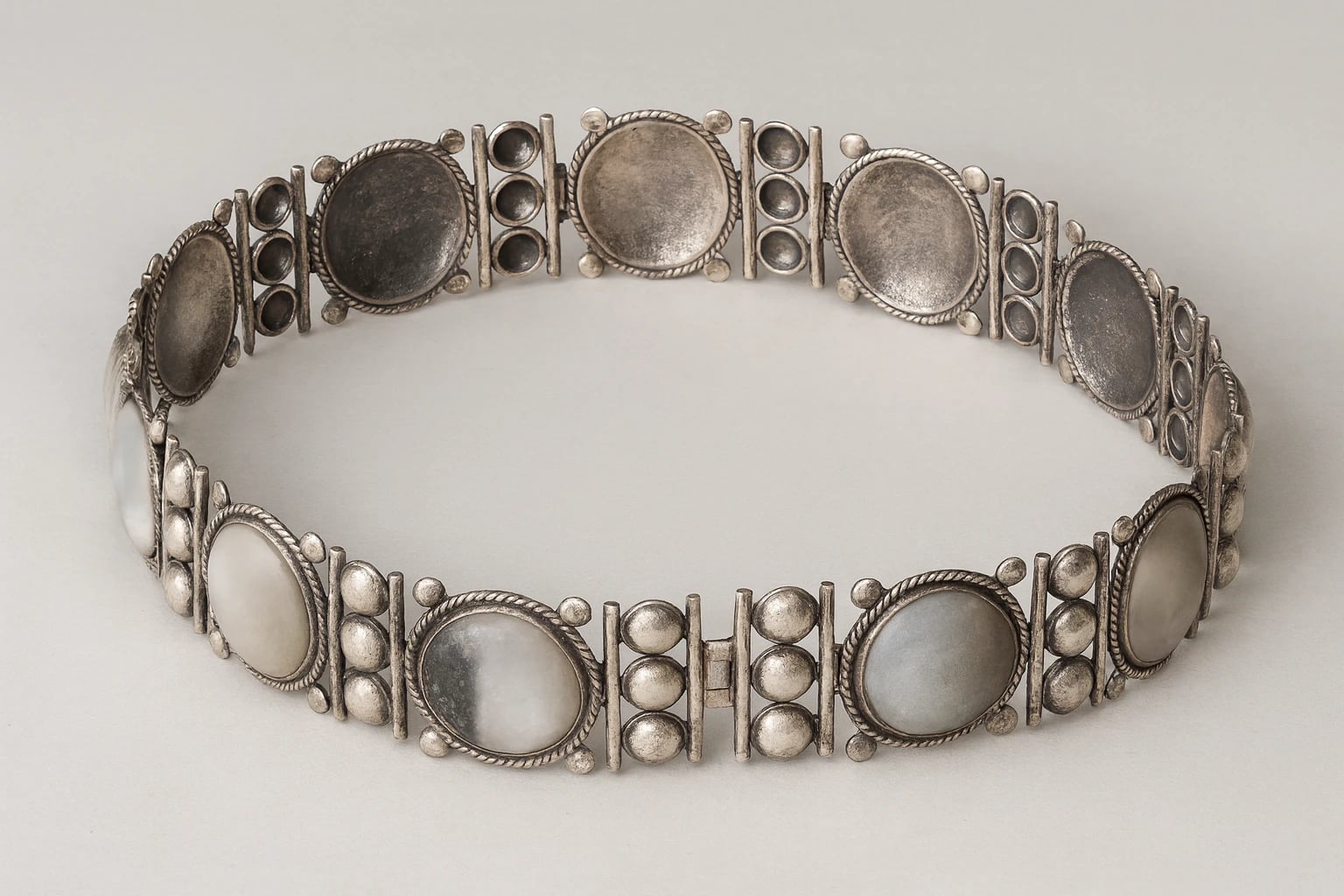
A belt built entirely of linked silver armadillos turns a plated defensive animal into a mechanism for wearability. Each segment repeats the tapering, banded body of the armadillo, and the joints between them let the band curve around the waist the way the animal's own articulated shell allows it to flex and roll. The design solves a basic problem of silver at the waist, which is how to make a rigid metal follow the body, and it solves it by borrowing the natural engineering of its subject. The result is ornament and hinge at once, with no separate structural apparatus hidden behind the motif.
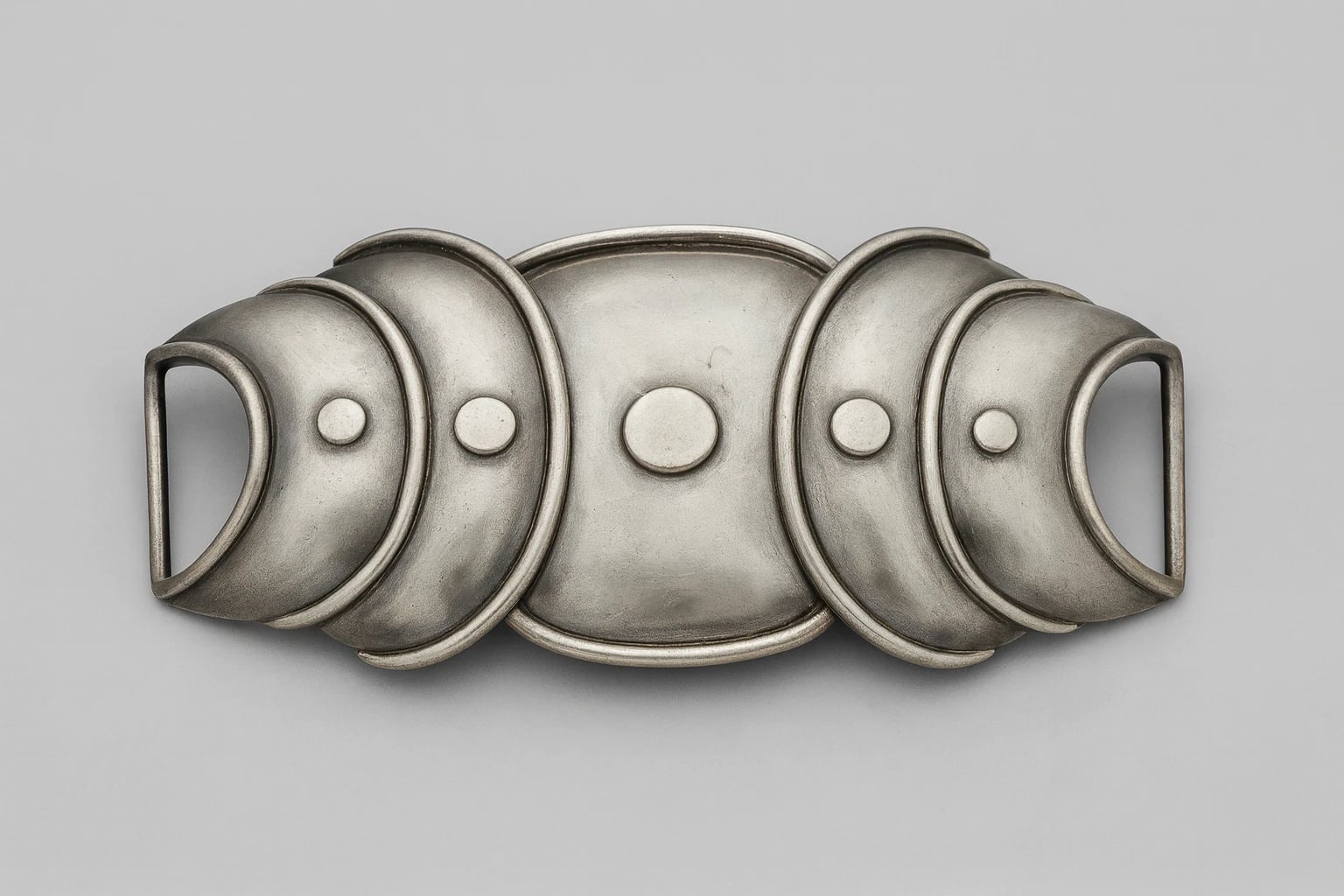
The armadillo is an unusual choice for a Taxco belt, and Héctor Aguilar treats it with restraint rather than caricature. The banding across each body reads as a series of parallel ridges, catching light in horizontal bars that alternate with the shadowed grooves between them, so that a viewer sees a rhythm of bright and dark running the length of the band. Because the segments are individually formed and then linked, the belt keeps its play of reflection while moving, and the repetition of a single animal form gives the whole a steady, insistent cadence. Aguilar favored strong, weighty silver at the waist, as his massive belt buckles of the early 1940s attest, and this belt belongs to that same interest in silver worn as a substantial band rather than a delicate accent.
Aguilar's Taller Borda, established in Taxco in 1939, was organized so that leather and silver production sat side by side around the courtyard of the Casa Borda, with Severo Estrada overseeing a leather workshop that produced belts and purses fitted with silver buckles and ornaments. Those early belts combined dyed leather, pita stitching, and applied silver, and wartime disruption to the silver industry eventually ended their production. Against that background, an all-silver linked belt represents the other pole of the same enterprise, the moment when the silver division took over territory the leather shop had held. It shows the Taller thinking about the belt as a category worth developing in metal, not merely as a strap for a buckle. Penny Morrill's study of Aguilar documents this workshop structure and Aguilar's sustained attention to belts and buckles as a serious line of the taller's output.
For a collection, the piece records how Aguilar and his workshop extended figural imagery into a functional, articulated object rather than confining animal motifs to brooches or single buckles. The armadillo, native to Mexico and long present in its popular imagery, is put to work here as both ornament and hinge, so that the choice of animal and the choice of construction reinforce one another. As a document of Taller Borda practice, it clarifies the range between the shop's leather belts and its silver production, and it preserves a less common form within Aguilar's body of work, the belt conceived as a continuous chain of a single repeated creature.
Museum of Mexican Silver. “Armadillo Belt.” Catalog no. MoMS-001374. https://museumofmexicansilver.com/pieces/aguilar-belt-armadillo
See something wrong with this record? Suggest a correction and the piece details fill in automatically.
Héctor Aguilar
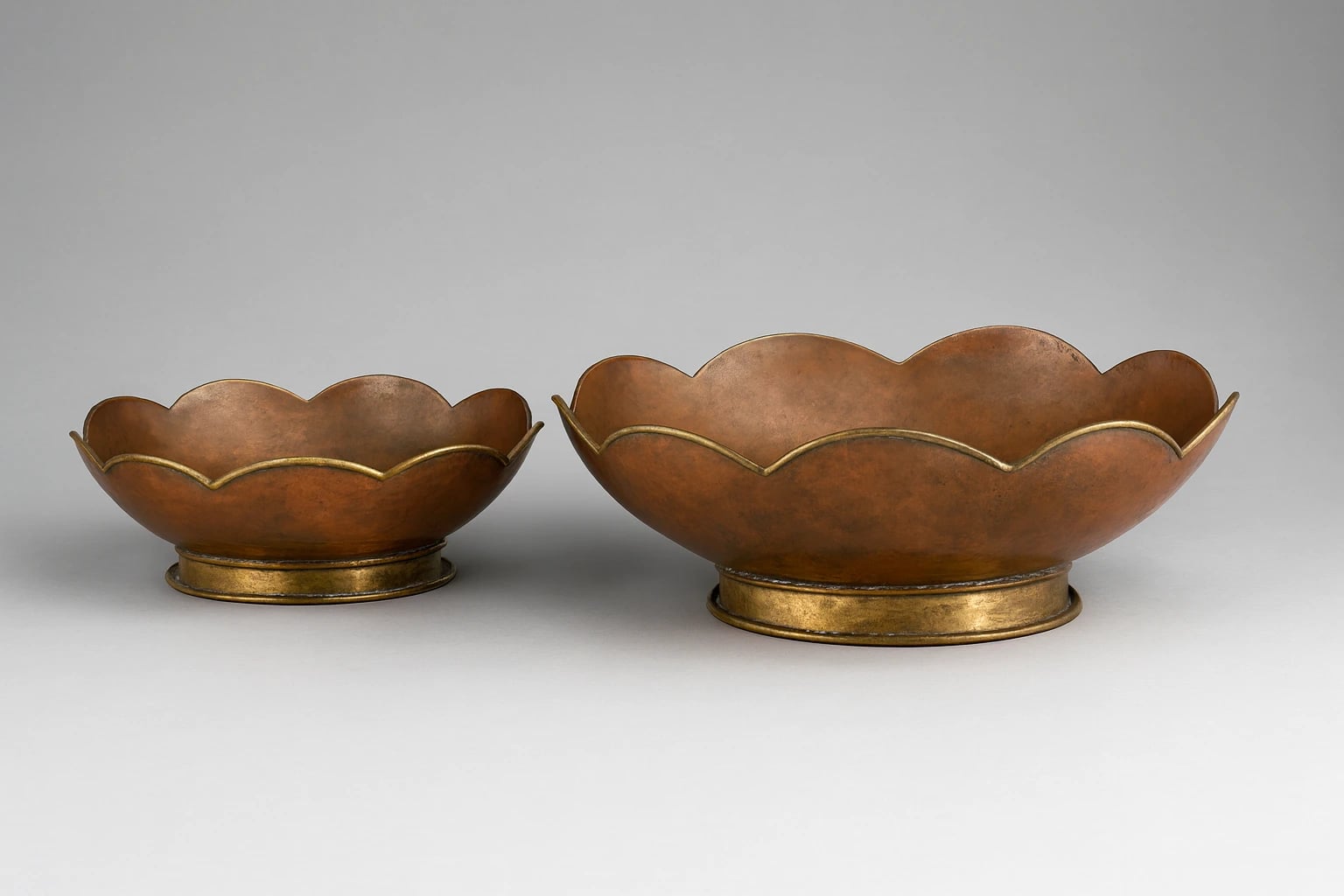
Brass Bowl
1939-1962
Brass