Saves instantly, no account needed. Already a member? Sign in.
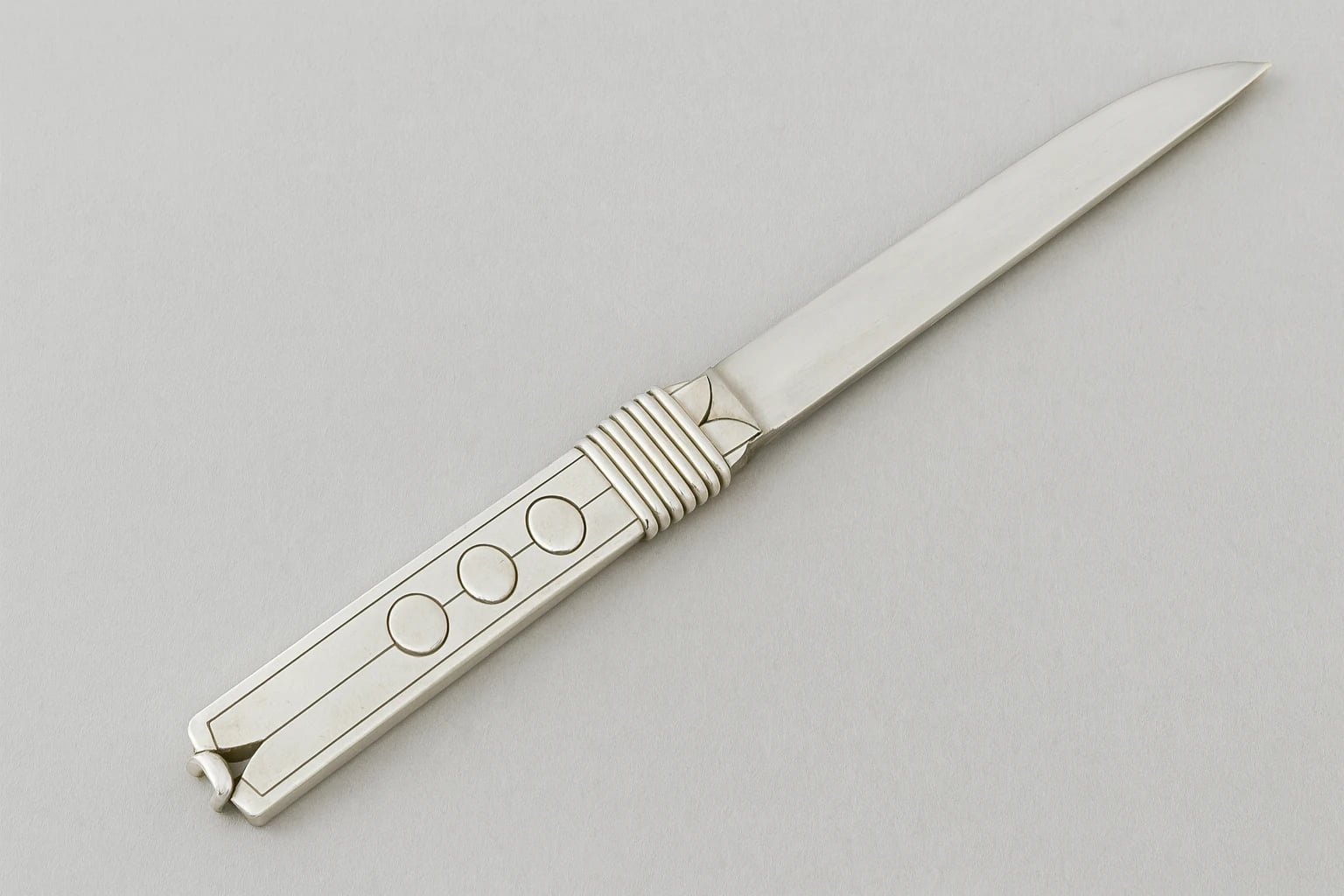
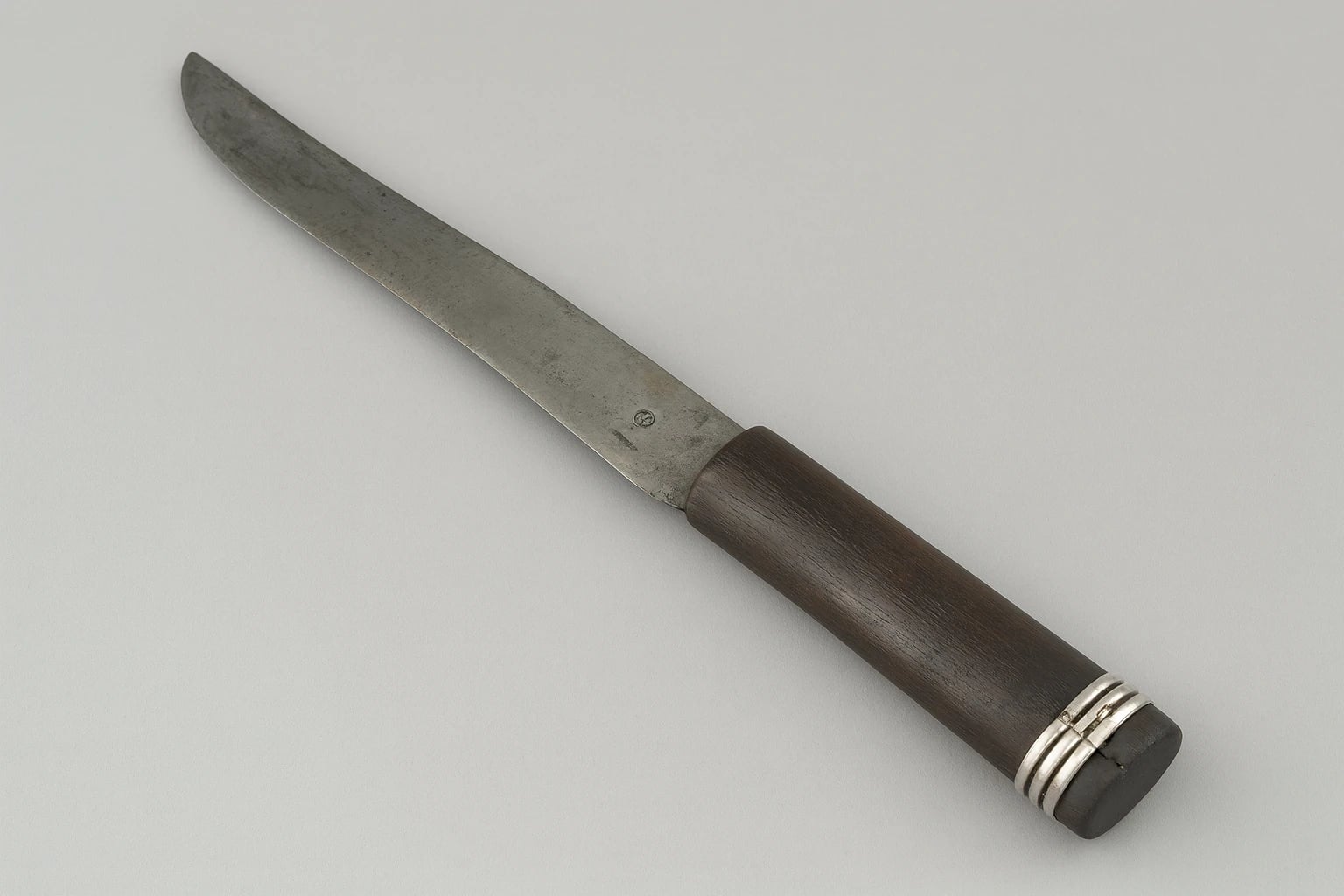
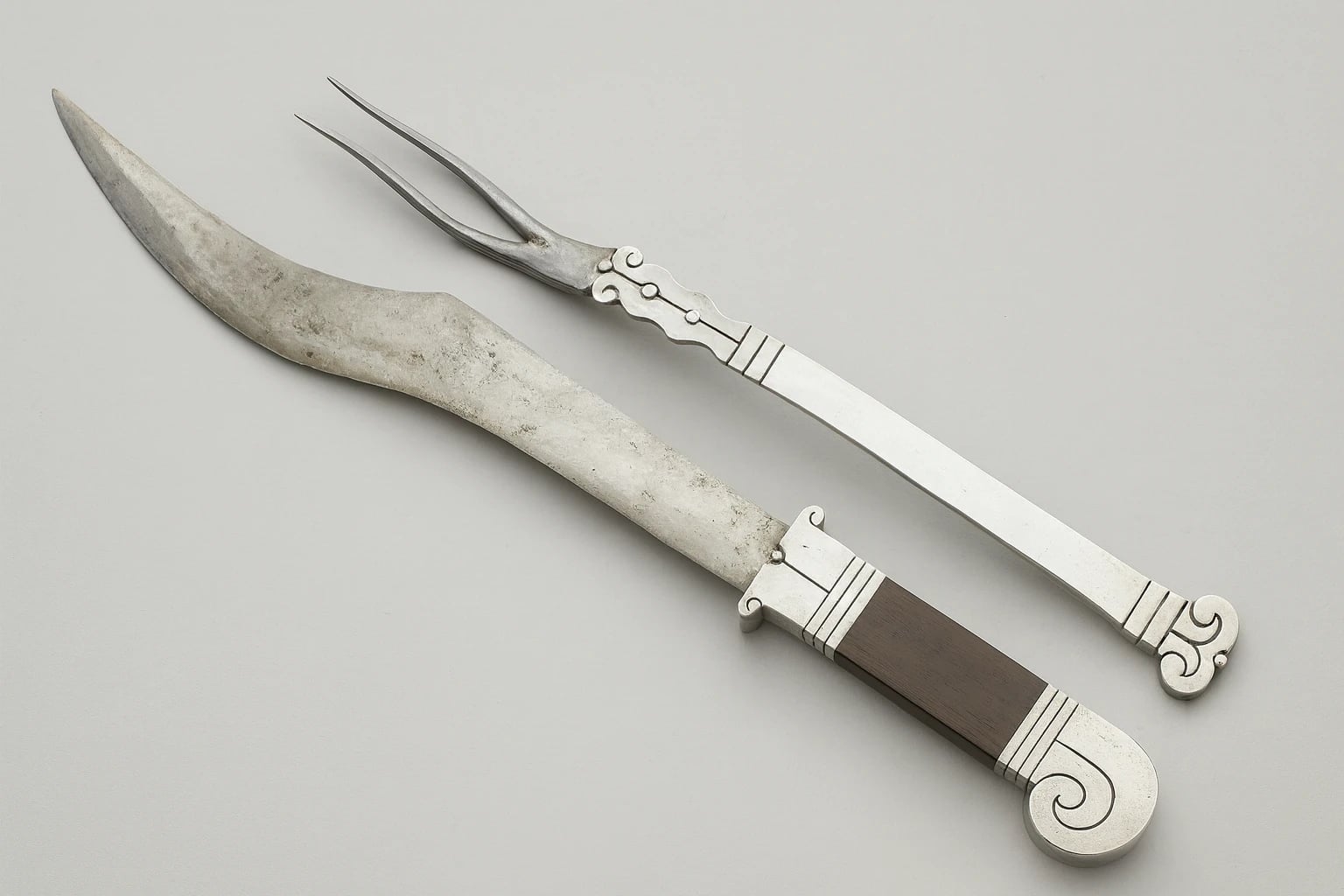
A carving knife draws its character from a working blade, and this one from the workshop of Héctor Aguilar treats a functional tool as a problem of proportion and weight. The handle carries the silver, tapering and swelling to meet the hand, while the blade extends toward its point with the balance a carver requires. Aguilar's flatware and serving pieces are among the least discussed parts of his output, overshadowed by his massive hollowware and jewelry, yet they show how his workshop applied a consistent design sensibility to objects meant to be gripped, pulled, and used at the table.
The knife belongs to a documented carving set recorded in Morrill's study of Aguilar, where the fork and knife are catalogued together as III-98. Reading the object against that catalog entry clarifies its place: this is a table-service form, produced alongside candlesticks, salad sets, gravy boats, and other domestic silver that carried the Taller Borda name into dining rooms far from Taxco. The handle is where the design decision lives. Silver flatware handles must reconcile the metal's weight with the hand's comfort, and Aguilar's shops solved this by giving the handle enough mass to feel substantial without becoming ungainly, a judgment about ergonomics as much as ornament.
Aguilar left Spratling's Taller de Las Delicias in 1939, taking several silversmiths with him to found the Taller Borda, and his workshop became one of the few in Taxco producing handwrought hollowware in those early years. Morrill draws an important distinction for dating Aguilar's domestic silver: pieces showing hammer marks generally come from the brief window between 1939 and 1942, before machine forming entered the Borda, while much of the hollowware signed with his name was produced later in the fifties under machine-assisted methods finished by hand. Flatware such as this carving knife sits within that same span of Borda production, from the shop's founding to its closing in 1962, a period when Aguilar built a distinct commercial identity in table silver rather than following Spratling's lead.
Aguilar's counterfeit-plagued marks and the survival of dual-hallmarked pieces remind us how widely his designs circulated and how much they were valued and imitated. A carving knife is a modest survivor of that enterprise, less spectacular than a pitcher or a heavy cuff, but it documents the Borda's reach into everyday domestic ritual. It records a Taxco workshop treating the table itself as a site for design, extending the silver renaissance from the jewelry case to the carving board.
Museum of Mexican Silver. “Rosewood Handle Aztec Carving Set.” Catalog no. MoMS-001400. https://museumofmexicansilver.com/pieces/aguilar-knife-carving
See something wrong with this record? Suggest a correction and the piece details fill in automatically.
Héctor Aguilar
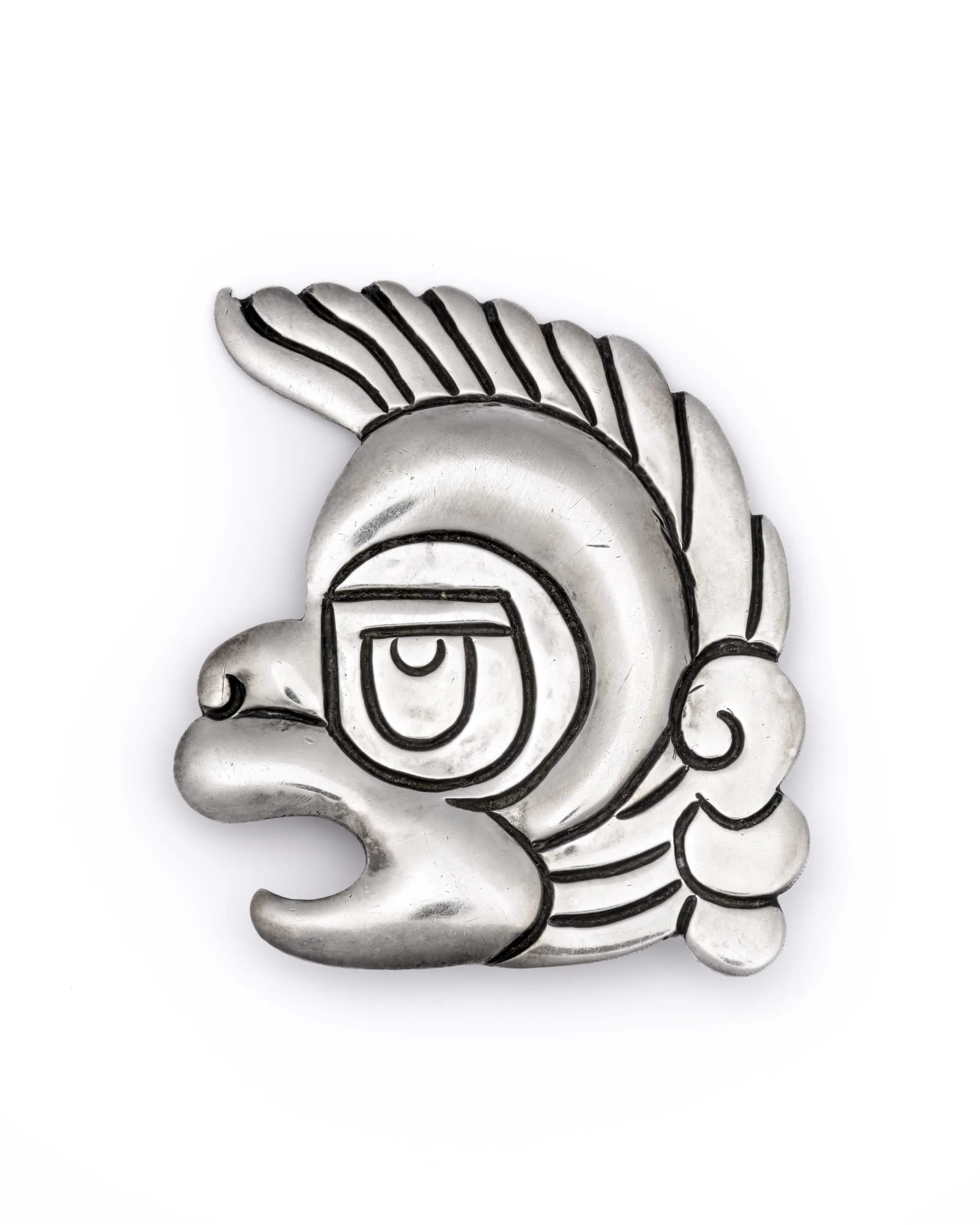
Warrior Monkey Brooch
c. 1940
940 silver