Part of the design family Monkey Head
Saves instantly, no account needed. Already a member? Sign in.
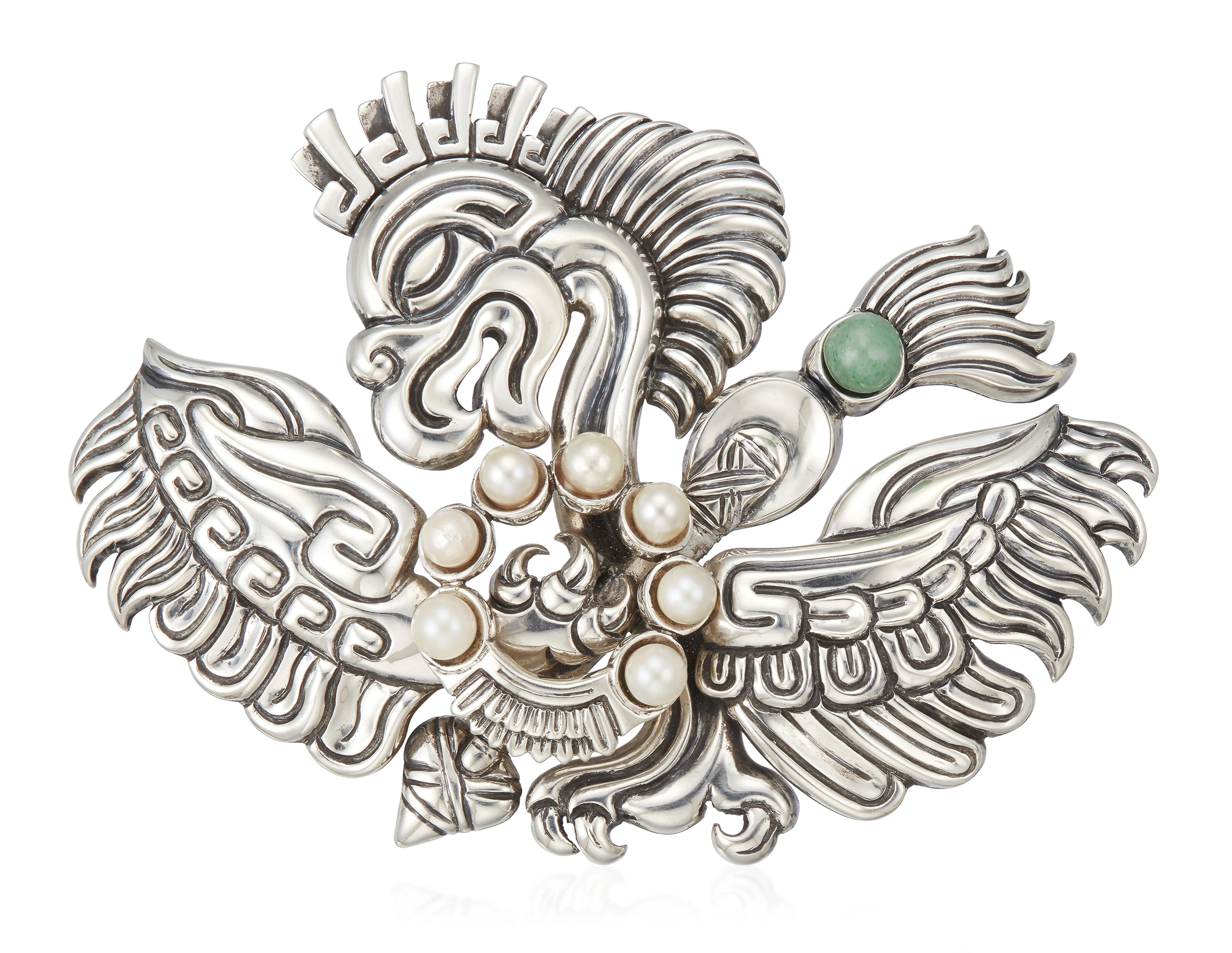
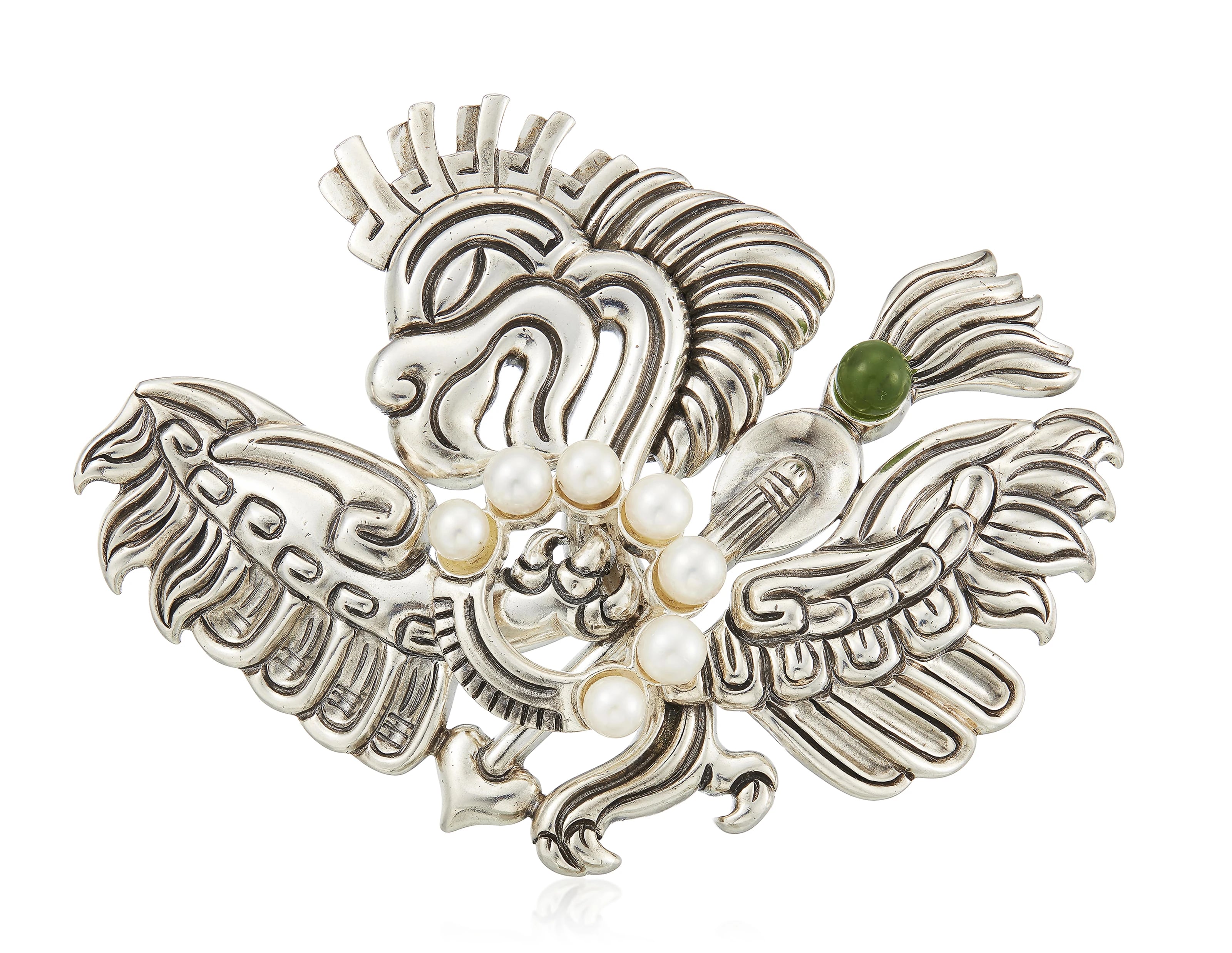
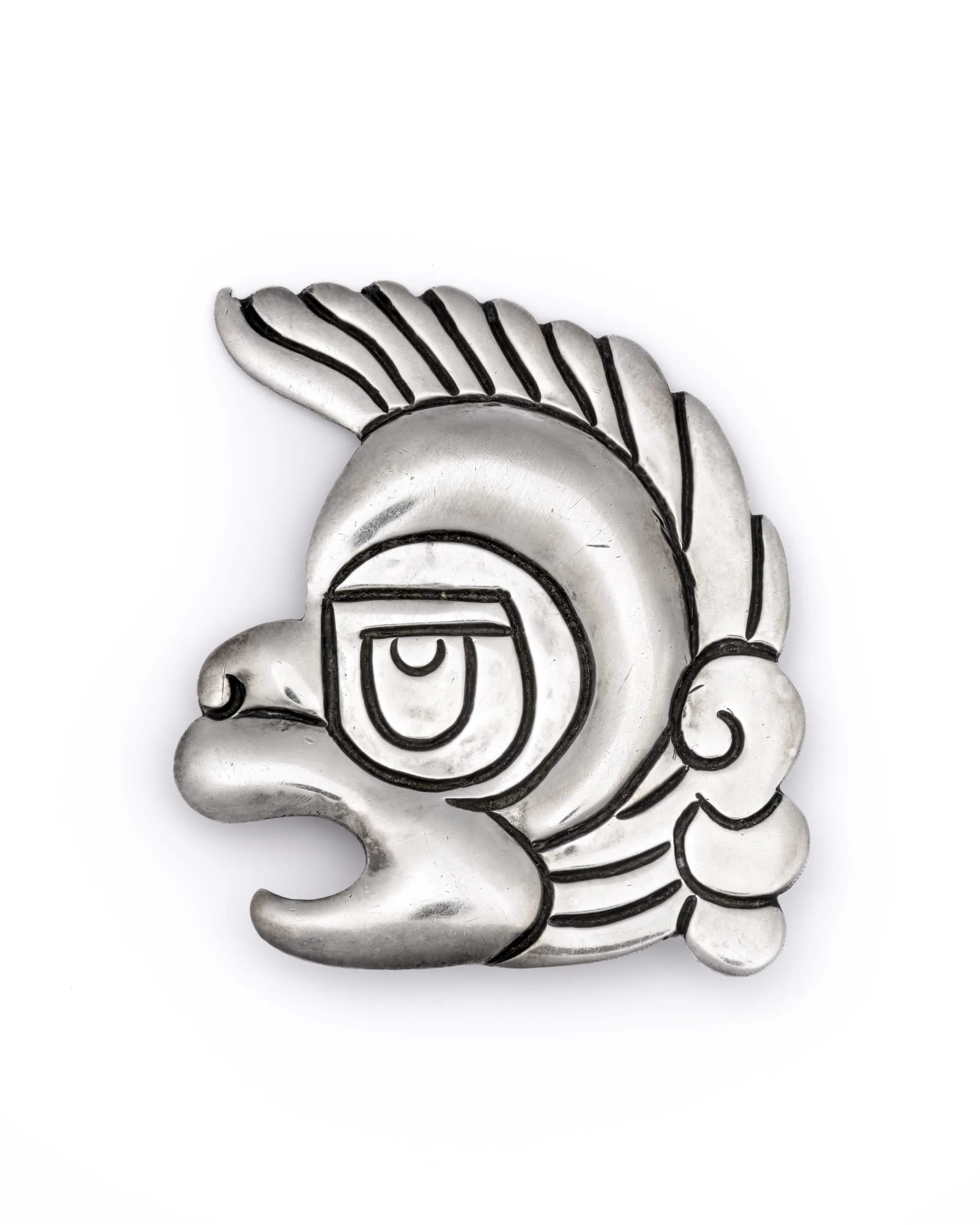
The importance of this small brooch lies in what it shows about the earliest years of Héctor Aguilar's Taller Borda: that the workshop's ambitions ran not only to the heavy fabricated cuffs for which it became famous, but to cast figural silver that treated the pictorial language of ancient Mexican manuscripts as a living design source. Made around 1940, within the workshop's first seasons, and carrying the hallmark of Aguilar's earliest period, the Warrior Monkey is documented in Penny Morrill's Silver Masters of Mexico, the foundational study of Aguilar and the Taller Borda. At barely an inch and three quarters in height, it condenses a whole approach to Mexican modernism into an object meant to be pinned to a lapel.
The design is a profile head crowned with a sweeping crest of plumes, each feather divided from its neighbor by a deep recessed line darkened with oxidation. Those blackened channels do the work that painted outlines do in an Aztec codex: they keep the drawing crisp while the silver between them swells into low, rounded relief. The face is built from a few confident volumes, a curved snout, a scrolled ornament at the ear, a framed eye. Lost-wax casting gives the brooch its continuous, slightly cushioned mass, and the hand finishing that followed brightened the raised planes so that light moves across the head in soft gradations rather than hard glints. A small eye of bone or stone, set into the cast surface, fixes the creature's expression and gives the monochrome silver a single point of contrasting material.
The subject belongs to the graphic world of Aztec pictorial manuscripts, where the heads of animals and costumed warriors served as compact, instantly readable signs. The monkey, ozomatli, was among the day signs of the Aztec calendar, and the plumed, helmeted profile here recalls the way such heads were drawn: flattened, emphatic, bounded by strong contour. Aguilar's generation, working in the wake of postrevolutionary Mexico's rediscovery of its ancient arts, did not treat these sources as material for archaeological reproduction. This brooch converts a two-dimensional drawn convention into sculpted metal, keeping the outline logic of the manuscript page while giving it the weight, sheen, and dimensionality of silver.
The materials themselves place the object in a specific moment. The brooch combines 940 silver with 990 silver, a near-pure fineness that Aguilar's workshop stamped in its earliest years; Hougart's hallmark study records both the Taxco HA 940 and the Taxco HA 990 marks in use from 1940 to 1945, before the eagle assay system arrived in 1948. Aguilar had left William Spratling's Taller de Las Delicias to establish the Taller Borda in Taxco in 1939, and Morrill's catalog shows the range of that opening period, from massive 940 silver cuffs to boxes and figural work of about 1940. Within that range, the Warrior Monkey demonstrates that casting, with its capacity for continuous modeling and fine linear detail, was part of the Taller Borda's repertoire from the start. It is a reminder that the early Taxco workshops were not committed to a single technique but chose the method that best served the image, and that an image seven centimeters wide could carry the same seriousness of purpose as the workshop's most imposing silver.
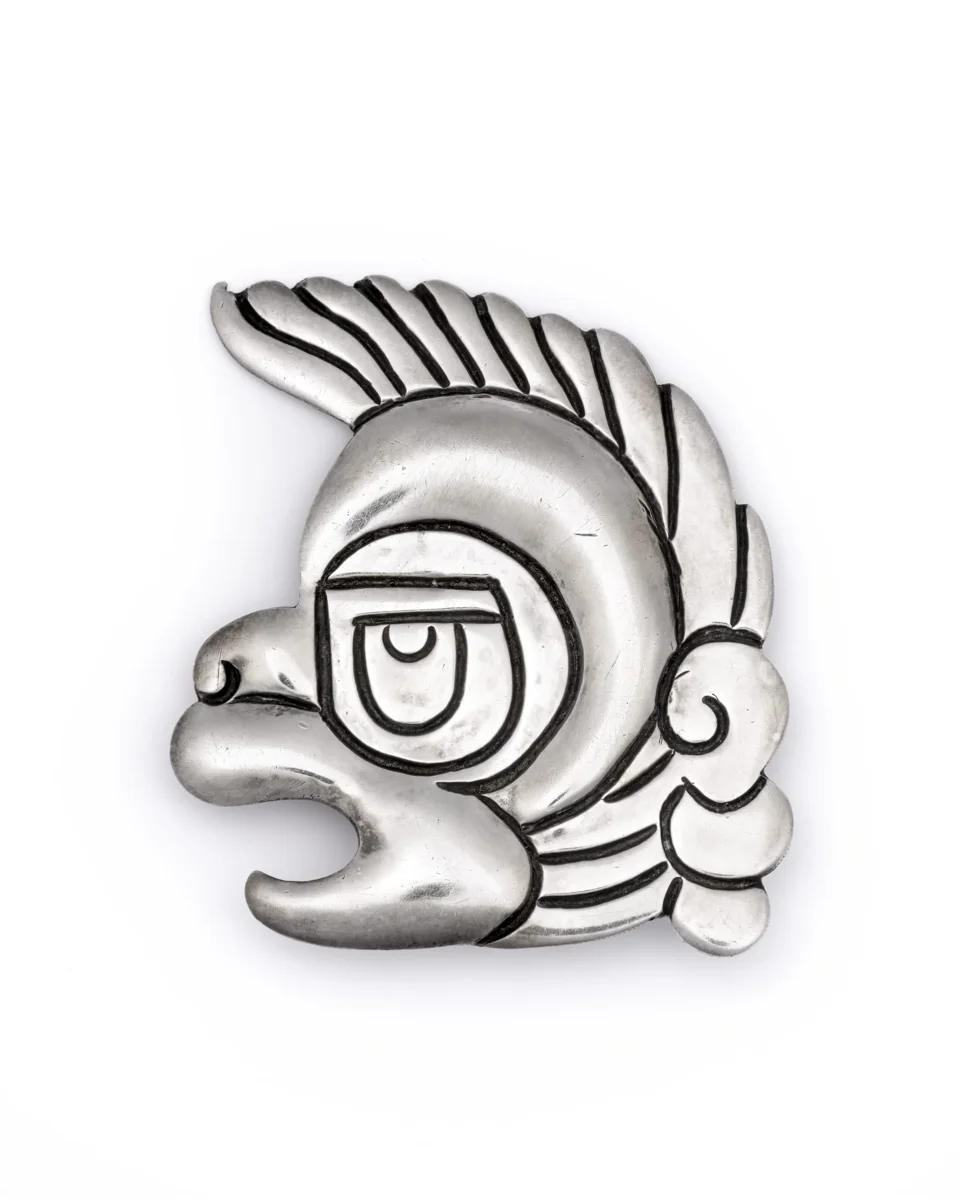
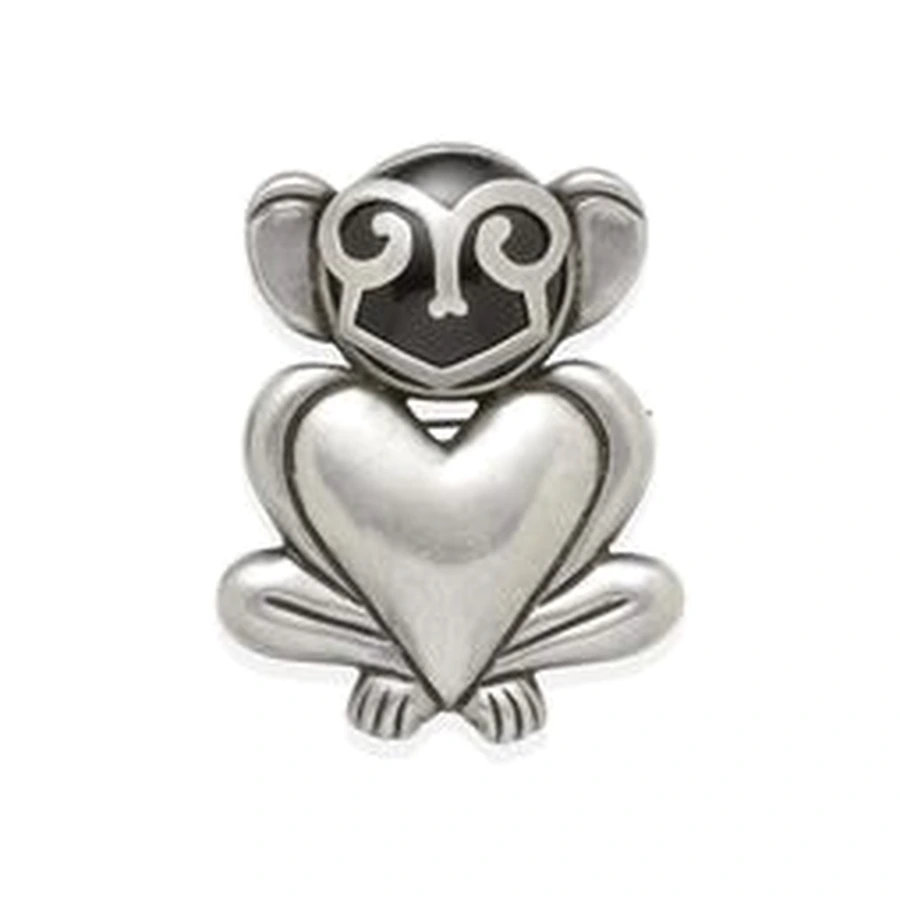
Monkey Brooch (Prendedor con mono), circa 1930
Accession M.2016.253.2. Official museum record Photo: Los Angeles County Museum of Art.
Verified against each institution's own collection records. All museum collections
Museum of Mexican Silver. “Warrior Monkey Brooch.” Catalog no. MoMS-001672. https://museumofmexicansilver.com/pieces/aguilar-monkey-brooch
See something wrong with this record? Suggest a correction and the piece details fill in automatically.
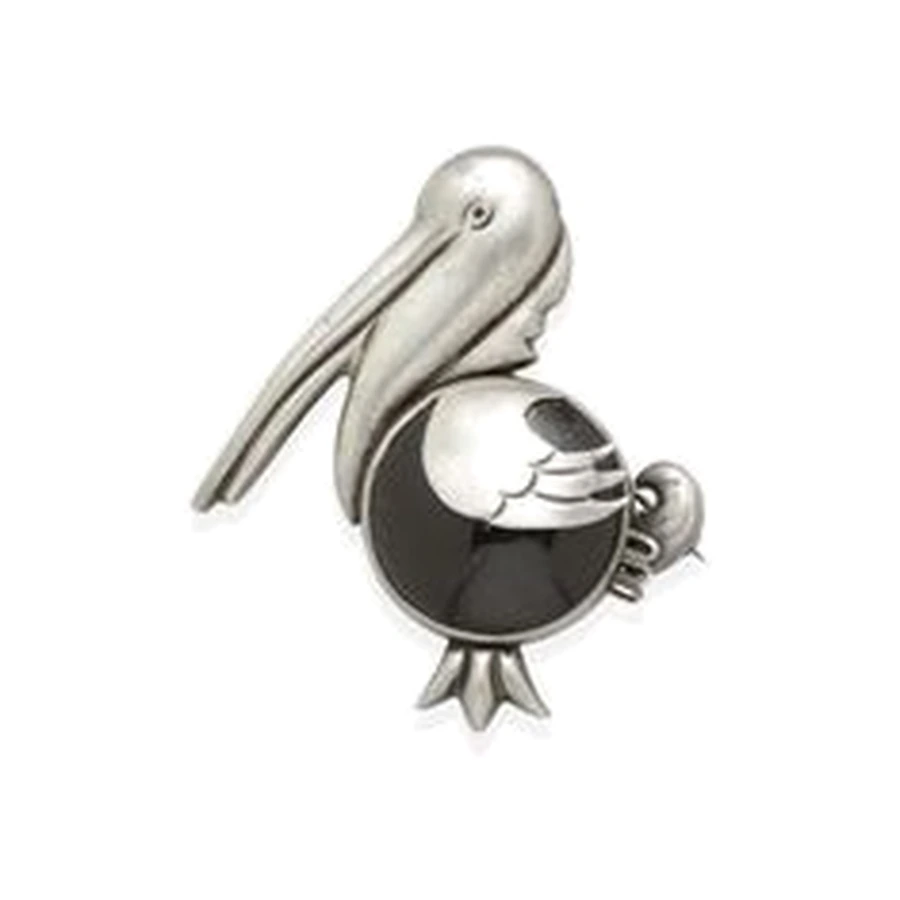
Pelican Brooch
1939-1962
Silver