Saves instantly, no account needed. Already a member? Sign in.
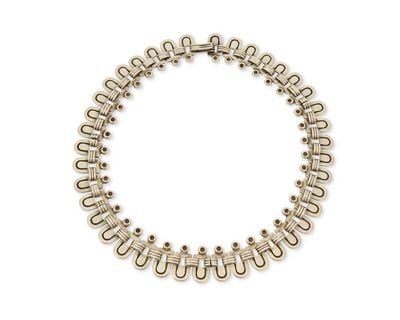
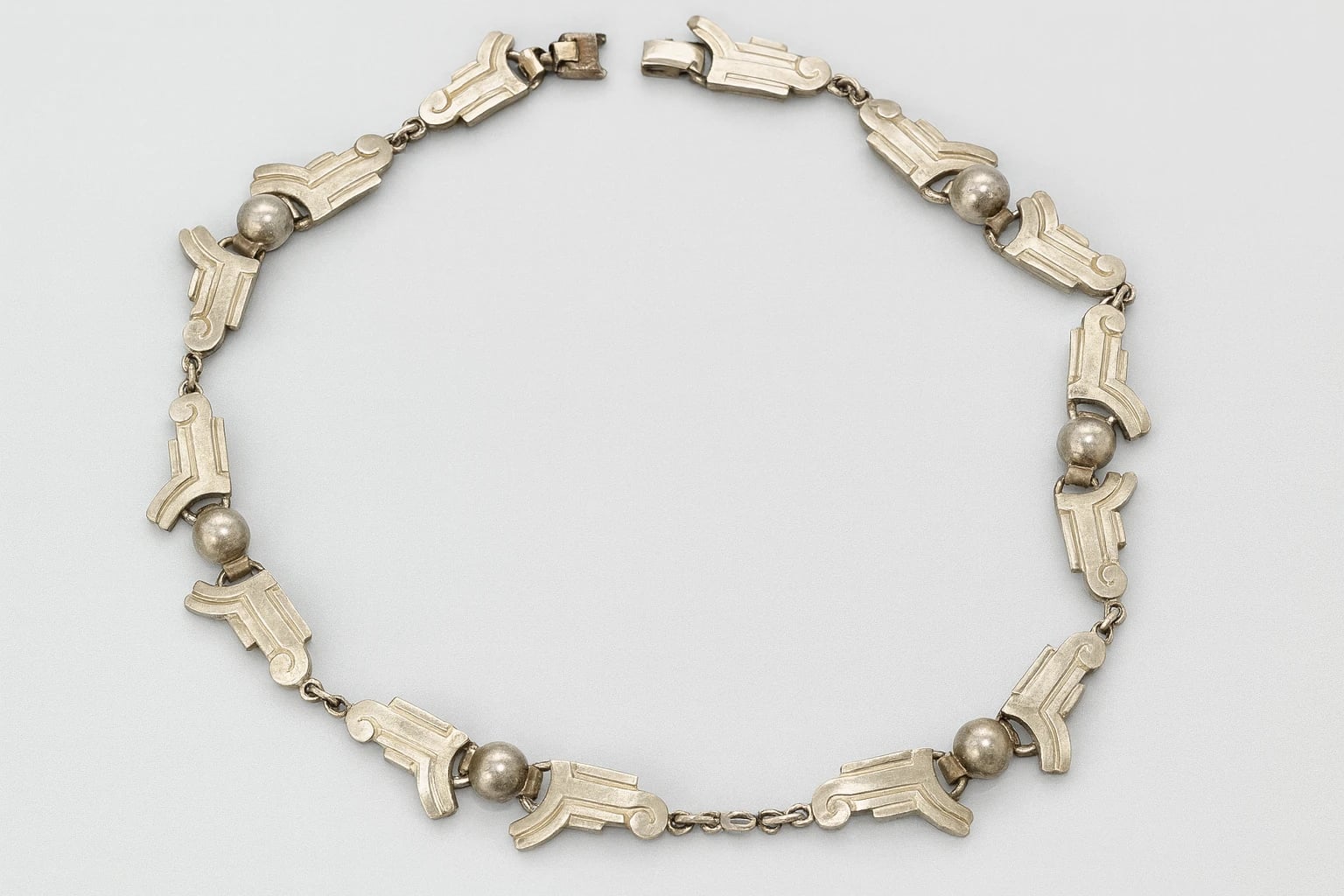
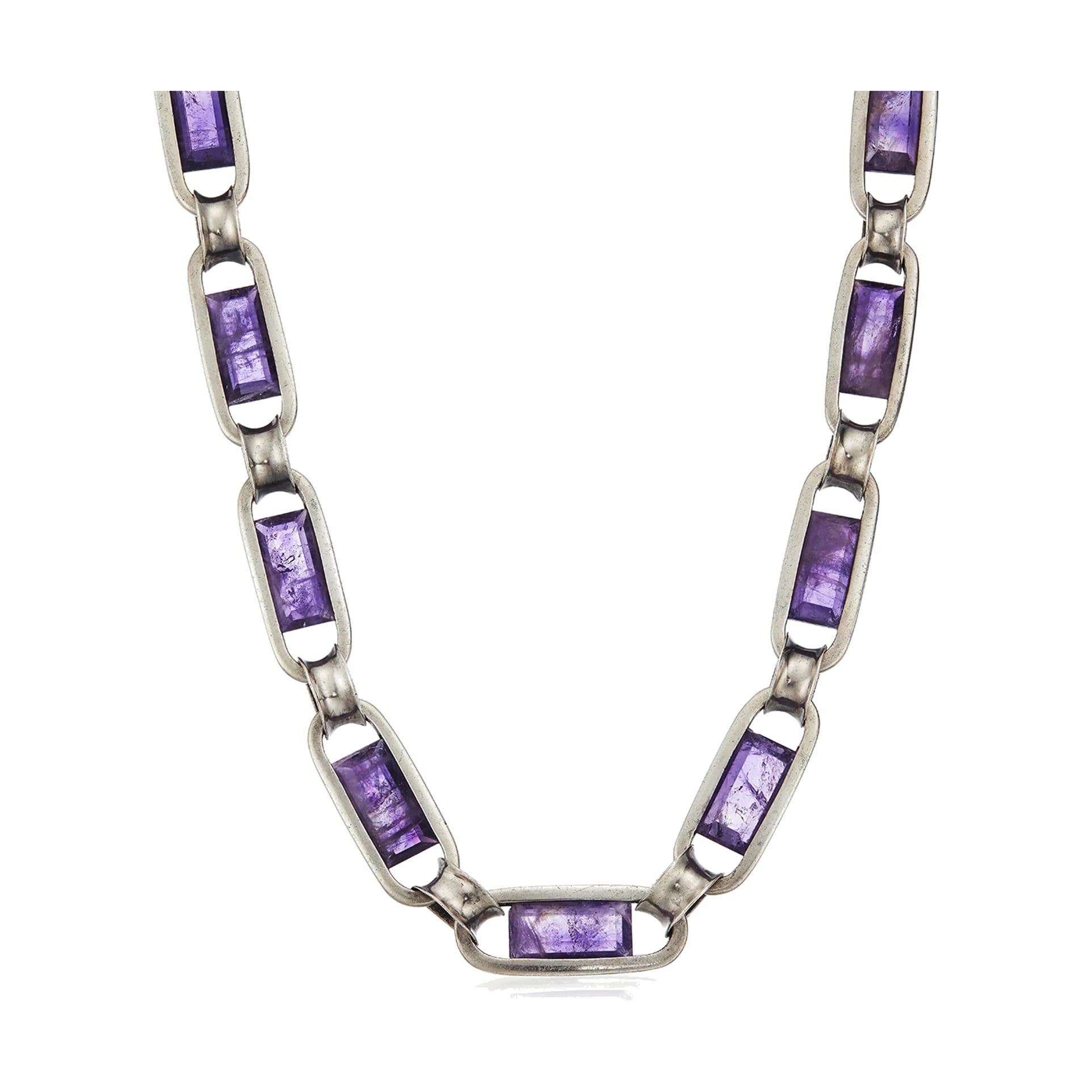
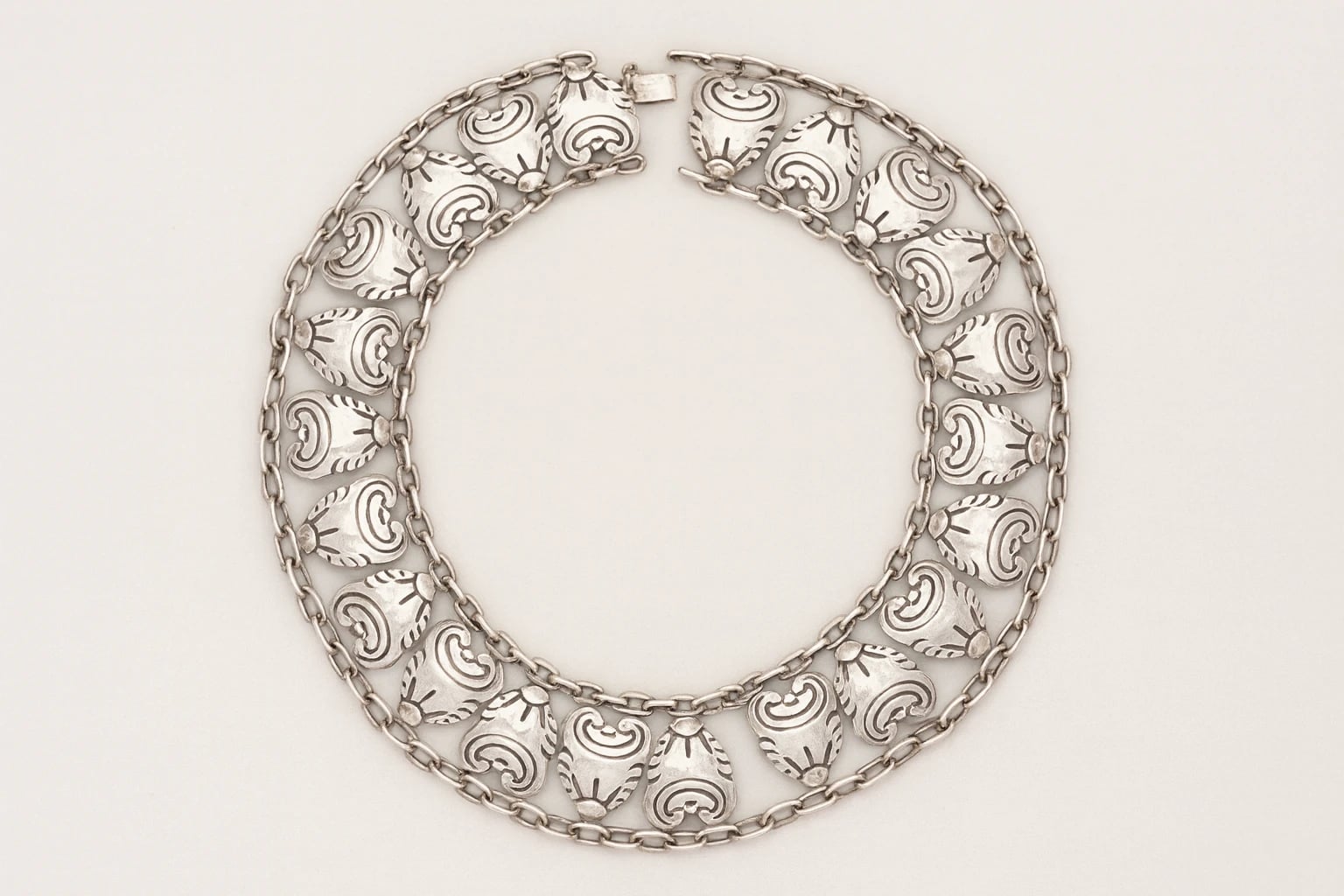
A double chain of interlocking silver links carries its weight low and close, and the design earns its presence not through applied ornament but through the discipline of the link itself. Héctor Aguilar built this necklace from repeated forms doubled into a denser, more supple band than a single chain would allow. The doubling changes how the piece behaves. It settles across the collarbone with the fluid heft of woven metal, and its rhythm comes entirely from the cadence of one unit repeated and paired, without a stone, a pendant, or a decorative focal point to interrupt the run.
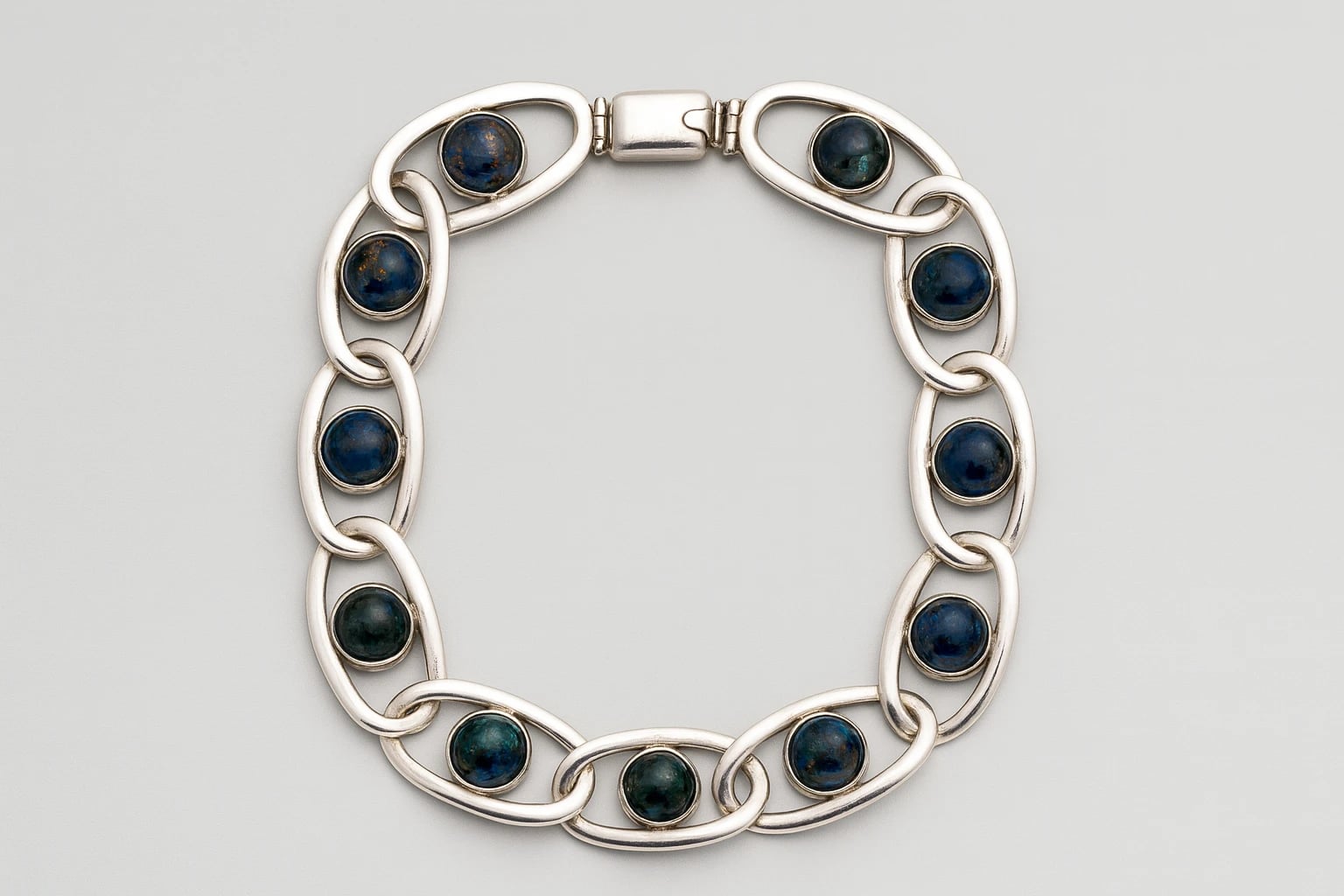
The interest of the piece lies in how Aguilar treated the chain as the whole subject rather than as a support for something else. Each link is a small resolved shape, and the two rows read as a single continuous surface when the necklace lies flat, then break into shifting light as it moves. Silver here is doing structural and optical work at once. The metal supplies the mass, the drape, and the reflective play, so that the necklace depends on proportion and articulation rather than on contrast with a second material. That restraint is a deliberate position. Where many of Aguilar's necklaces set silver against malachite, obsidian, amethyst, or Mexican hardstone, this design withholds color and lets the joinery become the ornament.
Aguilar led the Taller Borda in Taxco, and his authority as a designer and workshop head rested on exactly this kind of clean, weighty construction meant for repeated production at a controlled standard. His name reached an international audience through the shop's steady presence in travel guides of the 1940s and 1950s and through publication of his flatware and holloware in Warren Shipway's photographs of Mexican interiors, where the work was shown alongside contemporary Mexican ceramics as part of a modern domestic vocabulary. A chain necklace of this type belongs to that sensibility. It is not a costume piece but a modern object built to a designer's standard, and it reflects the taller system in which Aguilar set the design and quality while smiths executed the links to a consistent form. Even after the workshop closed in 1962, his designs continued to circulate in books and articles on Mexican silver, which is why the vocabulary of these chains remains legible as his.
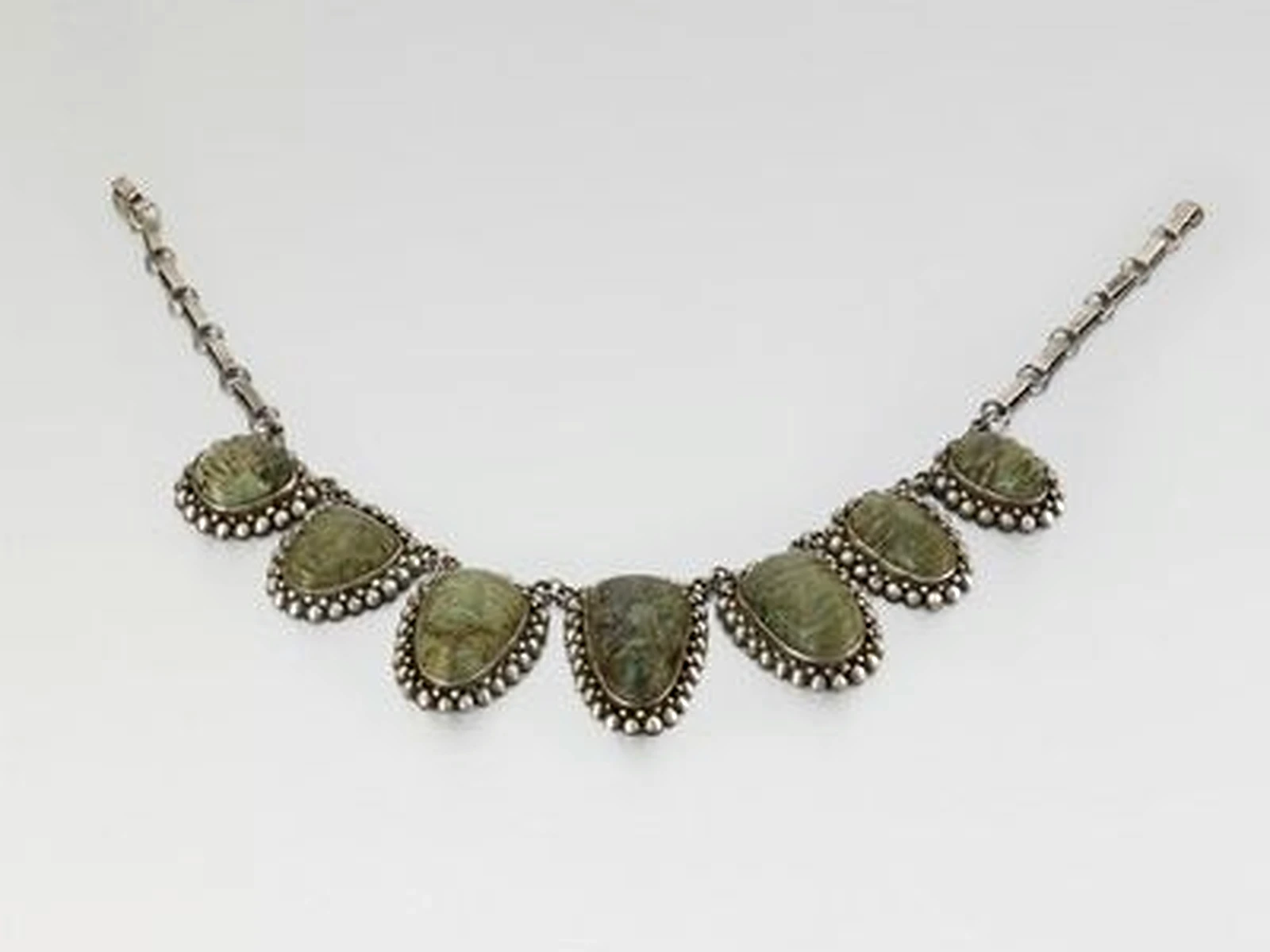
For a collection, the piece documents the plainer and more architectural side of Aguilar's jewelry, the register in which he trusted a single well-made unit to carry an entire design. It sharpens what is visible in his stone-set necklaces by showing what he does when the stone is removed and the metal must answer for everything. Seen beside the malachite and Pre-Columbian bead necklaces recorded in Morrill's study of his work, this chain marks the boundary of his range, the point at which ornament and structure become the same thing.
Museum of Mexican Silver. “Double-Chain-Link Necklace.” Catalog no. MoMS-001361. https://museumofmexicansilver.com/pieces/aguilar-necklace-double-chain-link
See something wrong with this record? Suggest a correction and the piece details fill in automatically.
Héctor Aguilar
New Maguey Necklace
circa 1940
Silver