Saves instantly, no account needed. Already a member? Sign in.
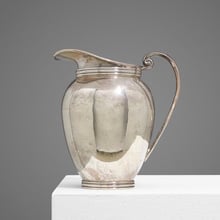
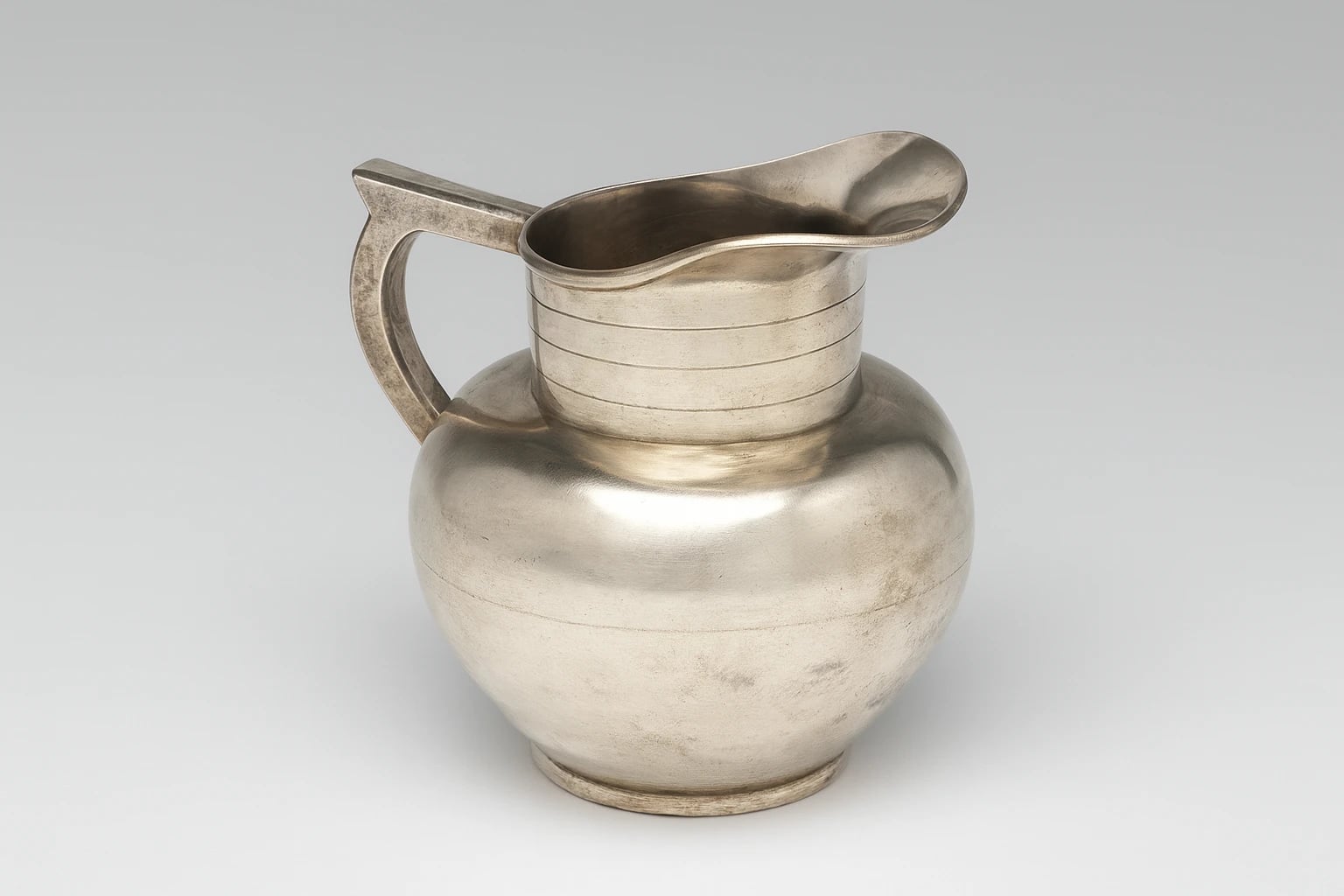
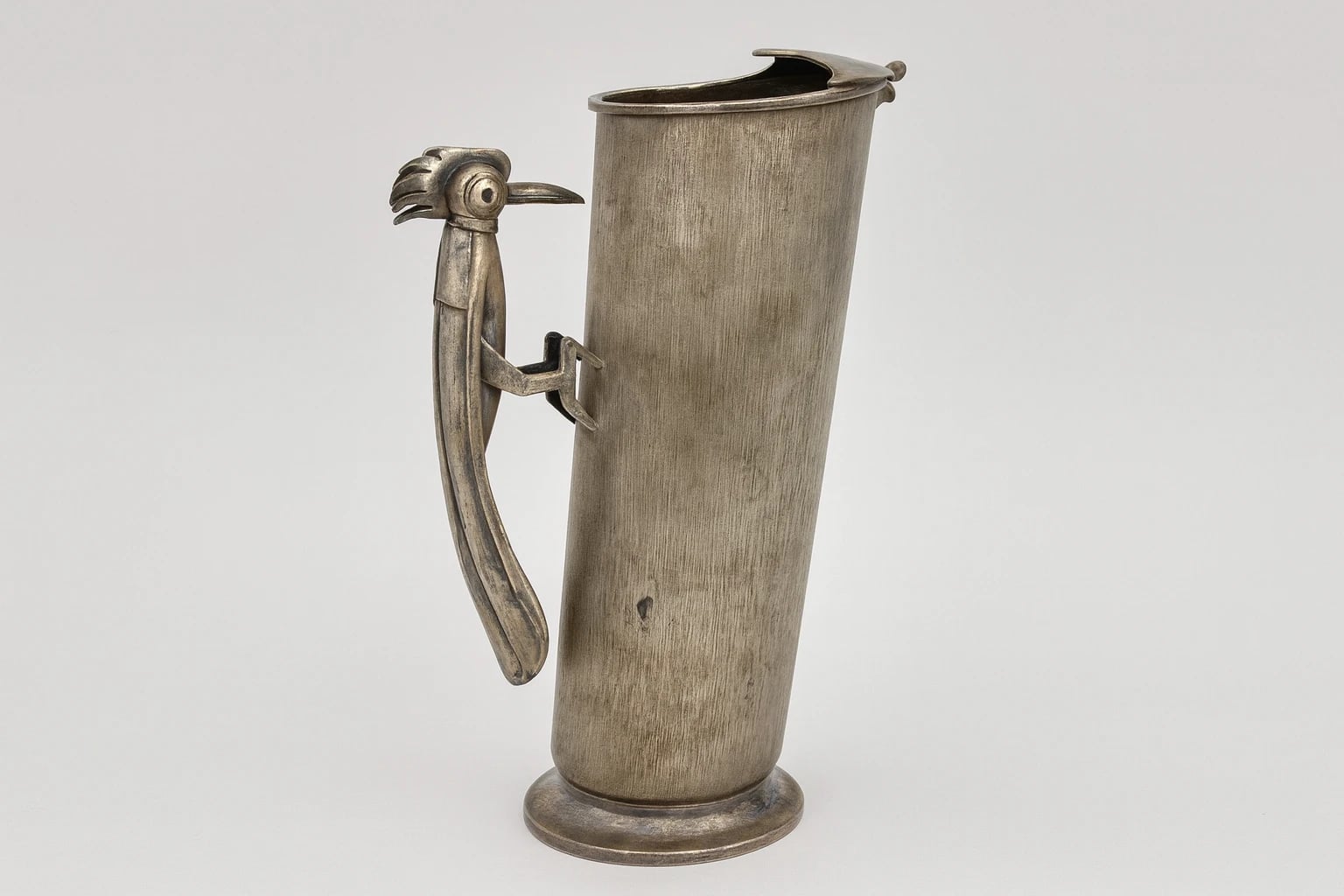
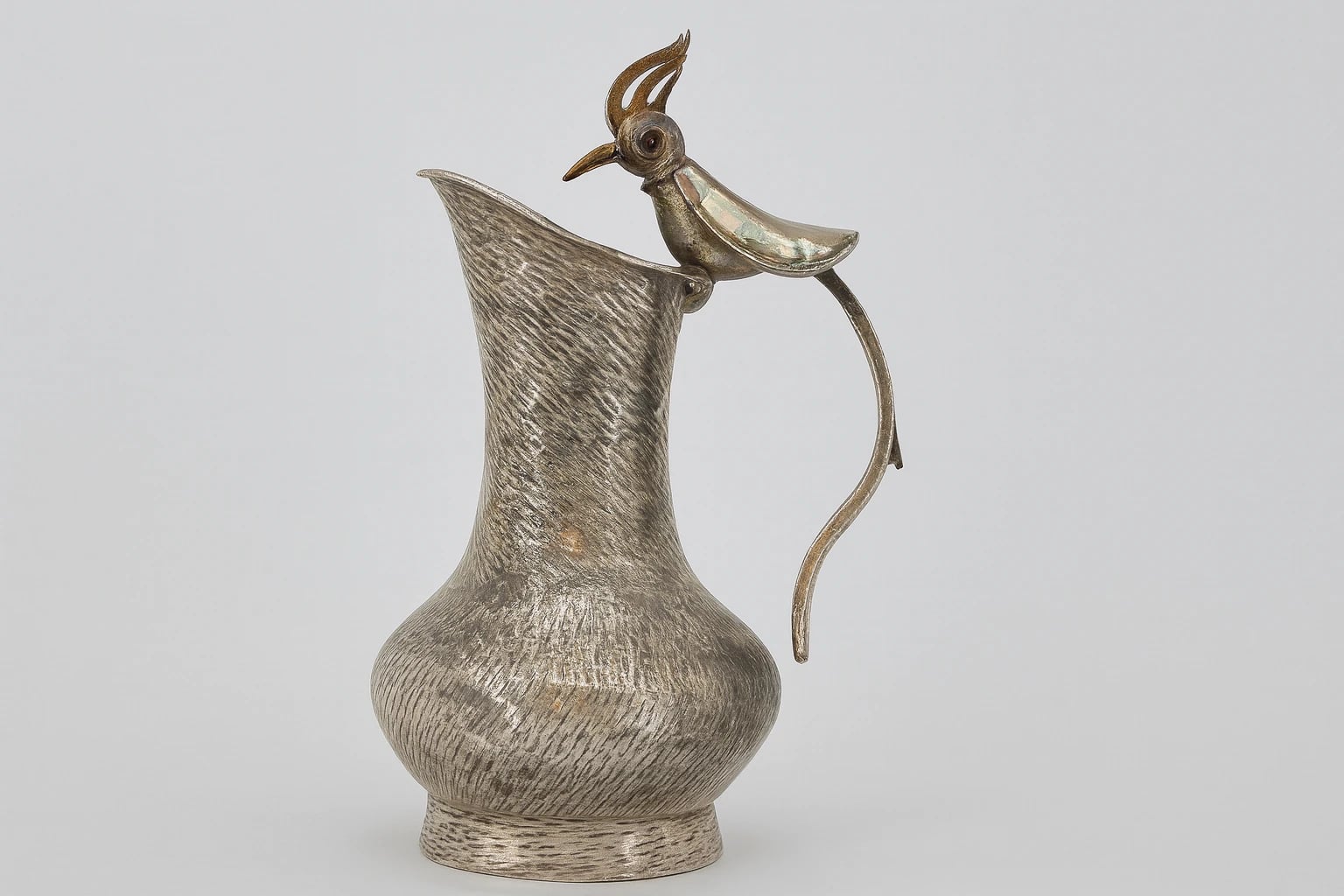
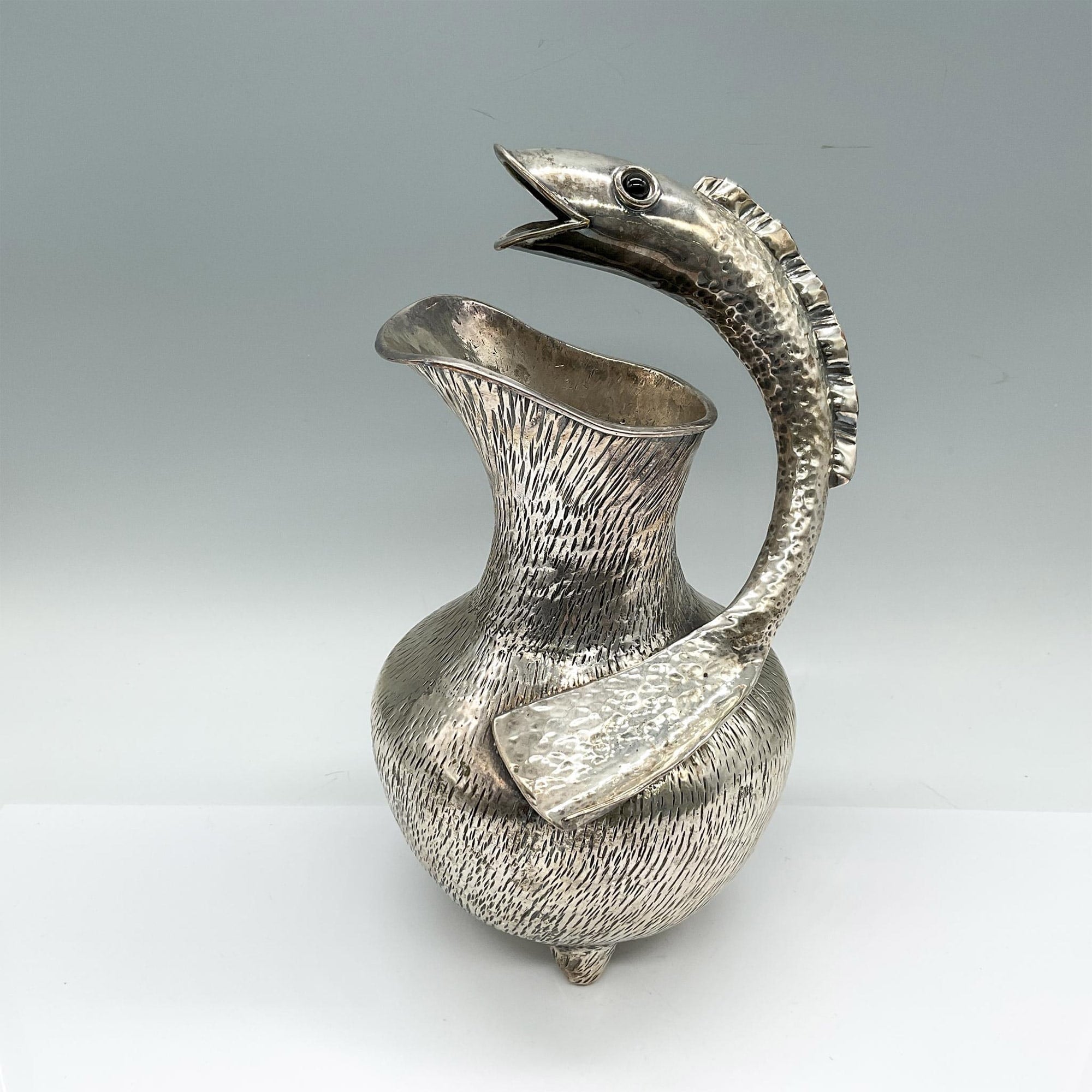
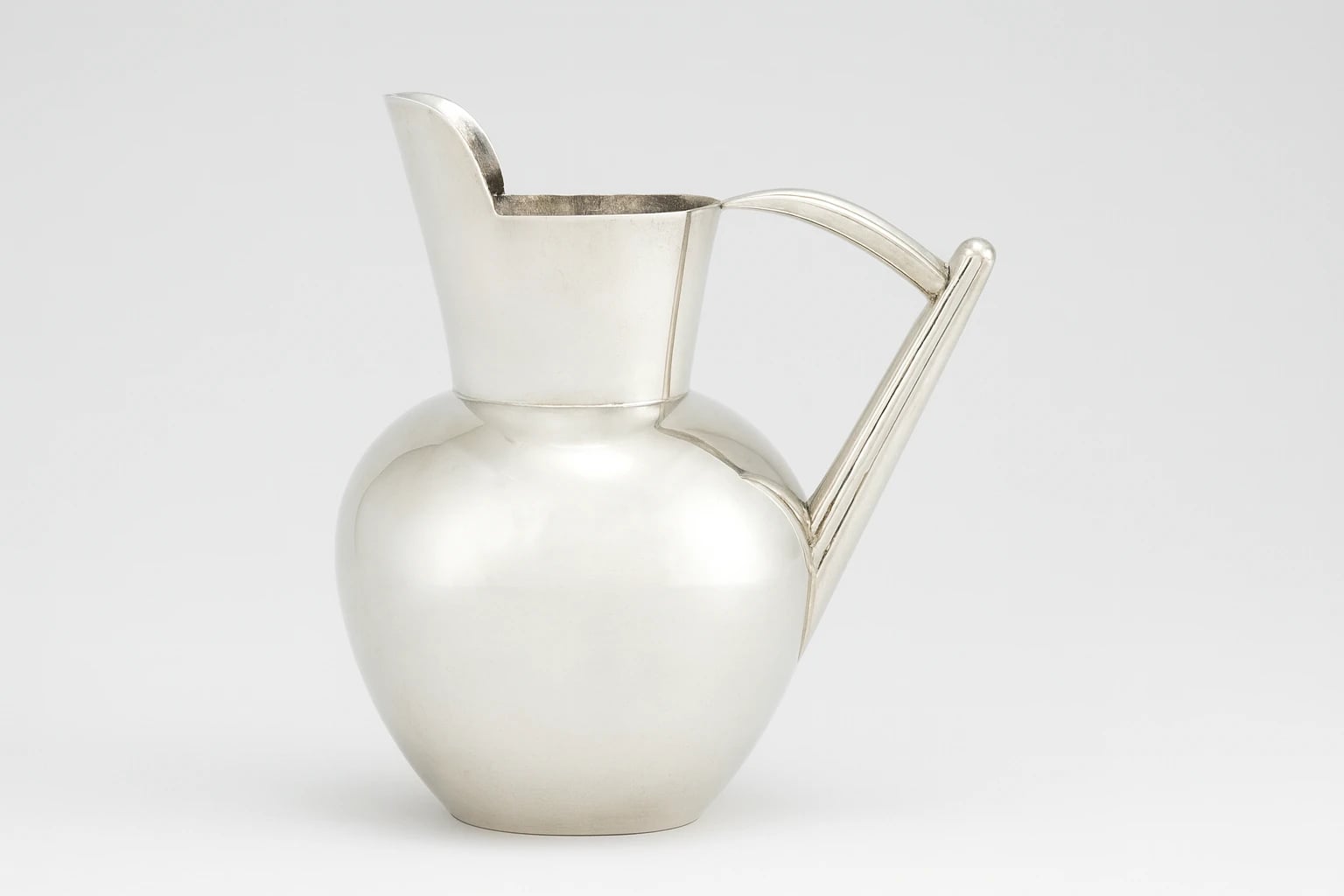
A silver pitcher demands something a brooch never has to prove: that it can hold its shape at full scale while remaining an object of use. Héctor Aguilar's water pitcher meets that demand through the discipline of its silhouette, a body swelled around a turned half-sphere base and drawn up to a spout and handle that read as continuations of the vessel rather than attachments. The eye follows an unbroken profile. That coherence is the achievement, because a pitcher of this size is assembled from separately formed parts, and the design conceals the seams that would betray a lesser hand.
The construction history here is unusually well documented for Taxco holloware, and it changes how the object should be read. Aguilar's Taller Borda was one of only three workshops in Taxco producing holloware by hand, where silversmiths shaped the base as a half-sphere on a turning wheel, working the metal around a wooden or metal model with a tool called a spoon. The upper body, spout, and handle were soldered on and finished, joined with a white solder Aguilar's shop developed to be invisible and durable on holloware. That last detail matters to anyone standing before this pitcher. The absence of a visible joint is not an accident of polishing but a deliberate technical solution meant to let the form appear continuous. Where the piece carries the marks of the hammer, it belongs to the brief window between 1939 and 1942, before machinery entered the workshop. Where it does not, Morrill's account points toward the Conquistador production of the fifties, when Borda designs were formed by machine and finished by hand.
This ambiguity of manufacture sits at the center of Aguilar's holloware and should not be smoothed over. After 1942, as Aguilar himself recorded in Artesania de la Plata, most Taxco pitchers and trays were no longer handwrought locally. Machinery for chasing and die-cutting lived in Mexico City, and Aguilar arranged to have holloware produced to his specifications at Horacio de la Parra's better-equipped workshop. The economist Moises de la Pena, drawing his information from Aguilar directly, noted that almost all silver holloware sold in Taxco was in fact made in the capital. A pitcher like this one therefore records a designer negotiating between the hammer and the machine, keeping design authority while conceding the means of production. The dual hallmarks and inventory numbers Morrill catalogs across surviving pieces are the paper trail of that negotiation.
For a collection of the Mexican silver renaissance, the pitcher supplies what jewelry cannot: evidence of how a Taxco workshop confronted scale, function, and the industrial pressures of the postwar decades. Aguilar's holloware was never made at high volume, and the survival of a resolved water pitcher lets a viewer weigh his design intelligence against the domestic table rather than the body. The form is plain in the best sense, confident enough to carry weight and pour without ornament to distract from its line. It shows that the modern discipline the Taxco School brought to a brooch could govern a vessel just as completely.
Museum of Mexican Silver. “Sterling Water Pitcher.” Catalog no. MoMS-001384. https://museumofmexicansilver.com/pieces/aguilar-pitcher-sterling-water
See something wrong with this record? Suggest a correction and the piece details fill in automatically.
Héctor Aguilar
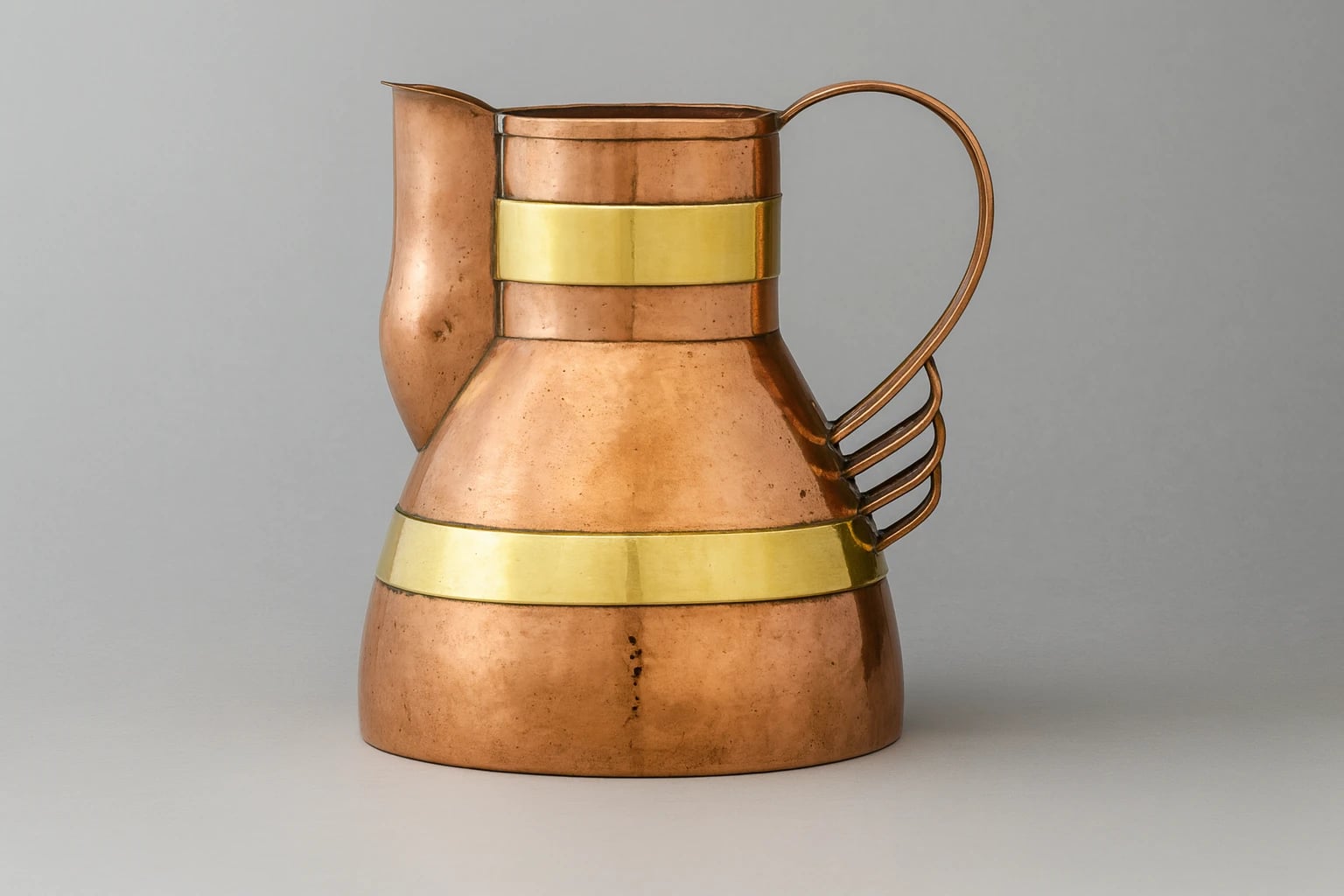
Copper & Brass Pitcher
1939-1962
Copper