Saves instantly, no account needed. Already a member? Sign in.
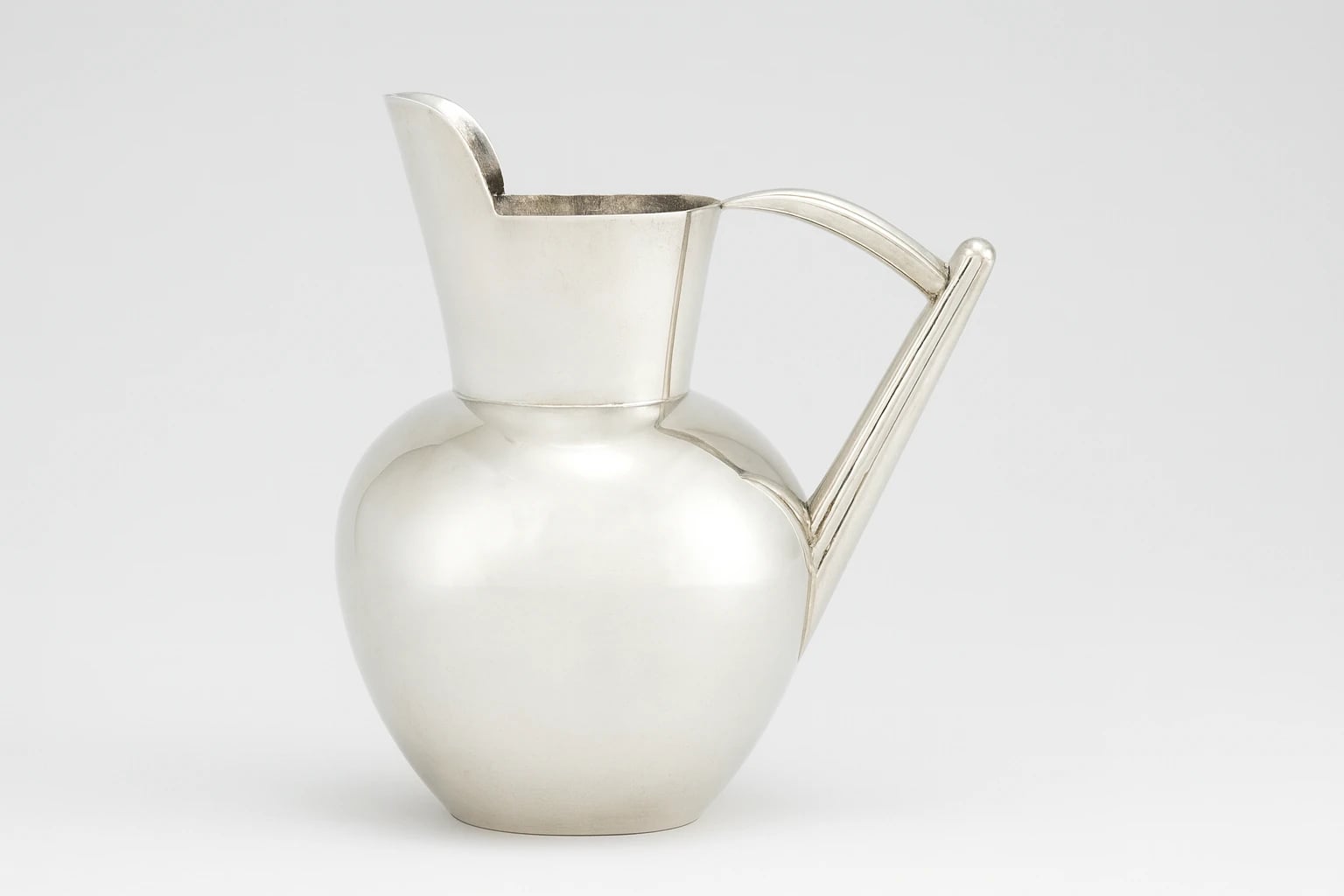
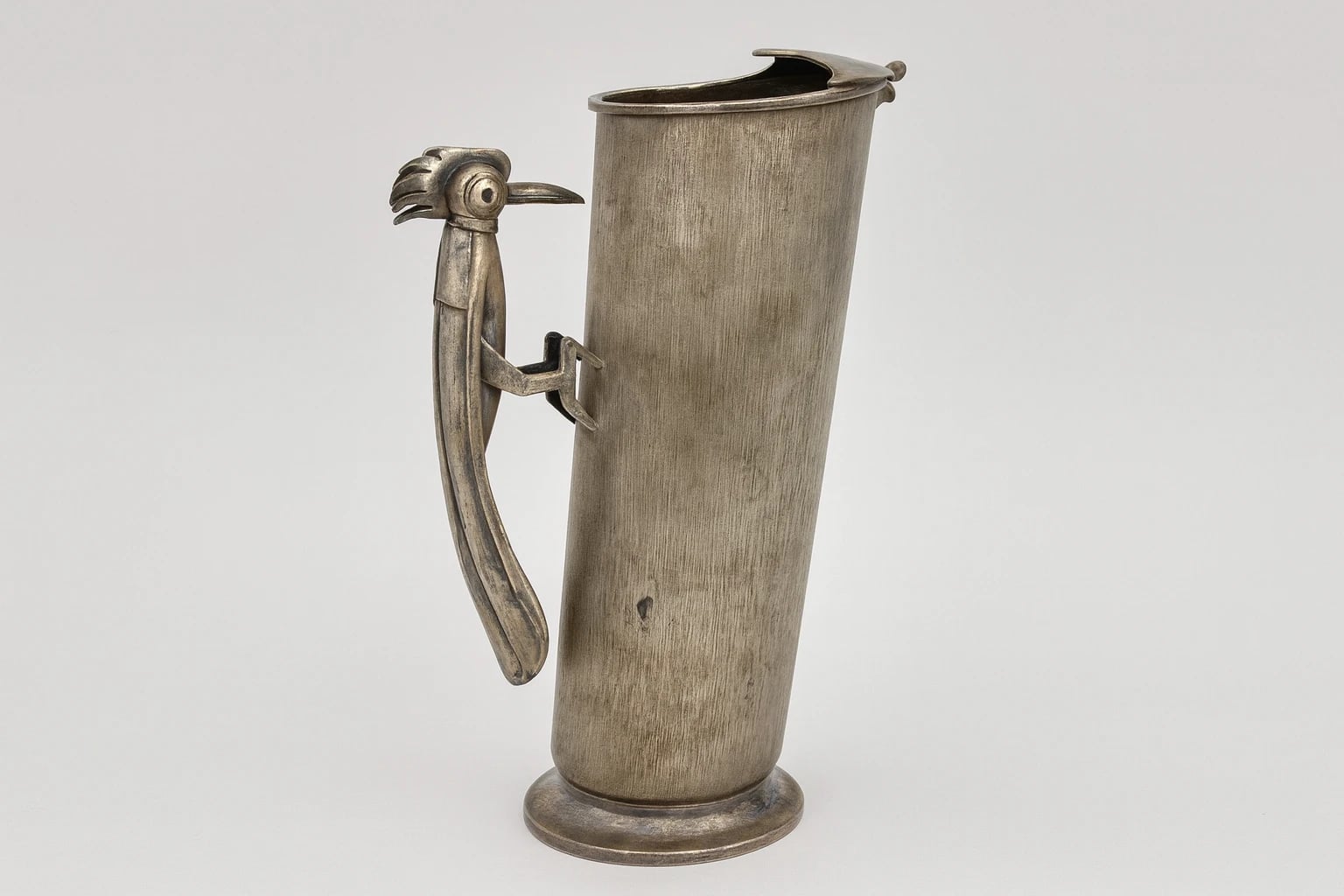
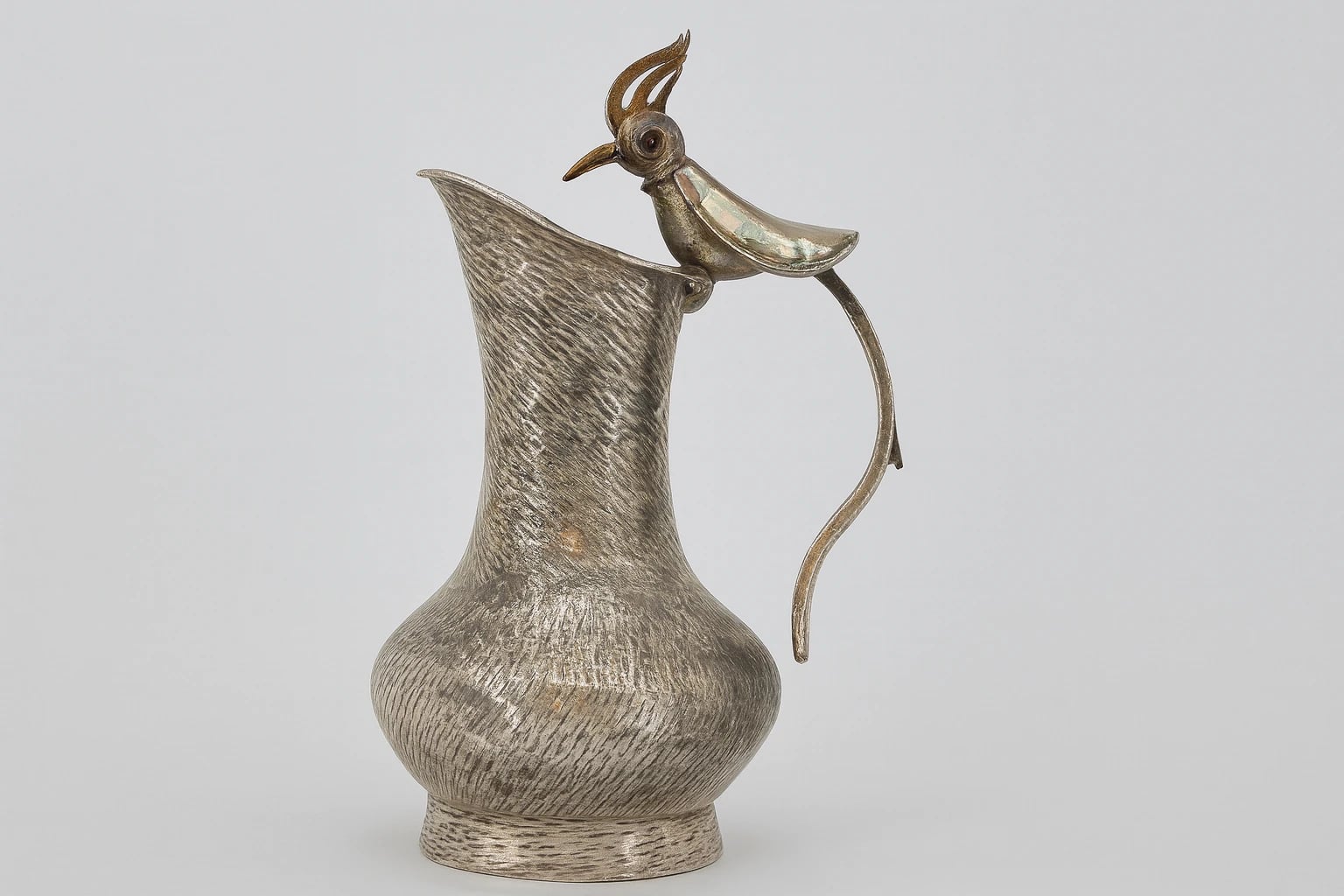
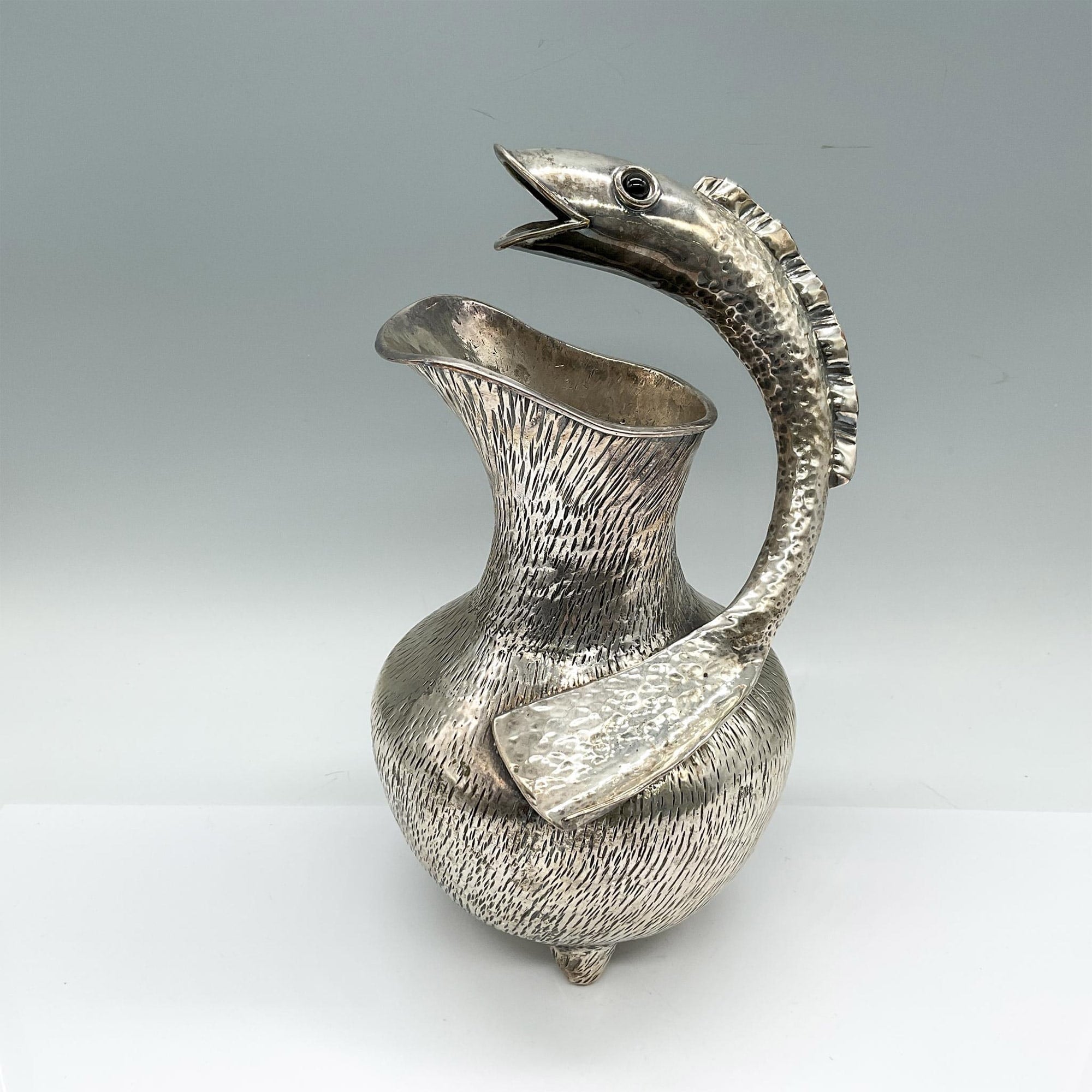
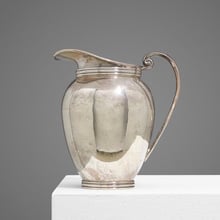
A single sculptural vessel in sterling, this pitcher shows Héctor Aguilar working at the scale where proportion and volume, rather than surface ornament, carry the design. Where jewelry compresses a maker's ideas into small articulated units, a pitcher exposes the fundamental decisions: how a body swells and tapers, where a lip breaks the silhouette, how a handle answers the mass it serves. Aguilar's hollowware records those decisions plainly. Standalone pieces of this kind remain far less represented in collections and exhibitions than the bracelets and cuffs on which much of the Taxco reputation rests, and this pitcher extends the record toward the larger work Aguilar is documented to have designed.
The design is organized around the relationship between the vessel's volume and its handle. A pitcher must balance a full body against the line that lifts and pours it, and the handle here has to read as both structure and ornament without overwhelming the form it joins. Silver rewards this kind of attention. Its reflectivity registers every change in curvature, so a swelling body and a drawn lip are described by the way light travels across the surface rather than by applied decoration. On hollowware this discipline is unforgiving, because there is no stone, no fringe, and no repeated link to distract from proportion. The vessel stands or falls on the accuracy of its volume and the resolution of the join between body, lip, and handle.
Penny Chittim Morrill's study of Aguilar documents his production of large silver pieces, including tea sets and trays, placing hollowware at the center rather than the margin of his practice. This pitcher carries a Conquistador shield mark alongside the eagle assay stamp, and Aguilar's association with Conquistador is well documented: by the late 1940s the firm, then under Axel Wenner-Gren, had grown into one of the largest silver manufacturers in Mexico and at one point produced items marked for both William Spratling and Aguilar. A Conquistador mark on an Aguilar design therefore describes a specific arrangement in which Aguilar's design authority was realized through a large manufacturing operation, not a contradiction of it. Morrill records a comparable Conquistador Aguilar pitcher dated to about 1955 to 1960, which situates this vessel within Aguilar's later hollowware rather than the earlier Taller Borda years.
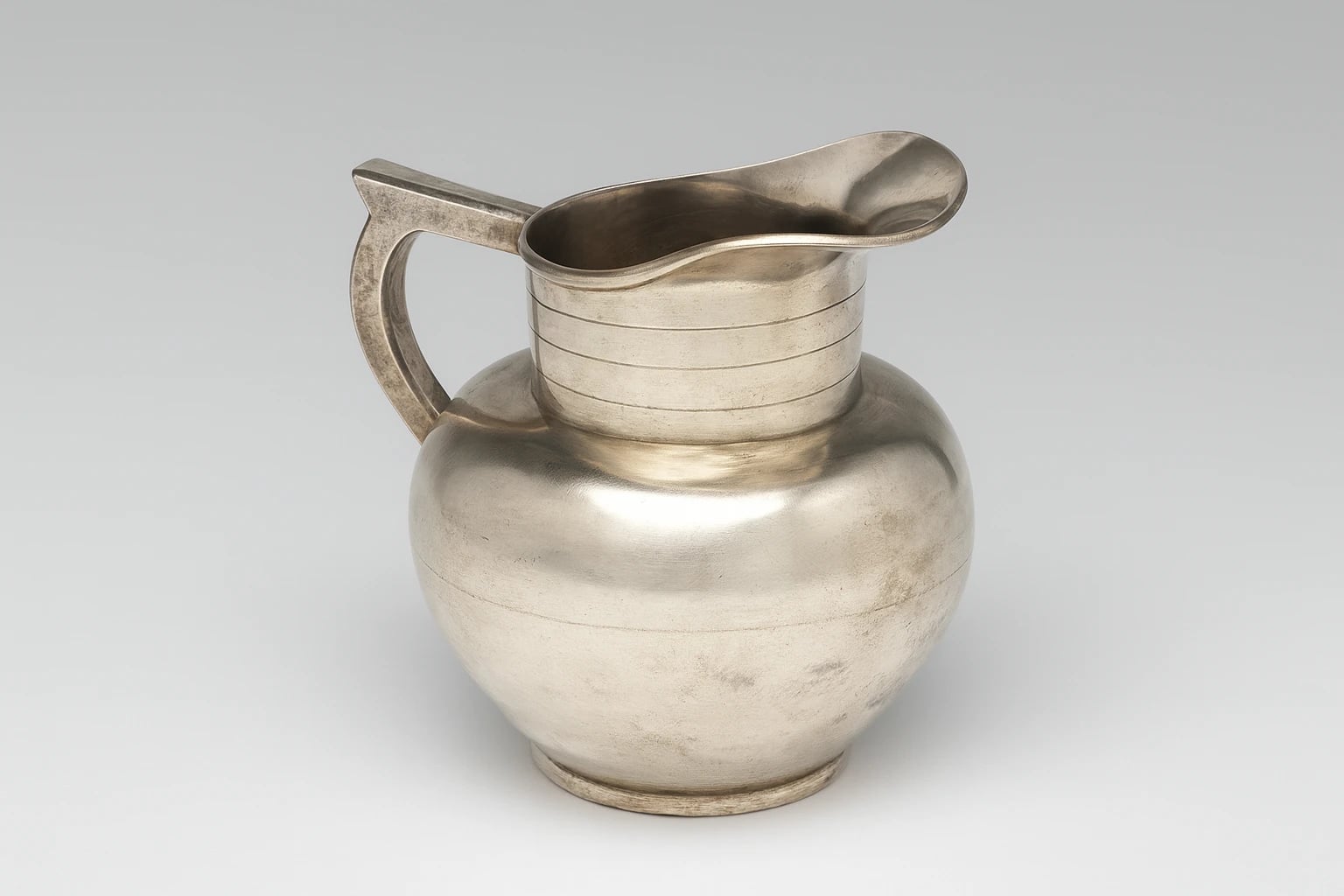
Aguilar's hollowware belongs to a broader current in mid-century Mexican metalwork that treated the vessel as a field for modern form, seen in the married-metal and copper-and-silver pitchers that Los Castillo and Victoria produced in the same decades. Within Aguilar's own output, a pitcher makes his sense of proportion legible in a way that jewelry cannot, showing how he handled mass, line, and the working demands of a functional object. For a collection weighted toward bracelets and small articulated work, hollowware of this kind restores the part of the Taxco story that unfolded on the table rather than the wrist.
Museum of Mexican Silver. “Sterling Silver Pitcher.” Catalog no. MoMS-001992. https://museumofmexicansilver.com/pieces/aguilar-sterling-silver-pitcher-c-1960-47
See something wrong with this record? Suggest a correction and the piece details fill in automatically.
Héctor Aguilar
Sterling Pitcher
1939-1962
Silver