Saves instantly, no account needed. Already a member? Sign in.
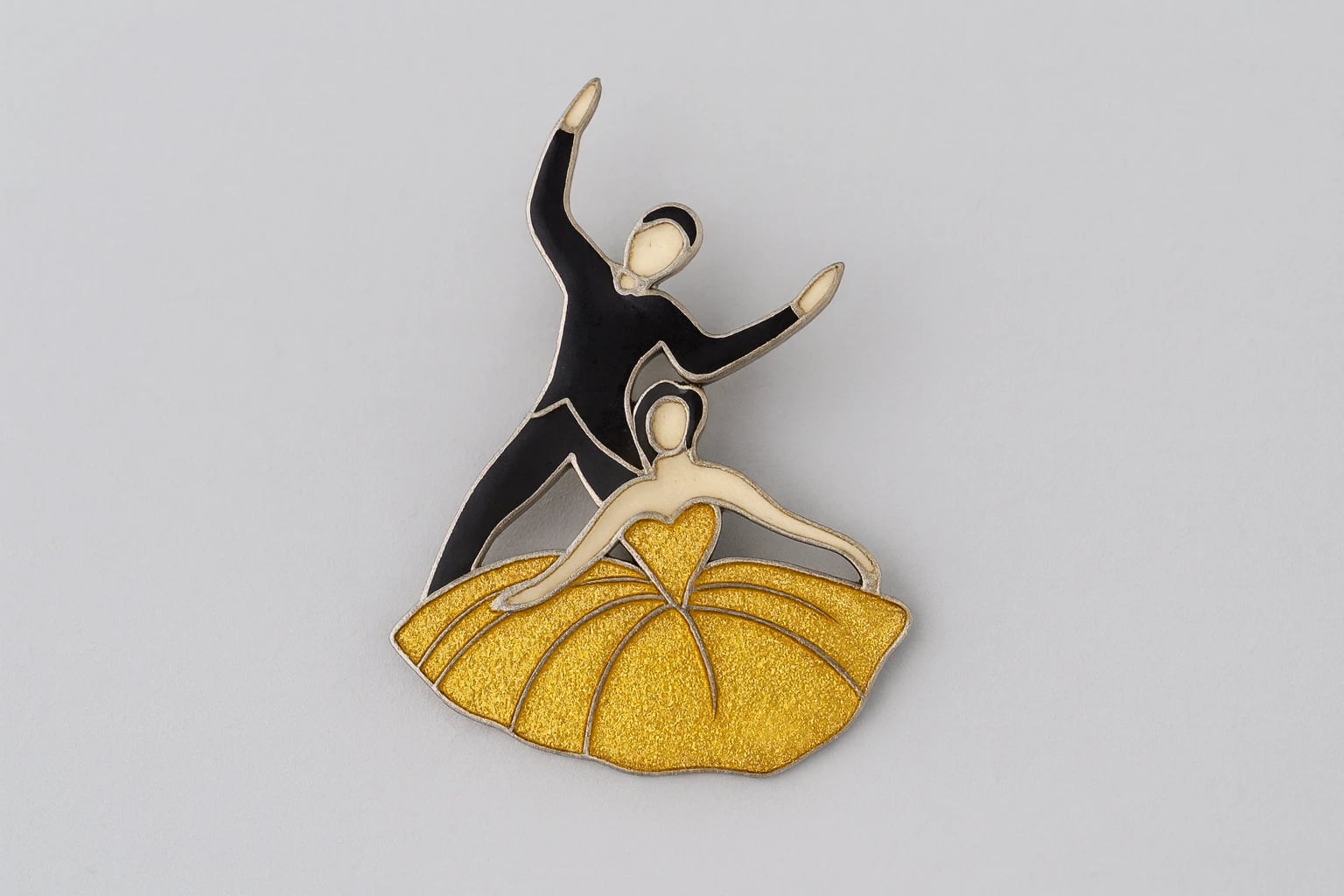
This small figural pin compresses a dance into a few decisive curves. At two inches high by one and one half inches wide, it depends on silhouette, color, and the raised silver edges of champlevé enamel rather than on facial description or costume detail. The male dancer is rendered as a black enamel shape with arms lifted and one leg extended, while the female dancer turns beneath him in a broad yellow skirt divided by silver ribs. The pairing is economical and lively: black enamel gives the upper figure graphic force, the pale enamel of the heads keeps the bodies legible, and the skirt becomes the pin’s field of motion.
The design is organized around contrast. The male figure is nearly all contour, a dark sweep against polished silver. The female figure is built from line and fan shaped color, with the skirt spreading outward like a stage spotlight or a flower head. The silver ridges do more than contain the enamel. They draw the arc of the skirt, mark the lifted arms, and give the tiny composition enough structure to read from a distance. This was one of Margot de Taxco’s great strengths as an enamel designer: color was not applied as surface decoration after the fact, but planned with the metal from the beginning.
The marks record the pin as Margot de Taxco, sterling, Made in Mexico in a circle, Eagle 16, design number 5421. That combination places the object within the workshop’s mature system of signed and numbered production. Hougart records Eagle 16 among the documented Margot de Taxco marks, including enamel pieces with adjacent design numbers from the 1950s onward. The 1950s date is significant because Margot’s enamel on silver line developed into a defining part of her workshop after its introduction in the middle of that decade. Morrill’s research describes the workshop process as an unusually integrated collaboration: Margot prepared detailed color drawings and instructions, dies were made to create recessed fields in the silver, and enamelists applied and fired the colors within those raised contours. The pin’s clarity at such a small scale depends on that disciplined sequence.
As a subject, the flamenco dancers also show how Margot’s workshop could move beyond the ancient Mexican, floral, animal, and spiral motifs for which it is often remembered. The dancers are not treated as ethnographic illustration. They are translated into modern graphic form, with the body reduced to bend, interval, and color. Within the history of the Taxco School, this pin is a compact example of how jewelry absorbed the languages of performance, travel, and cosmopolitan taste while remaining technically rooted in Mexican silver workshop practice. It belongs in the collection not because it is large or elaborate, but because it shows Margot de Taxco’s enamel vocabulary working at intimate scale: a brooch in which color, line, and bodily movement are held in precise balance.
Museum of Mexican Silver. “Design 5421 Flamenco Dancers Enamel Brooch.” Catalog no. MoMS-002314. https://museumofmexicansilver.com/pieces/margot-de-taxco-enamel-figural-pin
See something wrong with this record? Suggest a correction and the piece details fill in automatically.
Margot de Taxco
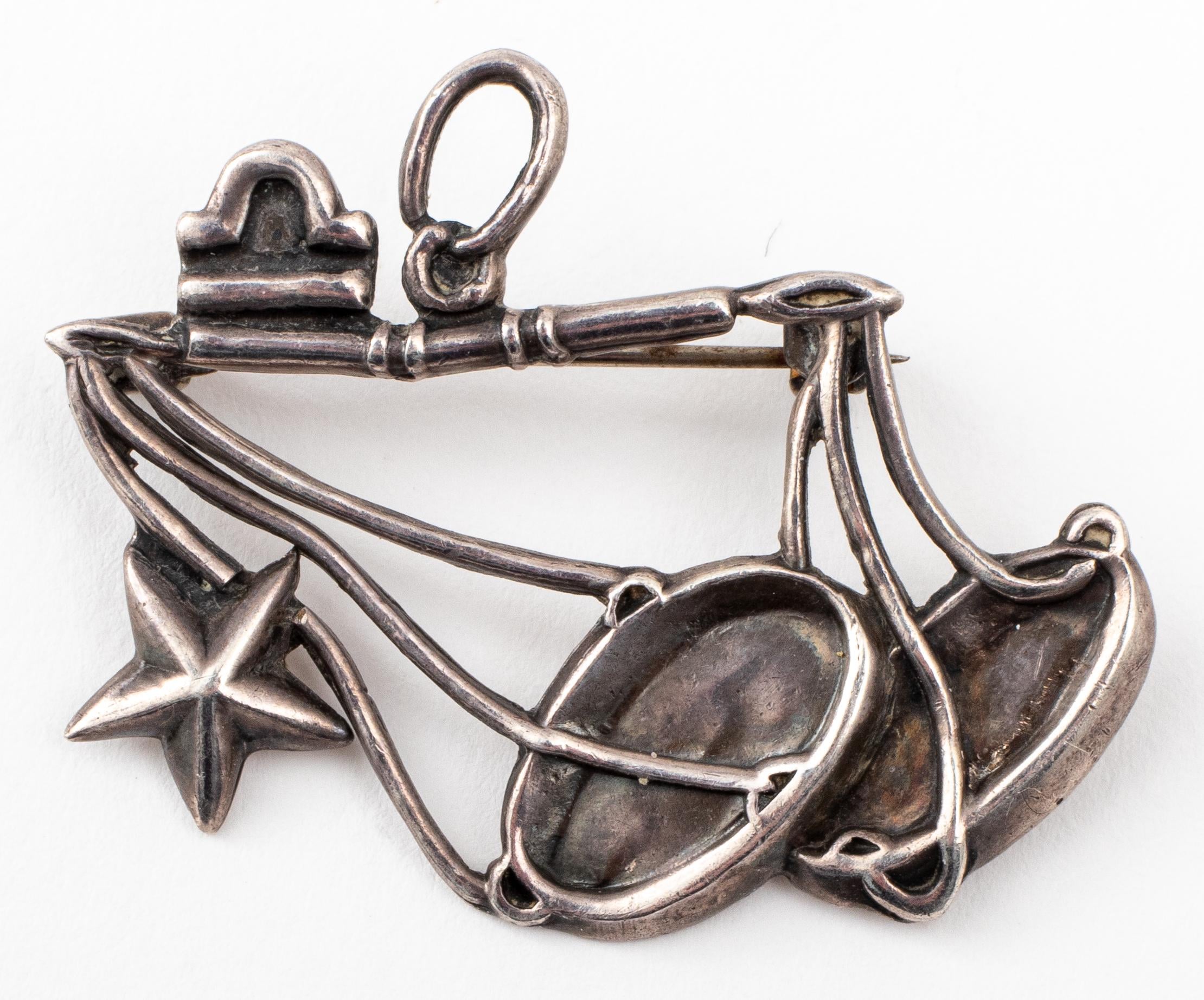
Libra Zodiac Brooch, Design No. 5226
Sterling silver