Saves instantly, no account needed. Already a member? Sign in.
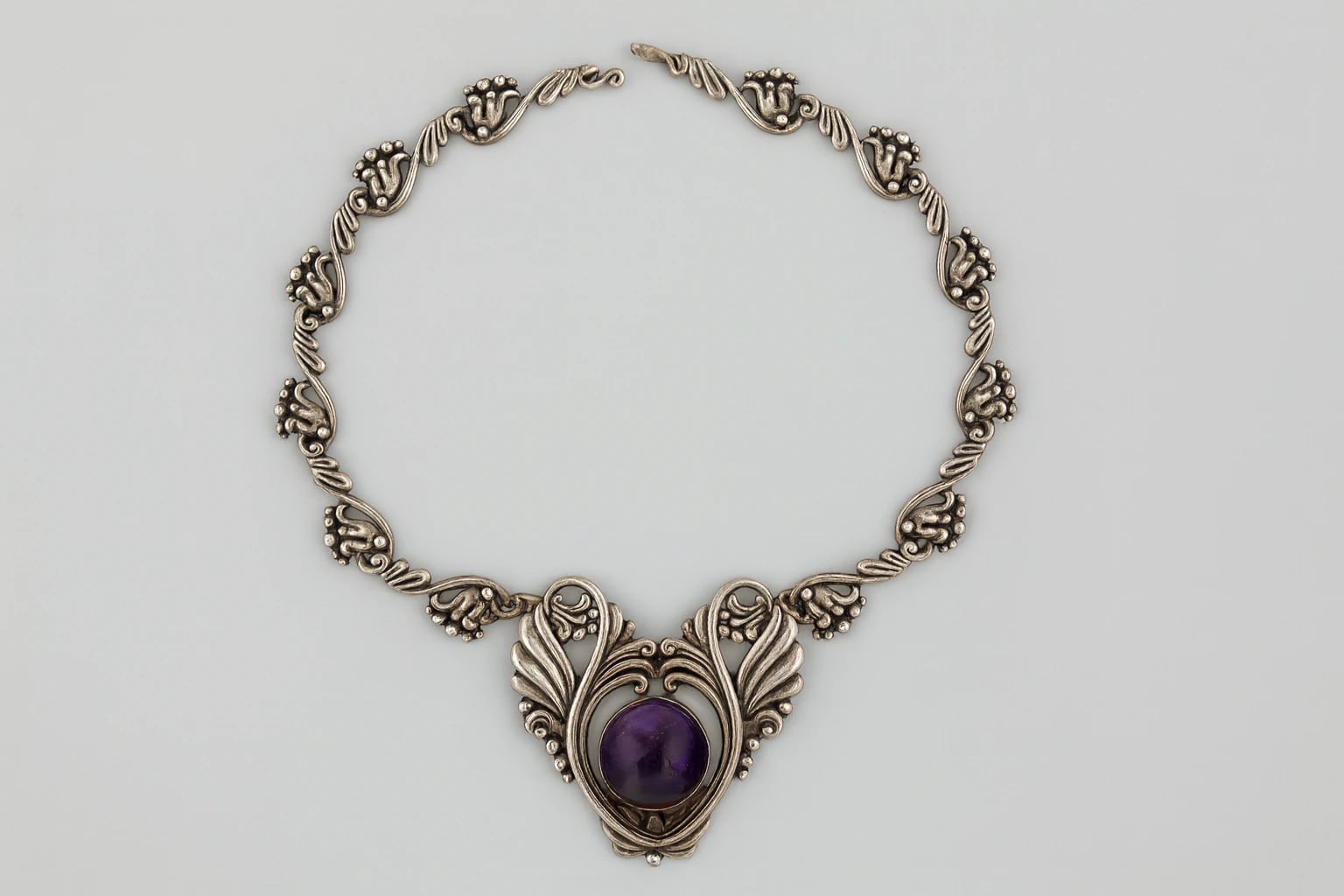
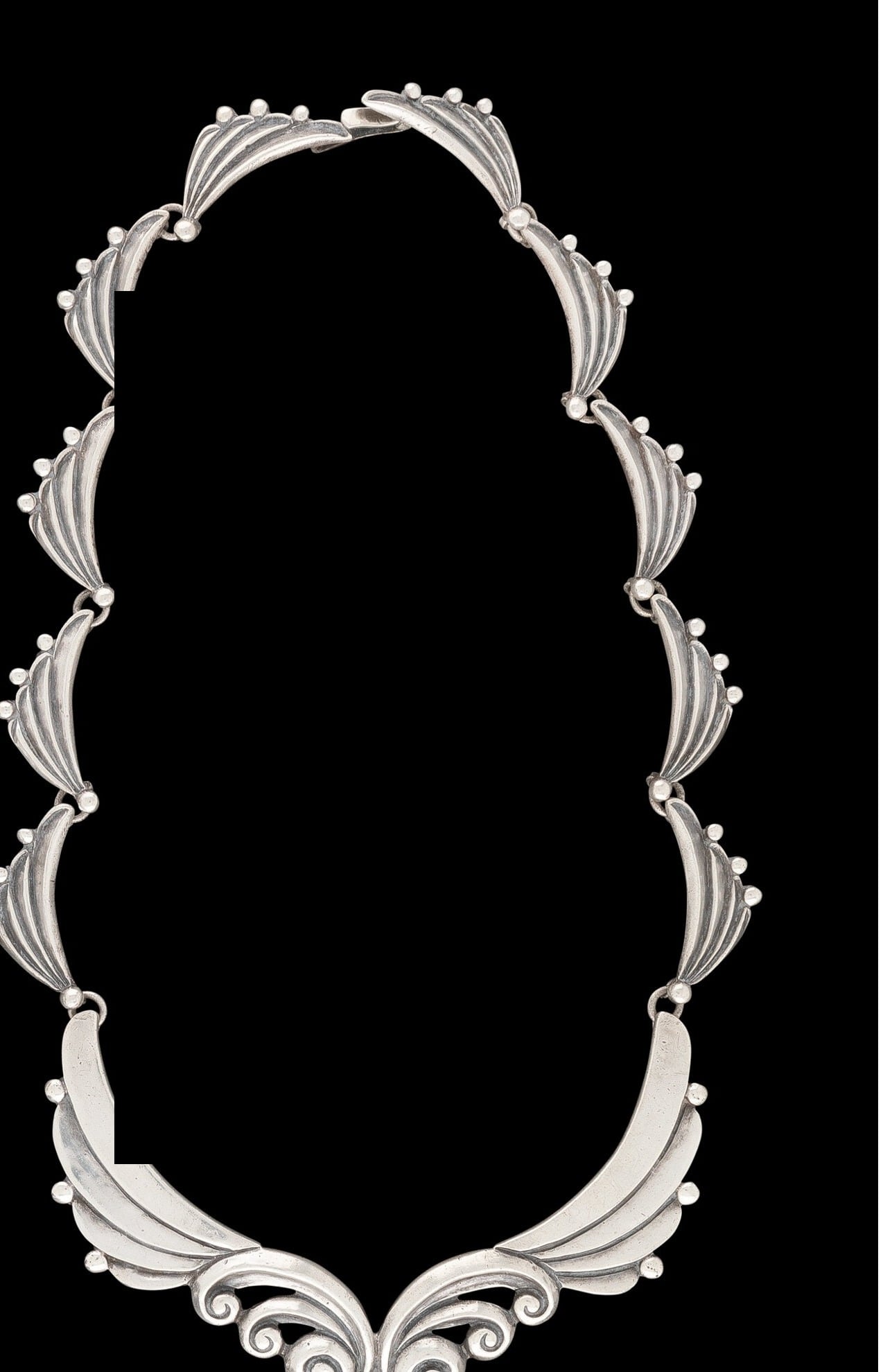
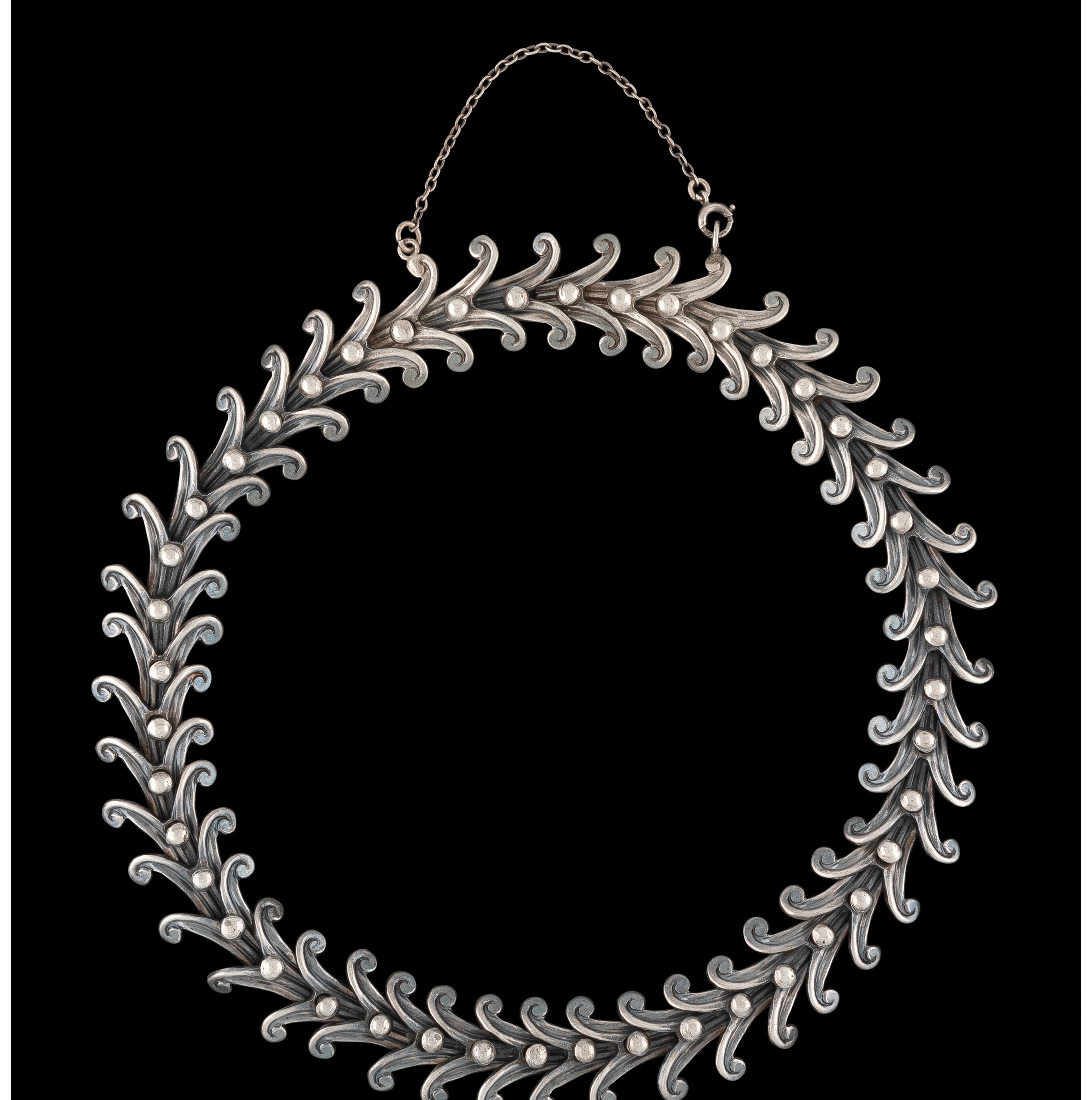
Design 5102 falls within the earliest sequence of Margot de Taxco numbers, the run beginning around 5100 that carries only the sterling stamp without the enamel notation found on her later designs. The number itself places the necklace close to the founding years of the shop, when Margot van Voorhies was working primarily in silver rather than the champlevé enamel for which she would become best known after 1955. A low number in her system is a useful marker of relative sequence rather than an exact date, but it locates this design in her formative period, when she was establishing an independent language after leaving Los Castillo.
The sterling context matters to how the piece should be read. Margot's reputation now rests heavily on the enameled work she began producing in 1955, a body of jewelry so distinctive that other Taxco makers, Castelan among them, produced silver and enamel pieces the hallmark literature describes as reminiscent of hers. Design 5102 predates that phase and belongs instead to the silver vocabulary she developed first. Understanding her as a designer who worked fluently in unenameled sterling before turning to color corrects the common assumption that enamel defined her from the start. The early numbered silver designs are the ground from which the later enamel work grew.
Margot's independence is central to this design's place in her career. She had created many of the early designs for Los Castillo, the taller her husband Antonio Castillo founded in 1939, before their marriage ended in 1946. She opened Margot de Taxco in 1947. A design in the 5100 range therefore represents work made under her own name and mark, on her own terms, in the first years of a shop she directed as designer and proprietor. This distinction is not incidental in the Taxco system, where design authority, workshop management, and execution were often held by different people. Under the Margot de Taxco mark, the design authority was unambiguously hers.
The Margot de Taxco marks are also well enough documented that a piece can be placed within her production with some confidence, and the hallmark literature separately records a crude cast counterfeit tab bearing her name, a reminder that her designs were copied closely enough to be worth faking. For a collection tracing the arc of a single designer, an early sterling design like 5102 records the moment before enamel, when Margot was defining in silver alone the sense of pattern and structure she would later fill with color.
Museum of Mexican Silver. “Design 5102 Necklace.” Catalog no. MoMS-001044. https://museumofmexicansilver.com/pieces/margot-necklace-5102
See something wrong with this record? Suggest a correction and the piece details fill in automatically.
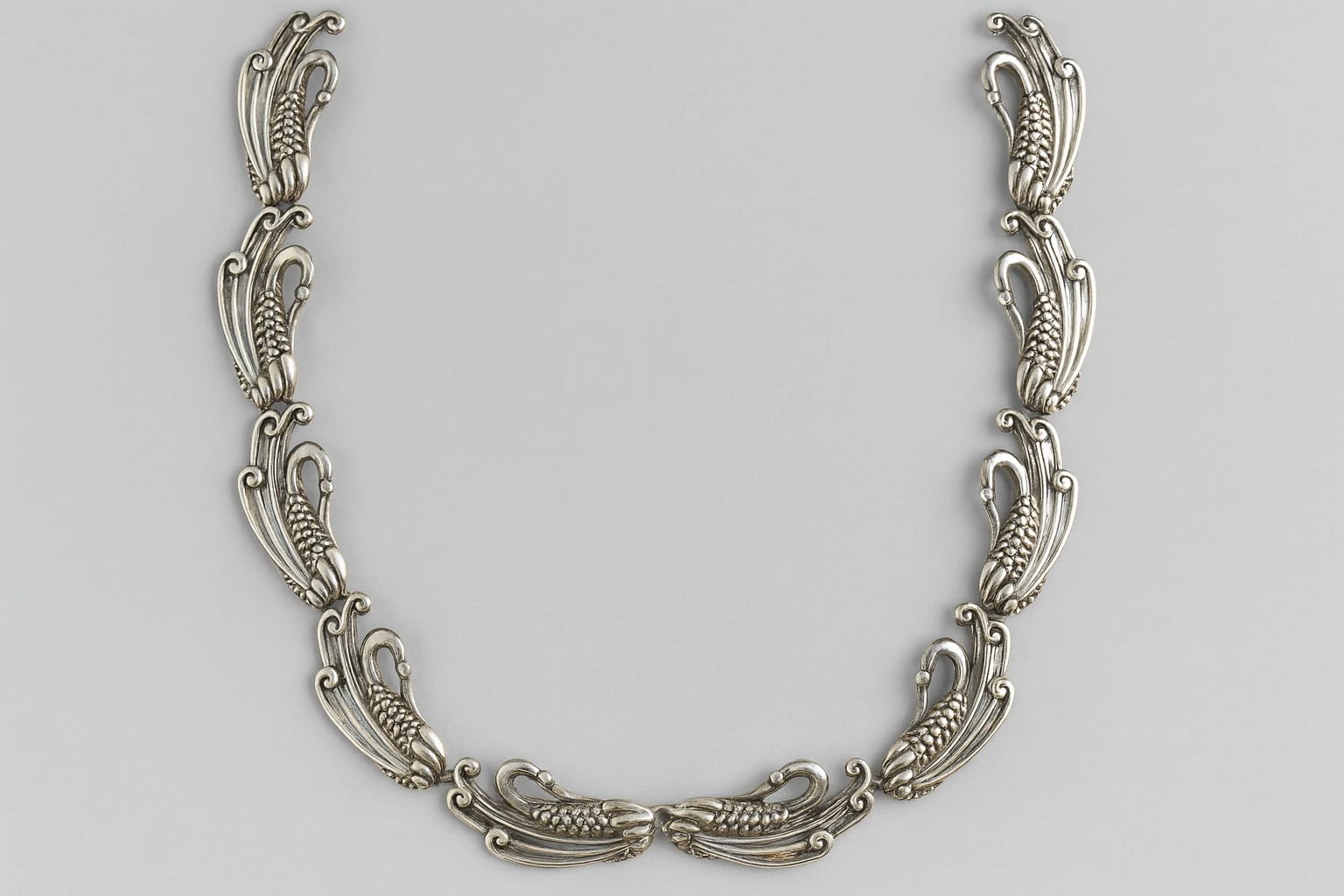
Design 5144 Necklace
Sterling silver