Saves instantly, no account needed. Already a member? Sign in.
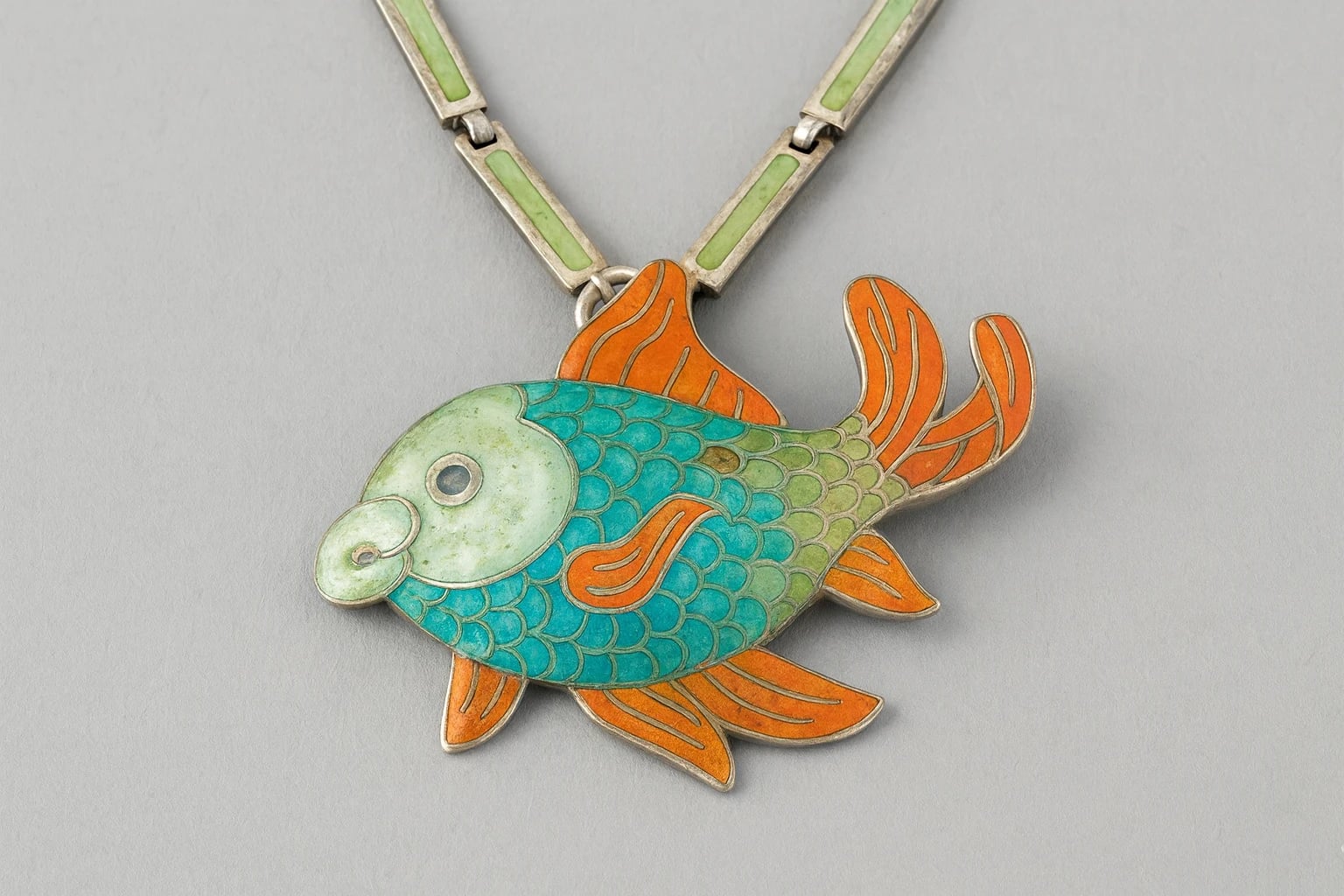
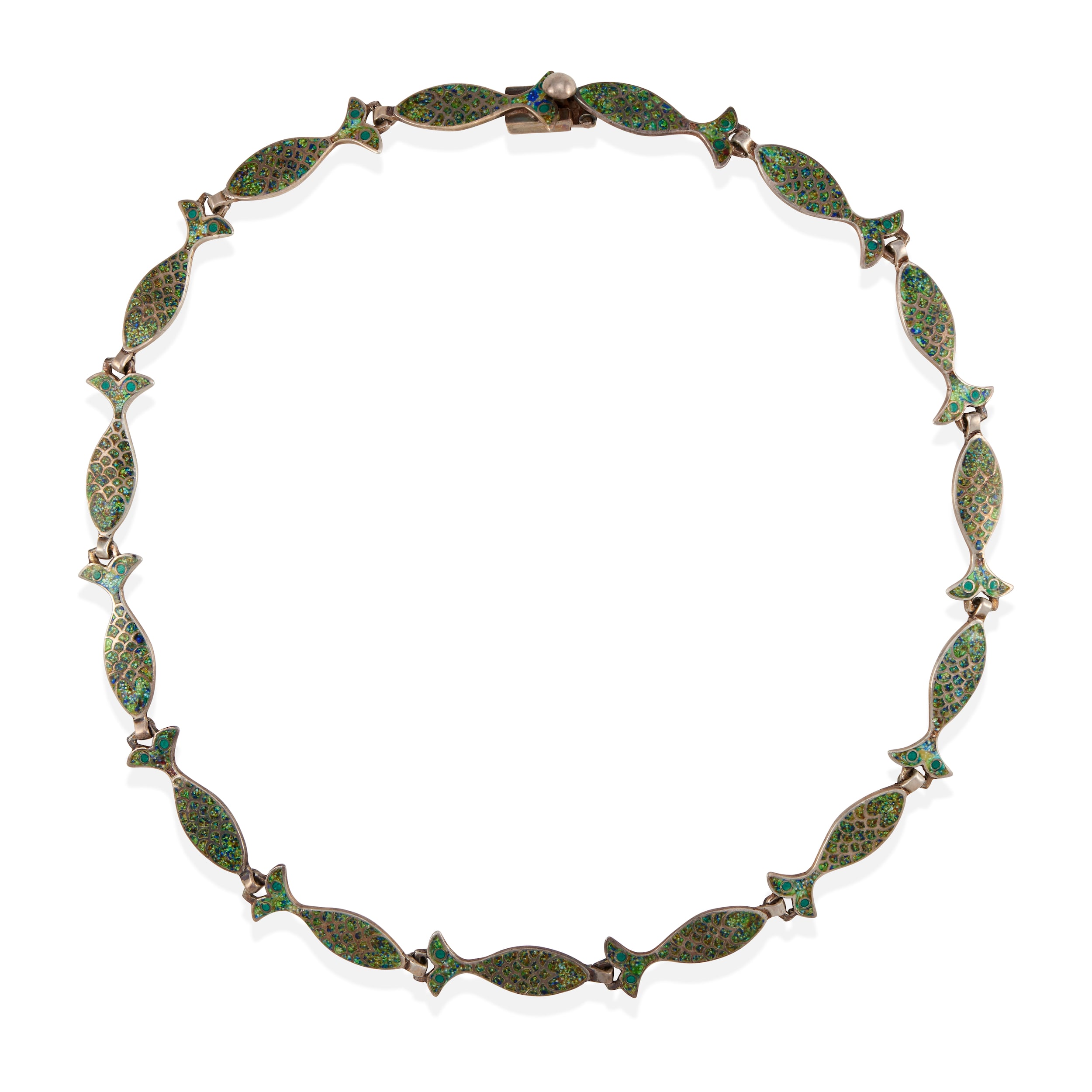
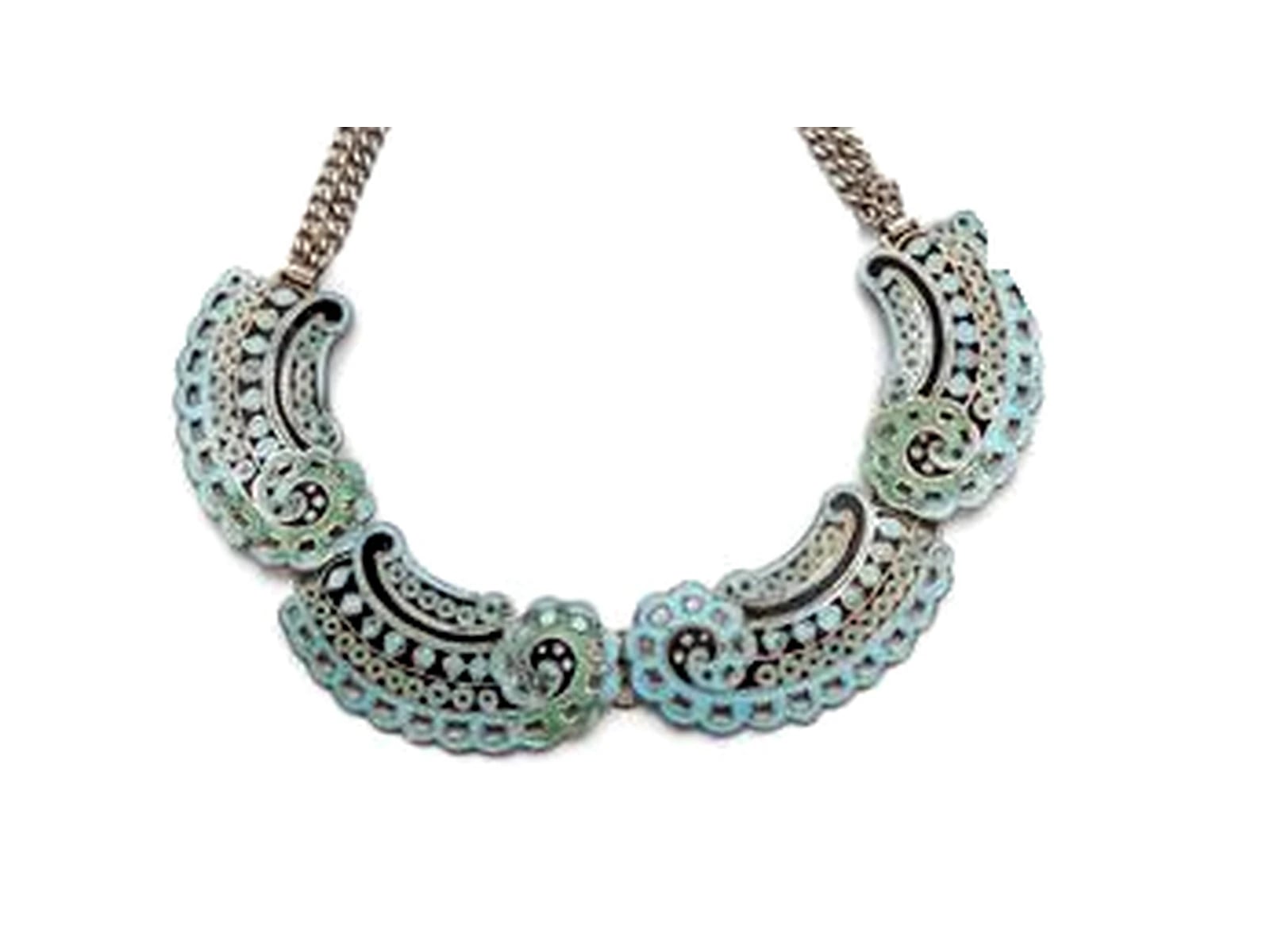
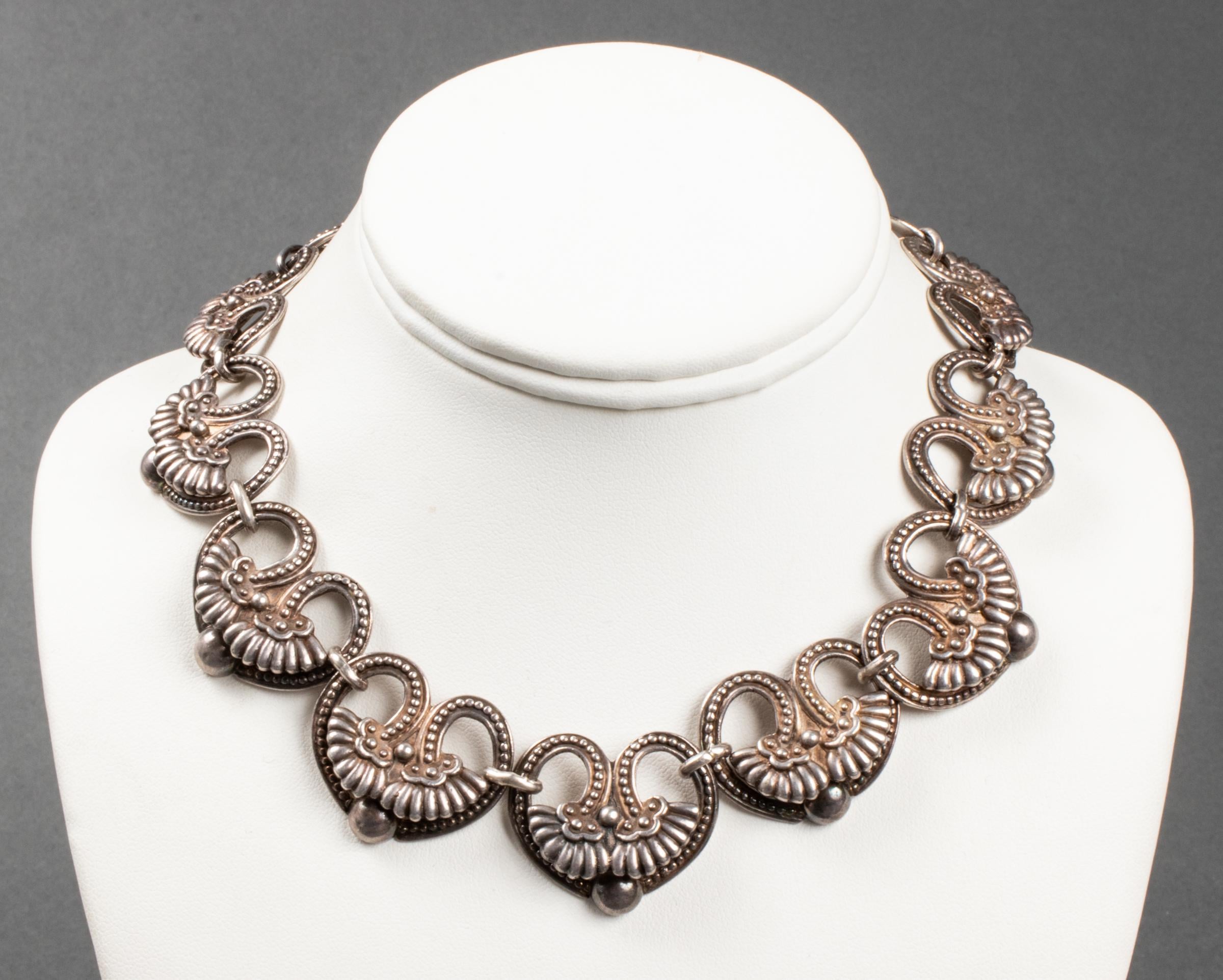
Design 5832 belongs to the mature phase of Margot de Taxco, when the workshop had committed fully to enamel as its central expressive means. The necklace joins sterling silver to enamel, the material combination that Margot van Voorhies made her signature after her champlevé production began in 1955. The higher design number places it well into the sequence Margot developed over decades of independent work, and it reflects the sensibility that separated her shop from the many Taxco talleres working in plain silver: color treated as an integral part of jewelry design rather than an accent.
The enamel technique that defines Margot's output was demanding and controlled. Champlevé requires the silversmith to create recessed cells within the metal, then fill them with vitreous enamel that fuses to the surface under heat. The result binds color permanently to structure, so that the silver framework both contains and divides the enamel field. Margot's design vocabulary depended on this discipline, and it explains why her work reads as composed rather than assembled. A necklace like 5832 distributes color across linked or continuous elements, letting the silver borders organize the enamel into deliberate zones while the metal itself supplies reflectivity and edge.
Margot van Voorhies came to this work with a formation that shaped the entire enterprise. Born in the United States, she married Antonio Castillo in Taxco and created many of the early designs for Los Castillo before that marriage ended in 1946. She opened Margot de Taxco in 1947 and turned to champlevé enamel in 1955, building a reputation on the quality and range of that production. Her marks record this history: the earliest sterling stamps carry the workshop name without reference to enamel, while the marks documented on enamel pieces, bearing Eagle 16, correspond to the period from 1955 onward. The design number alone does not fix an exact year of fabrication, since Margot's designs remained in production across long stretches and later pieces could carry earlier conceptions, but the enamel identity of the work situates it firmly within the phase for which she is best known.
Within the broader silver renaissance, Margot's enamel work occupies a distinct position. Where many Taxco makers pursued sculptural form in silver or the married-metal experiments associated with Los Castillo, Margot pursued color as a formal element, and her champlevé pieces were sufficiently characteristic that other workshops, Castelan among them, produced enamel and sterling work described as reminiscent of hers. That resemblance is itself evidence of how recognizable her approach had become. Design 5832 records the specific contribution of a designer who treated enamel not as decoration applied to silver but as a material equal to it, held in place by a metal structure that gives the color its shape and its light.
Museum of Mexican Silver. “Design 5832 Necklace.” Catalog no. MoMS-001054. https://museumofmexicansilver.com/pieces/margot-necklace-5832
See something wrong with this record? Suggest a correction and the piece details fill in automatically.
Swan Necklace
Sterling silver