Saves instantly, no account needed. Already a member? Sign in.
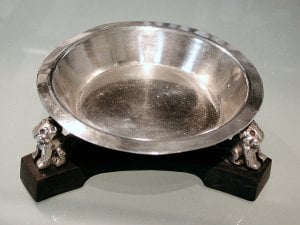
Three silver jaguars shouldering an ashtray on a triangular ebony base is Spratling at his most sculptural in a functional object, the great cat of Mesoamerican art pressed into service as both support and subject. The jaguar recurs across his work because it carried the pre-Columbian sources he drew on throughout his program of grounding Taxco silver in indigenous Mexican forms rather than European models (Morrill, pdf p. 39).
The ebony base supplies the dark, dense counterweight to the silver figures, the material contrast Spratling exploited in his Third Period hollowware. The triangular plan turns three identical animals into a stable, deliberately composed object.
The design was included in "The World of William Spratling," the exhibition organized by John Leeper that toured U.S. museums beginning in 1965 and drew on Spratling's own collection of pre-Columbian and world art alongside his silver (Morrill, p. 77). It is recorded in Morrill and Berk's Mexican Silver, in La Platería Mexicana, and in Goddard's field guide.
It wholesaled at $14.40 in 1958-59 and $16 in 1967 and has been reissued. Period examples with intact ebony and crisp casting are the ones to seek.
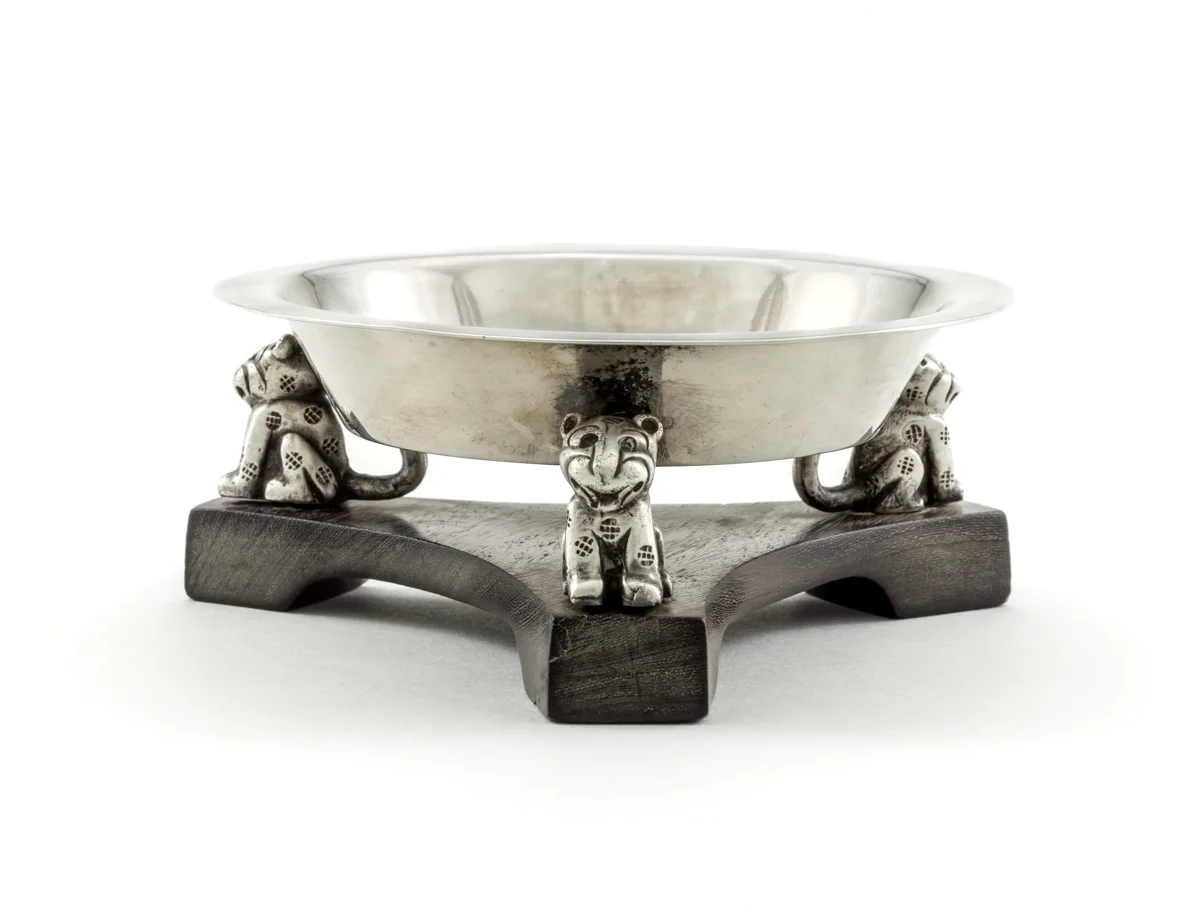
Ashtray with Jaguars, 1951-1962
Accession M.2015.190.3. Official museum record Photo: Los Angeles County Museum of Art.
Verified against each institution's own collection records. All museum collections
Museum of Mexican Silver. “Silver Jaguar Ashtray.” Catalog no. MoMS-000797. https://museumofmexicansilver.com/pieces/spratling-508
See something wrong with this record? Suggest a correction and the piece details fill in automatically.
William Spratling
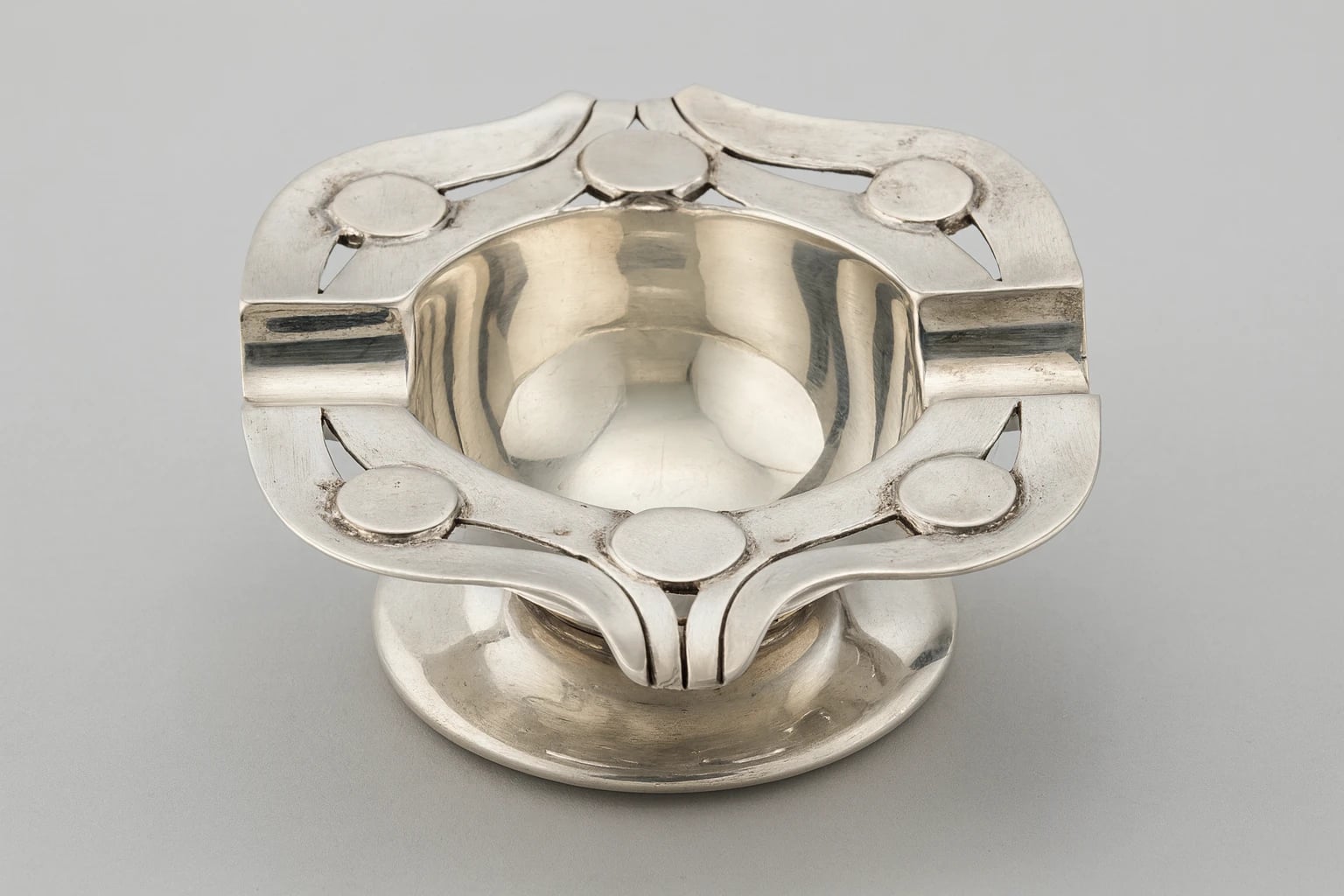
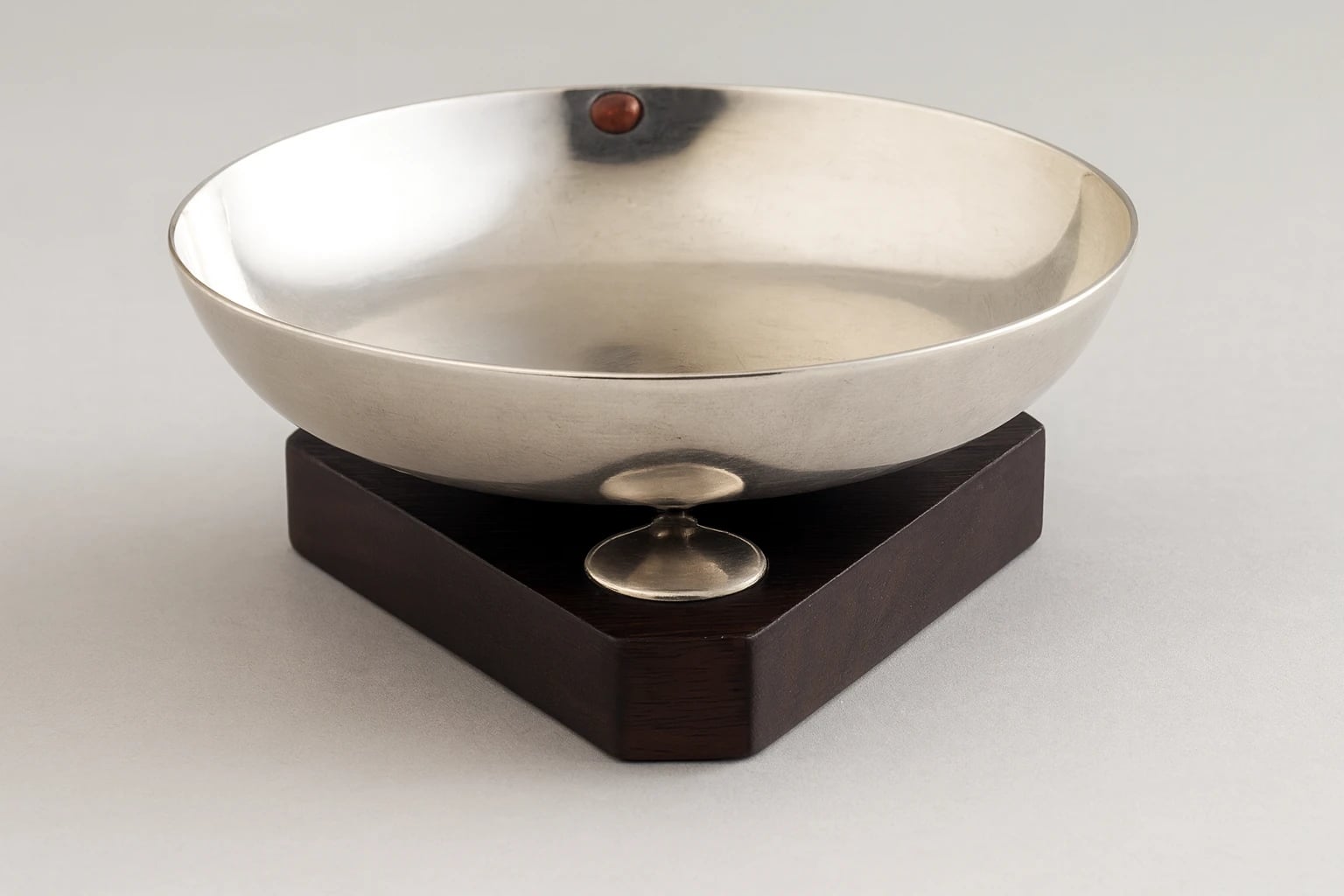
Ashtray on Pedestal
Second Design Period: 1949 - 1951
Silver