Saves instantly, no account needed. Already a member? Sign in.
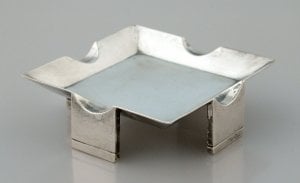
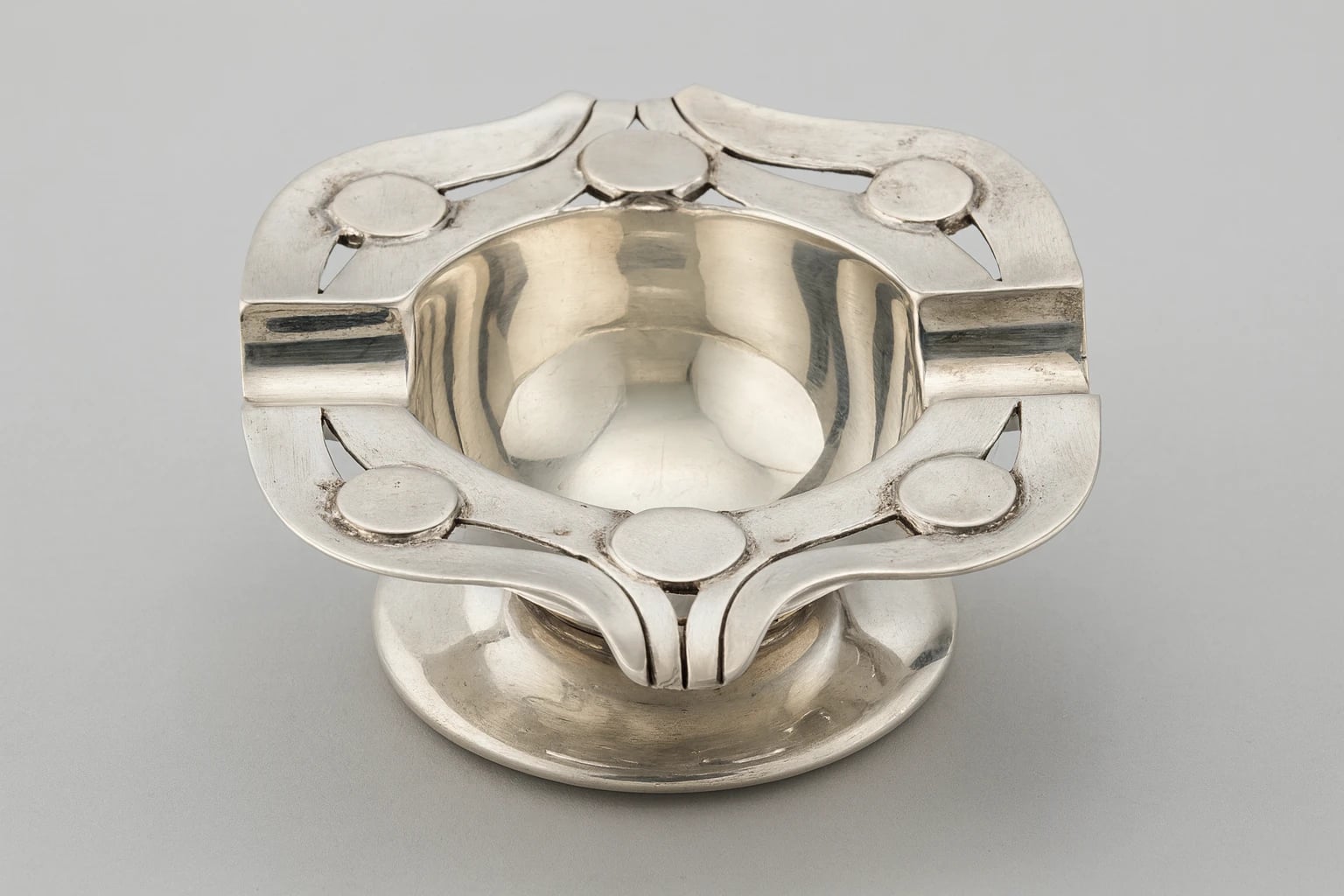
A pierced silver ashtray raised on a pedestal, this object shows the workshop turning calar, the cutting and piercing of silver to make a design (Morrill, pdf p. 15), into the ornamental scheme of a piece of table silver. The same pierced pattern was carried into bowls, a ladle, and plates, marking it as a design family rather than a single object; Spratling called it "Discos," while the firm Conquistador knew it as "Buttons and Bows."
The ashtray dates to the Second Design Period of 1949 to 1951. That a single pierced pattern was extended across several hollowware forms reflects the workshop's habit of developing a motif into a coordinated suite.
With the two recorded names for the pattern offering a useful point of reference, the ashtray stands as a characteristic example of the workshop's pierced Second Period hollowware.
Museum of Mexican Silver. “Ashtray on Pedestal.” Catalog no. MoMS-000402. https://museumofmexicansilver.com/pieces/spratling-804
See something wrong with this record? Suggest a correction and the piece details fill in automatically.
William Spratling
Four Legged Silver Ashtray
Second Design Period: 1949 - 1951
Silver