Saves instantly, no account needed. Already a member? Sign in.
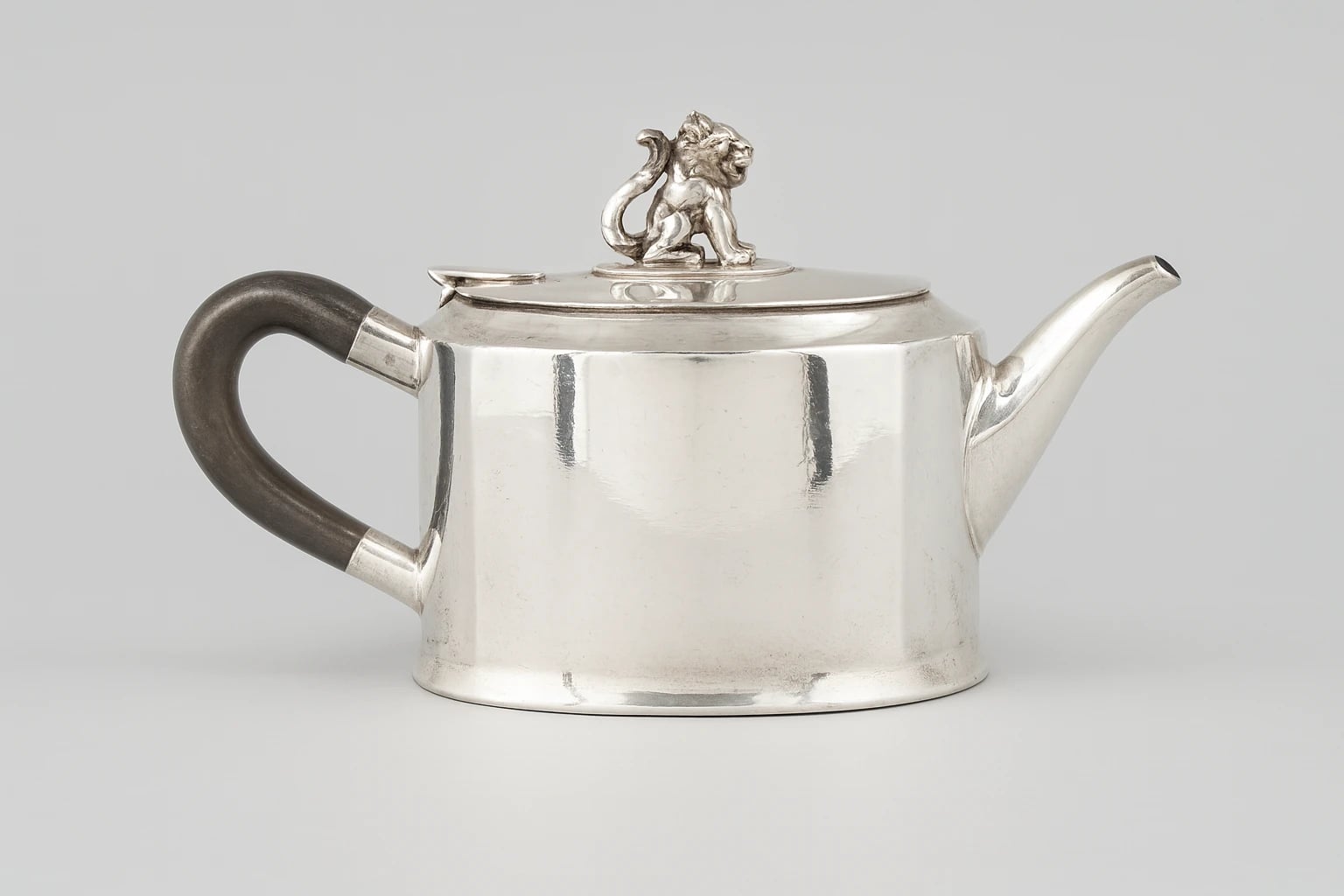
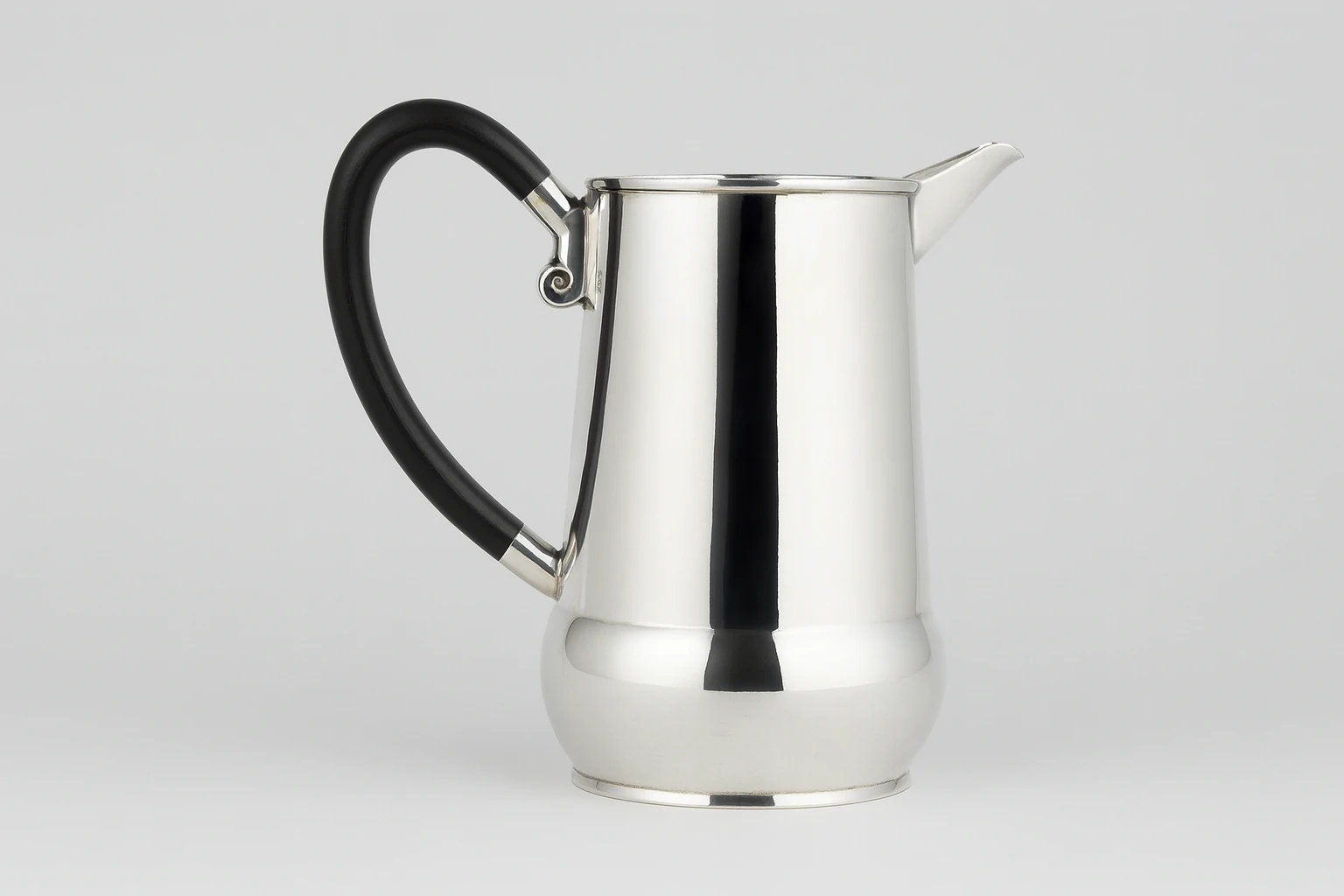
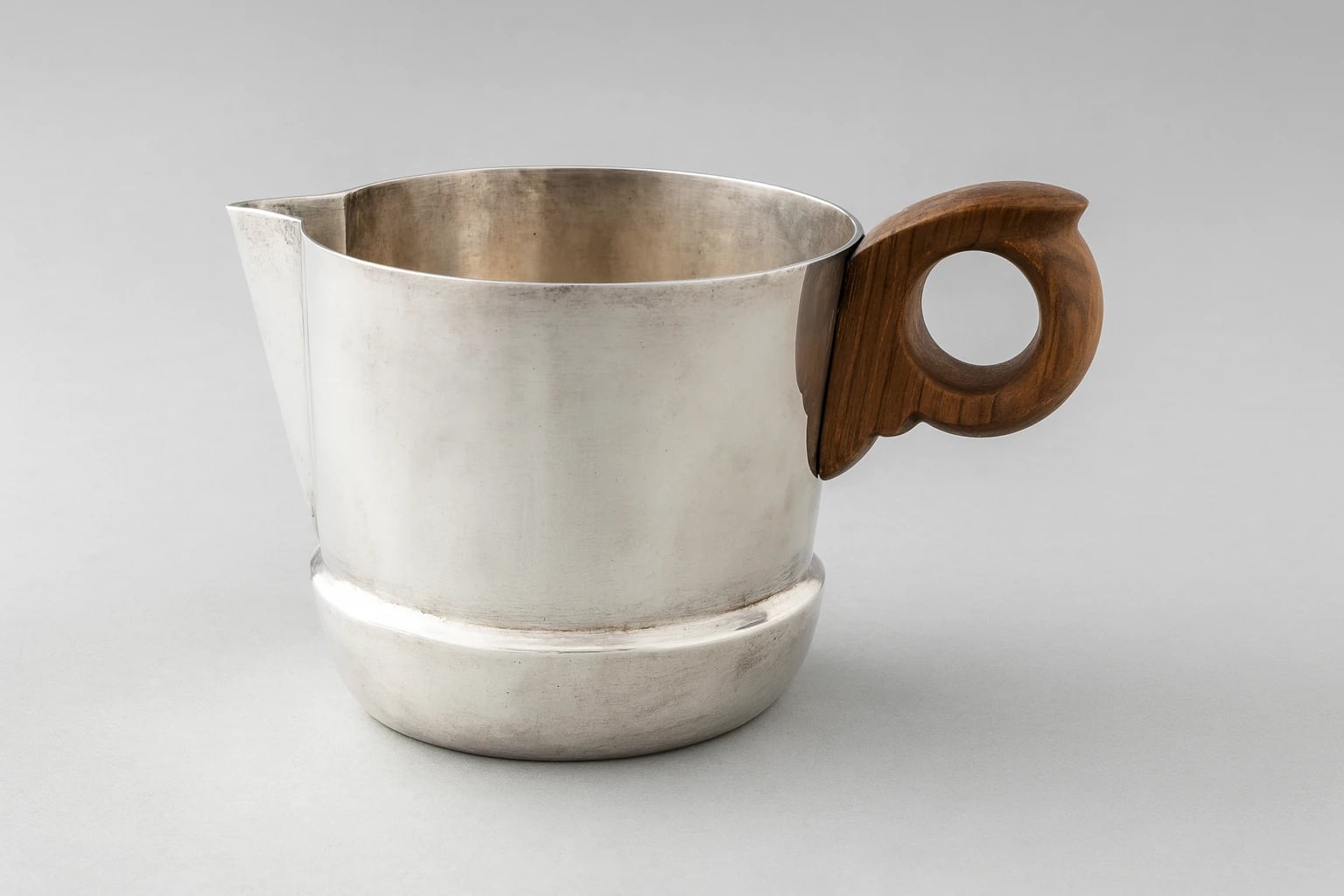
A cream pitcher asks little of a designer, which is precisely why this one rewards attention. William Spratling reduced the form to a taut silver body and answered it with two round rosewood handles, and in that pairing he stated a principle that runs through his best hollowware: that warmth and coolness, wood and metal, can be set against one another until each sharpens the other. The pitcher belongs to Spratling's First Design Period, the years between founding the Taller de Las Delicias in 1931 and 1946, when he was working out how a modern Mexican object should look and feel in the hand.
The design lives in the relationship between the silver vessel and the wood. Where most silver pitchers extend a handle as a continuation of their own metal, Spratling interrupts the reflective surface with rosewood, a dense tropical hardwood whose deep grain absorbs light exactly where the silver throws it back. The round section of the handles matters. A rounded grip reads as something to be held rather than admired, and it keeps the eye moving around the body instead of resolving into a single silhouette. This is the same instinct Spratling brought to his flatware and serving pieces, where local woods and horn were joined to silver not as economy but as deliberate contrast, giving Mexican material a structural role in a modern object.
Spratling did not introduce metalworking to Taxco, a region with its own older traditions, but at Las Delicias he built the workshop system that let a designer concentrate on form while master smiths translated it into production. That structure is visible in an object like this one. The pitcher was made in two sizes, and this is the smaller, which tells us it was conceived as a considered design rather than a single experiment, repeatable through the taller yet held to the designer's standard. The same workshop culture trained or passed along a generation that Gobi Stromberg and Penny Morrill have documented, from Antonio Pineda to Héctor Aguilar, designers who left Spratling's orbit to build formal languages of their own. Reading this pitcher against that history clarifies what Spratling contributed: not a style to be copied, but a way of thinking about how silver and Mexican material could carry modern form.
Hollowware survives in smaller numbers than jewelry from these years, and a domestic object like a cream pitcher was used, worn, and often lost. Its appearance in Morrill and Berk's *Mexican Silver* places it within the documented record of Spratling's First Period work. For a collection tracing the Mexican silver renaissance, the pitcher shows the movement operating at the scale of the table, where the same design intelligence that produced ambitious necklaces quietly reshaped an everyday form.
Museum of Mexican Silver. “Cream Pitcher with Round Rosewood Handles.” Catalog no. MoMS-000374. https://museumofmexicansilver.com/pieces/spratling-795
See something wrong with this record? Suggest a correction and the piece details fill in automatically.
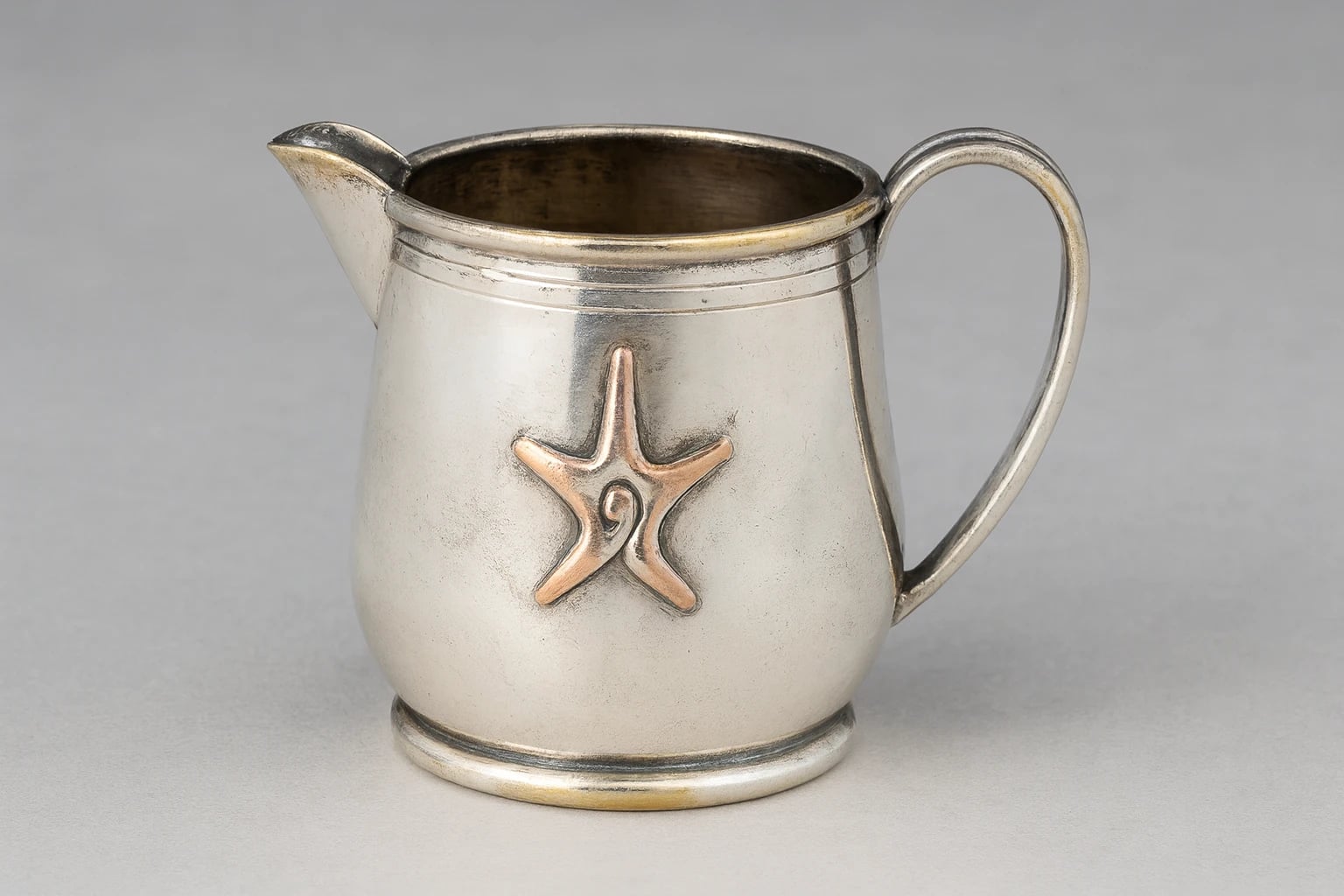
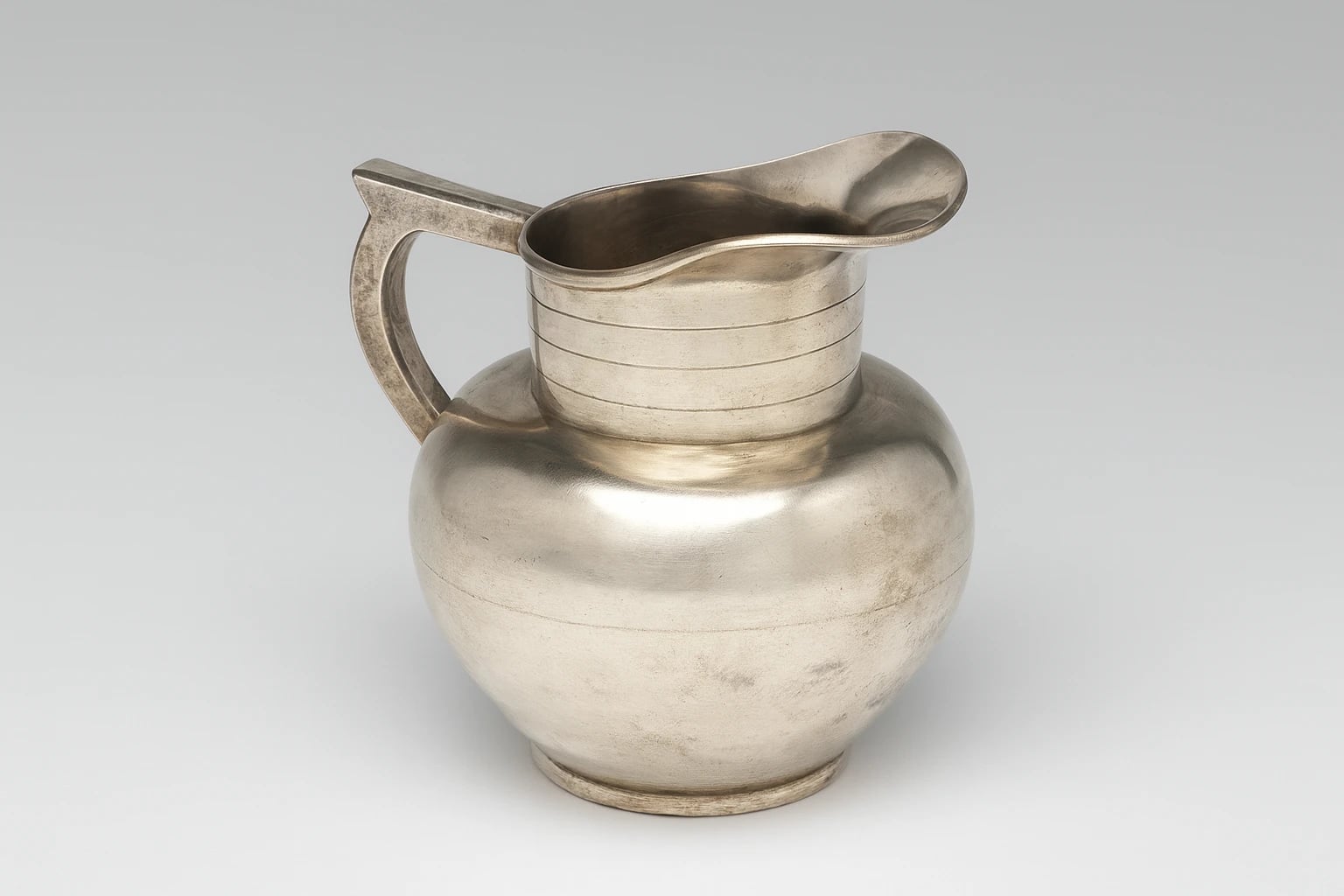
Cholulteca Cream Pitcher
Silver Plate