Saves instantly, no account needed. Already a member? Sign in.
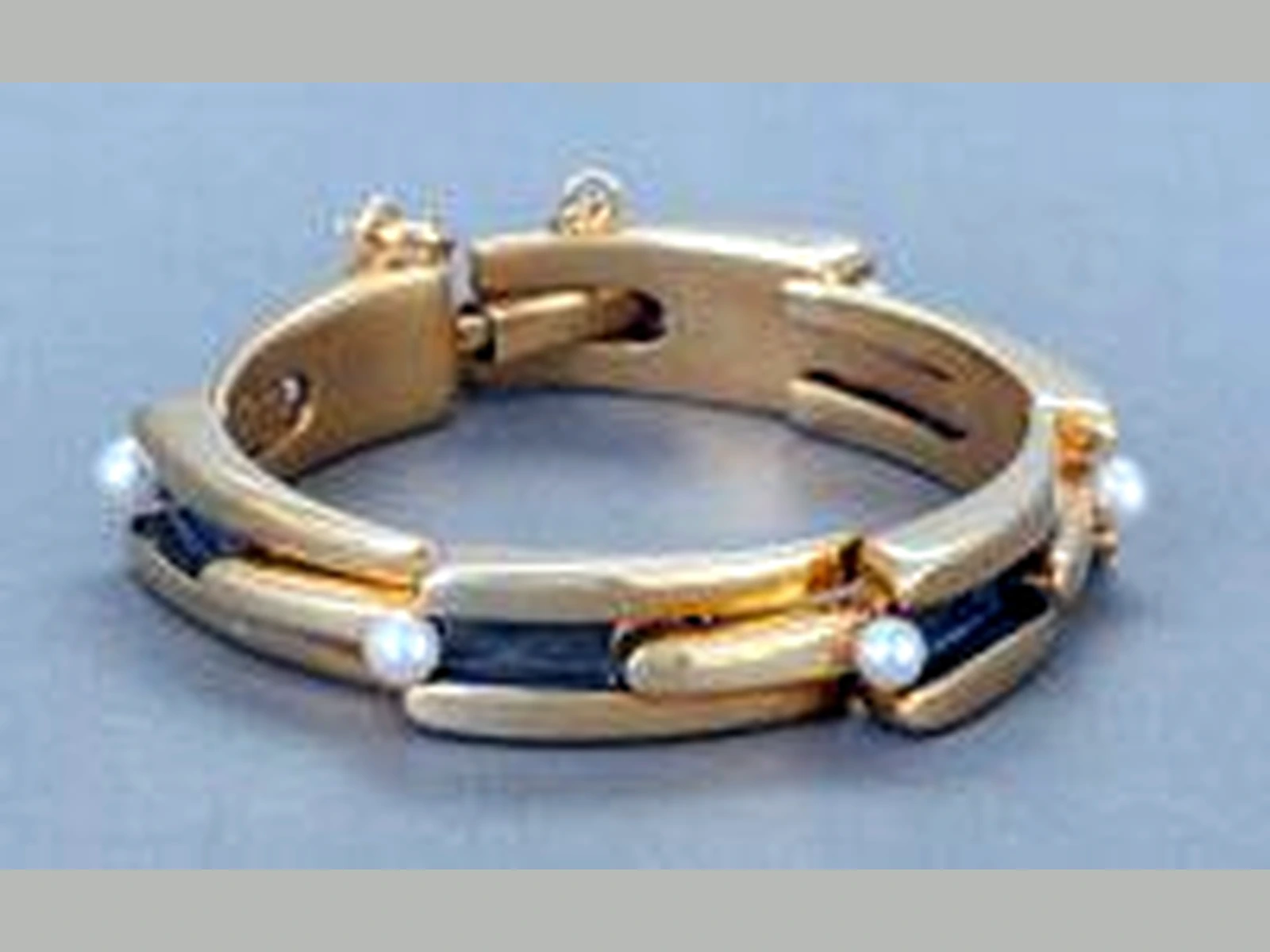
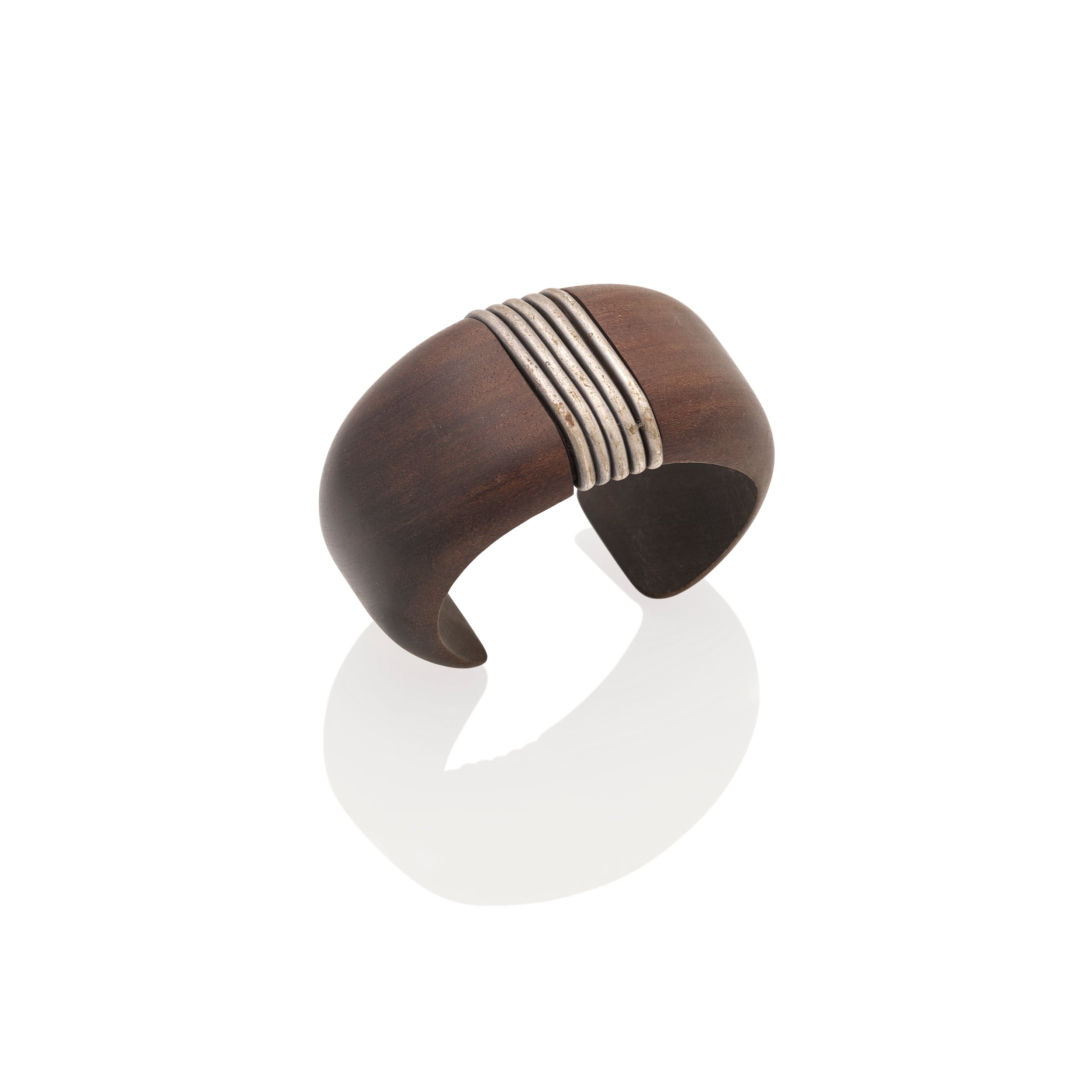
A band of rosewood, warm and close-grained, encircles the wrist, its dark surface interrupted at the center by several turns of silver wire. The design places almost all of its emphasis on the wood, treating silver not as the body of the bracelet but as a binding element that draws the eye to the middle of the form. This inversion of the usual hierarchy, in which silver carries the object and stone or wood serves as accent, is what makes the cuff worth close attention. It belongs to William Spratling's early exploration of mixed materials, in which native hardwoods and silver were combined so that each read as a deliberate choice rather than a substitution.
The construction is direct. A single curved band of rosewood forms the cuff, and the silver wire is wrapped around its central span, its coils held under tension against the wood. The contrast is one of temperature and weight as much as color: the rosewood absorbs light and feels warm to the touch, while the silver reflects and cools. Spratling understood that a hardwood cuff sits differently on the arm than a silver one, lighter, quieter, more sympathetic to skin. The wrapped wire concentrates visual interest at one point rather than distributing ornament across the surface, so the bracelet reads as a plain dark ring with a bright cinch at its middle. The restraint is characteristic of Spratling's willingness to let a single material relationship carry a design.
This cuff belongs to Spratling's first design period, the years following the 1931 opening of the Taller de Las Delicias, when the workshop was establishing the formal vocabulary that would define Taxco silver. Spratling drew on Mexican sources and on his own architectural training, and he treated local materials, including rosewood and other native woods, as legitimate partners to silver rather than lesser fillers. The workshop of these years produced Aztec-derived bracelets, carved amethyst pieces, and animal forms, but it also pursued a quieter line of work in which wood and silver were joined for the sake of their contrast. Phyllis Goddard's field guide records the type, placing it within the range of forms that came out of Las Delicias under Spratling's direction. The bracelet reflects the taller system of that period, in which Spratling set the design direction and skilled silversmiths carried out the fabrication.
The cuff documents a strand of the early Taxco renaissance that is easy to overlook beside the more elaborate silver jewelry of the same years. It shows Spratling reducing a bracelet to two materials and one gesture, and trusting the wood to hold the design. As a record of the first design period's material experiments, it clarifies how the workshop thought about silver in relation to the wood, stone, and other substances it set against it.
WILLIAM SPRATLING: A SILVER AND WOOD BRACELET, MEXICO
Bonhams · 2022-11-10
A SILVER AND WOOD CUFF, WILLIAM SPRATLING, CIRCA 1940-46
Bonhams (United States)
A WOOD AND SILVER CUFF, WILLIAM SPRATLING, TAXCO, MEXICO, CIRCA 1940-46
Bonhams (United States)
WILLIAM SPRATLING: A SILVER AND WOOD BRACELET, MEXICO
Bonhams (United States)
Museum of Mexican Silver. “Wire Wrapped Rosewood Cuff.” Catalog no. MoMS-000449. https://museumofmexicansilver.com/pieces/spratling-834
See something wrong with this record? Suggest a correction and the piece details fill in automatically.
William Spratling
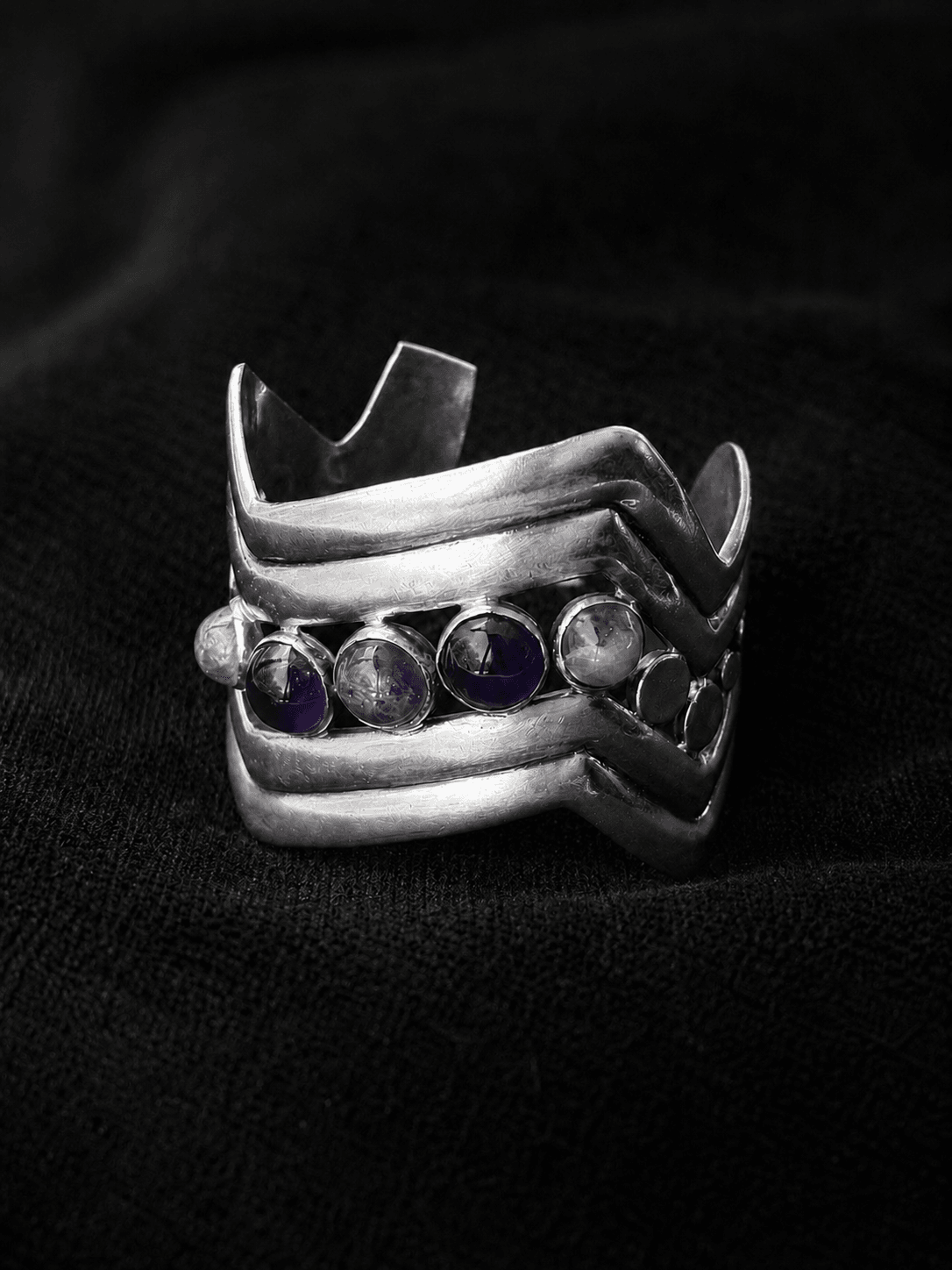
Zig Zag Bracelet with Amethysts
First Design Period: 1931 - 1946
Silver