Saves instantly, no account needed. Already a member? Sign in.
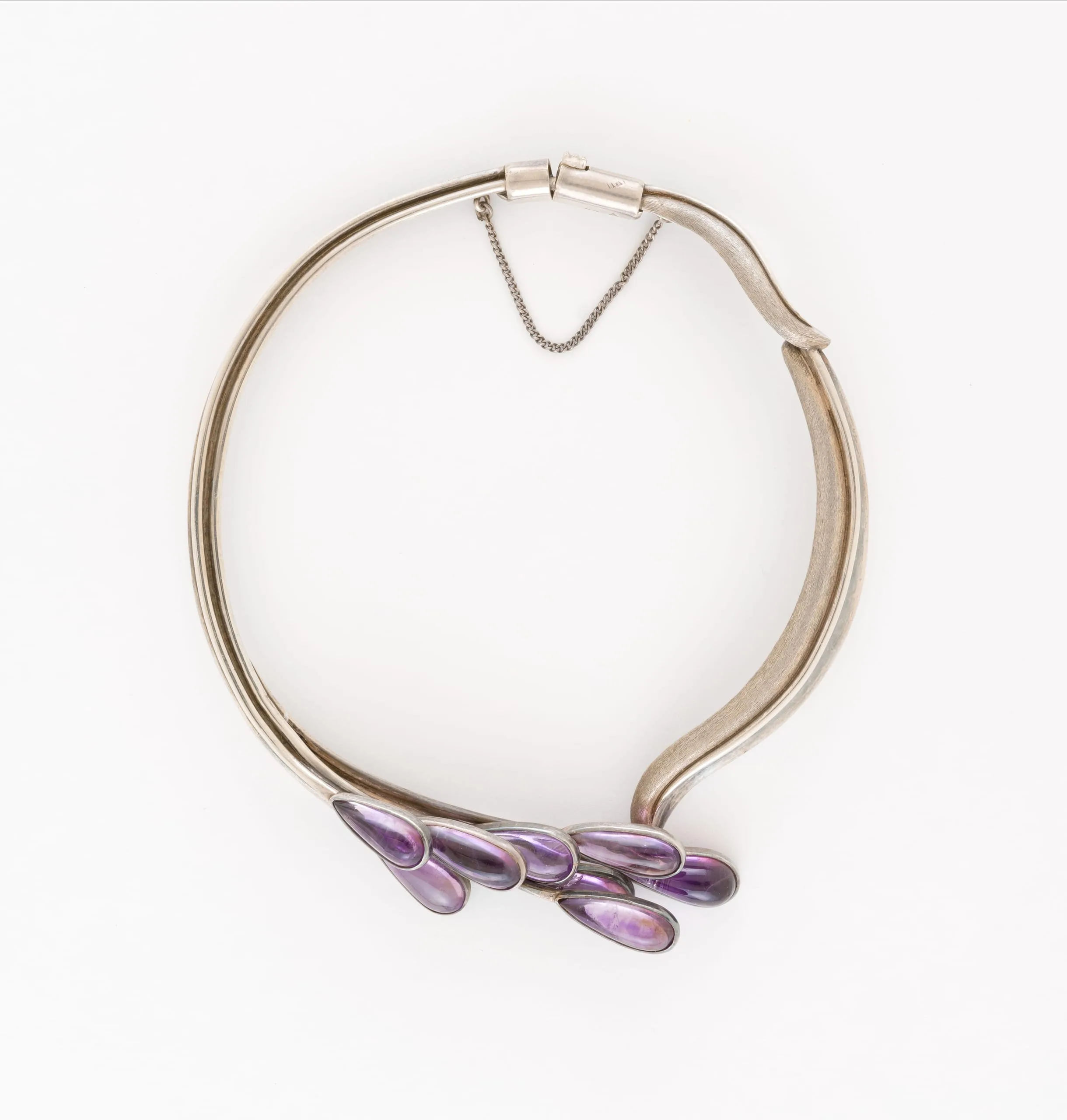
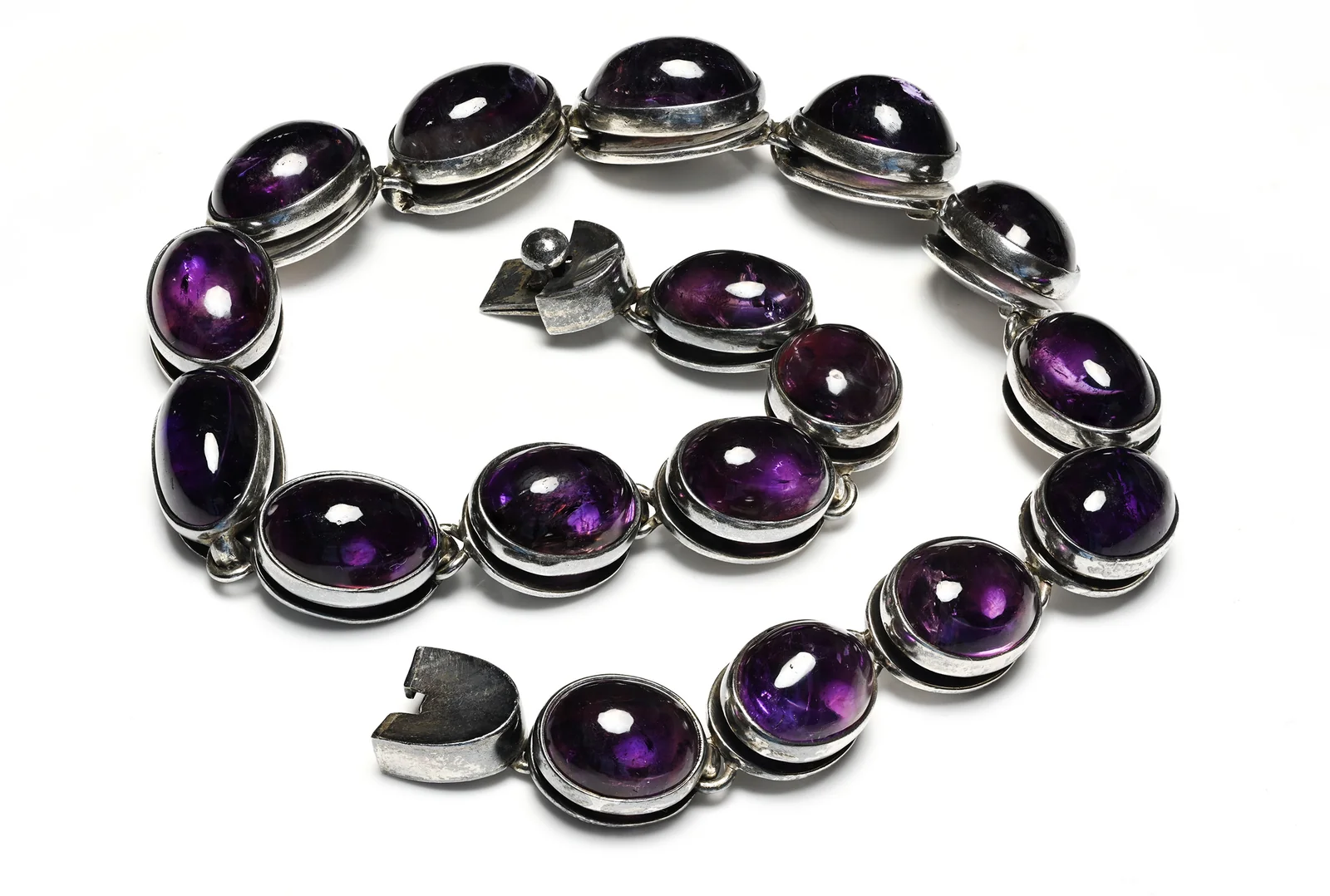
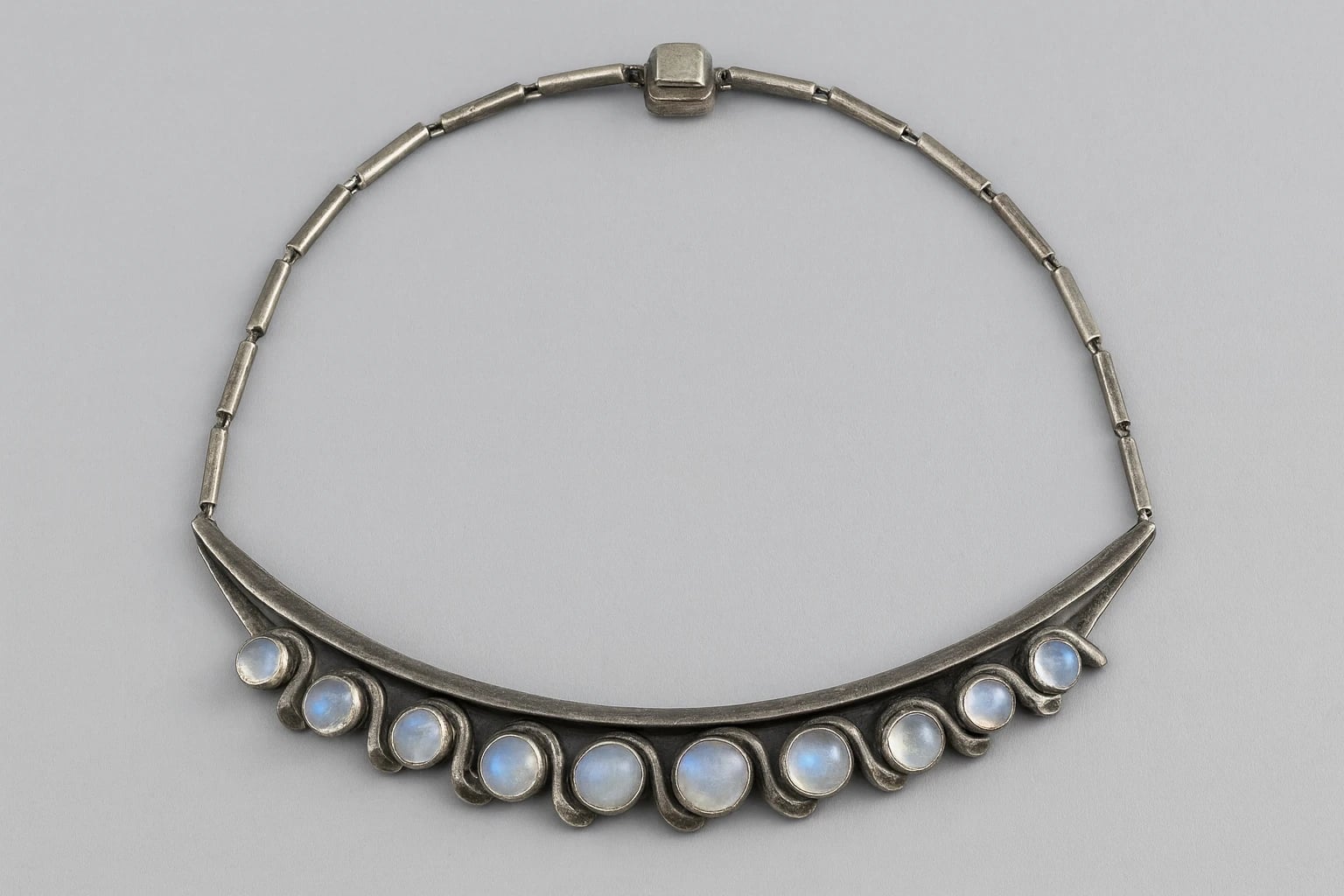
Set into a row of collets and suspended from a simple chain, the amethysts of this necklace seem to hover just above the collarbone, each stone held with only as much silver as its mounting requires. Antonio Pineda organizes the design around restraint rather than display, letting the transparent violet of the stones carry the necklace while the metal recedes to a series of thin bezels and connecting links. The effect is one of controlled lightness, an arrangement in which the material weight of silver is deliberately minimized so that color and transparency become the primary event.
The amethysts are cut and set to admit light from behind, so that their color deepens or pales as the wearer moves and the stones catch changing illumination. Pineda treats the gem not as a jewel to be surrounded and protected but as an element of pure color, framed just enough to be secured. The silver bezels are kept low and narrow, and the linkage between them allows the row to follow the curve of the neck rather than sit as a rigid band. This is a designer thinking about how the eye reads translucent purple against skin, and about how a necklace behaves as it is worn, not merely how it appears at rest. The spacing between stones, the rhythm of the collets, and the plainness of the chain all serve to isolate the amethyst as the necklace's subject.
Working from his own shop in Taxco under the Antonio crown mark, Pineda built a reputation for exactly this kind of disciplined modernism, in which the setting is subordinated to a strong material or geometric idea. Morrill's Silver Masters of Mexico documents related necklaces and bracelets from the same period in which Pineda pairs 970 silver with a single stone type, including moonstone suites dated to around 1955, where the stone is similarly presented as a field of color or light rather than as a faceted luxury. The floating amethyst design belongs to that investigation. Pineda's eagle 17 mark, recorded in Hougart as coming into use from 1953, is consistent with a design of this moment, though the mark indicates the period of use rather than a single year of fabrication. His workshop drew on subcontracting smiths and specialized hands for production, so the Antonio crown identifies the design authority and shop under which such a necklace was made rather than a single pair of hands at the bench.
Among Pineda's stone-set jewelry, the floating amethyst treatment shows how far he was willing to reduce the metal in favor of the gem, a position distinct from the heavier sculptural silver for which he is also known. The necklace records a specific idea within his practice: that a precious stone could be presented almost weightlessly, with silver serving as structure and connection rather than as ornament in its own right. It is a clear example of the material intelligence that placed Pineda among the most inventive designers of the Mexican silver renaissance.
Museum of Mexican Silver. “Floating Amethyst Necklace.” Catalog no. MoMS-001937. https://museumofmexicansilver.com/pieces/pineda-silver-and-amethyst-necklace
See something wrong with this record? Suggest a correction and the piece details fill in automatically.
Antonio Pineda
Silver and Moonstone Necklace
c. 1953
Sterling silver