Saves instantly, no account needed. Already a member? Sign in.
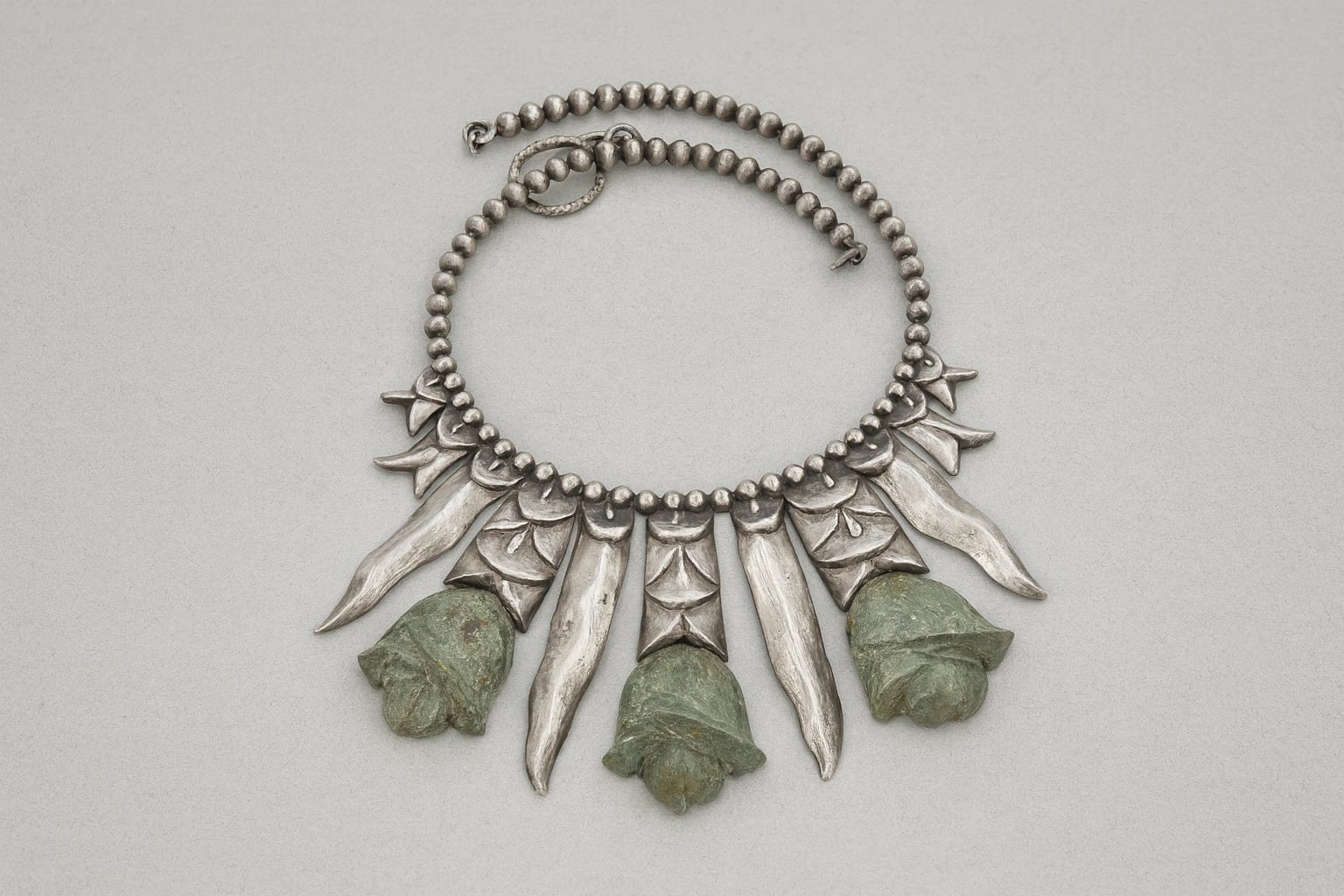
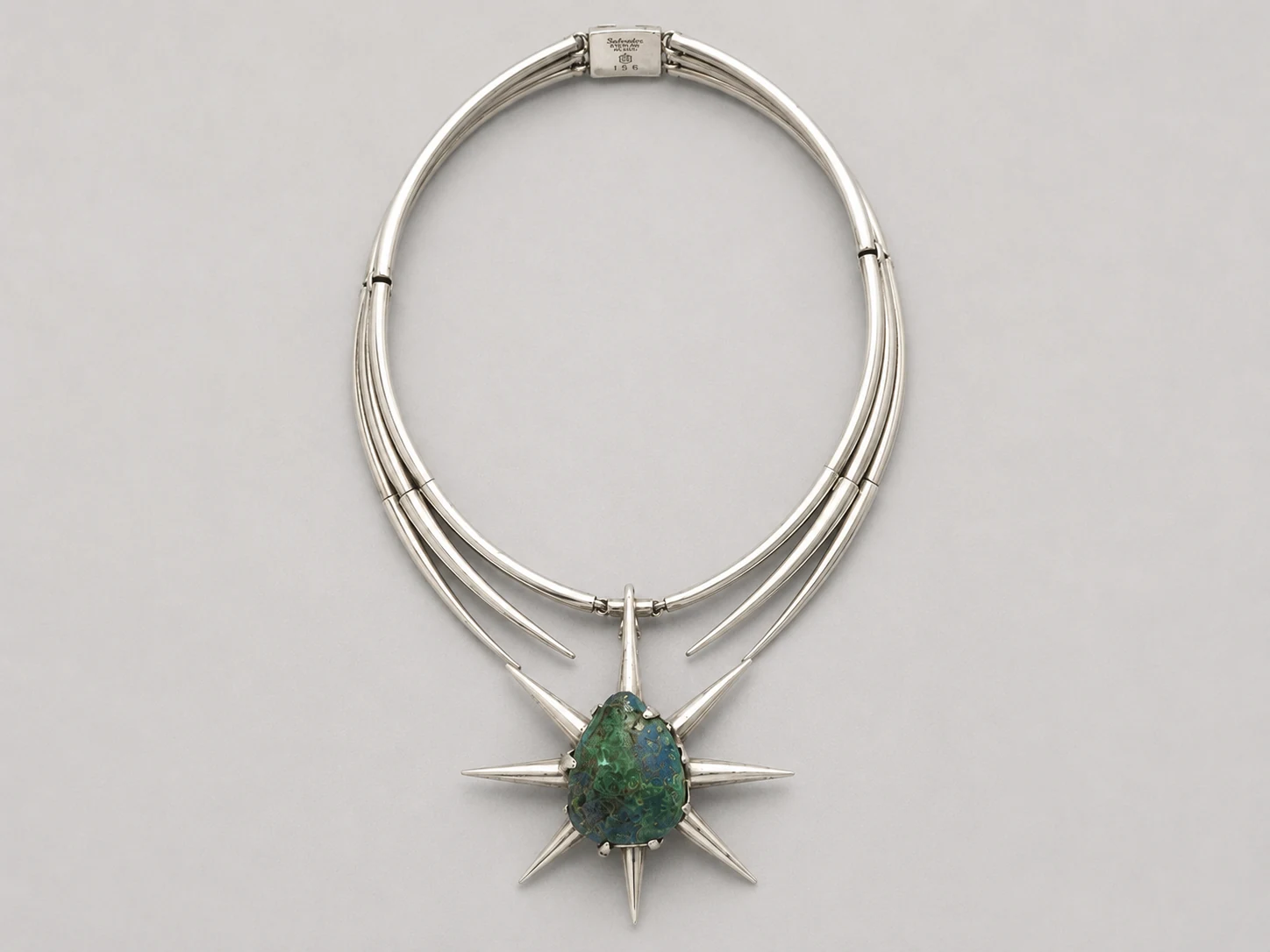
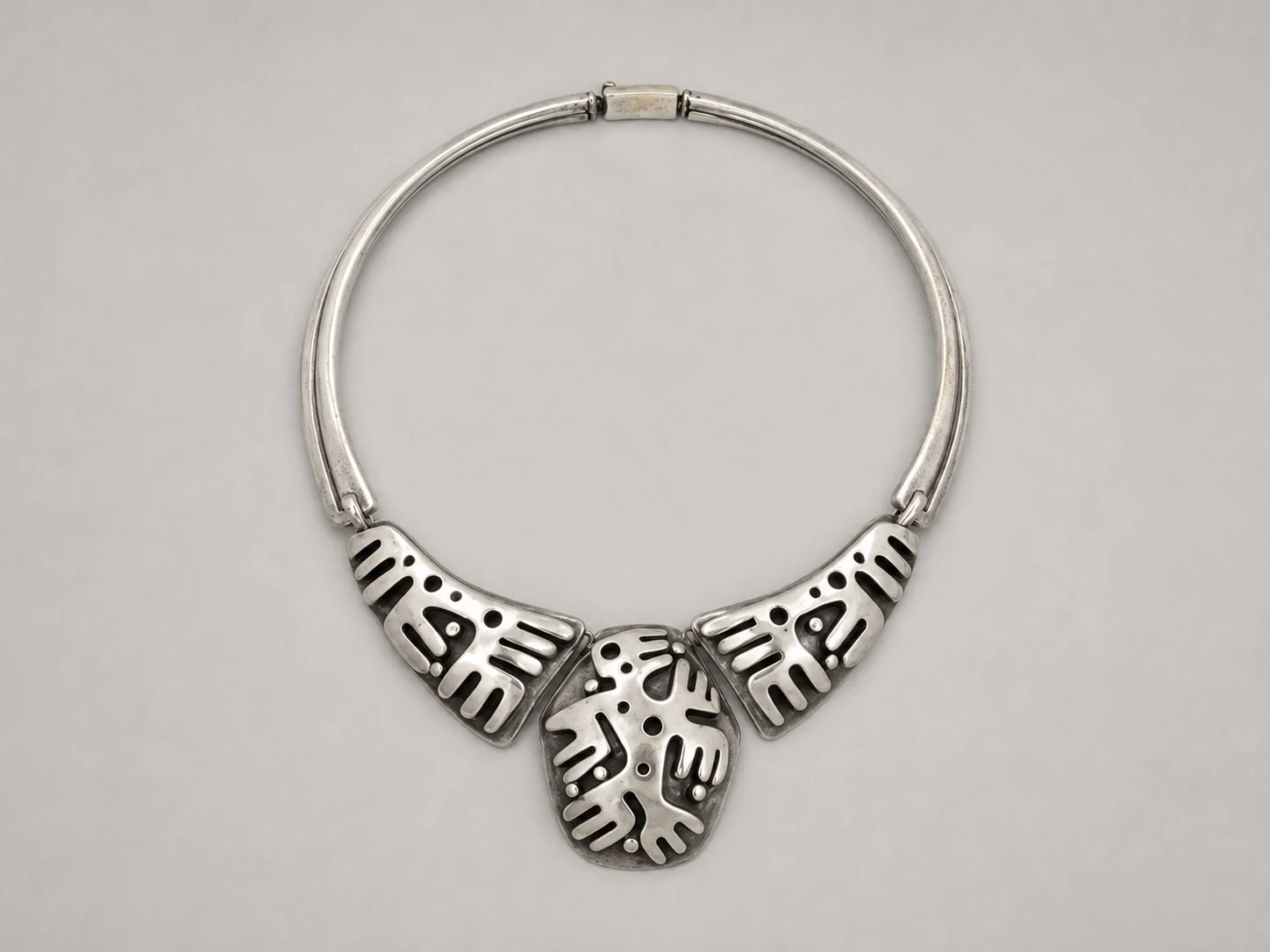
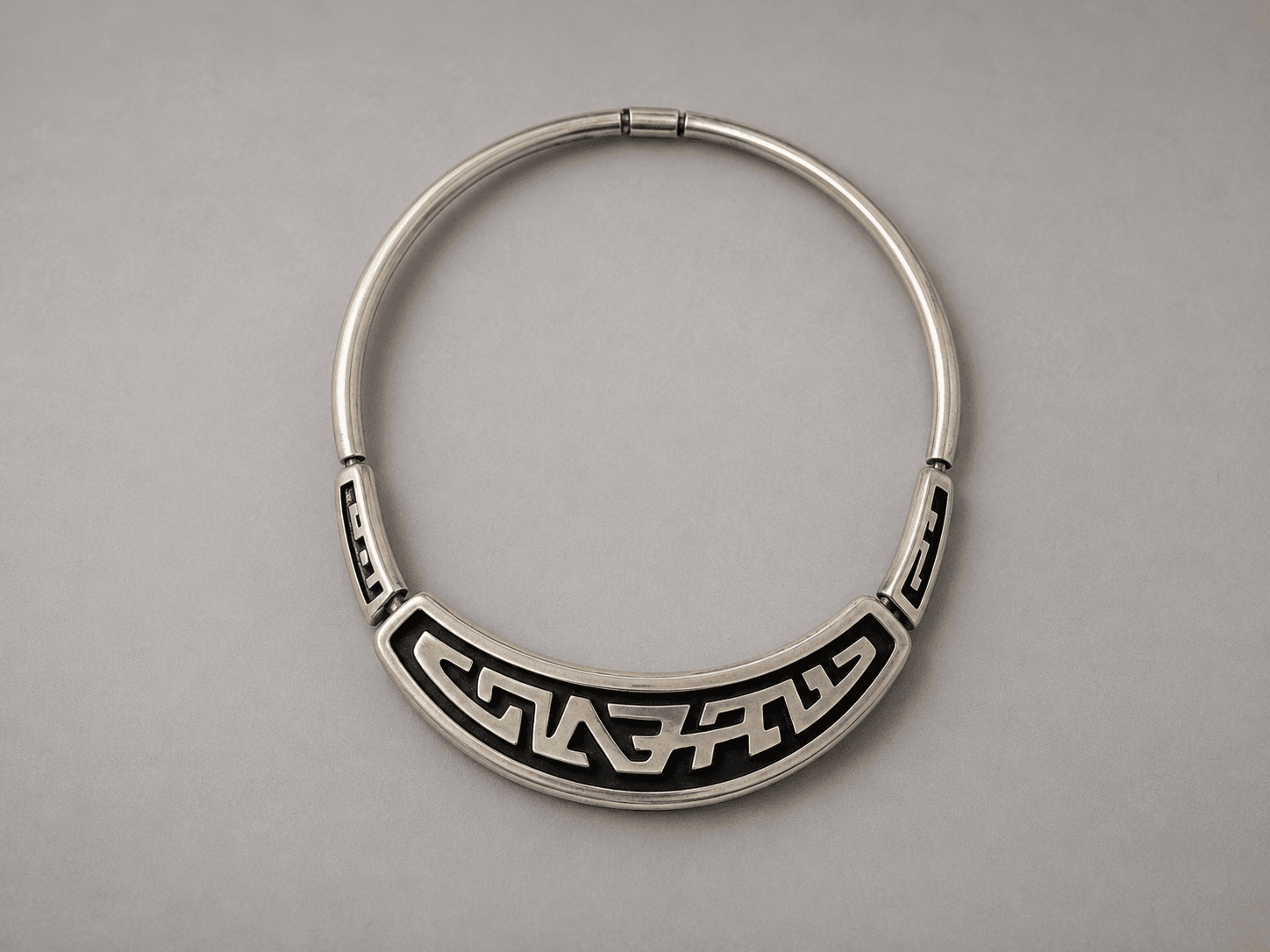
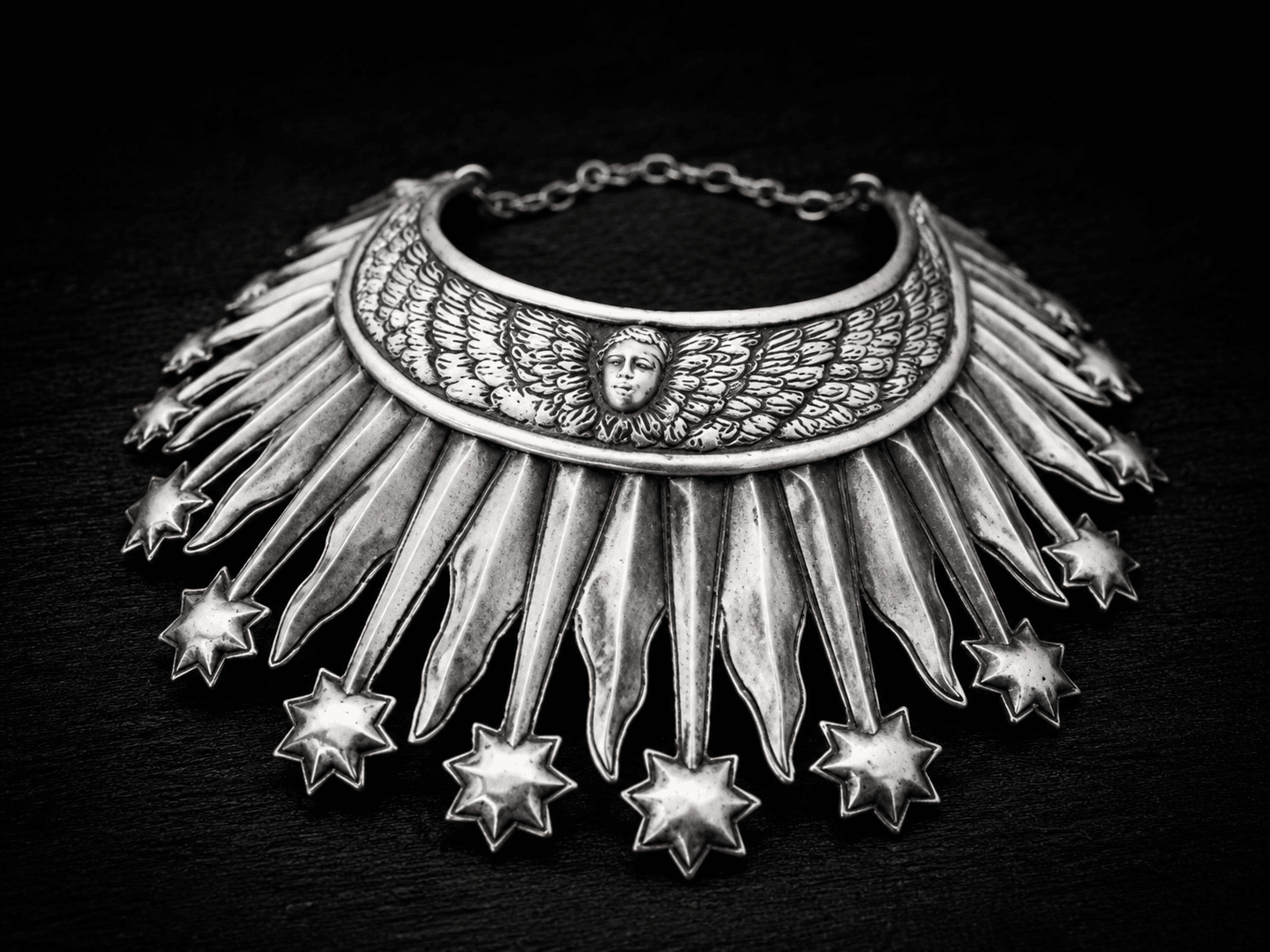
A bib necklace centered on a repoussé winged cherub amid stars and a sunray motif, this is one of the rare designs in which Spratling turned to Hispanic and religious sources rather than the Pre-Columbian models that dominated the Las Delicias workshop. He named it "Collar Rubenstein," and its design inspiration came from the halo of a figure of the Virgin now in the Museo de Arte Religioso in Mexico City, a documented departure that makes it a possibly unique style for him.
The piece comes from the First Design Period and was made from the mid-1930s into the mid-1940s, with this example dating to the earliest part of that run. The repoussé cherub and rayed halo translate a colonial religious image into modern wearable silver, an unusual move for a maker who otherwise mined Mexico's ancient past.
Worked in 980 silver under the joined "WS" mark Spratling adapted from his horse brand (Morrill, p. 39), the necklace is unusually well documented, recorded in Davis and Pack's Mexican Jewelry, in Cederwall and Riney's Spratling Silver, in Morrill's Maestros de Plata, and in Goddard's field guide.
That combination, an atypical religious subject, a named design, a documented source, and a place in four references, gives this bib necklace real standing. An earliest-period example, with intact repoussé and an early mark, is the one to seek.
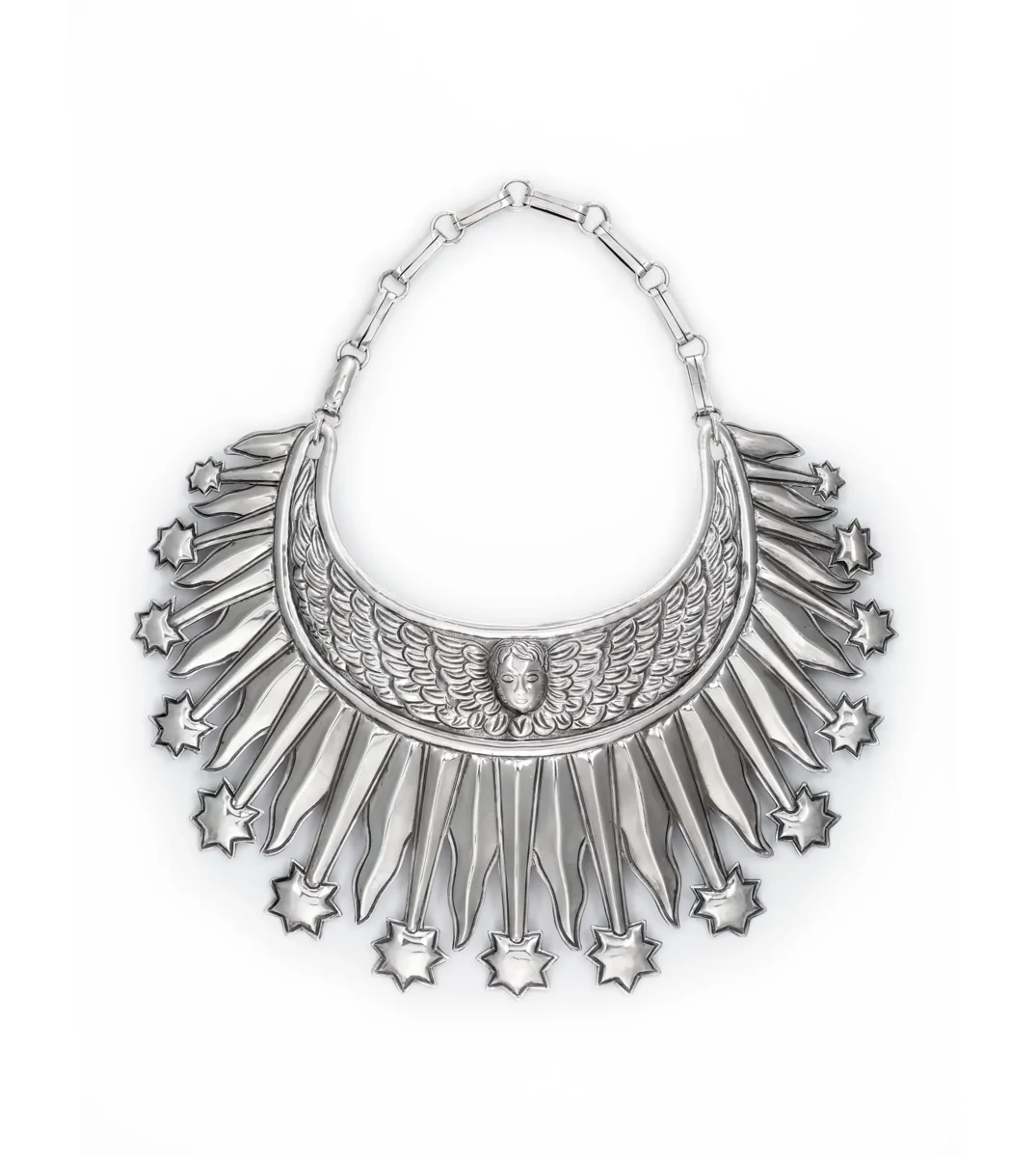
Helena Rubinstein Necklace (Gargantilla de Helena Rubinstein), circa 1940
Accession M.2012.189.1. Official museum record Photo: Los Angeles County Museum of Art.
Verified against each institution's own collection records. All museum collections
Museum of Mexican Silver. “Helena Rubinstein Necklace.” Catalog no. MoMS-000199. https://museumofmexicansilver.com/pieces/spratling-296
See something wrong with this record? Suggest a correction and the piece details fill in automatically.
William Spratling
Turquoise Flower Necklace
First Design Period: 1931 - 1946
Silver